


Oak Serving Trolley
These oak serving trolley pieces bring mobile hospitality into a room, offering sturdy shelves and clever trays for tea or drinks.
Oak Serving Trolley
When you search for an oak serving trolley, you encounter practical mobile furniture designed for moving food, drinks, or tea across a room. The pieces on this page span several decades, crossing Victorian, Edwardian, and mid-century periods with varying tiers and wheel arrangements.
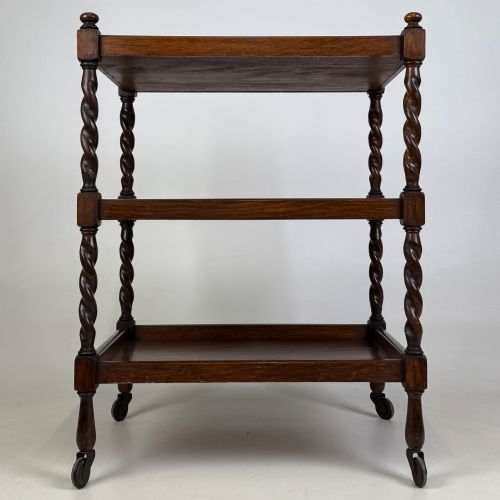
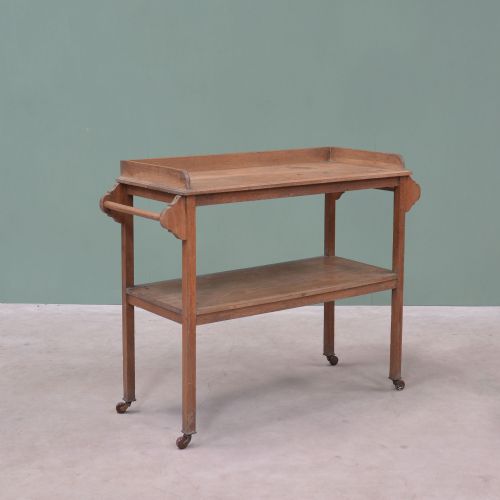
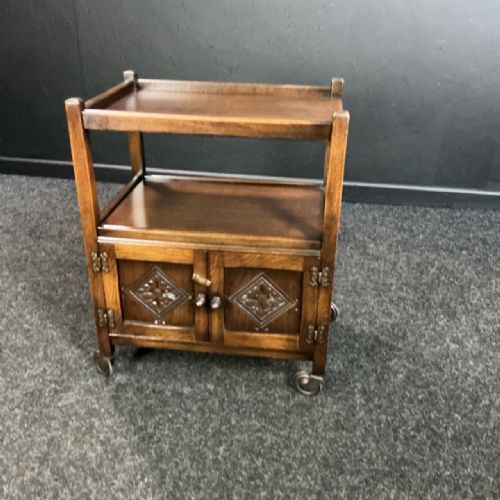
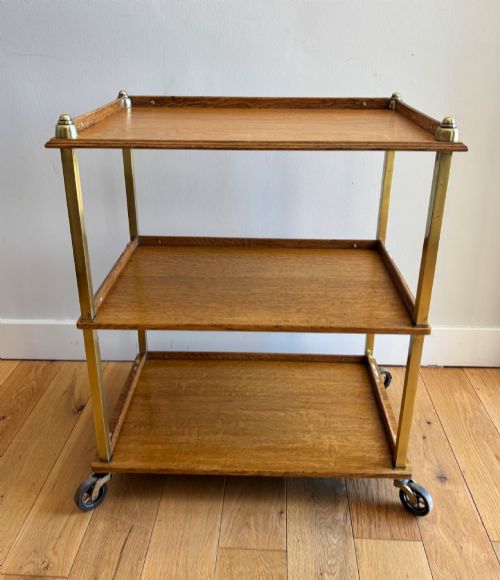
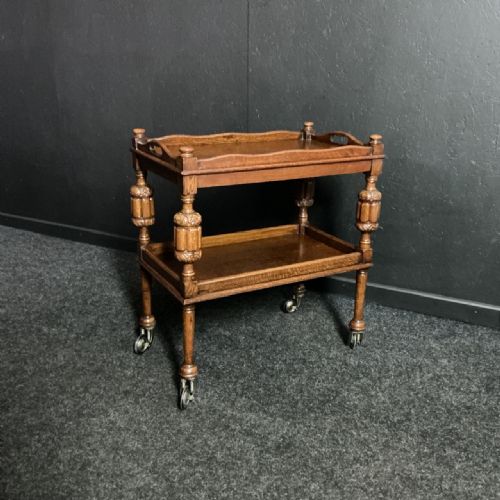
The most common version you meet here is the Edwardian or nineteen-twenties tea trolley, frequently equipped with two or three tiers, wheels, and sometimes drop-leaf sides or a removable top tray. These domestic items evolved from earlier nineteenth-century dumb waiters and heavy buffets into lighter, wheeled conveyances for the parlour or dining room.
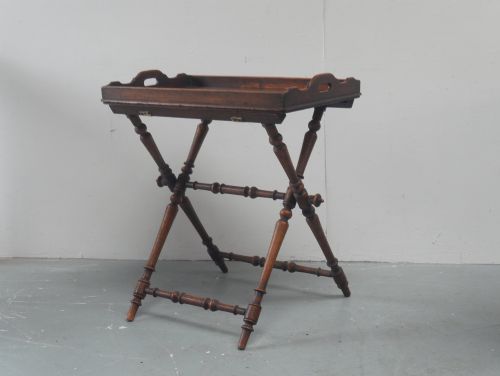
Alongside standard tea trolleys, the evidence shows related forms such as butlers' trays on stands, etageres, and metamorphic tables that adapt for card games or expanded serving space. Whether rendered in plain English oak or figured pollard oak, each piece provides functional surface area mounted on castors or wheels.
What varies in quality
The distinction between standard examples and superior pieces rests on the choice of timber and the sophistication of the mechanics. Pieces utilising figured pollard oak or fine carving stand apart from plain utilitarian models.
Quality also shows in the integration of functional elements, such as smoothly operating drop-leaves, removable trays that fit securely, and robust wheels or castors that bear weight evenly across multiple tiers.
The archive records versatile hybrid forms, including tea trolleys that double as card tables and buffets with built-in cutlery drawers.
The Oak Serving Trolley Glossary
- Barley twist
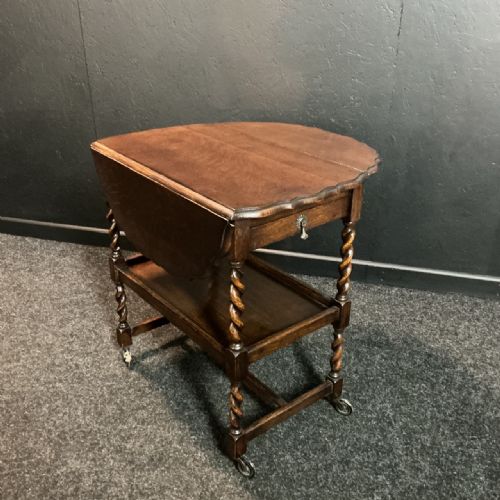
- A turned wooden furniture leg or support carved in a spiral twist resembling a rope or barley sugar. This decorative detail appears frequently on Edwardian and nineteen-twenties trolleys.
- Drop-leaf
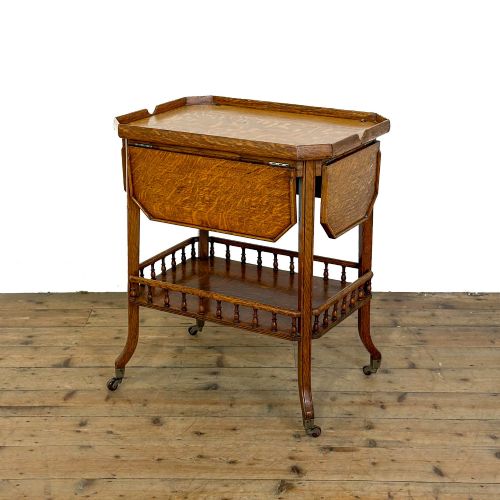
- A table top with hinged side flaps that fold down when not in use and lift up on swing brackets to extend the surface. It provides flexibility in smaller rooms.
- Dumb waiter
- A tiered serving piece or mobile stand used for holding dishes or drinks without requiring a servant at the table. Early nineteenth-century versions often featured heavy round revolving tiers or rise-and-fall mechanisms.
- Etagere
- A piece of furniture consisting of a set of open shelves for displaying or holding small items. In this context, it functions as a multi-tiered serving trolley.
- Pollard oak
- Oak timber taken from pollarded trees, yielding highly decorative, mottled grain patterns. It was favoured for high-status Victorian and Art Deco sideboards and trolleys.
Oak Serving Trolley: Frequently Asked Questions
What is an oak serving trolley used for?
These pieces served originally for transporting tea, meals, and drinks from the kitchen to the dining room or parlour without needing extra staff. They functioned as mobile side tables during social gatherings.
Today, people utilise them as home bars, plant stands, or auxiliary serving surfaces in dining spaces and sitting rooms.
How do I date an oak trolley?
Dating relies on observing construction methods, hardware, and stylistic details recorded across periods from the eighteen-seventies to the nineteen-sixties. Victorian pieces often display heavier proportions and carved details, while Edwardian and nineteen-twenties examples frequently feature barley twist legs and removable trays.
Mid-century pieces from the nineteen-sixties show simpler, cleaner lines without historical revival motifs.
Are the trays removable on these trolleys?
Many models feature a removable top tray that lifts off the stand to carry items directly to guests. This dual-purpose design allowed the tray to function independently from the wheeled base.
Not all versions include this feature, as fixed two or three-tier designs are equally common in the records.
Did these trolleys have drop leaves?
Several examples incorporate drop-leaf sides supported by swing brackets or wooden gates. This mechanism allowed the surface area to expand when serving food or drinks and contract for storage.
Folding tops and metamorphic designs also appear among Edwardian and later pieces to maximise versatility.