



Brown Drinks Trolley
A brown drinks trolley brings period charm and practical mobility to entertaining, offering tiered surfaces for bottles and glassware.
Brown Drinks Trolley
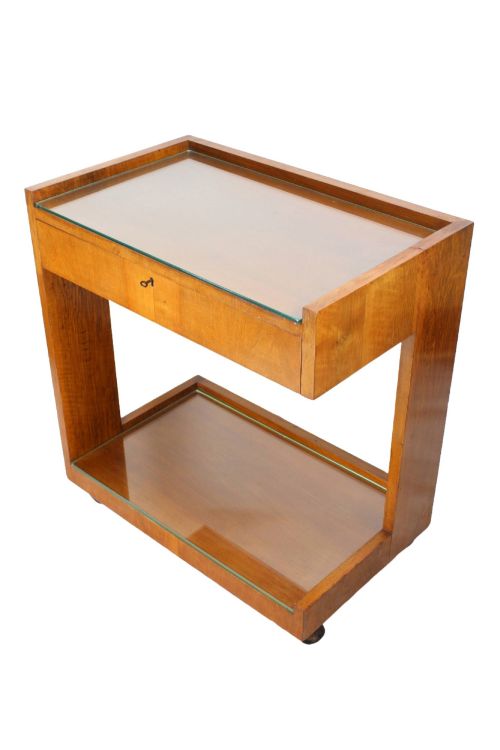
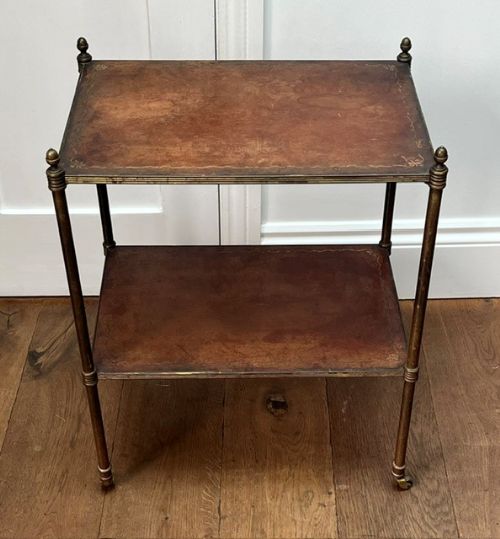
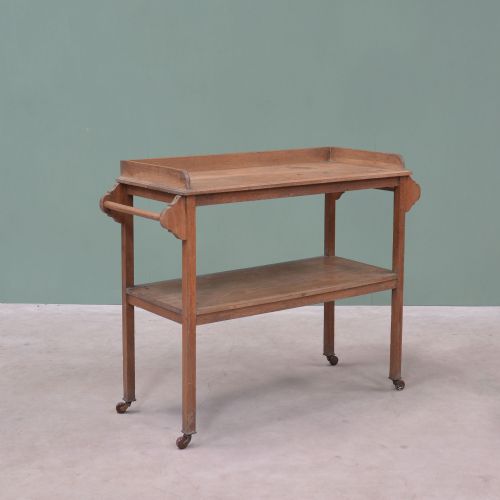
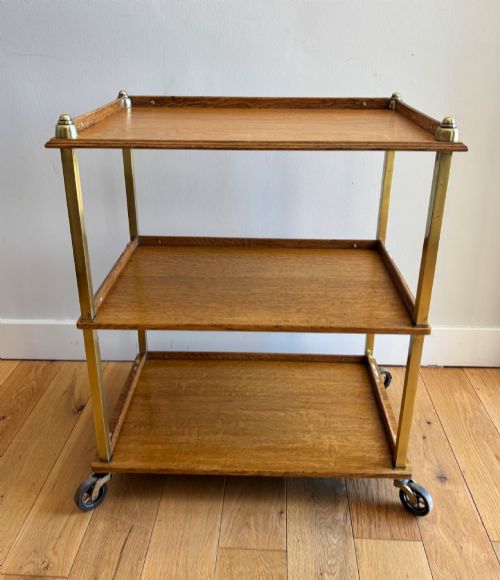
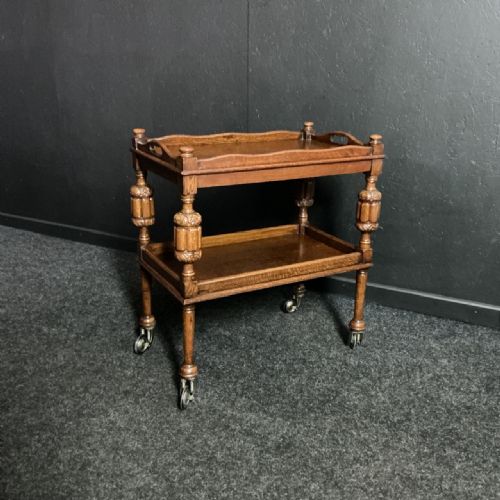
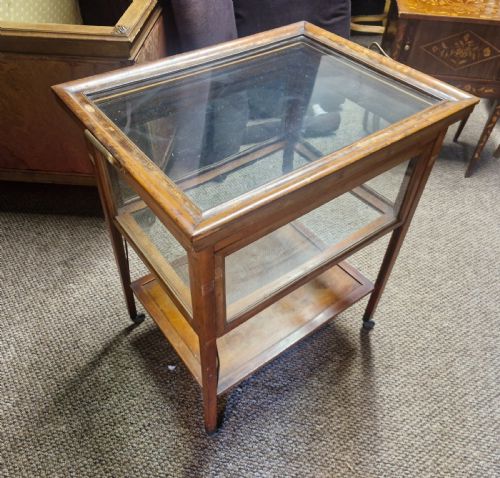
A brown drinks trolley functions primarily as a mobile surface for serving refreshments, appearing on this page in forms such as tea trolleys, bar carts, serving trolleys, and dumb waiters. These pieces span periods from the Victorian era and Edwardian times through to the nineteen-twenties, nineteen-thirties, and nineteen-forties, drawing on styles including Art Deco, Jacobean Revival, and Georgian.
The materials utilised across these examples include mahogany, oak, walnut, burr amboyna, hardwood, and beech, frequently complemented by brass, metal, glass, leather, and cane. Buyers encounter items ranging from simple two-tier wooden carts with removable trays to elaborate metamorphic side tables and streamlined cocktail bars.
Origins vary from English and French workshops to Indian carved pieces, demonstrating how domestic entertaining evolved across the nineteenth and twentieth centuries. The selection on this page captures this utility, providing functional wheel-mounted furniture designed for the home.
How they were made
Construction relies heavily on traditional cabinet timbers such as mahogany, oak, and walnut, often enhanced with veneers like burr amboyna and goat skin to create distinct surface patterns. Artisans shaped these hardwoods into drop sides, tiered shelves, and folding tops supported by sturdy legs and functional wheels.
Metal components, notably brass and lacquered brass, appear in structural frames, gallery rails, and wheel mounts, adding both mechanical durability and visual contrast to the wood. Leather, cane binding, and glass inserts further enrich the construction, offering varied textures across the tiers and trays of each cart.
Some Edwardian models include built-in baize cards tables, ensuring your afternoon tea can instantly escalate into a competitive game of bridge.
What varies in quality
The calibre of a brown drinks trolley rests upon the selection of timber and veneer, where figured grains like burr walnut or amboyna distinguish finer examples from standard utility pieces. Cabinetmaking precision dictates how smoothly drop sides operate, how securely removable trays fit, and how well wheels and castors are integrated into the lower tier.
Stylistic ambition also divides the range, moving from straightforward Edwardian oak tea trolleys to sophisticated Art Deco streamline bar carts featuring specialist materials such as goatskin, tooled leather, or lacquered brass. The integrity of the joinery and the preservation of original surfaces ultimately define the standing of each piece.
Mallett of London·Lusty of Leicester·Aldo Tura·Incorporall
The Brown Drinks Trolley Glossary
- Etagere
- A piece of furniture consisting of a set of open shelves for displaying small objects or serving items. These tiered stands provide multiple levels for bottles and glassware on a trolley.
- Metamorphic
- Furniture designed to transform into another form or serve a secondary function. An example includes a side table that converts into a drinks chest.
- Dumb Waiter
- A tiered serving table used to hold food and drinks without the need for immediate servant attendance. Victorian versions typically feature three heavy mahogany tiers.
- Burr
- A growth on a tree that produces intricate, swirled wood grain patterns when sliced into veneer. Cabinetmakers utilise burr walnut and burr amboyna on statement surfaces.
- Drop side
- A hinged section of a table or trolley top that can be raised to extend the surface area or lowered when space is restricted.
Brown Drinks Trolley: Frequently Asked Questions
What is a brown drinks trolley used for?
These pieces serve primarily as mobile surfaces for holding bottles, glasses, and teaware during social gatherings.
Their tiered design allows users to transport refreshments between rooms with ease while keeping entertaining essentials close at hand.
How do I identify an Art Deco drinks trolley?
Art Deco examples typically date from the nineteen-thirties and feature streamlined silhouettes, geometric forms, and exotic veneers like burr walnut or amboyna.
They often incorporate contrasting materials such as brass, glass, and leather to emphasise modern luxury.
Are the trays on these trolleys removable?
Many tea and drinks trolleys feature lift-off or removable top trays designed for carrying items independently from the wheeled base.
This practical feature allows the upper surface to double as a serving tray during tea or cocktail service.
What is the difference between a tea trolley and a bar cart?
Tea trolleys generally date from the Edwardian period and the nineteen-twenties, often constructed from oak or mahogany with drop sides and wooden wheels for domestic service.
Bar carts tend to lean towards nineteen-thirties Art Deco or mid-century designs, placing greater emphasis on displayed glassware and cocktail preparation through the use of brass, mirror, and veneer.