


Antique Wheeling Table
An antique wheeling table brings mobile utility and period craftsmanship to a room, offering clever tiering or sturdy frames on castors.
Antique Wheeling Table
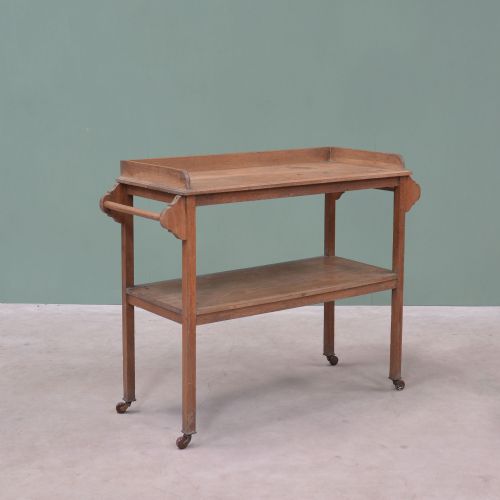
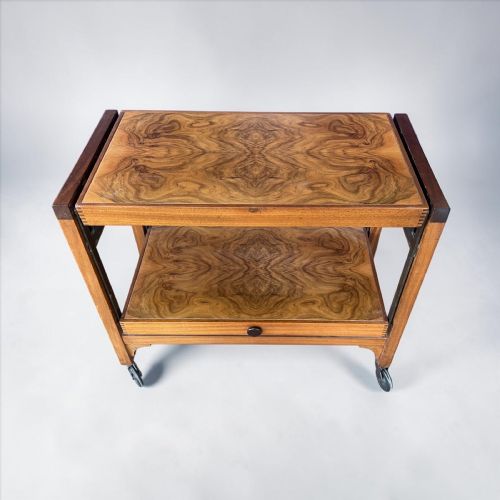
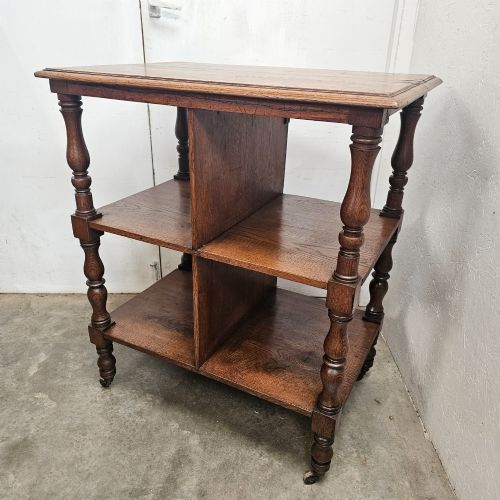
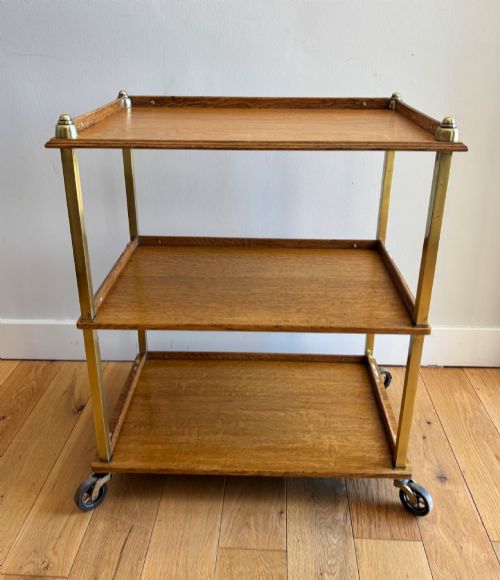
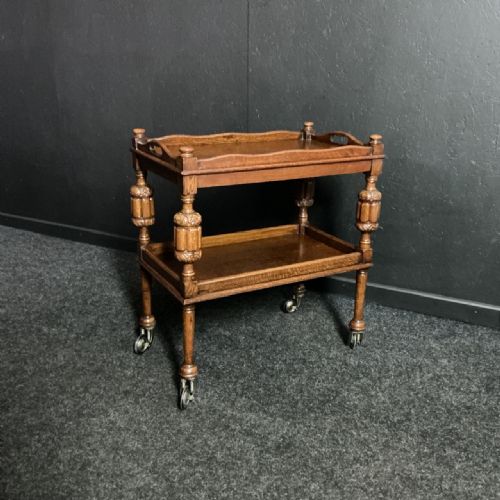
When you search for an antique wheeling table, you encounter practical items designed for mobility and service around the home, primarily manifesting on this page as serving trolleys, tea trolleys, and library carts from the Victorian and Edwardian eras. These pieces usually feature timber construction, tiered surfaces, and dedicated wheels or castors for smooth transportation.
The selection ranges from early twentieth-century oak serving trolleys with folding tops to nineteenth-century library carts and metamorphic designs. Buyers typically seek these items for their functional surface space and period character, merging practical domestic history with decorative utility.
Assessing quality in mobile furniture
Quality rests in the integrity of the moving parts, such as folding mechanisms, drop leaves, and the smooth operation of original castors. Superior examples maintain structural rigidity without looseness in the joints despite the dynamic stress placed on wheeling furniture.
The grade of timber selection and the retention of original hardware, including lift-off trays and surface finishes, distinguish finer pieces from simpler utility items. The crispness of carved details and the harmonious proportion of tiers dictate the overall standard of craftsmanship.
Listings feature oak as the primary timber for wheeling tables, complemented by brass and cast-iron hardware across the Victorian and Edwardian periods.
Carters of London·James Mein of Kelso·Stevens and Williams
The Antique Wheeling Table Glossary
- Castor
- A small wheel or set of wheels mounted on a swivel, attached to the legs of a piece of furniture to facilitate easy movement across floors.
- Drop leaf
- A hinged flap of wood attached to the main tabletop that can be raised and supported to extend the usable surface area.
- Etagere
- A piece of furniture consisting of a set of open shelves for displaying small objects or serving items, often adapted with wheels.
- Metamorphic
- Describing furniture designed to transform into different forms or serve multiple functions through clever mechanical adjustments.
- Lift-off tray
- A removable upper surface designed to function independently as a serving tray while resting securely on the main trolley frame.
Antique Wheeling Table: Frequently Asked Questions
What is an antique wheeling table used for?
These pieces served primarily for transporting food, tea, or books across domestic spaces, functioning as mobile hospitality stations in nineteenth and twentieth-century homes.
Today, buyers use them as flexible side tables, drinks trolleys, or display surfaces that can be easily repositioned within a room.
How do I date an oak serving trolley?
Dating relies on examining the timber grain, construction methods, and hardware styles, with Edwardian examples often displaying lighter framing and simpler turned supports compared to heavier Victorian models.
Folding mechanisms and castors also provide chronological clues, as industrial patents and manufacturing techniques evolved rapidly between the nineteenth and early twentieth centuries.
Are the wheels on these tables original?
Original castors typically show appropriate wear, correct metallurgical composition such as brass or cast iron, and secure mountings that match the age of the wooden frame.
Replacement wheels occur frequently due to heavy domestic use, so inspecting the fixing points helps determine whether the castors have been updated over time.
How do I care for an antique wooden trolley?
Maintenance requires regular dusting with a soft cloth and occasional application of appropriate wax to nourish the timber surfaces and protect the finish from moisture.
Keeping castors clean and lightly lubricated ensures smooth movement while preventing undue strain on the structural joints during relocation.