
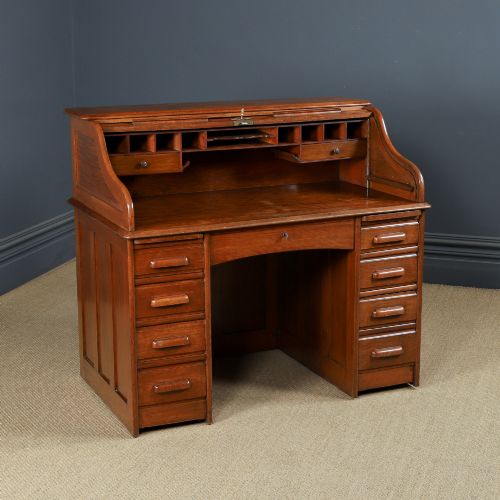
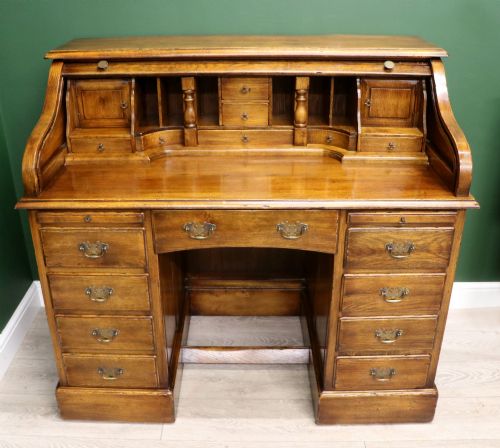
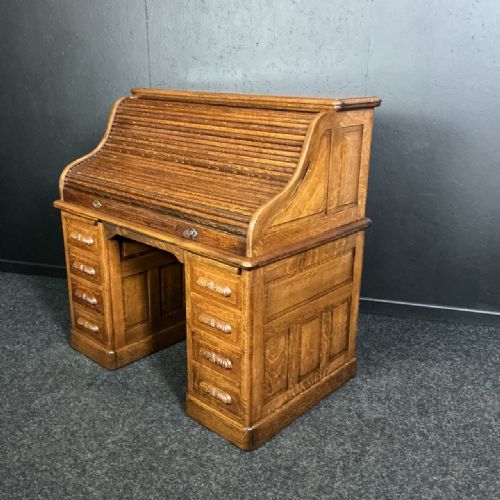


Oak Roll Top Desk
An oak roll top desk is a practical working station with a flexible slatted cover designed to secure papers.
Oak Roll Top Desk
An oak roll top desk is a substantial workspace fitted with a slatted tambour shutter that draws down to conceal the writing surface and pigeonholes. Buyers search for this phrase to find functional period furniture that brings traditional organisation into a home study or office.
The pieces seen most frequently on this page date from the Edwardian period and the Victorian era, alongside examples from the 1920s and 1930s. These desks typically take the form of large pedestal units, twin pedestal configurations, or freestanding designs built to manage correspondence and stationery.
Alongside standard writing desks, the record includes related variants such as stationery cabinets, cylinder top desks, and bureau bookcases. These forms share the characteristic slatted timber shutter or curved cylinder front paired with internal compartment layouts.
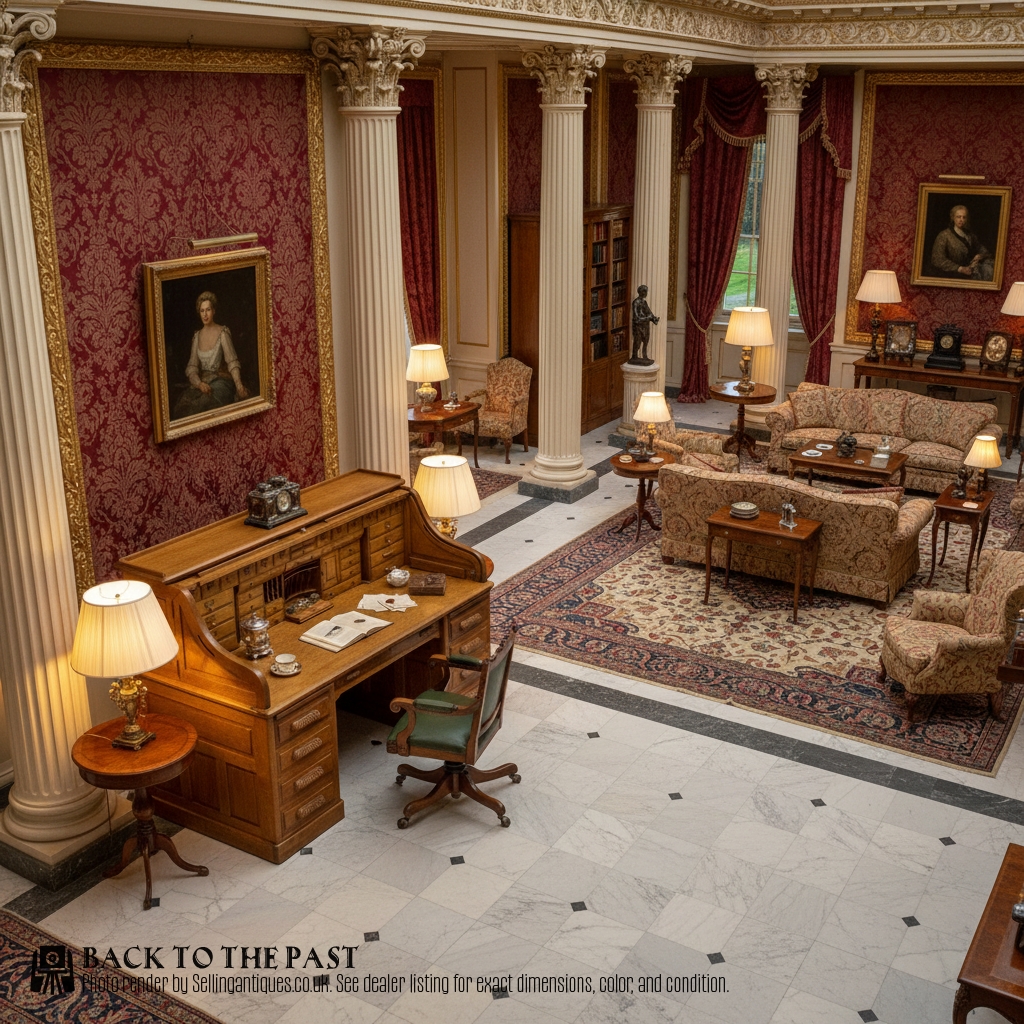
What separates examples
Quality in these desks is determined by the selection of timber and the precision of the tambour mechanism. Superior examples utilise solid golden oak with well-matched grain patterns across the panels and drawers.
The smoothness of the sliding shutter tracks and the complexity of the interior fittings distinguish finer workshops from standard production pieces. Well-made desks operate the tambour action without sticking and incorporate detailed internal stationery drawers and adjustable date mechanisms.
Oak Roll Top Desk Retail Price Guide 2026
Typical asking prices for oak roll top desk among the pieces listed under this phrase on Sellingantiques today, from the lower quarter to the upper quarter. They describe what is for sale here now, not the wider market.
The listings on this site span multiple decades from the Victorian era through the 1930s, constructed predominantly in oak with leather and brass details.
Maples of London and Paris·Angus, London·Lebus·Arvon
The Oak Roll Top Desk Glossary
- Tambour
- A flexible shutter made from narrow strips of wood glued to a fabric backing. It slides along a grooved track to cover the desk interior.
- Pedestal desk
- A heavy freestanding desk supported by two banks of drawers rather than simple legs. The writing surface rests across these storage pedestals.
- Cylinder top
- A smooth, solid curved wooden cover that rolls back into the desk body, differing from the multi-slatted tambour construction.
- Stationery cabinet
- A smaller desktop unit or standalone piece containing pigeonholes and small drawers for paper and correspondence.
- Bureau bookcase
- A dual-purpose piece combining a lower writing desk section with upper shelving enclosed by glazed doors.
Oak Roll Top Desk: Frequently Asked Questions
How does the tambour top operate?
The tambour shutter runs on internal grooved tracks cut into the sides of the desk frame. The individual wooden slats move flexibly around the curve when pushed upward or pulled down.
Properly maintained tracks allow the entire slatted curtain to glide smoothly into the recess behind the pigeonholes without catching.
Are these desks heavy to move?
These pieces are built solidly from oak and incorporate internal banks of drawers, making them exceptionally heavy furniture items. Many examples separate into multiple modular sections, including two pedestal bases and a top module, to ease transport.
Freestanding versions require careful lifting and often benefit from being dismantled before relocation between rooms.
How do I care for the leather writing surface?
The inset leather panel on the writing surface requires gentle cleaning with a slightly damp cloth rather than harsh chemical detergents. Applying a specialised leather balm periodically prevents the material from drying and cracking.
Avoid placing sharp metal objects directly on the leather to prevent permanent surface scoring.
What is the difference between an Edwardian and a Victorian desk?
Victorian examples generally feature darker timber tones and heavier, more imposing proportions with deep panelled construction. Edwardian pieces often showcase lighter golden oak finishes and slightly more refined surface detailing.
Both periods utilise similar tambour mechanisms, though Edwardian designs frequently include specialised compartments for contemporary office equipment such as early typewriters.