





Oak Religious Sculpture
Oak religious sculpture spans centuries of devotional carving, offering collectors tangible pieces of European ecclesiastical history.
Oak Religious Sculpture
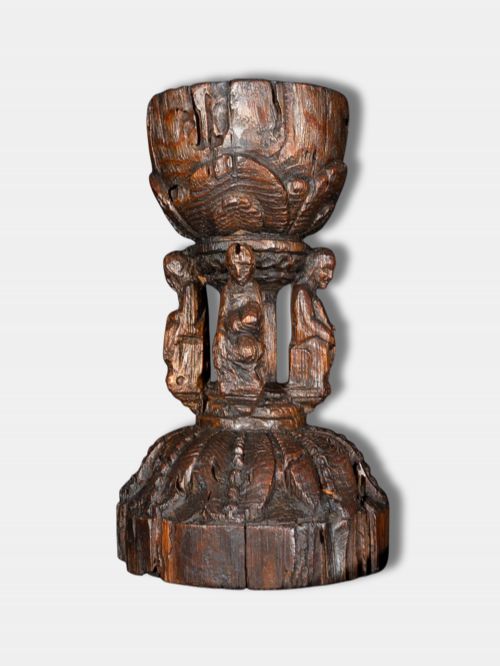
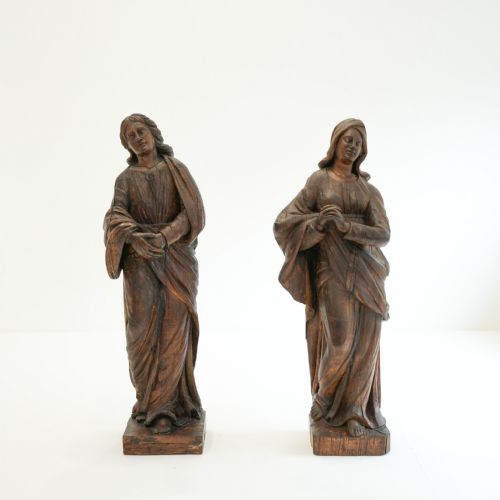
When seeking an oak religious sculpture, collectors encounter figures of saints, panels, and altarpiece fragments originating from workshops across Europe. The selection spans pre-sixteenth century Gothic pieces through to nineteenth-century interpretations.
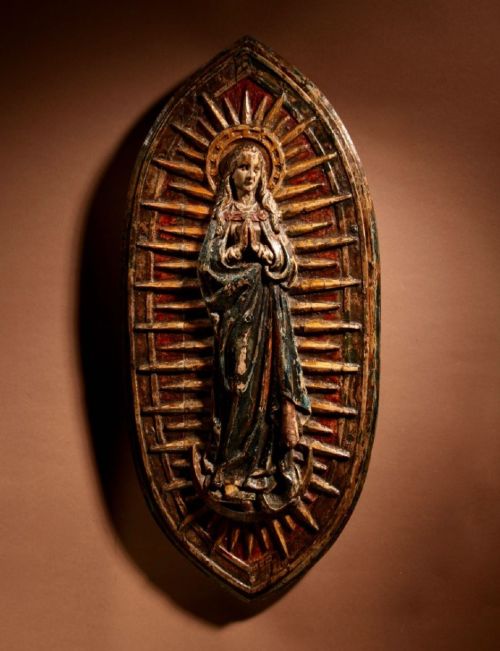
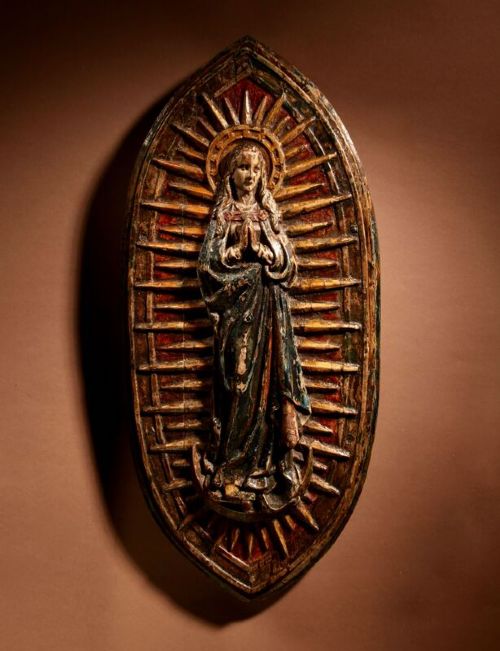
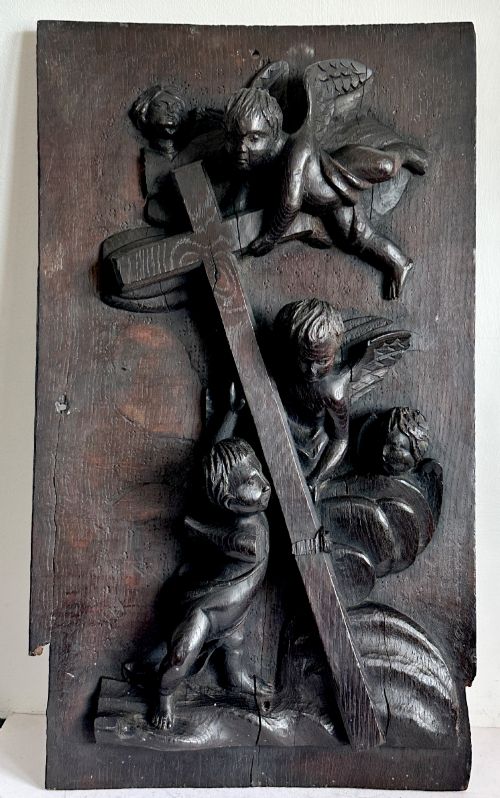
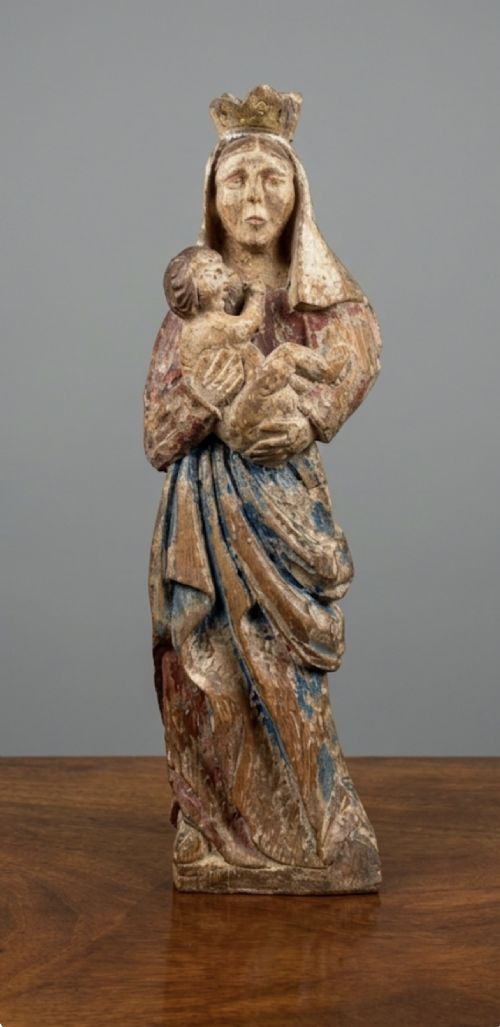
Forms vary widely from freestanding statues of the Virgin and Child to wall-mounted reliefs depicting biblical narratives like the Passion. Pieces emerge from distinct regional traditions including Flemish, German, and Italian centres.
Early examples embody medieval piety, whilst later periods introduce baroque dynamism and Gothic revival aesthetics. These wooden carvings frequently served devotional functions in churches, chapels, and private domestic shrines.
Materials and carving techniques
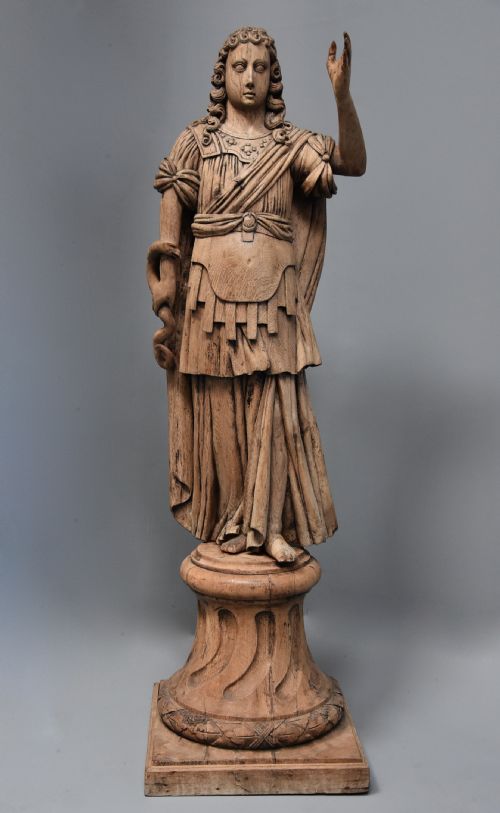
Carvers utilised dense regional hardwoods, primarily oak, allowing for intricate detail work in drapery and facial expressions. Timber blocks were selected and seasoned to minimise splitting before chisels and gouges shaped the forms.
Many surfaces received preparation with gesso layers to smooth the wood grain prior to the application of polychrome paint, gold leaf, or parcel gilt. Pigments and metallic leaf brought vibrancy to altarpieces and devotional figures, though much surface colour has worn away over centuries.
Look closely at sixteenth-century carvings of the Virgin, where sculptors occasionally tucked hidden snakes beneath sandalled feet.
Factors determining quality
Quality rests in the anatomical proportion, the expressiveness of the carving, and the depth of relief achieved by the artisan. Master carvers imparted distinct emotion and realistic drapery folds that elevate certain statues far above provincial output.
The survival of original surface treatments, such as polychrome paint and gilding, alters the desirability of a piece. Depth of sculptural execution, whether in high relief panels or freestanding figures, distinguishes exceptional workshop production from simpler domestic items.
Franz Keller
The Oak Religious Sculpture Glossary
- Polychrome paint
- Decoration applied to sculpture using multiple colours. This traditional finish brought realism to carved saints and devotional figures.
- Gesso
- A plaster mixture applied to wood surfaces as a base for gilding and paint. It provided a smooth ground for intricate ornamentation.
- Corpus Christi
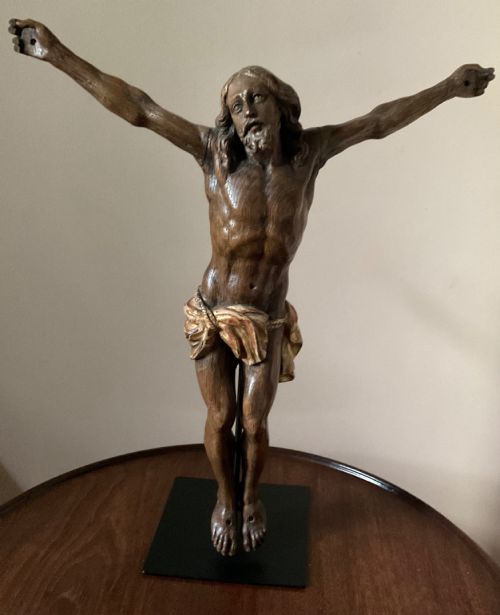
- A representation of the body of Jesus Christ on the cross. These figures form the central focus of historic crucifixes.
- Parcel gilt
- The practice of gilding specific portions of an object rather than the entire surface. This technique highlighted details like halos and vestments.
- Relief
- Sculpture where figures project from a flat background surface. High relief indicates forms standing out strongly from the backing panel.
Oak Religious Sculpture: Frequently Asked Questions
How old are these oak sculptures?
The pieces span a wide chronological range, with significant examples originating from the pre-sixteenth century Gothic era, the sixteenth-century Renaissance, and later seventeenth and eighteenth-century periods. Nineteenth-century revival pieces also appear frequently.
Establishing exact age relies on stylistic analysis of the carving technique, tool marks left by the artisan, and the natural ageing patterns of the timber over hundreds of years.
Where were these sculptures originally displayed?
Historic religious carvings were primarily housed within churches, abbeys, and cathedrals as components of large altarpieces, rood screens, or standalone devotional shrines. Some smaller panels and figures originated for private domestic prayer.
As ecclesiastical interiors changed over the centuries, many pieces entered private collections before eventually reaching the antiques market.
How do I care for antique wood carvings?
Maintain stable indoor humidity and temperature levels to prevent the dry oak from splitting or warping over time. Avoid placing wooden sculptures in direct sunlight or near active heat sources.
Dust the surface gently with a soft, dry brush and refrain from applying modern polishes, waxes, or cleaning liquids to historic finishes and exposed timber.
What is an altarpiece panel?
Altarpiece panels formed sections of larger decorative screens positioned behind church altars, often depicting narrative scenes from the lives of saints or the Passion of Christ. These could be carved in high relief or painted.
Individual panels found today were often detached from their original architectural structures when altars were dismantled or remodelled during historical periods.