


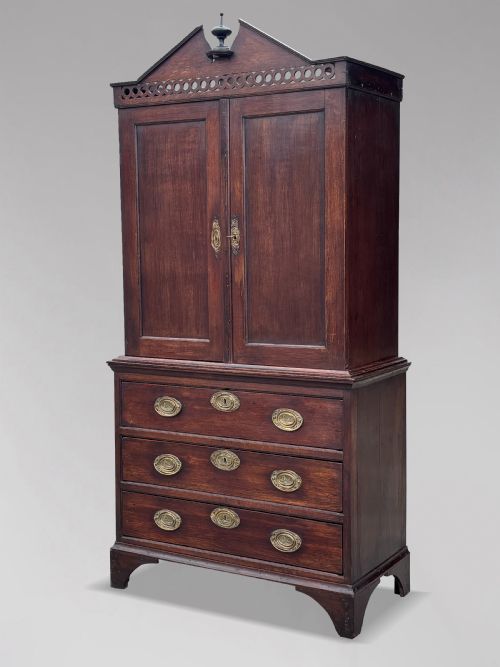


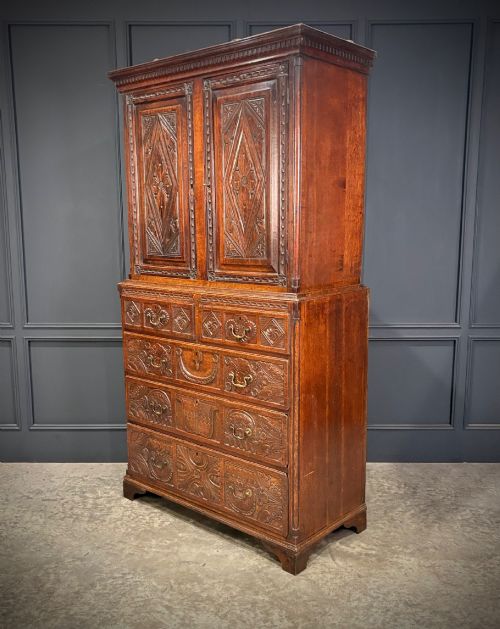


Oak Press on Chest
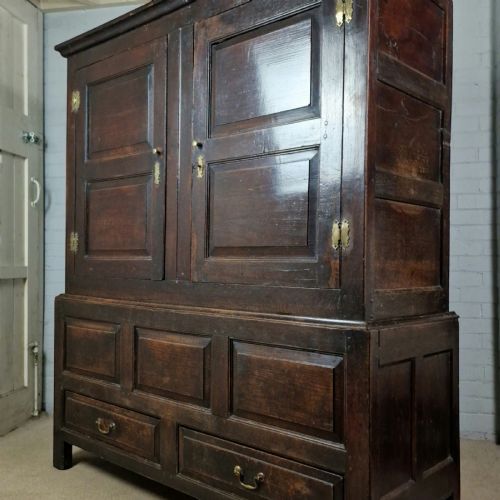
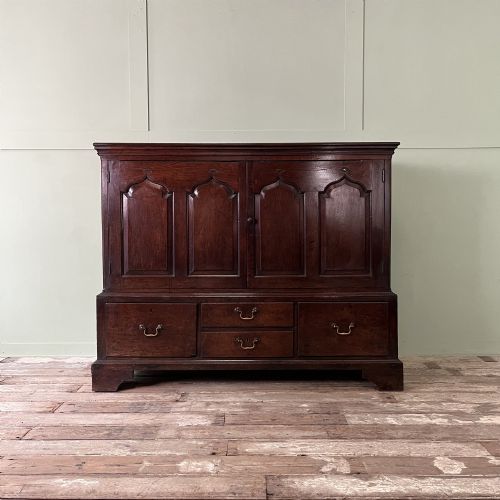
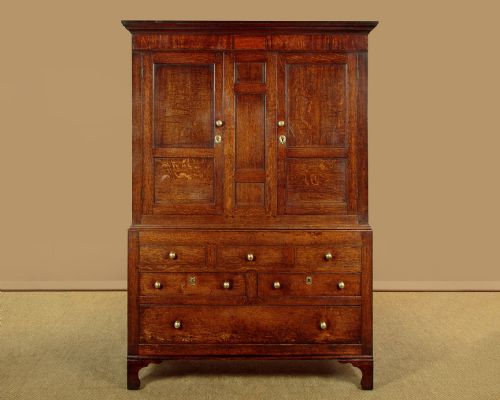
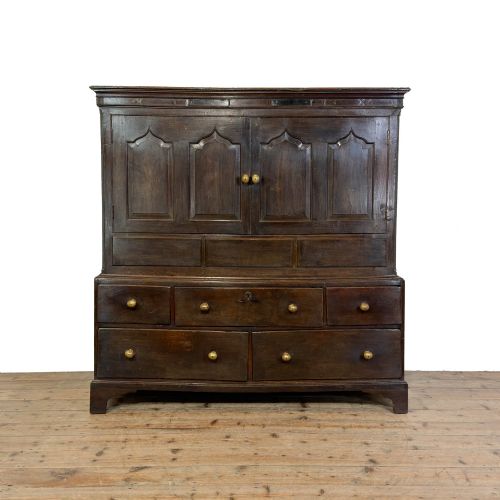
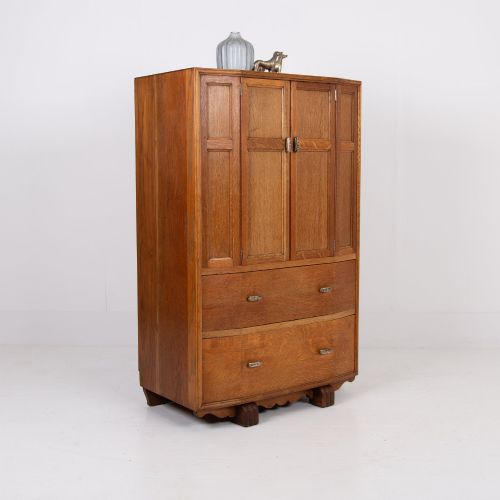
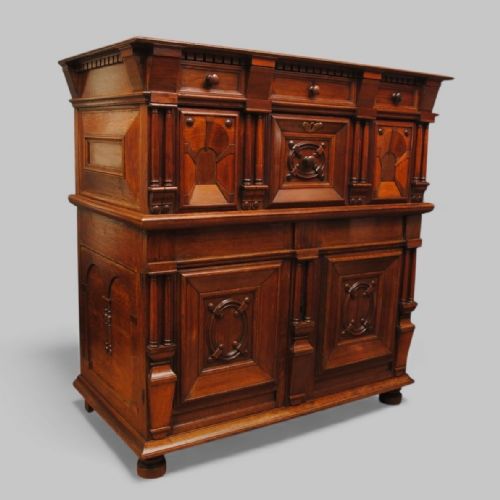
An oak press on chest combines storage for garments with sturdy timber construction, offering a commanding presence for period interiors.
Oak Press on Chest
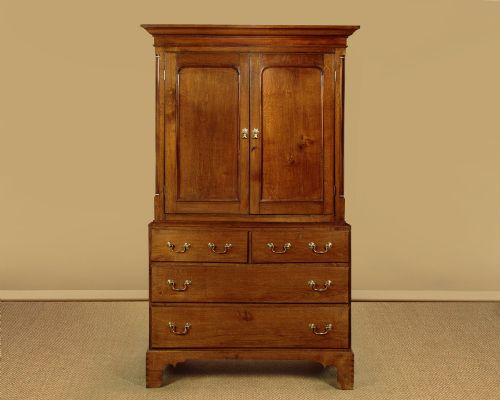
An oak press on chest combines an upper cupboard for hanging or shelving linens with a lower bank of drawers, forming a substantial storage piece for the home. The form spans several centuries, drawing heavily on Georgian, seventeenth century, and nineteenth century vernacular traditions from Wales and regional England.
Buyers encounter regional variations ranging from provincial Welsh country pieces to formal George III examples featuring cross-banded veneers and mahogany details. The lower section typically functions as a chest of drawers, while the upper stage houses sliding trays or press mechanics designed to keep folded textiles flat.
Materials and construction methods
Cabinet makers relied primarily on solid oak, frequently augmented with secondary timbers such as walnut, fruitwood, and mahogany for contrast and inlay work. Iron and brass hardware, including hinges, escutcheons, and screw mechanisms, provided functional strength to the heavy two-stage framework.
Traditional joinery involved pegged mortise and tenon frames alongside hand-cut dovetails for the drawer construction. Carving, panel moulding, and occasional marquetry inlay decorated the exterior surfaces of seventeenth and eighteenth century examples.
Early cupboard makers occasionally hid tiny carved initials inside the linen press trays, leaving secret signatures for future finders to uncover.
Quality factors in traditional press chests
The degree of hand carving and the selection of timber figure heavily distinguish finer regional workshops from standard utility furniture. Well-matched grain patination and intact original brass or iron hardware elevate the standing of a piece.
Structural integrity depends on the retention of original upper trays, functioning internal screw mechanisms where present, and minimal timber shrinkage in the fielded panels.
BULSTRODE London
The Oak Press on Chest Glossary
- Press cupboard
- A large storage furniture item comprising an upper cabinet section and a lower base, traditionally used for linen. It often incorporates internal sliding shelves or trays.
- Court cupboard
- An early seventeenth-century style of oak sideboard or display cupboard featuring recessed upper tiers and turned supports. These items demonstrate heavy regional carving.
- Cross-banding
- A decorative border technique where veneer strips are laid perpendicular to the main grain of the panel. This method adds subtle contrast to Georgian casework.
- Livery cupboard
- A traditional English storage cabinet used originally for food or garments. These forms evolved into the larger linen presses found in country houses.
- Fielded panel
- A wooden panel with bevelled edges designed to fit within a grooved frame. This construction allows the timber to expand and contract with humidity changes.
Oak Press on Chest: Frequently Asked Questions
How do I date an antique oak press?
Dating relies on examining construction techniques, hardware, and timber characteristics. Seventeenth-century examples typically display heavy hand-carved decoration, peg-joined frames, and panelled doors.
Georgian and later versions introduce cleaner lines, mahogany cross-banding, and dovetail joinery within the drawer construction. The presence of secondary woods like fruitwood or walnut also helps narrow the period of origin.
Were these pieces used for linen?
Yes, these cabinets were primarily built to store household textiles and table linens before modern wardrobes became common. The internal sliding trays kept folded cloths flat and neatly organised.
Lower drawers accommodated bulkier items, while the upper press protected delicate fabrics from dust. Some variants included specialised screw mechanisms to press garments flat.
How do I care for antique oak furniture?
Maintain stable room humidity to prevent the solid oak panels and secondary timbers from splitting or warping. Avoid placing the furniture in direct sunlight or near active heat sources.
Apply a traditional beeswax polish occasionally to nourish the timber and preserve the natural grain patination. Dust regularly with a dry, soft cloth rather than using modern aerosol sprays.