


Oak Plate Shelf
An oak plate shelf brings utilitarian timber warmth to kitchen walls, holding ceramics securely in full view.
Oak Plate Shelf
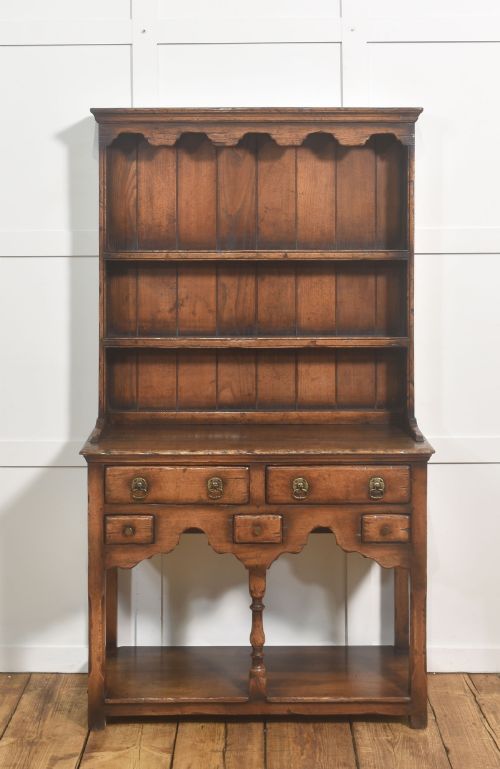
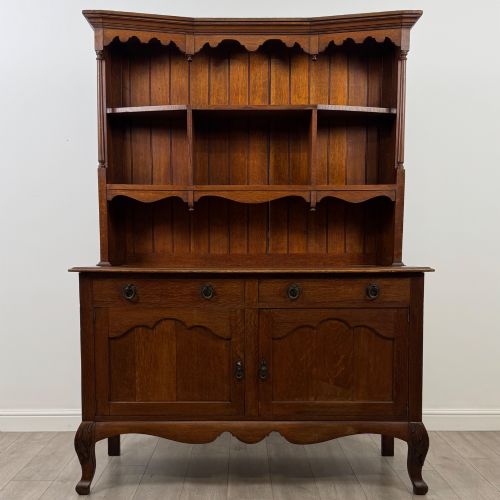
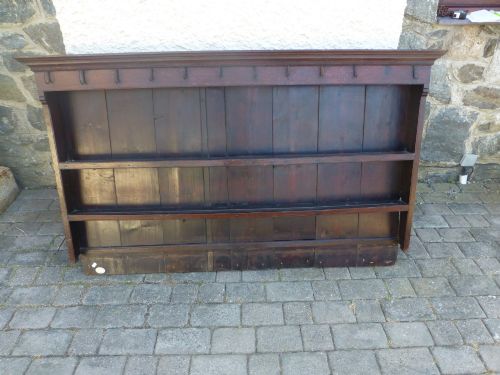
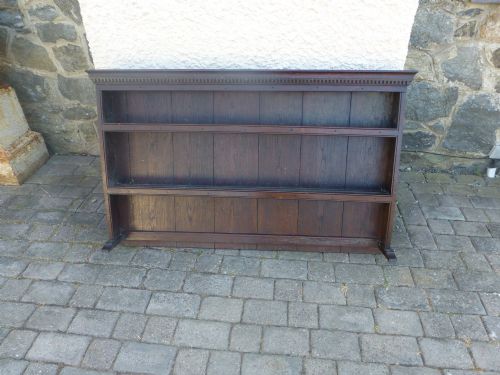
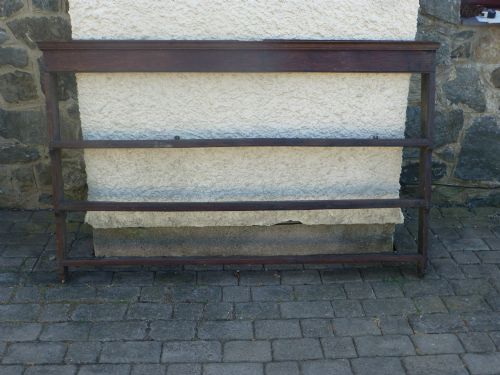
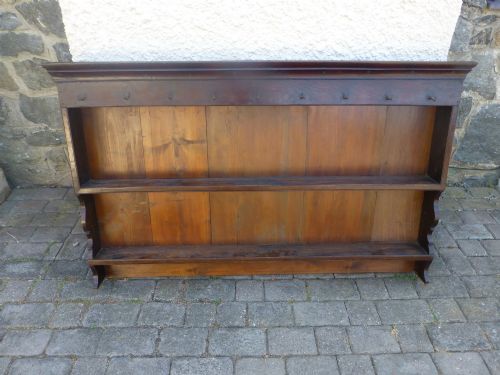
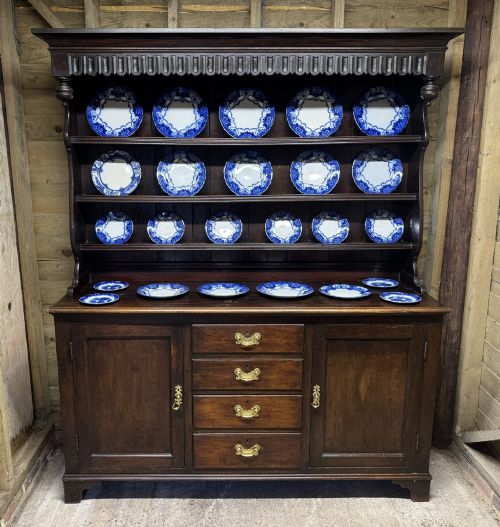
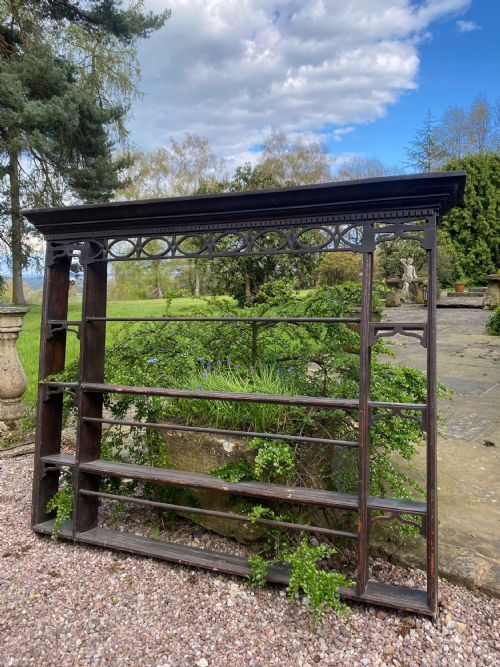
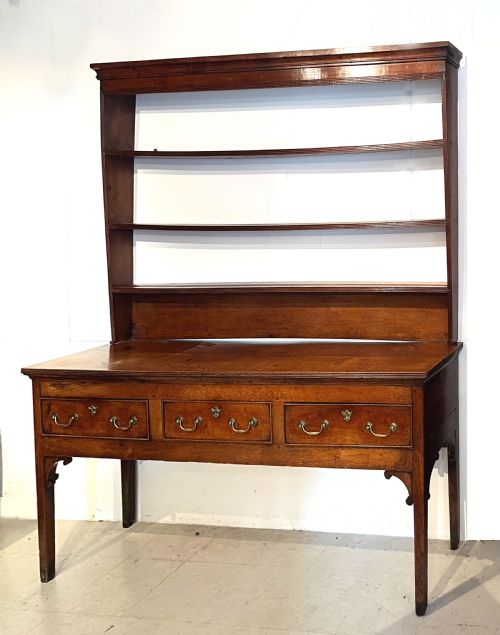
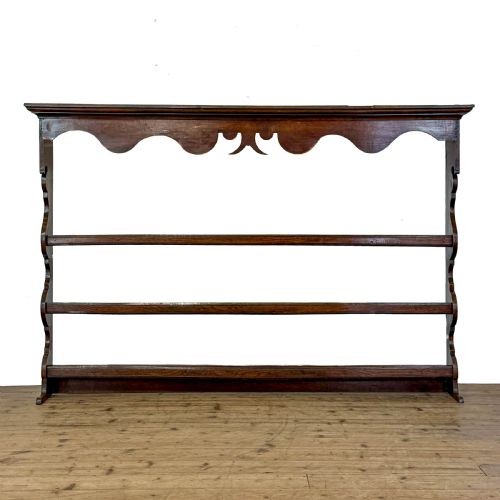
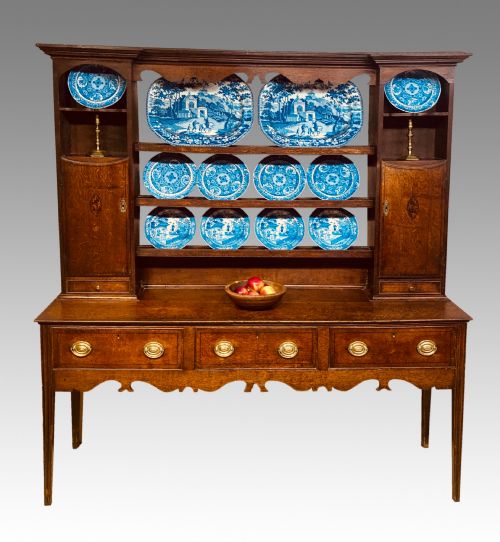
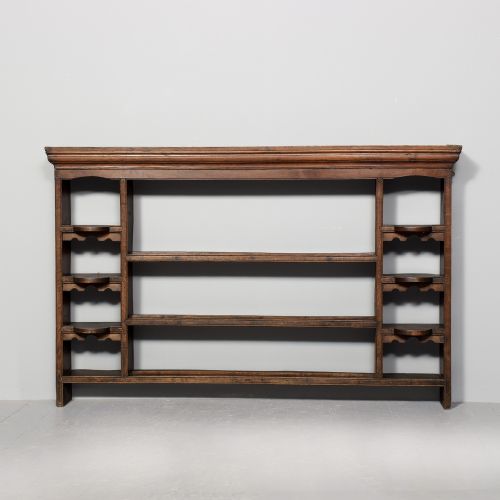
An oak plate shelf provides traditional open storage for ceramics, appearing either as a standalone wall hanging rack or as the upper tier attached to a larger Welsh dresser.
The pieces on this page span several eras, with 18th century and Georgian examples sitting alongside 19th century and Edwardian country furniture.
Most items combine solid timber construction with grooved ledges designed to keep plates upright and visible in domestic interiors.
Materials and construction methods
Makers relied principally on solid oak, occasionally combining secondary timbers such as pine or mahogany within the internal structure or backing boards.
Carpentry techniques involve traditional pegged joints, hand-planed boards, and applied mouldings or carved details characteristic of regional English and Welsh workshops.
Some provincial shelves retain historic grease stains from centuries of country baking beneath the plate grooves.
Judging quality and proportion
Quality rests upon the proportion of the timber, the depth of the frieze, and the survival of original hanging brackets or backboards.
A superior piece displays harmonious spacing between the tiers and patinated oak surfaces untouched by excessive modern cleaning.
The Oak Plate Shelf Glossary
- Delft rack
- An open wall-mounted shelf designed specifically for displaying ceramic plates and platters. These frames often include shallow ledges and retaining rails.
- Potboard
- The lower horizontal plank base of a dresser situated close to the floor. Historically, this space held heavy pots and pans.
- Welsh dresser
- A large two-part kitchen unit comprising a base cabinet and an upper plate rack. Examples vary from rustic country pieces to formal Georgian designs.
- Cornice
- The decorative moulded projection running along the uppermost edge of the furniture. This architectural element crowns the top of wall shelves and dressers.
Oak Plate Shelf: Frequently Asked Questions
How do I hang a heavy oak plate shelf?
Secure the frame directly into wall studs using heavy-duty brackets screwed through the internal back rails. Distribute the weight evenly across multiple fixing points to support the load of heavy ceramics safely.
Avoid relying solely on plasterboard anchors, as old oak furniture carries substantial weight even before plates are added.
Are these shelves suitable for modern kitchens?
The rustic timber tones and functional open design integrate easily into contemporary cooking spaces. They offer practical display storage for everyday tableware while introducing historical character.
Ensure the wall space can accommodate the depth of the rack and keep timber away from direct moisture sources.
How can I tell an 18th century rack from a later copy?
Examine the timber boards for hand-sawn tool marks, peg construction, and natural oxidation built up over centuries. Older pieces show irregular grain patterns and timber shrinkage consistent with age.
Later revival items often feature uniform machine planing and modern fixings that lack the organic wear of period rural joinery.
What is the difference between a wall rack and a dresser top?
A wall rack is built as a complete hanging unit designed to be fixed directly to a wall. A dresser top forms the upper half of a two-part Welsh dresser and normally lacks finished lower mounting brackets.
Many dresser tops were separated from their base units over the years and adapted to hang independently on walls.