

Oak Occasional Side Table
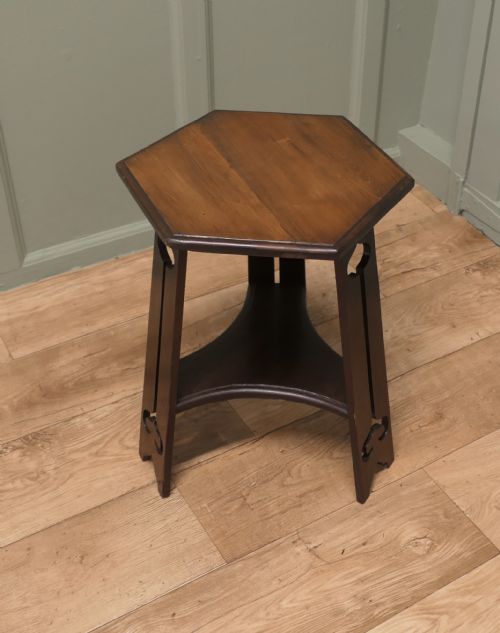
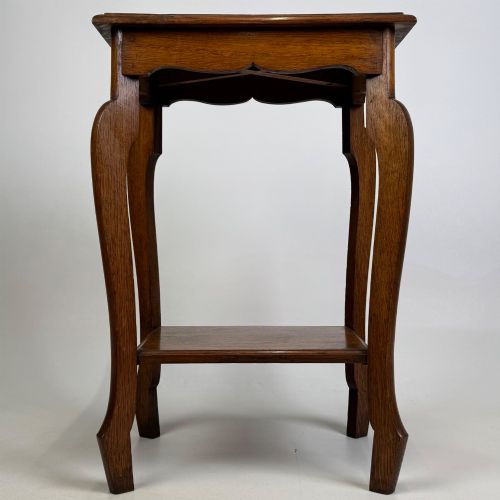
An oak occasional side table brings sturdy utility and rich grain to a room, ranging from country cricket pieces to crisp Arts and Crafts designs.
Oak Occasional Side Table
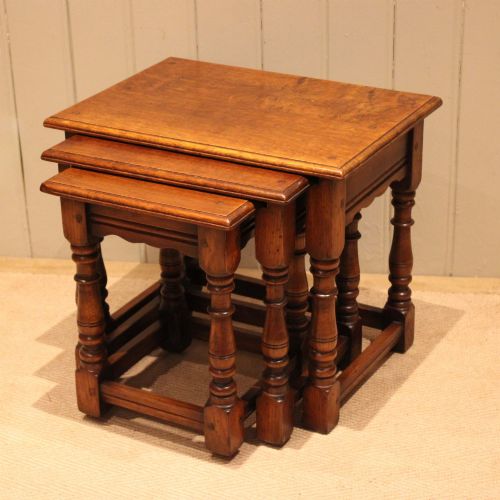
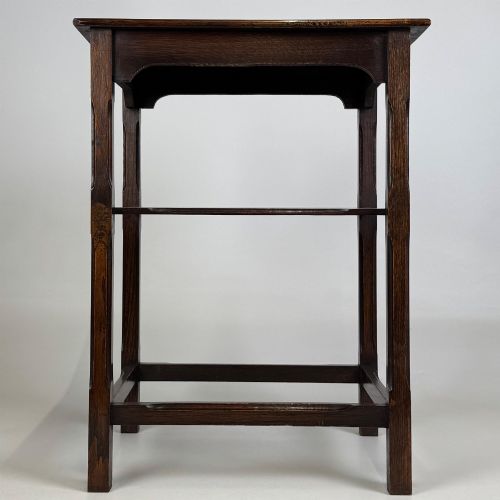
An oak occasional side table serves as a versatile piece of furniture designed for flexible placement throughout a home. These tables span several centuries and styles, appearing in forms such as tripod wine tables, lowboys, gatelegs, and nests of tables.
The selection ranges from 17th-century vernacular country pieces to early 20th-century Edwardian and Arts and Crafts examples. Buyers will frequently encounter compact occasional designs shaped by the functional demands of Georgian, Victorian, and later periods.
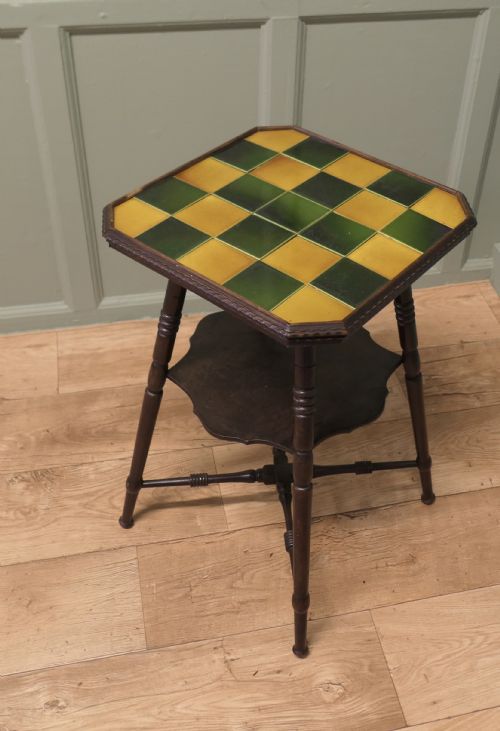
Makers often utilised solid oak alongside secondary timbers like elm and ash, incorporating practical elements such as drawers, drop leaves, and tiled tops. Whether acting as a plant stand or a lamp table, each piece demonstrates the enduring utility of domestic hardwood furniture.
How They Were Made
Traditional construction relies heavily on solid oak, selected for its dense grain and durability, frequently joined using time-tested methods like mortise and tenon. Secondary timbers such as elm, ash, and miscellaneous specimen woods appear in structural or secondary components.
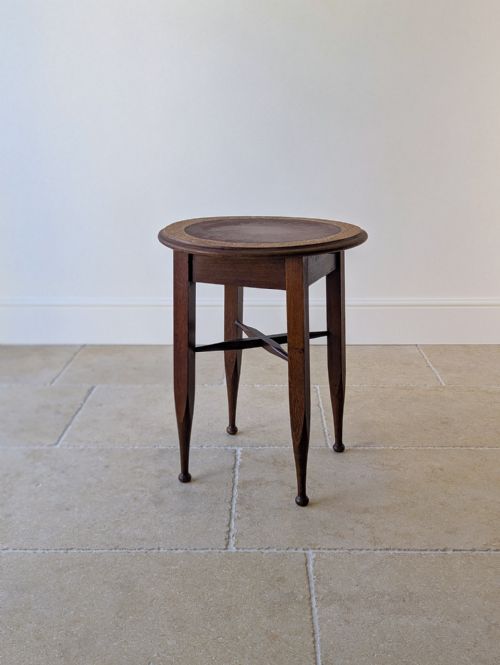
Surface decoration and secondary materials vary by period, including brass handles, ceramic inserts, wood inlay, and embossed leather. Finish techniques range from natural wax and honey tones to limed effects and dark Jacobean staining.
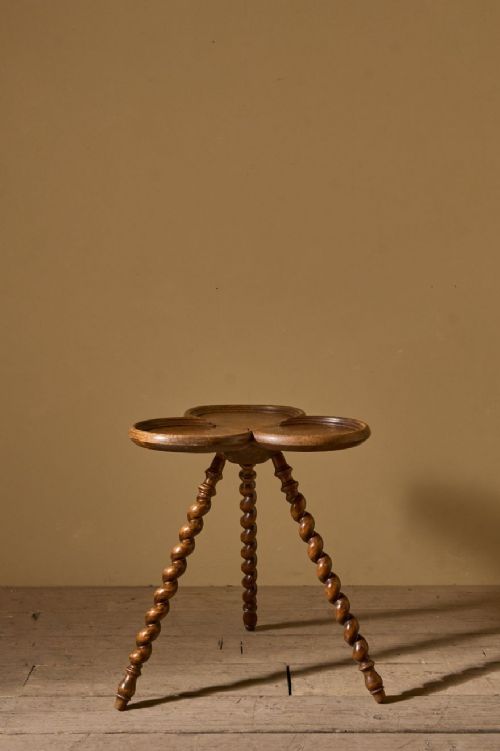
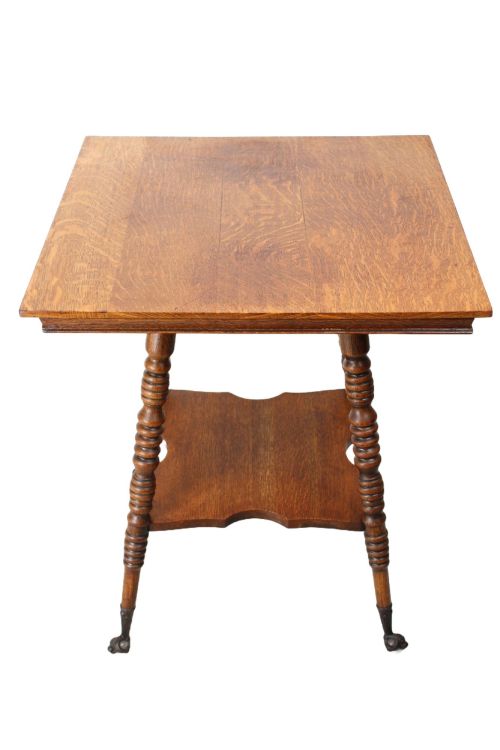
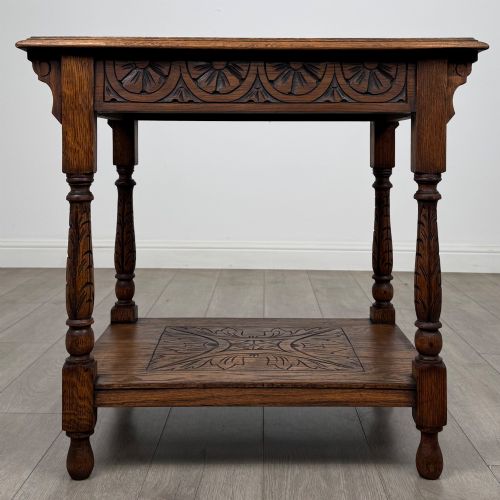
Turned elements, including barley twist legs and tripod pedestals, require precise lathe work, while carved details feature hand-chiselled motifs such as leaves and acorns.
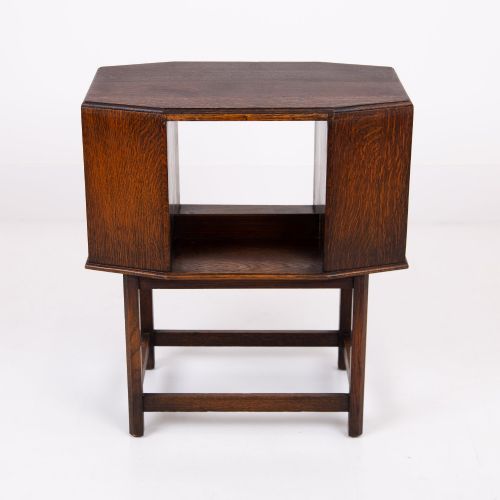
Some tables double as magazine racks or hide a lift-top compartment, proving our ancestors loved multitasking furniture just as much as we do.
What Varies in Quality
Quality rests in the integrity of the timber selection and the honesty of the construction, distinguishing vernacular country pieces from refined urban workshop commissions. Solid oak framing with minimal modern intervention holds greater distinction than heavily altered examples.
The sophistication of decorative details - such as crisp hand-carving, fine chequered inlay, or integrated ceramic tiles - separates standard production from exceptional vernacular or movement-led output. Proportion and structural balance determine whether a small table sits harmoniously or appears ungainly.
Shapland & Petter·Liberty & Co.·William Birch
The Oak Occasional Side Table Glossary
- Lowboy
- A small provincial dressing or side table featuring one or more drawers beneath a rectangular top, typically standing on slender legs.
- Cricket table
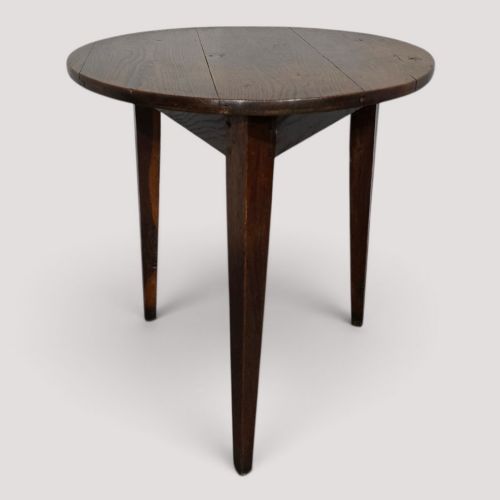
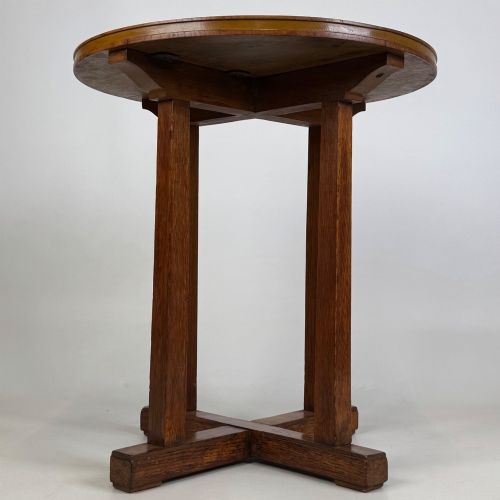
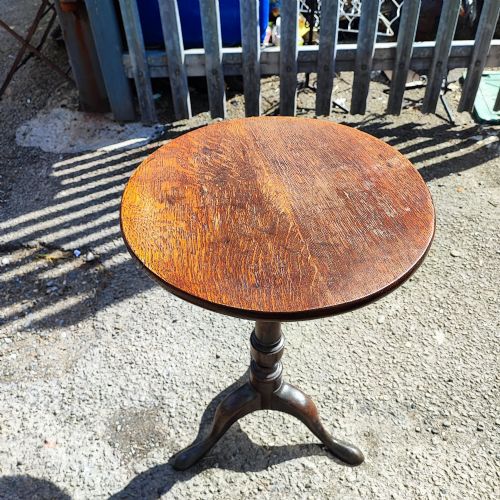
- A small, lightweight circular table supported by three splayed legs, traditionally designed for stability on uneven floors.
- Gateleg table
- A drop-leaf table where the leaves are supported by hinged legs that swing out like a gate.
- Tilt top
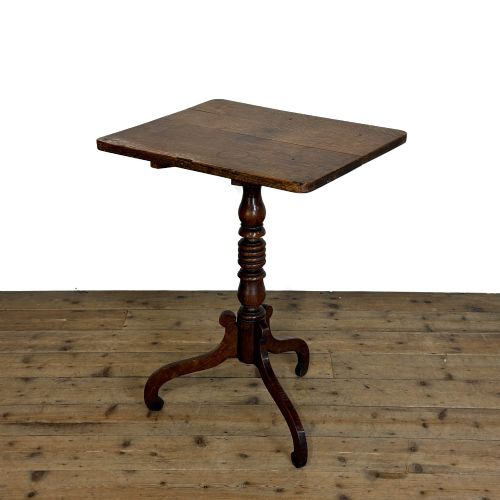
- A tabletop mounted on a central pedestal mechanism that allows the surface to pivot vertically when not in use.
- Joint stool
- A sturdy wooden stool constructed with mortise and tenon joints, frequently utilised as a low side or occasional table.
Oak Occasional Side Table: Frequently Asked Questions
What is a lowboy table used for?
A lowboy functions as a compact side or hall table, traditionally equipped with drawers for small documents or household items. In modern interiors, they serve well as hallway surfaces or writing desks.
Their shallow depth allows them to fit narrow spaces where standard furniture overwhelms the room.
Are tilt top tables stable?
Tilt top tables utilise a catch mechanism and a central pedestal base, which makes them convenient to store against a wall when folded. While they wobble slightly if the pivot mechanism wears, well-made examples remain sturdy during daily use.
They were originally designed as wine tables or candle stands.
What distinguishes Georgian oak from Victorian oak?
Georgian oak pieces tend to display simpler provincial lines, often showing the warm patina of country use and construction methods from the eighteenth century. Victorian examples frequently incorporate darker finishes, heavier turned elements like barley twists, and more elaborate carved decoration.
Examining the grain, hardware, and structural joints helps clarify the period of manufacture.