

Oak Modular Bookcase
An oak modular bookcase offers adjustable tiers that protect volumes behind glazed, lifting doors, combining practical storage with classic period craftsmanship.
Oak Modular Bookcase
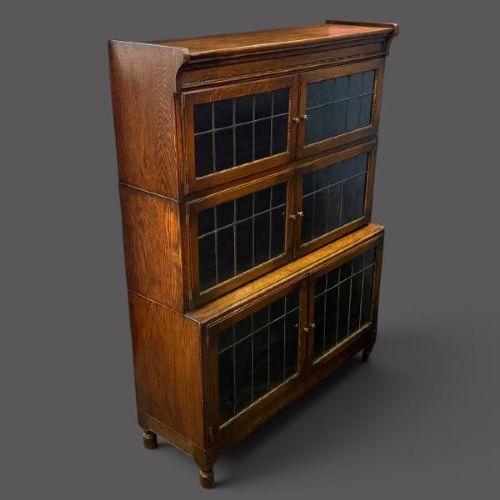
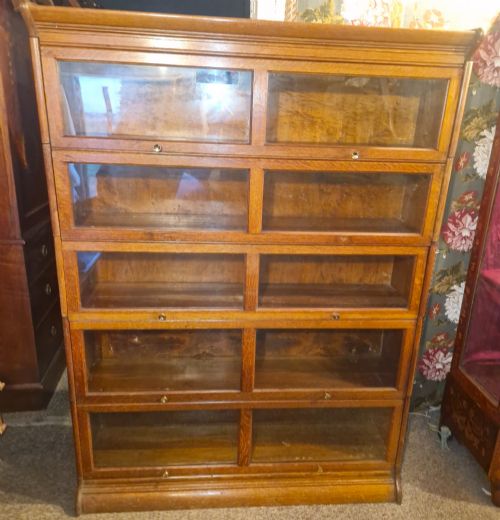
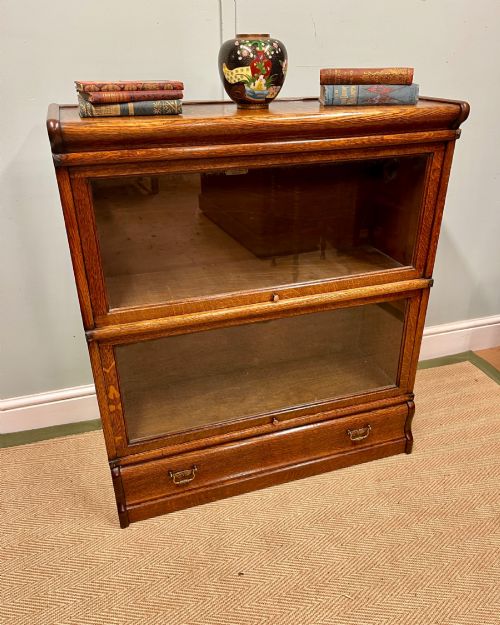
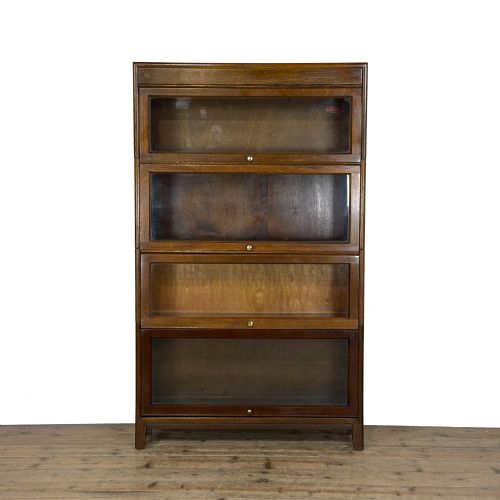
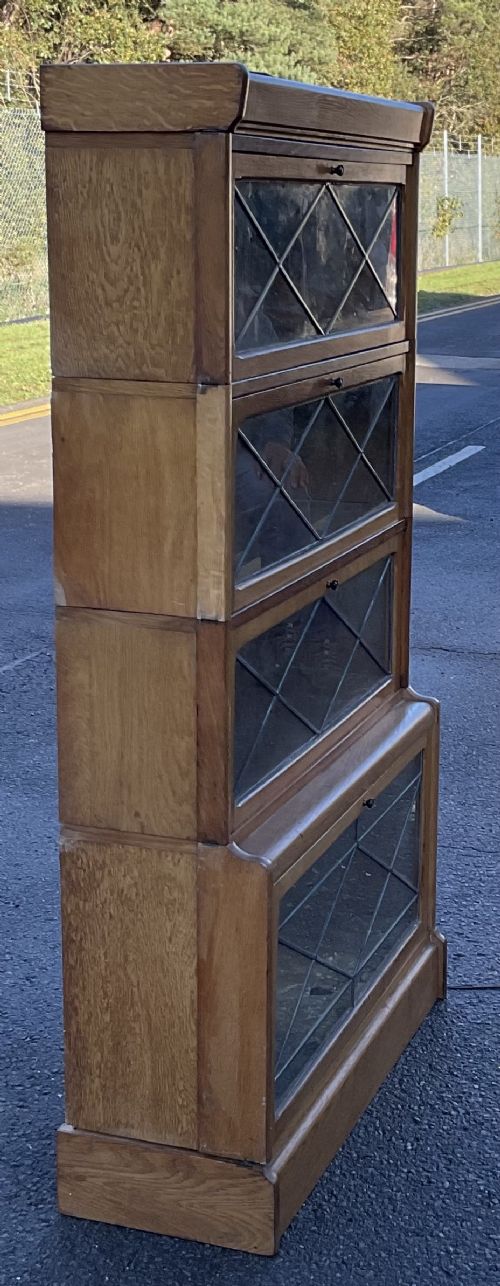
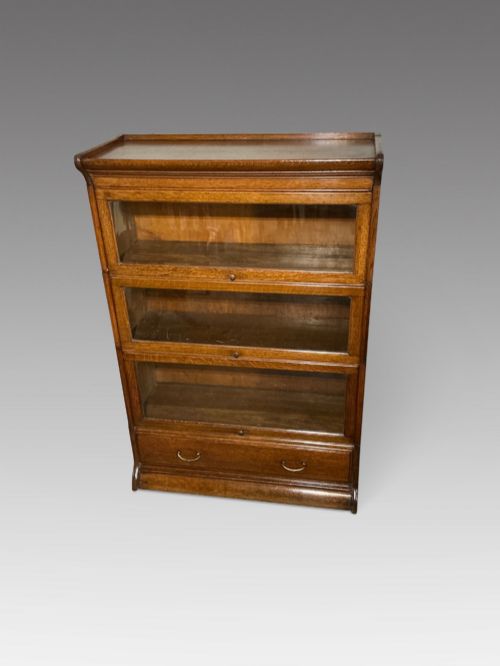
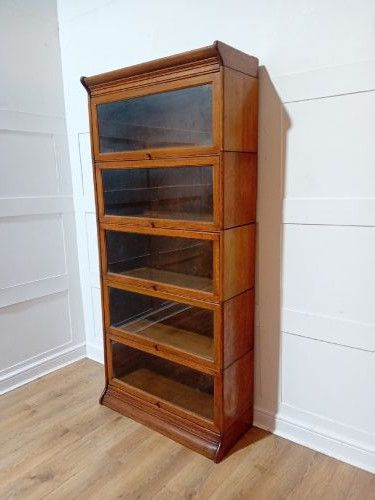
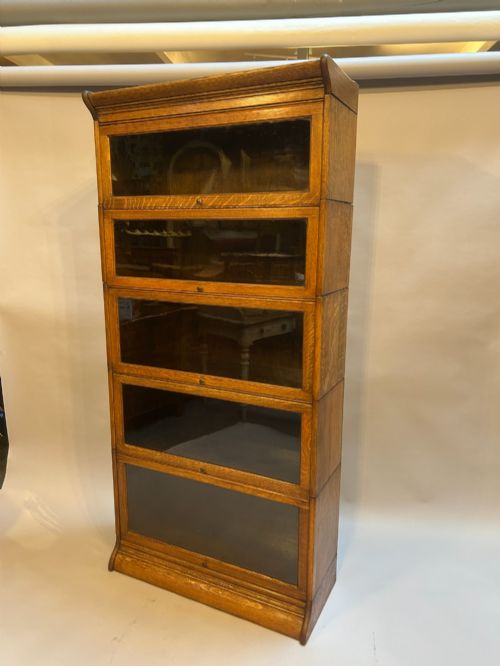
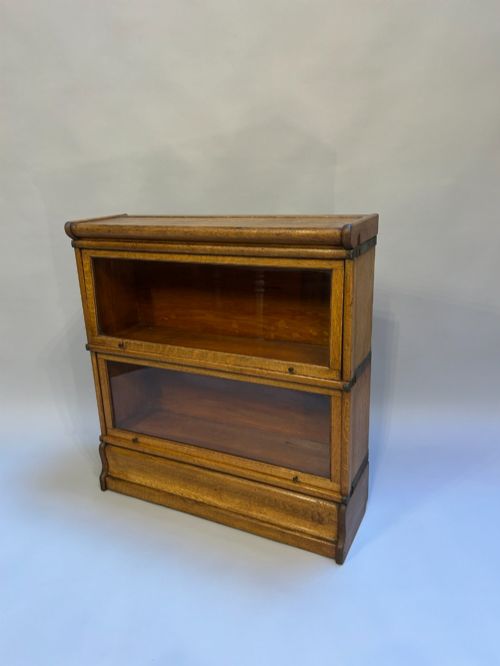
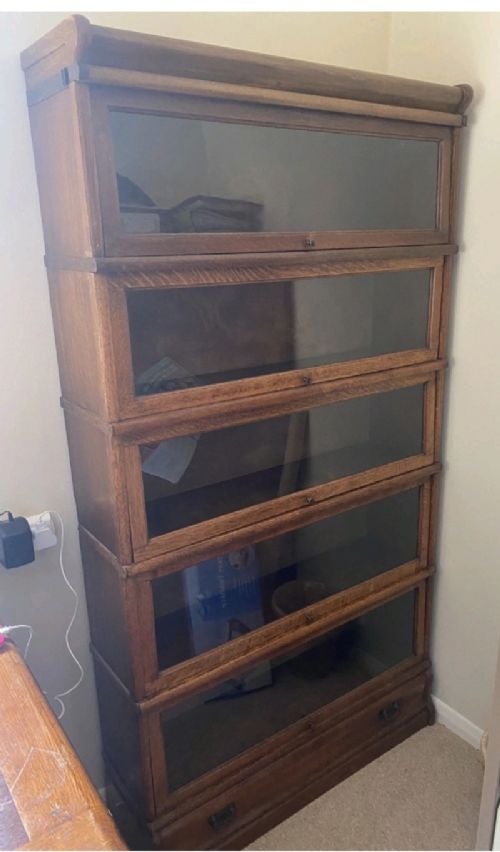
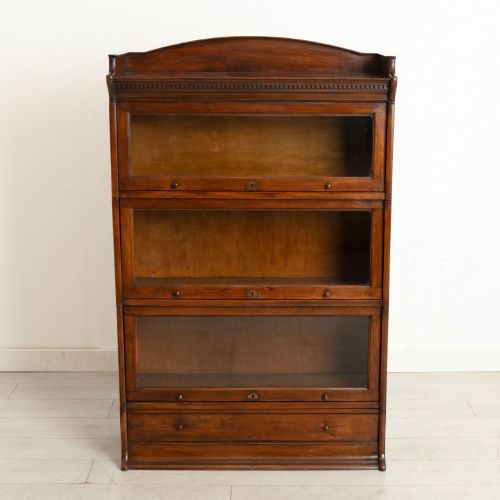
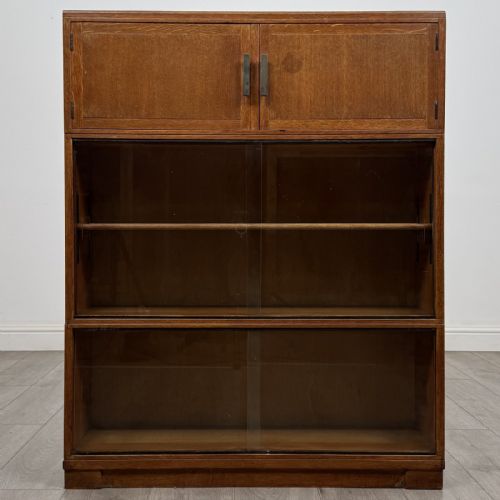
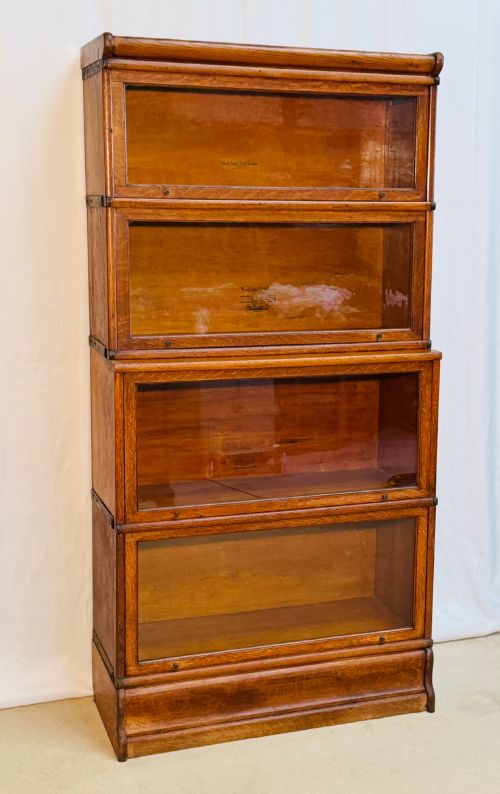
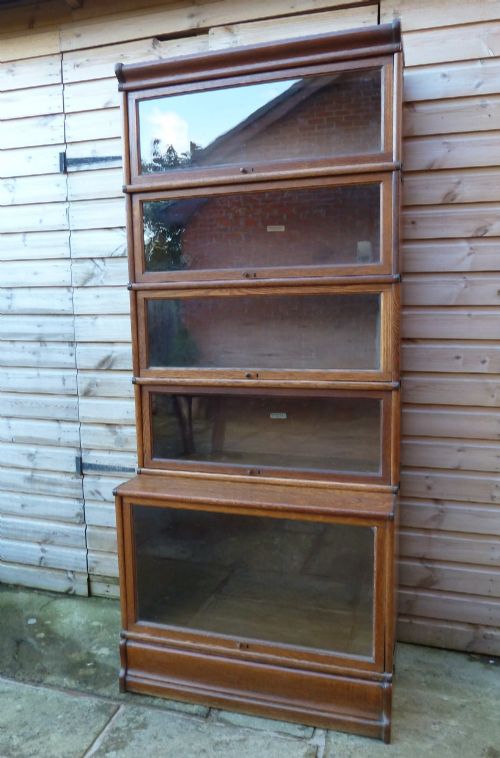
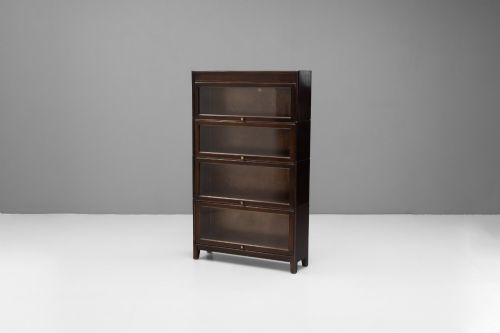
An oak modular bookcase comprises stackable sections that allow owners to build upward as their libraries grow, keeping books dust-free behind individual glazed fronts. The pieces seen on this page span the Edwardian era, the 1890s, the 1920s, and the 1930s, reflecting a period of functional office and home furniture design. Buyers will most frequently encounter sectional formats with four or more tiers, occasionally featuring a drawer at the base.
Makers such as Gunn, Minty of Oxford, and Lebus dominate these listings, providing the recognizable sectional mechanisms associated with barrister and Globe Wernicke styles. These units range from single stacking columns to double-section cabinets and matching pairs, constructed to suit studies, libraries, and living spaces. The prevailing aesthetic runs from Edwardian Arts and Crafts simplicity to later Mid-Century Modern and Art Deco influences.
The modular design relies on independent tiers that lift and stack, allowing for straightforward rearrangement or expansion by the owner. Variations include light oak, golden oak, and occasionally inlaid wood details that distinguish specific cabinet configurations. This furniture type remains sought after for its ability to house varied book sizes while maintaining a neat, compartmentalized appearance.
Materials and construction methods
Solid oak and golden oak form the structural core of these bookcases, providing a durable framework designed to support heavy volumes across multiple stacked tiers. Wood inlay appears on select examples, adding subtle decorative contrast to the grain of the oak panels.
Glass panels, fitted into wooden frames, create the lifting doors that shield the books from dust while maintaining visibility across the shelves. Brass and other metal hardware support the internal mechanisms and the stacking brackets that secure each tier in place.
Oak Modular Bookcase Retail Price Guide 2026
Typical asking prices for oak modular bookcase among the pieces listed under this phrase on Sellingantiques today, from the lower quarter to the upper quarter. They describe what is for sale here now, not the wider market.
Early legal professionals favored these cabinets because the glass doors kept case law pristine while allowing lawyers to stack another tier right onto the ceiling.
Factors that define quality
The integrity of the stacking mechanism and the smooth operation of the lifting glass doors distinguish superior pieces from standard examples. Precision in the joinery between individual tiers ensures that stacked sections align properly without shifting or binding during use.
Gunn·Minty of Oxford·Lebus
The Oak Modular Bookcase Glossary
- Sectional
- Furniture built in independent, stackable tiers that can be arranged vertically to form a taller cabinet. This construction allows for easy transport and modular expansion.
- Globe Wernicke
- A proprietary stacking bookcase system originating in the late nineteenth century, characterised by standardised modular tiers with glass doors that lift and slide inside the case. The name is frequently used to describe this entire genre of modular shelving.
- Barrister bookcase
- A specialised office cabinet designed with glass-fronted shelves to protect legal volumes, featuring a mechanism that allows the doors to recess above the books. They are synonymous with stacking modular designs.
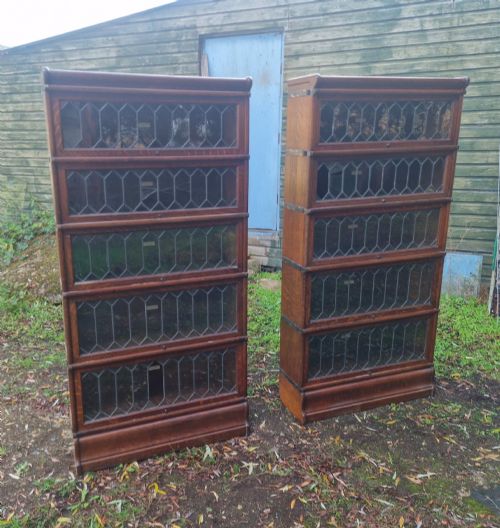
- Leaded glass
- Window construction where small panes of glass are joined together using strips of lead, often seen in decorative patterns on period cabinet doors. It adds weight and visual texture to the front of the bookcase.
- Wood inlay
- A decorative technique where contrasting pieces of wood are inserted into depressions in the primary oak surface to create patterns. This detailing is typical of Edwardian and Arts and Crafts pieces.
Oak Modular Bookcase: Frequently Asked Questions
Can the sections be separated?
The tiers are designed to be independent stacking modules, meaning they lift apart once any locking brackets are disengaged. This makes moving and reconfiguring the cabinet straightforward.
Collectors should take care when lifting individual sections, particularly those fitted with heavy glass or leaded panels, to avoid straining the wood joints.
How do I identify the period?
Dating relies on examining construction markers, hardware styles, and maker stamps located inside the tiers or on the back panels. Edwardian and 1920s examples often feature specific brass linkage hardware and distinct oak finishes.
Art Deco and later pieces incorporate streamlined cornices and simpler mouldings, distinguishing them from the heavier Arts and Crafts or Edwardian interpretations.
Are all sections the same size?
Individual tiers often vary in height within a single stack to accommodate different book sizes, from small novels to large folios. The taller sections typically sit at the bottom of the bookcase for stability.
When purchasing or rearranging a modular unit, checking the interior height of each tier ensures that specific volumes will fit behind the glass fronts.