
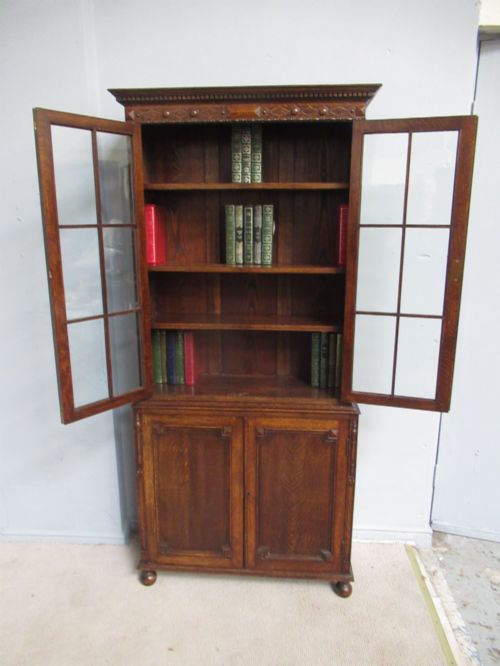
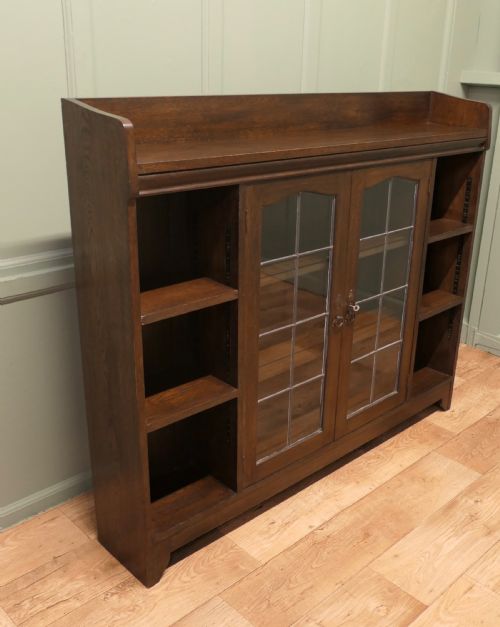
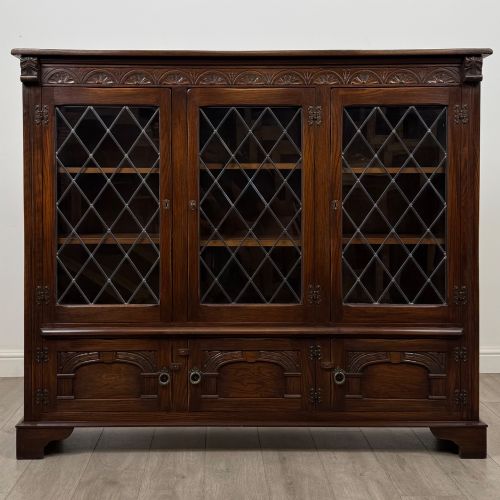
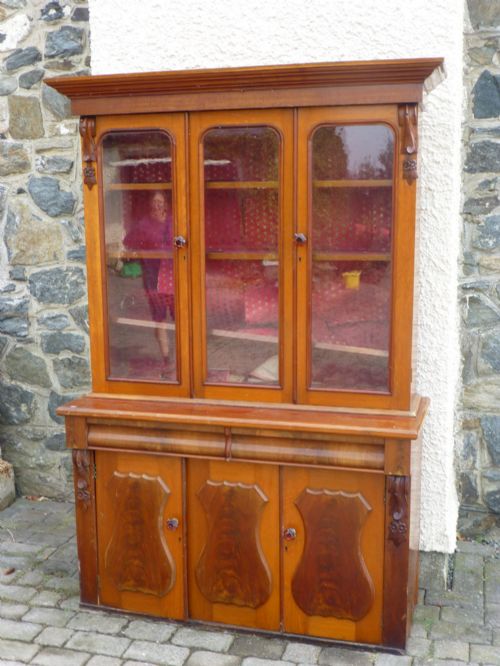
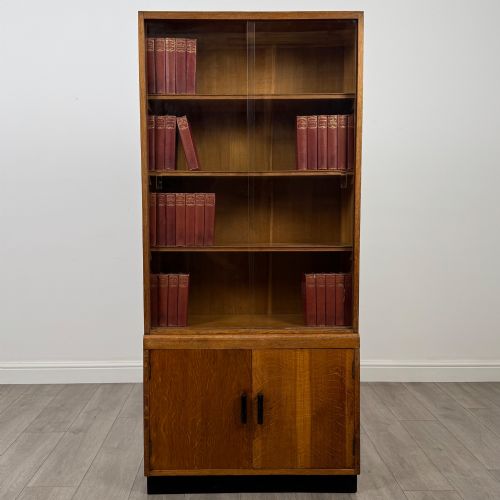
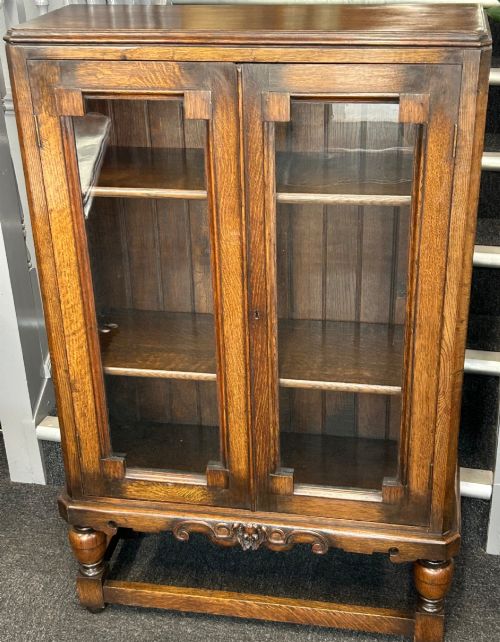
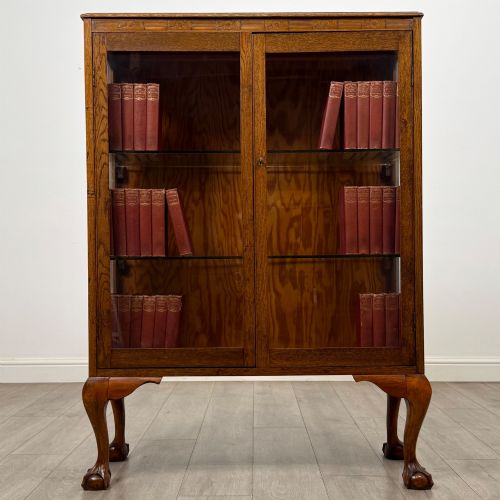
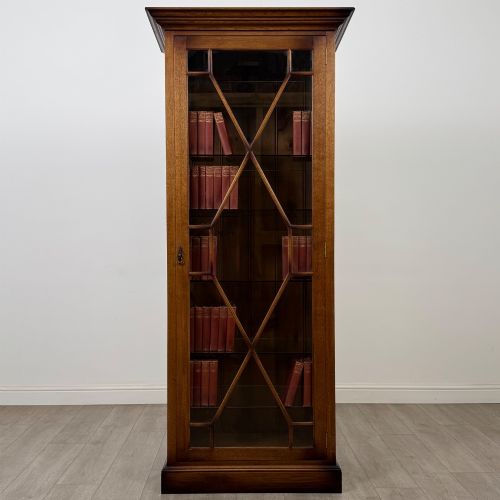


Oak Glass Door Bookcase
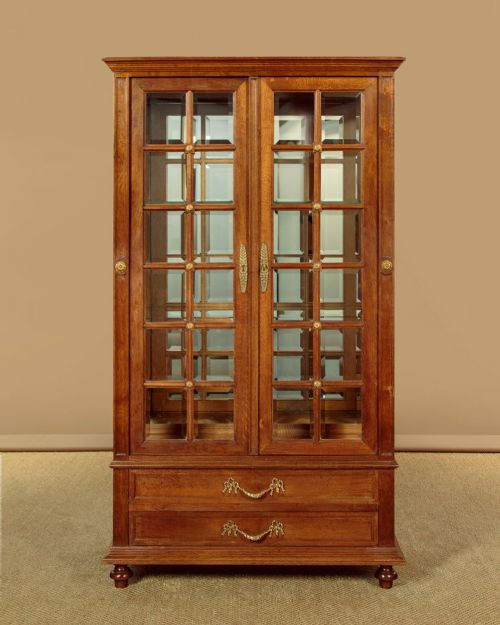
An oak glass door bookcase organises a library while keeping volumes visible and protected behind transparent panels.
Oak Glass Door Bookcase
An oak glass door bookcase brings together sturdy timber frames and transparent panels to display and protect volumes. These pieces appear in forms ranging from freestanding single-door cupboards to large multi-section modular units.
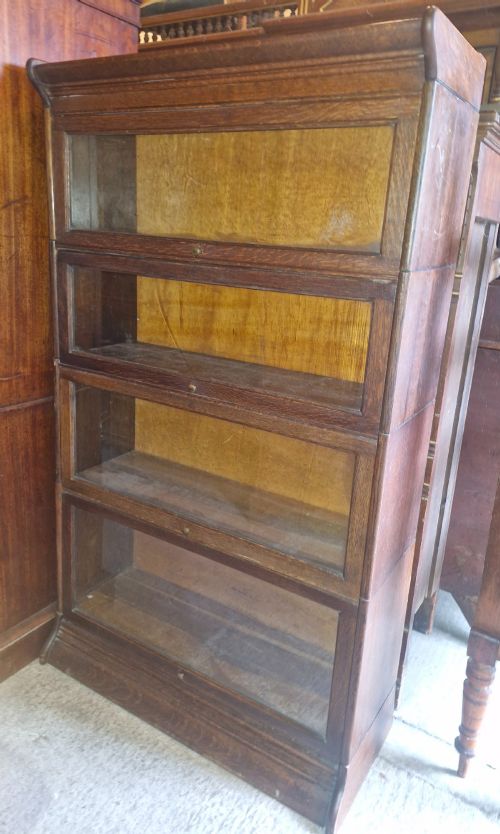
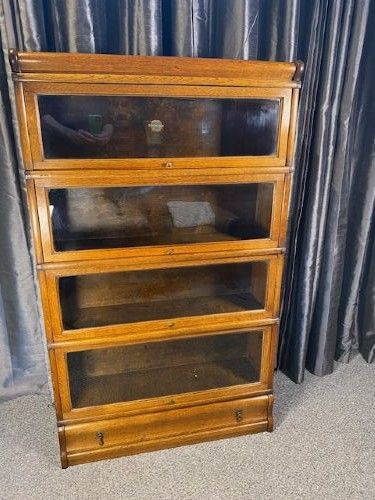
Most examples found here date from the Victorian era through to the mid-twentieth century, encompassing Edwardian, Arts and Crafts, and Art Deco designs. Sectional formats, including barrister and Globe Wernicke styles, sit alongside traditional double and triple door cupboards.
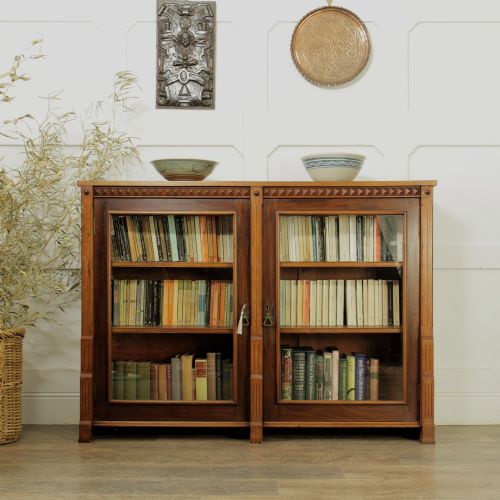
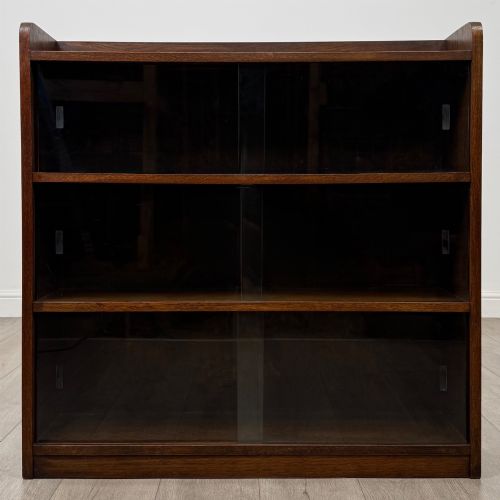
Makers often utilised solid timber alongside oak veneers, incorporating leaded, bevelled or sliding glass panes into the doors. Some variations mix materials by pairing the oak body with mahogany elements or brass and gilt brass hardware.
Materials and construction methods
Carpenters built these cabinets predominantly using solid English oak, frequently selected for its durable grain and warm golden or dark tones. Back panels and internal shelves occasionally relied on secondary timbers, while select twentieth-century examples adopted a limed finish.
Glazing techniques varied from simple single panes held in wooden rebates to segmented leaded lights secured with metal caming. Hardware such as brass hinges, handles, and occasional gilt mounts provided structural reinforcement and decorative accent.
Sectional bookcases employed specialised stacking mechanisms that allowed individual tiers to lock together without permanent fixings. Carved details, gallery rails, and panelled bases required traditional joinery skills handed down through workshops.
Listings feature oak, mahogany, and iron elements paired with leaded and bevelled glass.
Assessing build quality and integrity
The standard of timber selection and joinery marks the primary difference between standard utility furniture and finer cabinet work. Tighter grain matching, sound dovetail joints in drawers, and solid backboards indicate higher workshop standards.
The condition and execution of the glazing play a major role, particularly where leaded lights or specialised sliding mechanisms are involved. Original glass free from replacement panes and smooth-operating door actions maintain the piece's structural coherence.
Makers' marks and hardware originality distinguish standard production items from branded or patented stacking systems. The presence of matching sectional tiers and unblemished brass fittings elevates a piece above modified or heavily restored examples.
Lebus·Minty·Gunn
The Oak Glass Door Bookcase Glossary
- Barrister bookcase
- A modular office cabinet with stacked glazed sections that lift and slide inward to reveal the shelves.
- Globe Wernicke
- A prominent brand name often used to describe modular stacking bookcases with patented interlocking mechanisms.
- Leaded glass
- Small panes of glass held together by strips of lead, creating decorative geometric patterns within the door frame.
- Sectional bookcase
- A piece built in independent tiers that stack vertically, allowing the cabinet to grow or separate as needed.
- Limed oak
- A finishing technique that leaves a white pigment in the open pores of the oak grain to create a lighter surface tone.
Oak Glass Door Bookcase: Frequently Asked Questions
How do I date an oak glass door bookcase?
Dating relies on observing construction methods, hardware styles, and prevailing design movements. Pieces from the Victorian and Edwardian periods often display heavier mouldings and hand-cut joinery, whereas 1930s examples lean towards streamlined Art Deco or limed finishes.
Hardware and glass types also offer clues, as leaded lights and brass handles shifted in profile from the nineteenth century into the interwar decades. Comparing the internal structure and any maker stamps helps narrow the decade of production.
Are stacking barrister bookcases difficult to maintain?
Stacking barrister bookcases require minimal maintenance beyond regular dusting and occasional waxing of the oak surfaces. The lifting mechanisms on the glass doors benefit from keeping the guide tracks clean and free from obstruction.
Because these units separate into individual tiers, moving them is straightforward if each section is unloaded first. Ensuring the base sits level on the floor prevents the stacking mechanism from binding during daily use.
What is the difference between a display cabinet and a bookcase?
Bookcases generally feature adjustable wooden shelves designed specifically to support the weight of heavy volumes. Display cabinets often incorporate glass on the sides as well as the doors, prioritising the exhibition of decorative objects.
Many listings blur this distinction by combining both functions, offering glazed doors over shelved interiors that suit books and ornaments alike. Examining shelf depth and side panel construction clarifies the original intended use of the piece.
Can I adjust the shelves in older oak bookcases?
Shelf adjustability depends entirely on the period and the specific maker's design. Earlier pieces often featured fixed shelves nailed or grooved into the carcase sides for maximum rigidity.
Later twentieth-century and sectional variants frequently adopted metal pegs or adjustable rack systems to allow custom shelf heights. Checking the interior walls for support strips reveals whether the layout can be altered.