


Oak Leather Carver Chair
An oak leather carver chair brings sturdy timber and patinated hide together for a seat designed to anchor a room.
Oak Leather Carver Chair
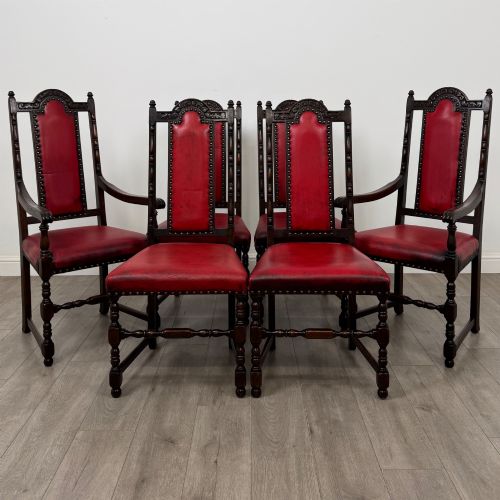
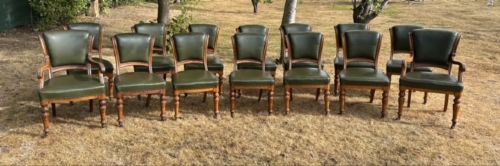
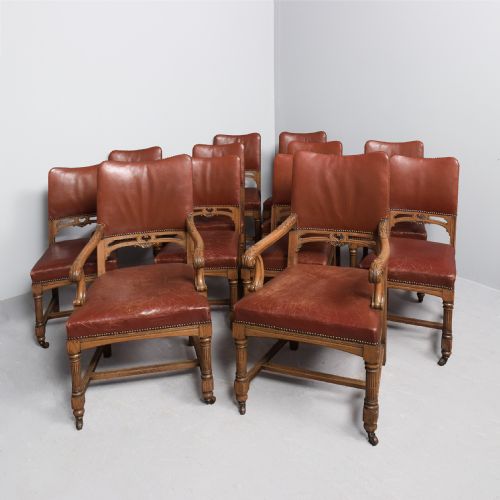
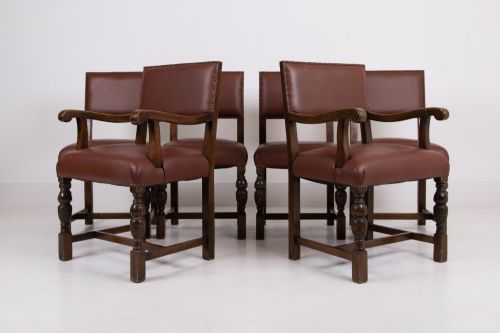
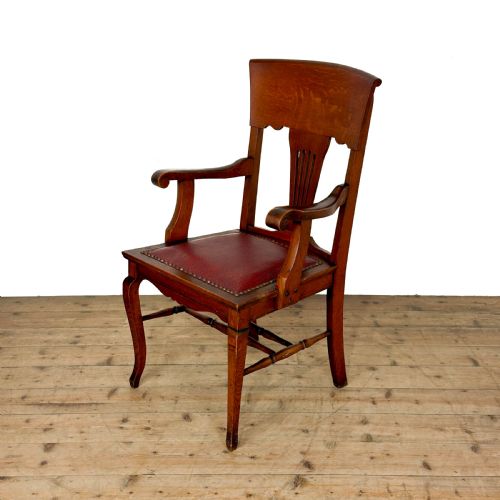
An oak leather carver chair combines a robust timber frame with a hide seat or back, originating primarily across the nineteenth and early twentieth centuries. These seats span desk chairs, dining carvers, and heavy throne armchairs rooted in revivalist movements.
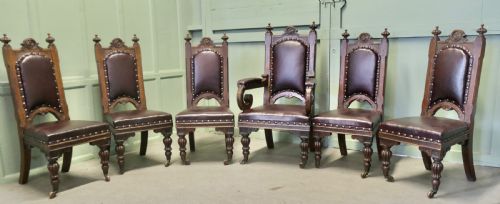
Most examples seen here lean towards Victorian, Edwardian, and interwar periods, frequently incorporating stylistic nods to Gothic, Jacobean, and Arts and Crafts traditions. The form serves utilitarian desks and formal dining tables alike.
Makers utilised sturdy construction methods to support the combination of solid wood and upholstered hide, resulting in durable seating that survives in daily use. The presence of arms distinguishes these carvers from standard dining chairs.
How they were made
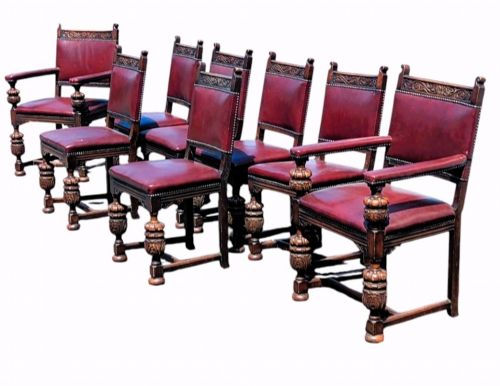
Makers constructed these frames from solid oak, sometimes utilising golden or dark fumed varieties, shaped with turned supports, barley twists, or hand-carved panels. Joinery relied on traditional mortise and tenon methods to ensure structural longevity under heavy daily use.
Upholstery involved stretching cattle hide across padded frames, secured traditionally with brass, copper, or metal studs driven individually along the borders. Selected examples feature woven leather strips or embossed panels integrated into the structural backrests.
Listings span periods from the nineteenth century through the 1930s, featuring oak timber paired with leather, brass, and copper studs.
What varies in quality
The degree of hand-carving and depth of relief distinguish standard production models from exceptional workshop pieces. Crisp execution of motifs, from Gothic tracery to foliate scrolls, reveals the hand of a skilled artisan.
Timber selection and hide thickness dictate the longevity and feel of the seat, with dense quarter-sawn oak and supple, thick leather marking out superior examples. The integrity of the original joints and the natural patina accumulated on the hide separate preserved originals from heavily restored alternatives.
W.Williamson & Sons·Lamb Of Manchester·Howard & Son's
The Oak Leather Carver Chair Glossary
- Carver
- An armchair, typically larger and with armrests, designed originally to sit at the head of a dining table or function as a desk seat.
- Barley twist
- A turning technique where wood is shaped into a spiral resembling twisted barley sugar, common in seventeenth-century and revival furniture.
- Jacobean Revival
- A nineteenth-century design movement copying the heavy, geometric, and dark-finished oak furniture of the early seventeenth century.
- Arts and Crafts
- A design philosophy emphasising hand craftsmanship, simple construction, and visible structural honesty, prominent around nineteen hundred.
- Studded
- Fastened with decorative metal tacks, often brass or copper, securing leather upholstery to the wooden framework.
Oak Leather Carver Chair: Frequently Asked Questions
How do I care for the leather?
Keep the hide clean using a dry cloth and occasionally apply a suitable leather balm to prevent drying and cracking over time.
Avoid placing the chair near direct heat sources or in strong sunlight, which can fade and stiffen the material.
Are these chairs comfortable for daily use?
Most feature supportive high backs and padded hide seats designed for upright posture during dining or office work.
Their sturdy oak frames provide reliable support, though cushioning varies depending on the specific period and padding style.
How do I date an oak chair?
Examine the construction methods, tool marks, and wood grain, noting whether machine-cut components or hand-cut joinery are present.
Stylistic cues like Gothic revival arches or Arts and Crafts simplicity also point toward specific decades between the nineteenth and twentieth centuries.
Can I mix carvers with standard chairs?
Placing armchairs at the heads of a table while using armless chairs along the sides creates a balanced traditional arrangement.
Matching the oak tone and revival style helps tie disparate seating together around a central dining table.