






Vintage Leather Hall Chairs
These vintage leather hall chairs combine sturdy timber framing with tactile hide upholstery, offering an authentic period statement for any entranceway.
Vintage Leather Hall Chairs
When you search for vintage leather hall chairs, you encounter seating built primarily from oak, walnut, and mahogany, often featuring carved details and upholstered panels. These pieces span from the eighteenth century through to the early decades of the twentieth century, encompassing various revival movements including Gothic, Jacobean, and Renaissance styles.
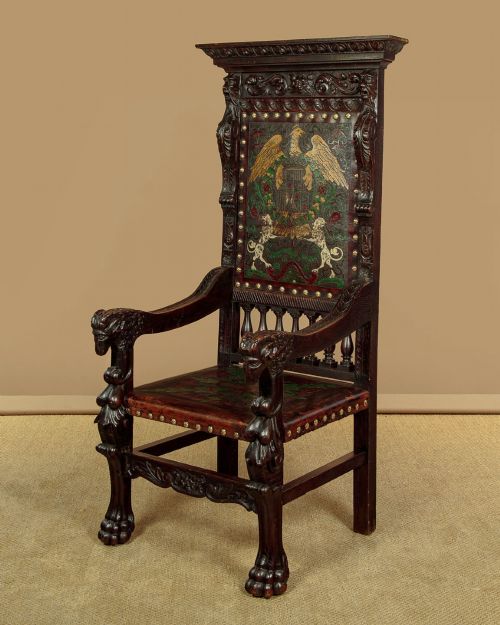
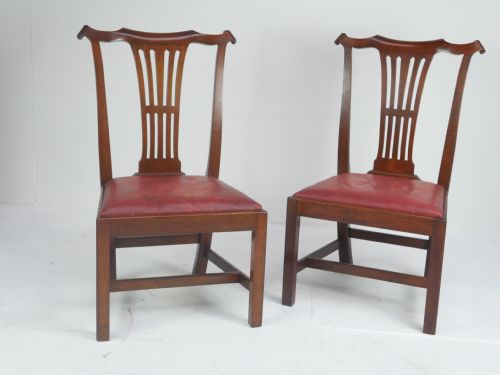
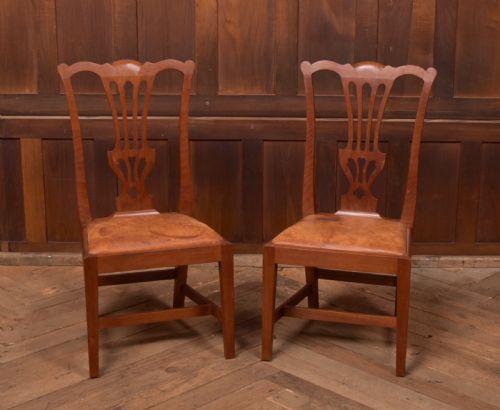
The specific examples you meet on this page lean heavily towards heavy timber frames paired with leather seats and backs, sometimes manifesting as single throne chairs, pairs, or matching sets. Object types stretch from dedicated hall chairs and side chairs to occasional seating and even specific regional variants like Spanish or Portuguese interpretations.
How they were made
Makers constructed these chairs predominantly using solid timbers such as English oak, walnut, and mahogany, joined to withstand frequent use in grand spaces. Artisans shaped the wood through traditional carving and turning methods, creating robust frames suited to heavy structural demands.
Upholstery involved securing hide panels to the timber framework, frequently accented with brass elements or decorative detailing. Master craftsmen employed durable fastening techniques to ensure the leather inserts remained taut within the carved wooden surrounds.
The inventory records regional influences including Spanish, Portuguese, and English traditions, alongside distinct revival movements like Gothic and Arts and Crafts.
What varies in quality
The distinction between ordinary and exceptional pieces rests upon the depth and crispness of the timber carving, along with the selection of the primary wood. Heavier, dense timbers like English oak or rich mahogany indicate a higher grade of manufacture than plain utility alternatives.
Another factor is the integration of the leather panel work within the wooden structure, where neatly fitted upholstery and refined metal detailing demonstrate superior workshop standards. The coherence of the revival style, whether Renaissance or Arts and Crafts, determines the artistic merit of the finished chair.
Mouseman
The Vintage Leather Hall Chairs Glossary
- Throne chair
- A large, high-backed seat with substantial carved woodwork and prominent upholstery, designed to command attention in a room. These pieces often feature Renaissance or Gothic revival motifs.
- Hall chair
- A rigid, upright seat traditionally placed in an entrance hallway rather than used for prolonged sitting. They generally prioritise architectural presence over deep cushioning.
- Revival style
- A design movement that imitates the aesthetic of a previous historical era, such as Jacobean, Georgian, or Portuguese Baroque. Makers of these later pieces deliberately borrowed earlier decorative vocabulary.
- Side chair
- A light, movable seat without arms, intended for occasional use around a room or alongside a larger table. They appear frequently in matched pairs or larger sets within older homes.
Vintage Leather Hall Chairs: Frequently Asked Questions
Where did people put these chairs?
These seats traditionally stood in entrance halls, corridors, and grand reception spaces rather than everyday living rooms. Households used them primarily for brief seating while waiting or greeting visitors.
Their robust timber construction allowed them to endure the heavy foot traffic typical of hallway environments. Over time, owners also placed them in studies and dining rooms as decorative accent pieces.
How do I identify the wood type?
Examining the grain pattern and natural colour of the timber helps distinguish oak from walnut or mahogany. English oak typically displays prominent medullary rays, while mahogany presents a deeper reddish-brown tone.
Looking underneath the seat or at the inner frame reveals unpolished wood that displays the true character of the material. Comparing the weight and hardness of the timber provides further clues to its classification.
Are these chairs comfortable for daily use?
Hall seating prioritises upright posture and architectural presence over soft, deep cushioning. The rigid wooden backs and firm leather pads encourage an erect sitting position rather than relaxed lounging.
Consequently, buyers usually select them for visual impact in transitional spaces rather than long hours of desk work. Pairing them with cushions can alter the comfort level if used more frequently.
How do revival styles differ from original periods?
Revival pieces date from later centuries, such as the Victorian or Edwardian eras, yet deliberately copy the aesthetic language of earlier periods like the seventeenth or eighteenth century. Makers utilised historical pattern books to recreate specific historic moods.
Closer inspection of construction techniques, tool marks, and fastener types generally reveals the true manufacturing date. This distinction separates genuine antique antiquity from stylistic homage.