


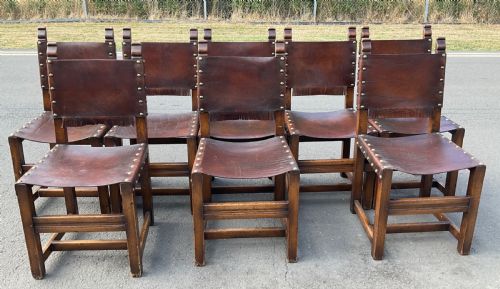


Antique Spanish Leather Chairs
Antique Spanish leather chairs bring robust timber frames and rich, stamped hides into a room, offering immediate warmth and historical weight.
Antique Spanish Leather Chairs
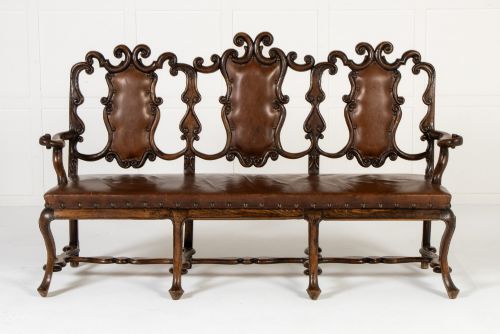
When you search for antique spanish leather chairs, you are looking at substantial seating built from timbers like oak and walnut, upholstered in heavy hides. These pieces range from simple side chairs to imposing dining sets and settees.
You are most likely to meet 19th century examples on this page, often reflecting Spanish Revival or Baroque Revival styles. The selection also includes earlier 18th century pieces alongside occasional 20th century interpretations.
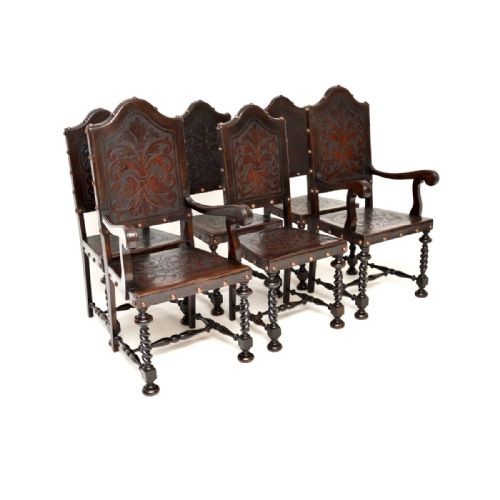
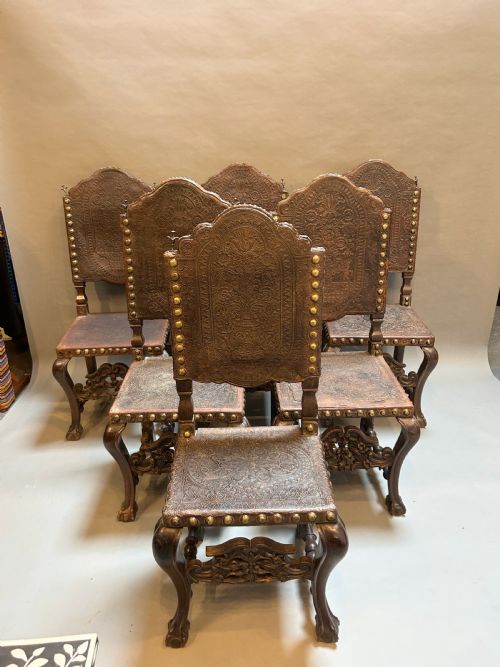
Forms vary between dining chairs, armchairs, and occasional side chairs, frequently featuring tall backs and sturdy frames. Many incorporate metal studs or embossed details that anchor their distinctive aesthetic.
How they were made
Maker construction relies heavily on solid woods such as oak and walnut, joined to support heavy leather upholstery. Artisans secured these hides using metal studs, brass accents, or wrought iron elements.
Decoration often involved intricate embossing on the cowhide surfaces, occasionally paired with woven leather sections or cane elements. Bone details and carved wooden frames complete the traditional construction methods.
Listings feature periods spanning the eighteenth through the twentieth centuries, utilising oak, walnut, wrought iron, and cowhide.
What varies in quality
Quality rests in the depth and clarity of the embossed leather work and the structural integrity of the oak or walnut frame. Pieces with deeply carved woodwork and well-preserved hides stand apart from simpler iterations.
The sophistication of the revival style, whether Spanish Revival or Portuguese Baroque, dictates the visual richness of the seating. Proportions and the careful integration of metal studs or wrought iron hardware also influence the overall standard.
The Antique Spanish Leather Chairs Glossary
- Embossed Leather
- Hide stamped with raised patterns or designs using metal dies. This technique adds tactile and visual depth to the chair back or seat.
- Metal Studs
- Decorative fasteners used to secure leather hides to the wooden framework. They frequently form repetitive geometric patterns along the edges.
- Baroque Revival
- An ornate design movement reviving the grand, dramatic curves of the seventeenth century. It appears in high-end seating through elaborate woodwork.
- Hip-Joint Chair
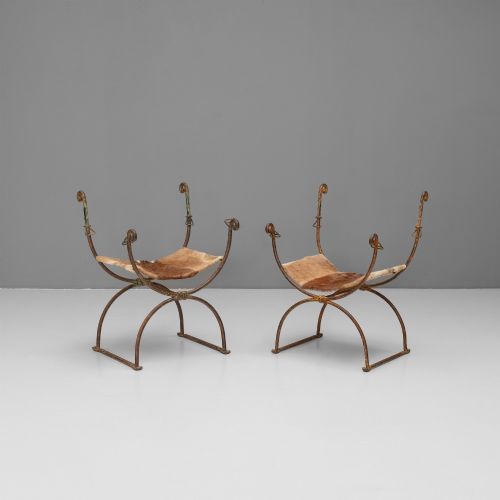
- A traditional folding or intersecting wooden chair design originating in medieval and Renaissance Iberia. The joints are cleverly carved to interlock.
Antique Spanish Leather Chairs: Frequently Asked Questions
What periods do these chairs come from?
The pieces span multiple eras, with the majority originating in the nineteenth century alongside select examples from the eighteenth and early twentieth centuries.
Revival styles dominate the timeline, echoing older baroque traditions while utilising the manufacturing techniques of their actual production dates.
How were these chairs used historically?
These robust items served primarily as formal seating in dining rooms, halls, and studies where heavy timber and leather projected status.
Armchairs and tall-back dining sets were positioned to dominate grand interiors, combining practical seating with decorative impact.
How do I live with antique leather chairs?
Integrating them into modern spaces requires placing them away from direct heat sources to prevent the historic hide from drying out. They anchor a room effectively when paired with simpler, contemporary furniture.
Regular, gentle conditioning helps maintain the suppleness of the cowhide without altering its aged patina.
How do I tell styles apart?
Spanish Revival pieces typically display bold, straightforward wooden frames with embossed leather, whereas Baroque Revival examples feature more dramatic curves and ornate carvings.
Examining the studs, the complexity of the wood turning, and the presence of woven elements helps distinguish regional and stylistic variations.