

Gothic Oak Accent Chairs
Gothic oak accent chairs combine heavy medieval architectural forms with sturdy timbers, offering distinct character for modern seating schemes.
Gothic Oak Accent Chairs
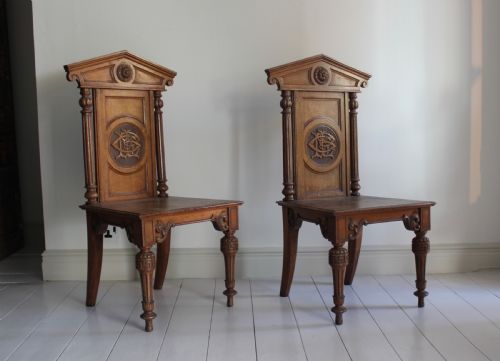
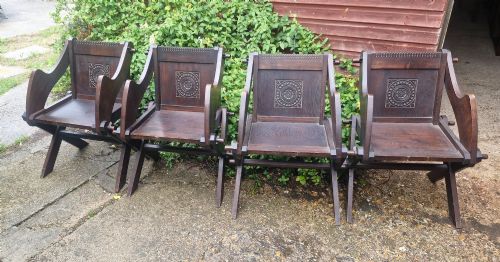
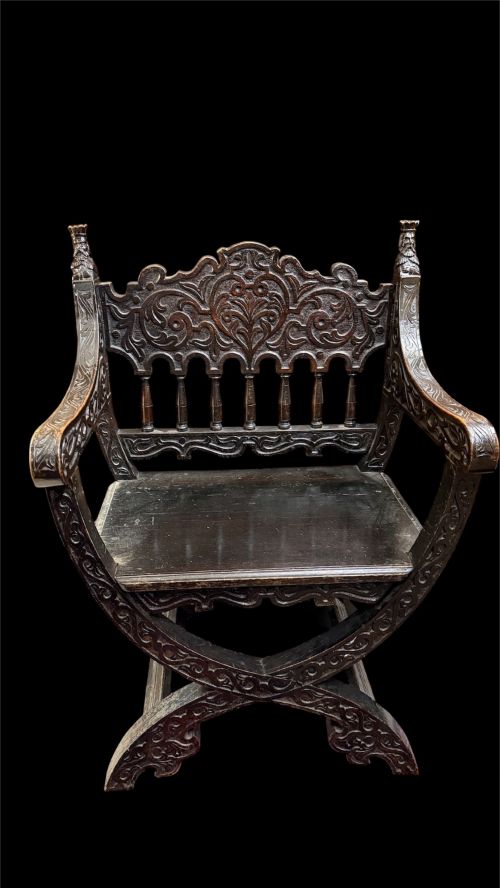
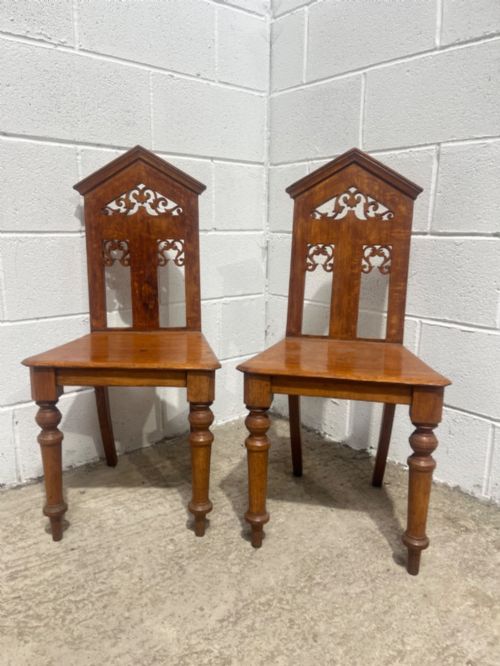
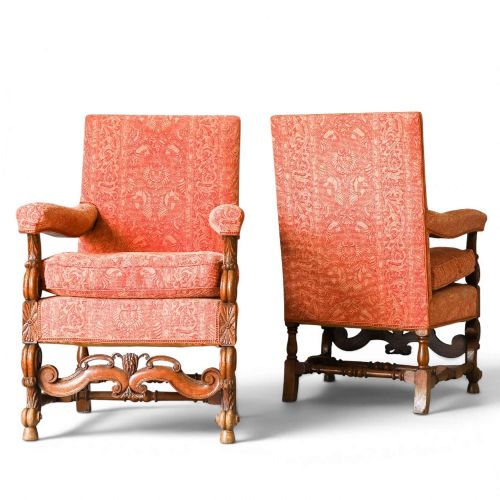
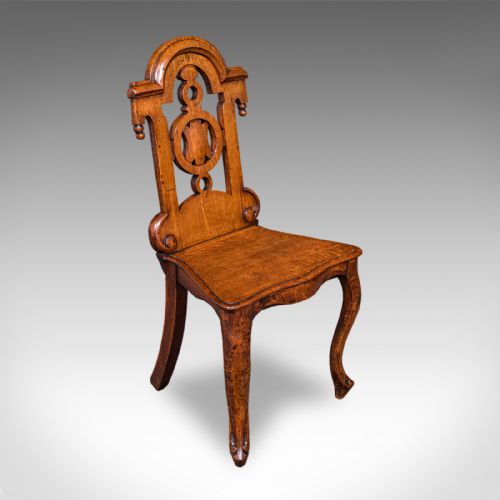
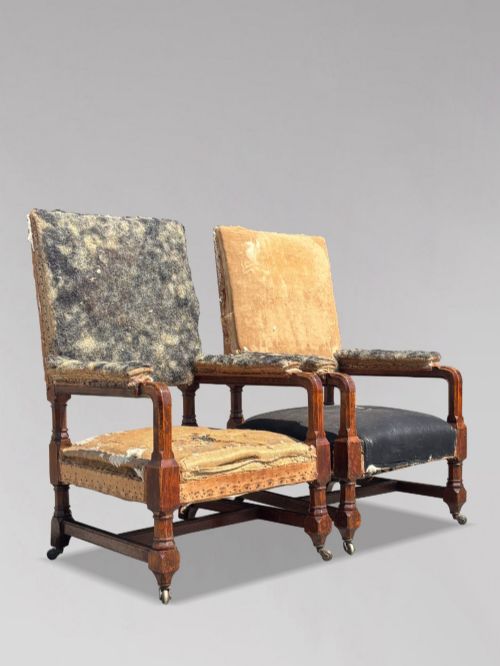
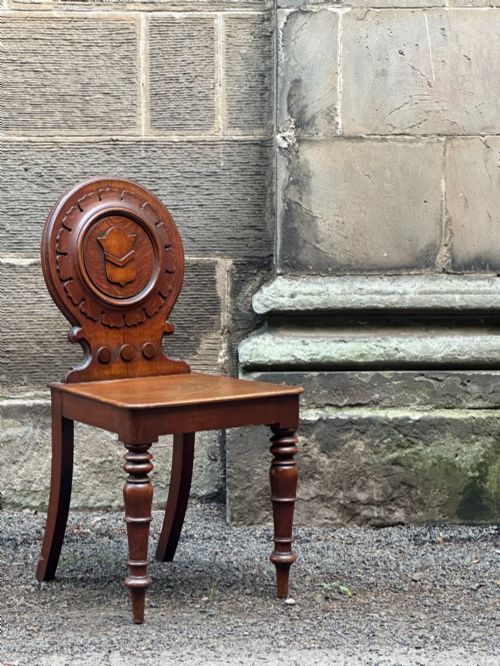
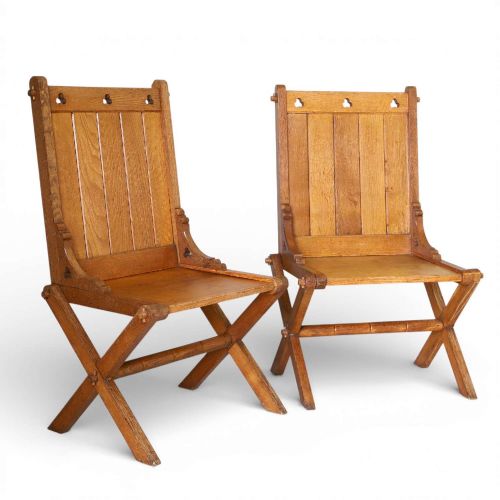
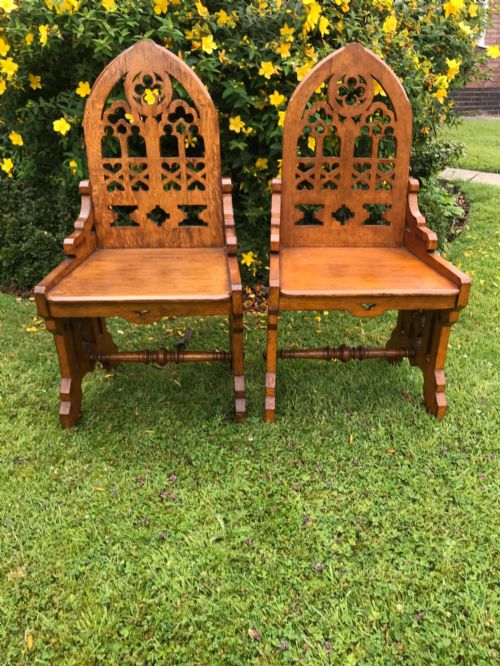
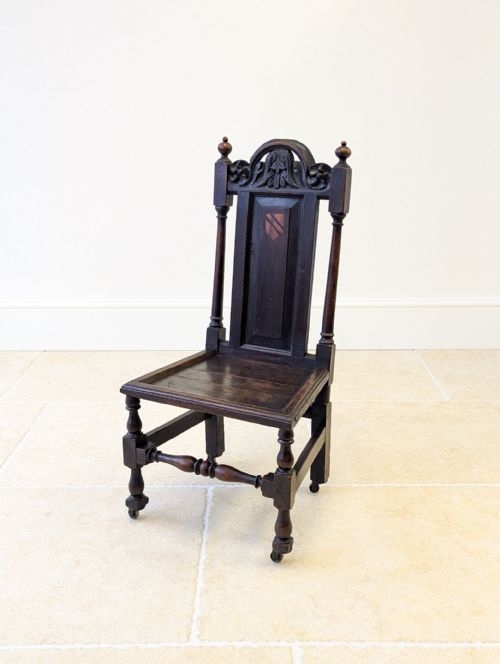
Gothic oak accent chairs appear primarily in nineteenth-century interpretations, spanning Victorian, Edwardian, and revival periods with distinct regional British, French, and Austro-Hungarian influences. These pieces take various structural forms including hall chairs, side chairs, and elbow seats, often constructed as sturdy single items or matched pairs.
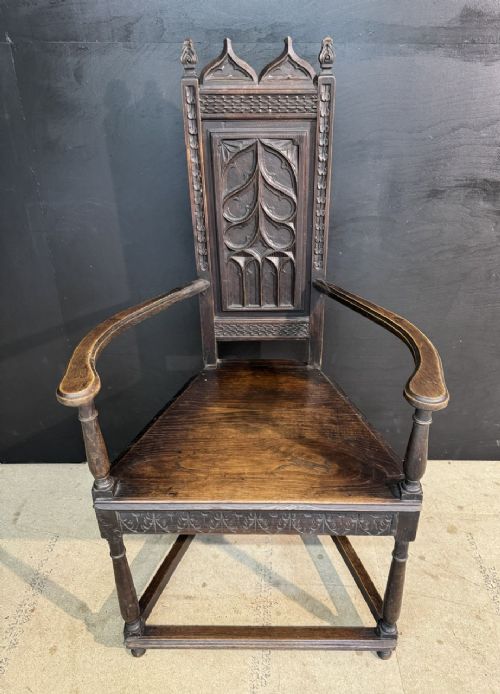
The aesthetic draws heavily from medieval church and castle architecture, incorporating pointed arches, trefoil details, and heraldic shield backs into domestic seating. Buyers encounter solid timber frames shaped by craftsmen working in Gothic Revival, Jacobean Revival, and Arts and Crafts traditions.
Functionally, these chairs serve as deliberate decorative punctuation within a room rather than everyday lounging seats. Their upright proportions and rigid timber construction make them ideal for hallways, reception rooms, and occasional seating areas.
Judgements of Quality
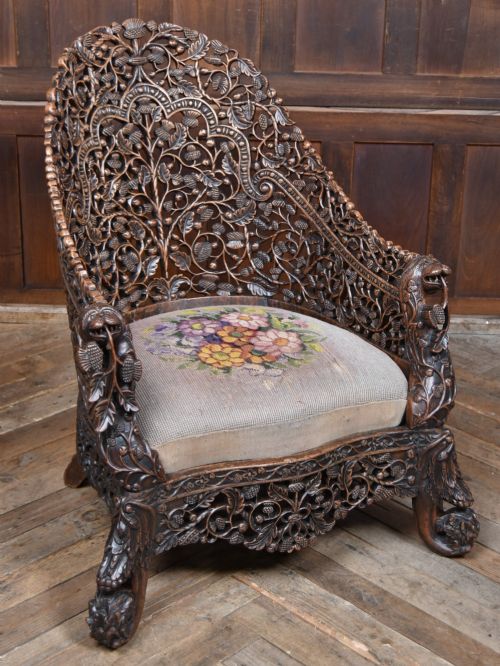
Quality rests heavily on the depth and crispness of the hand-carving across the frame, distinguishing deeply undercut architectural mouldings from shallow, mechanical depressions. The choice of timber grain and the integrity of the original joints further separate standard production pieces from workshop examples associated with known designers.
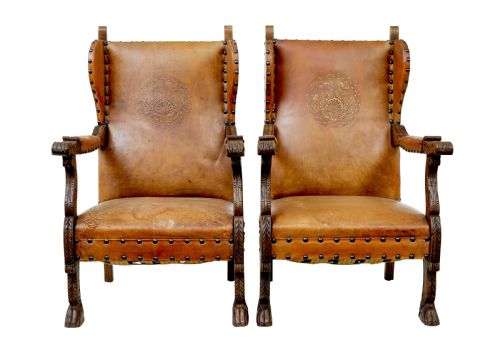
The retention of original surface patination, genuine period upholstery materials like embossed leather, and structural soundness without excessive timber shrinkage define the upper tier of surviving examples.
Gillows·Bruce Talbert·Liberty & Co
The Gothic Oak Accent Chairs Glossary
- Gothic Revival
- An architectural and decorative movement drawing inspiration from medieval forms, prevalent throughout the nineteenth century. This style dictates the pointed arches and structural heaviness seen in these chairs.
- Turner's chair
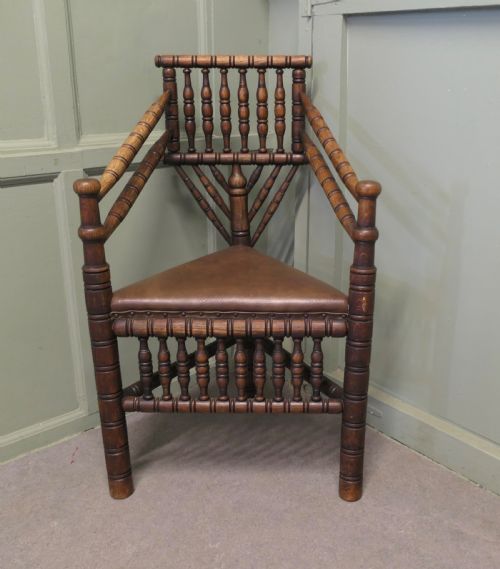
- A form of armchair constructed entirely from turned wooden spindles and members, also known as a cacquetoire or round chair. These draw on early sixteenth-century designs revived during the Victorian era.
- Trefoil
- A three-lobed decorative ornament resembling a clover leaf, frequently pierced through the wooden splats or backs of Gothic furniture. It remains a hallmark of medieval ecclesiastical design.
- Wainscot chair
- A heavy wooden armchair constructed with panelled backrests, typical of sixteenth and seventeenth-century English domestic interiors. Nineteenth-century makers frequently copied these robust forms.
- Curule chair
- An X-framed folding seat design originating in antiquity and revived during the Renaissance and nineteenth-century revival periods. These X-form structures often feature crossing oak stretchers.
Gothic Oak Accent Chairs: Frequently Asked Questions
Where should I place a Gothic oak chair?
These pieces suit low-traffic areas such as hallways, landings, or reception rooms where their architectural presence can be appreciated. Their upright posture makes them less suited for prolonged daily lounging.
Pairing one with a simple modern desk or placing it in an empty corner creates a striking visual contrast without cluttering the floor space.
How do I date a nineteenth-century oak chair?
Examine the construction methods, tool marks on the underside, and stylistic cues that point towards specific revival movements like the Arts and Crafts or Jacobean periods. Machine-sawn timber often indicates a later nineteenth or early twentieth-century manufacture.
Hardware elements such as brass tacks and the wear patterns on the oak feet also offer reliable clues to the exact manufacturing decade.
Are these chairs comfortable for daily use?
Most variants prioritise architectural form and upright posture over ergonomic cushioning, often featuring solid wooden seats or thin leather panels. Upholstered versions provide slightly more give but remain firm compared to modern armchairs.
Adding a removable period-appropriate textile cushion can soften the seat without altering the historical appearance of the frame.
How do I maintain antique oak furniture?
Keep wooden surfaces away from direct heat sources and strong sunlight to prevent the solid oak from splitting or the historic finish from drying out. Periodic applications of appropriate wax help nourish the grain and preserve the original patination.
Avoid commercial liquid polishes containing silicones, which can penetrate open oak pores and damage the historic finish over time.