
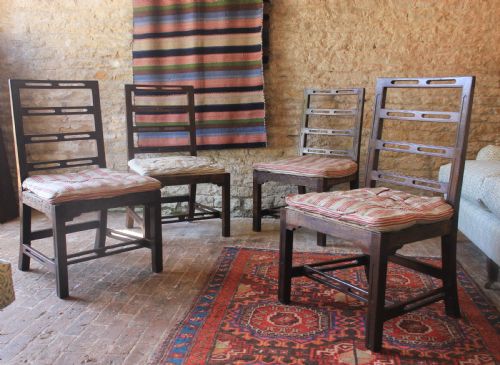
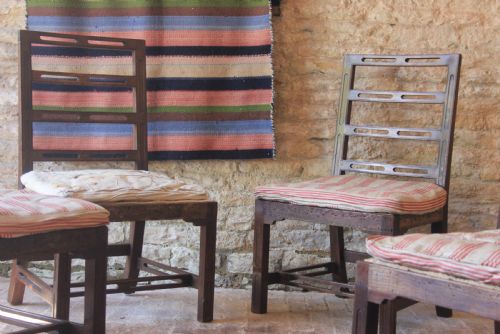
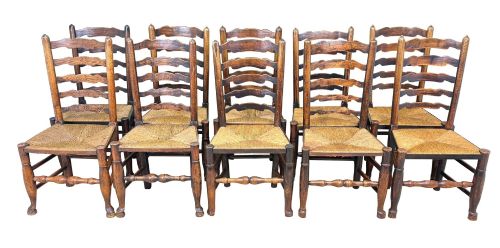
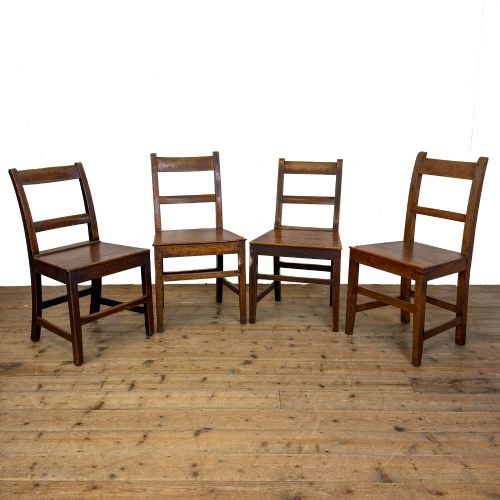
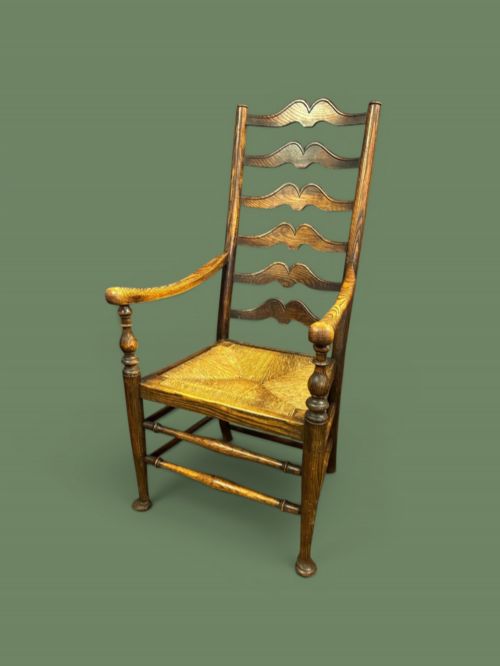
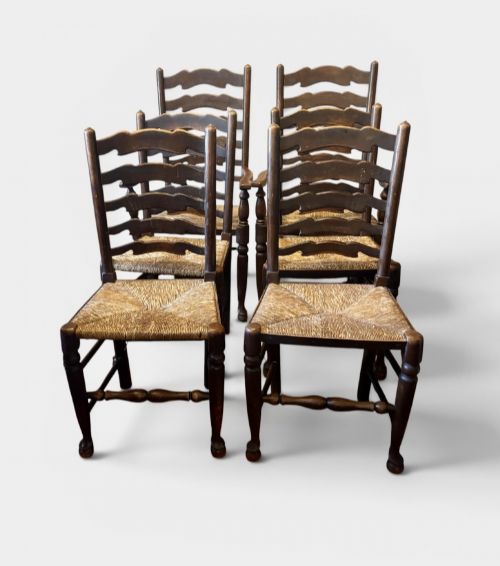


Oak Ladderback Chairs
Oak ladderback chairs combine sturdy regional frames with woven rush seats, offering practical domestic seating rooted in centuries of vernacular tradition.
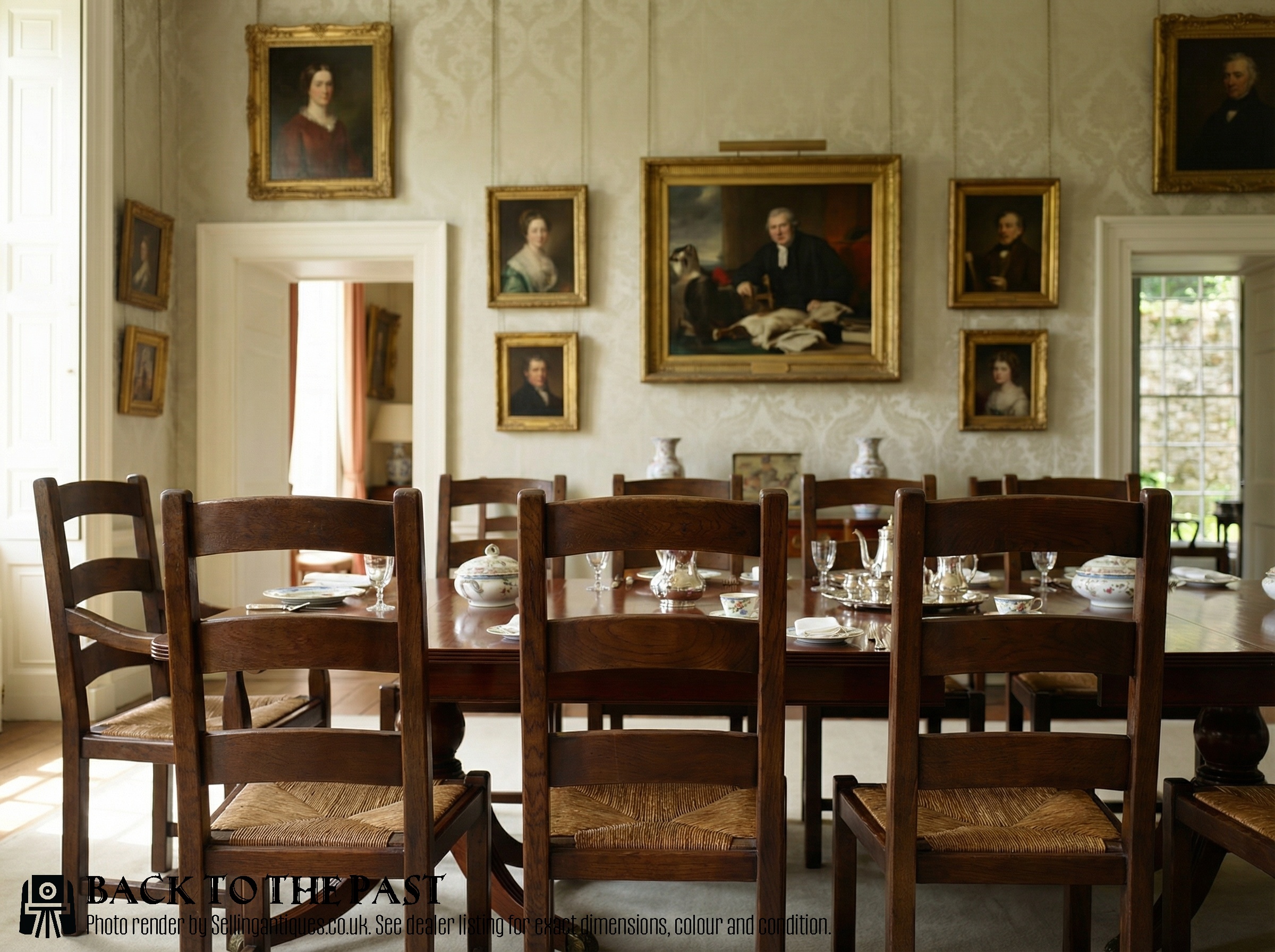
Oak Ladderback Chairs
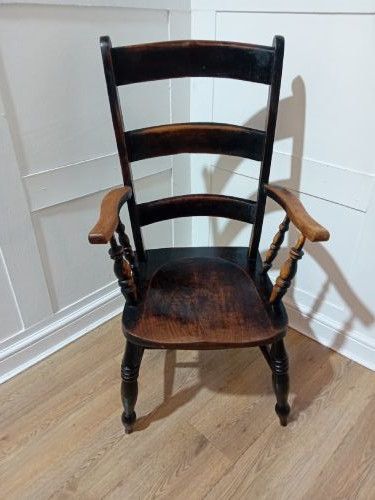
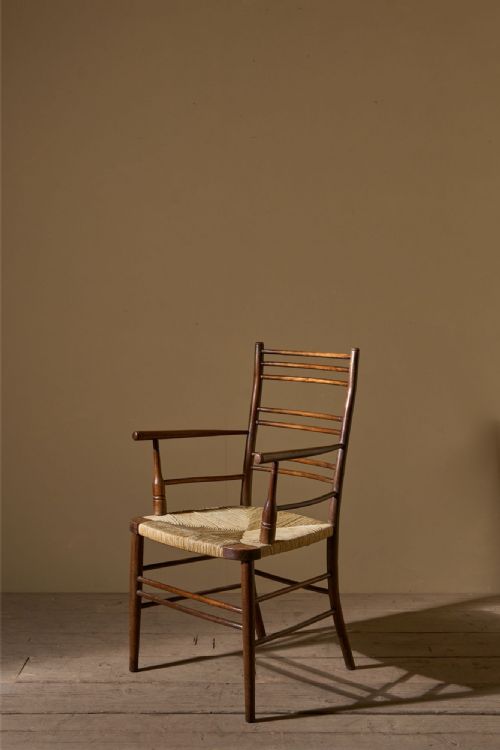
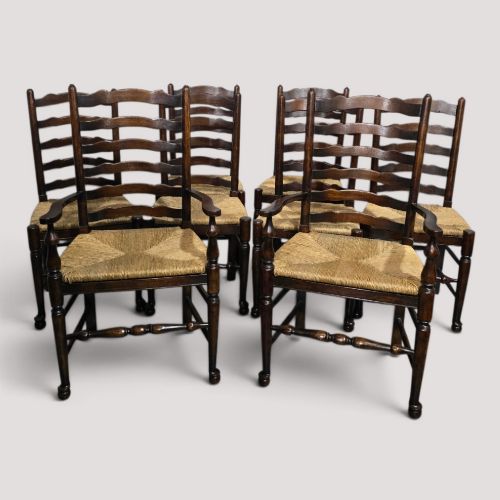
When you search for oak ladderback chairs, you encounter robust domestic seating defined by horizontal slats framed within upright posts. These chairs emerge in regional variations spanning the eighteenth, nineteenth, and early twentieth centuries, appearing singly or in matched sets for dining and kitchen use.
The selections on this page heavily feature English, Welsh, Irish, and French vernacular pieces, alongside Arts and Crafts revivals from around nineteen hundred to nineteen thirty. You will find standard side chairs, carver armchairs with low arms, rocking variants, and child-sized high chairs.
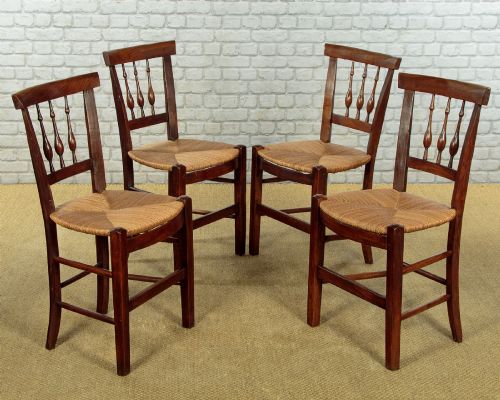
Many examples retain traditional rush seats woven tightly around the rails, while others incorporate solid timber panels or replacement pads. The formats range from simple two-slat country models to towering highback designs with multiple arched rungs.
Materials and construction
These pieces rely on solid framing timber, predominantly native oak complemented by elm, ash, or beech for turned spindles and secondary parts. Carpenters shaped components using traditional turning lathes and hand-drawknives to form the characteristic upright posts and curved back slats.
Seat construction typically involves natural marsh rush woven across internal seat frames, providing a flexible yet resilient platform. Joinery relies on pegged mortise and tenon joints, securing the horizontal stretchers that brace the legs against daily movement.
Oak Ladderback Chairs Retail Price Guide 2026
Typical asking prices for oak ladderback chairs among the pieces listed under this phrase on Sellingantiques today, from the lower quarter to the upper quarter. They describe what is for sale here now, not the wider market.
Listings feature oak combined with rush, elm, ash, and beech across nineteenth-century and Arts and Crafts dining formats.
Assessing quality and integrity
Quality rests heavily on the retention of original surface finishes, from aged patinated oak to historic painted ash, rather than modern stripping. The slenderness and proportional curve of the horizontal back rails also indicate the maker's skill and the care invested in the design.
The tightness and uniformity of the rush weaving determine the durability of the seat, with older twisted cords showing superior tension compared to loose replacements. Furthermore, the survival of matching sets across four, six, or ten chairs elevates the commercial and historical standing of the group.
Liberty & Co·Lawrence Neal·Edward Gardener·Dicon Nance
The Oak Ladderback Chairs Glossary
- Ladderback
- A chair style featuring multiple horizontal wooden slats or rungs positioned between the two vertical rear uprights. These slats are often slightly curved to fit the sitter's spine.
- Rush seat
- A seating platform woven from dried marsh grass twisted into cords. This technique creates a durable, textured surface common in vernacular country furniture.
- Carver
- An armchair designed to match a set of dining side chairs, usually placed at the head of a table. These pieces feature low-set armrests integrated into the front posts.
- Stretcher
- A horizontal wooden bar connecting the legs of a chair to provide structural rigidity. Double stretchers offer additional bracing on heavy regional seating.
- Harlequin set
- A collection of chairs that share a similar style, period, or material but were not originally manufactured together as a single matched group.
Oak Ladderback Chairs: Frequently Asked Questions
How do I spot a true antique ladderback?
Examine the construction joints for hand-cut pegged mortises and look for natural timber movement rather than modern machine finishing. Historic wear patterns on the lower stretchers where feet rested also indicate genuine age.
Check the timber species used for secondary components, as regional makers frequently combined oak frames with ash or elm turned parts. Consistent hand-turned irregularities confirm production prior to industrial standardisation.
Are rush seats durable for daily dining?
Traditional rush seats withstand regular daily use surprisingly well because the twisted marsh grass possesses natural elasticity and strength. Protecting the fibres from excessive moisture ensures the seating remains resilient for decades.
Over time, original rush may soften or fray, requiring professional re-weaving by a traditional artisan. Avoiding direct sunlight prevents the dried grass from becoming brittle.
What is a harlequin dining set?
A harlequin set is a group of chairs gathered together because they share matching styles, materials, and periods, despite originating from different workshops. This practice allowed households to assemble larger seating quantities before standardised factory production.
Buyers appreciate these groupings for their charming variations in turning details and slat shapes. They offer a practical solution for larger dining tables while maintaining a unified historic aesthetic.
How do I distinguish regional chair styles?
Regional differences appear in the profile of the ladder slats, the turning of the posts, and the choice of secondary woods. For instance, Lancashire and Yorkshire models often feature distinctive wavy slats and multiple stretchers.
Irish and Welsh vernacular pieces display unique local turning patterns and proportions influenced by available timber stocks. Comparing the backrest curvature and finial shapes helps isolate specific geographical origins.