
Oak Hallway Side Table
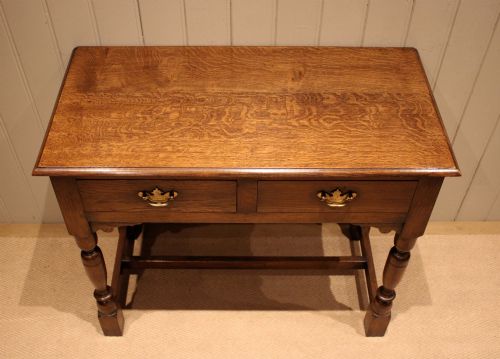
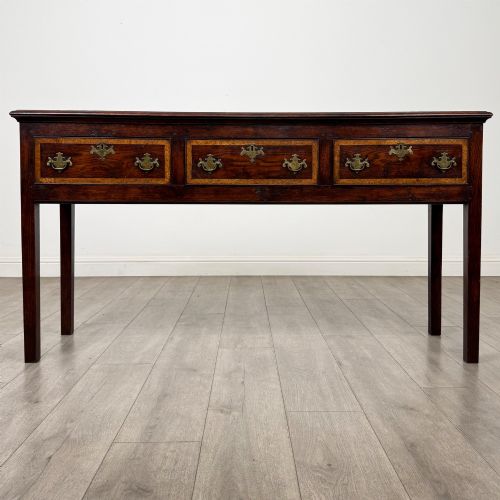
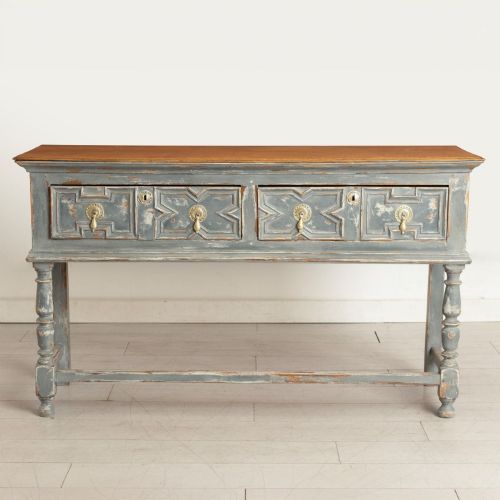
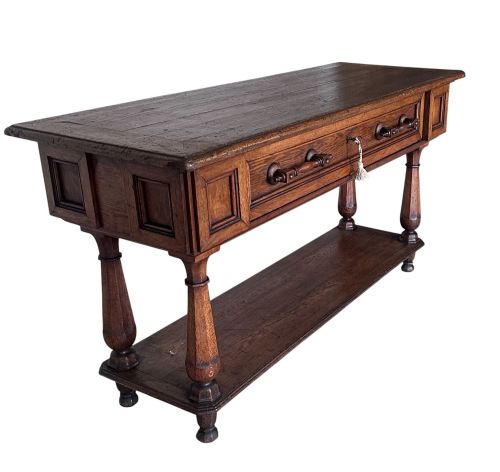
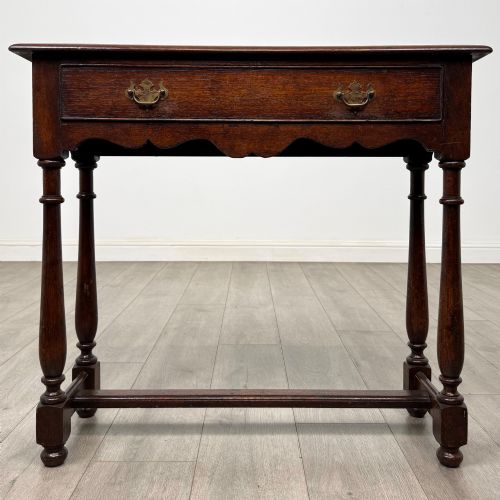
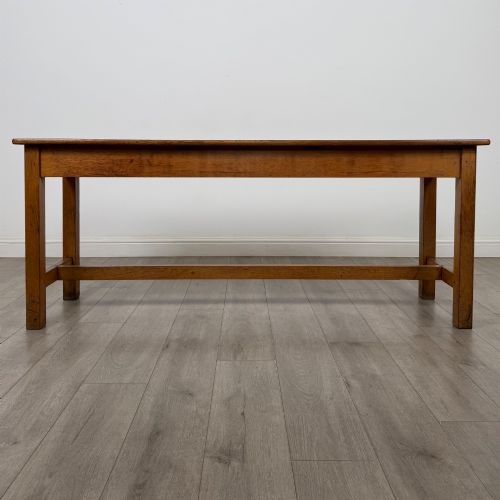
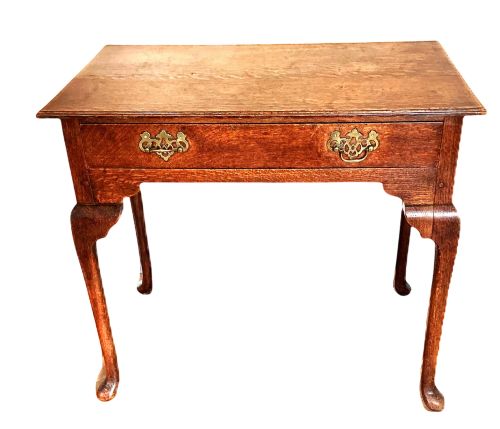
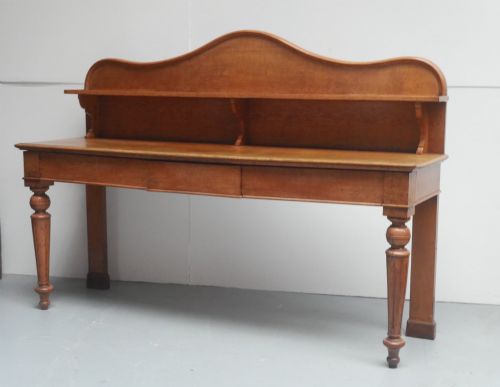
An oak hallway side table provides a sturdy surface for daily storage, ranging from compact Edwardian examples to substantial eighteenth-century dresser bases.
Oak Hallway Side Table
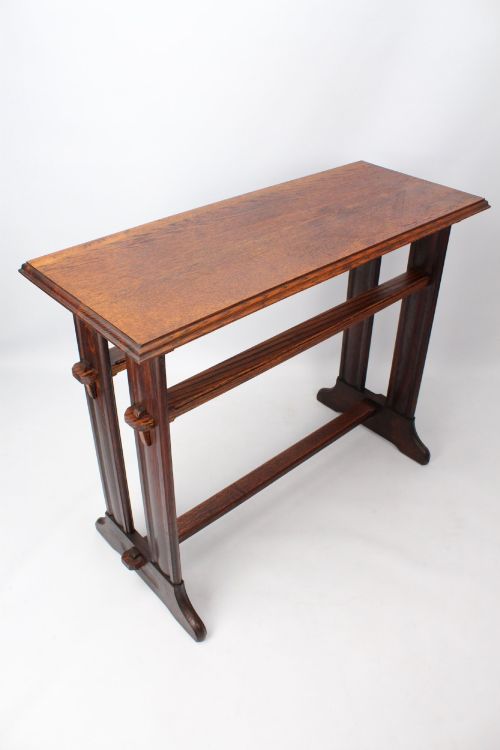
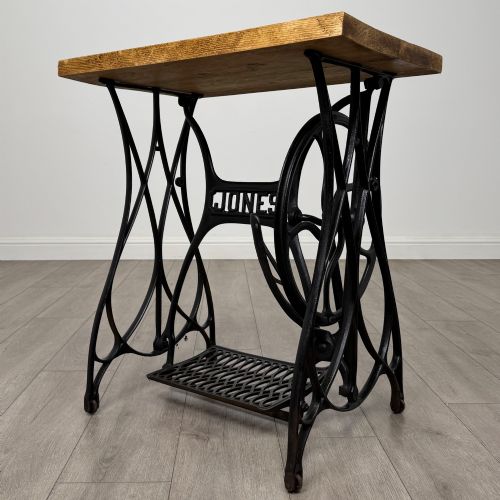
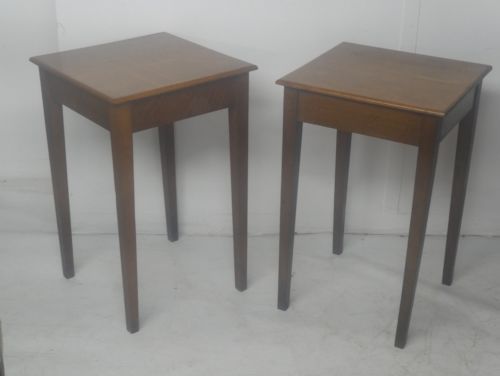
The oak hallway side table encompasses practical side tables, console tables, serving tables, and lowboys designed for narrow spaces.
Pieces span multiple periods including the seventeenth, eighteenth, and nineteenth centuries, alongside Edwardian and 1920s creations.
Regional variations appear across the selection, featuring English country styles alongside French provincial and Flemish designs.
Assessment of Quality
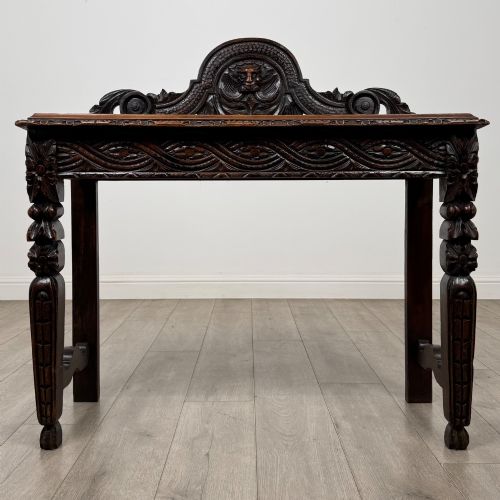
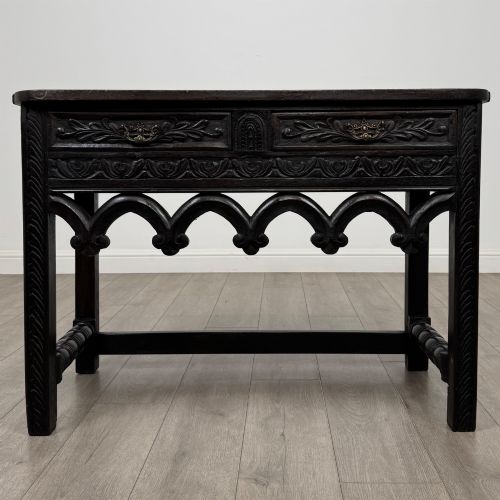
Depth of hand-carved detail and stylistic cohesion, such as Gothic Revival or Jacobean Revival motifs, distinguish individual items.
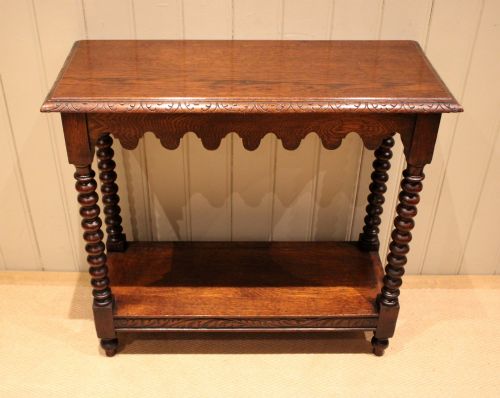
The choice of timber grain, golden tones, and surface patination elevate the visual weight of the piece.
Several tables feature carved Green Man motifs, watching over your hallway keys with medieval intensity.
The Oak Hallway Side Table Glossary
- Lowboy
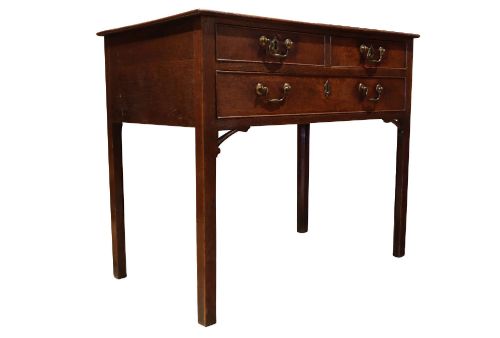
- A small table with one or more drawers, typically dating from the eighteenth century. These pieces often feature cabriole or turned legs.
- Dresser base
- The lower section of a kitchen or dining dresser, adapted as a sideboard or console table with deep storage drawers.
- Demi-lune
- A half-moon shape used for console tables designed to sit flush against a hallway wall.
- Console table
- A table supported by wall brackets or console legs, utilised primarily in entrance halls and reception rooms.
Oak Hallway Side Table: Frequently Asked Questions
How do I choose the right size for a narrow hallway?
Measure your available floor space carefully, noting both width and depth to ensure clearance for foot traffic.
Compact options like demi-lune tables or narrow Edwardian designs fit restricted areas without obstructing movement.
Can these tables withstand daily use in an entryway?
Solid oak construction provides durability and resistance to regular wear from keys, post, and bags.
Waxed or polished surfaces protect the timber while developing a deeper patina over time.
What is the difference between a lowboy and a side table?
A lowboy is a specific form featuring integral drawers and slender legs, originating prominently in the eighteenth century.
General side tables encompass a broader variety of forms, including simpler rectangular surfaces and serving tables.
How do I identify the period of an oak table?
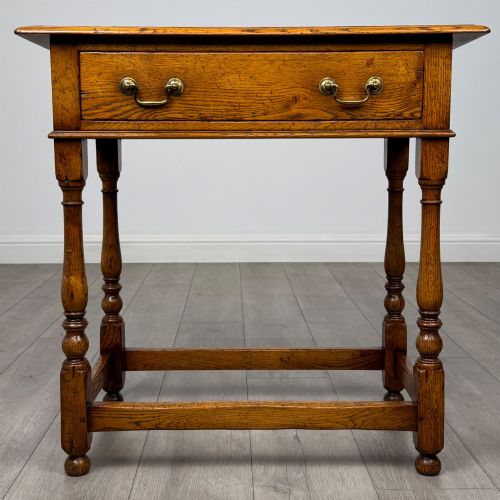
Examine construction methods, hardware materials such as brass or iron, and stylistic indicators like Gothic or Jacobean carving.
Turned leg styles and timber treatments often point towards specific decades spanning from the seventeenth to the twentieth century.