


Oak Entry Console
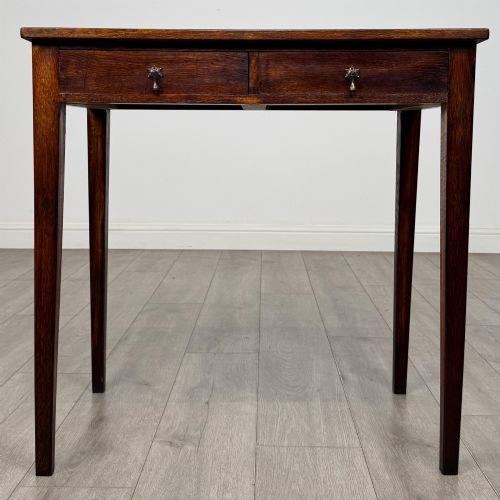
An oak entry console provides a sturdy landing place for letters and keys, bringing solid timber grain right to the front door.
Oak Entry Console
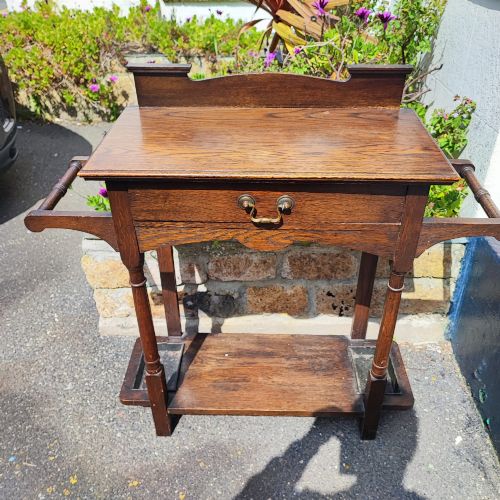
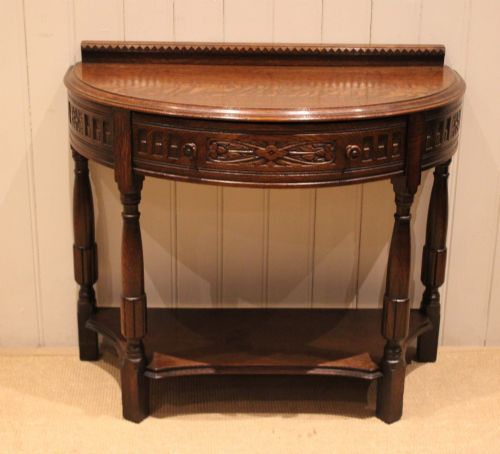
An oak entry console sits against a hallway wall, taking various forms from narrow side tables and lowboys to dedicated hall stands and serving tables. Buyers searching for an oak entry console will encounter pieces stretching from the seventeenth century through the Edwardian era, with nineteenth century items appearing frequently.
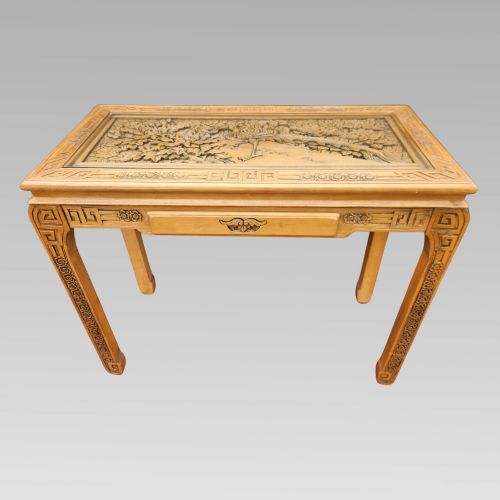
The selection ranges across several distinct stylistic revivals and regional interpretations. Pieces emerge in Jacobean Revival, Gothic Revival, and Arts and Crafts manners, alongside French provincial designs, Spanish furniture, and Chinese export carvings.
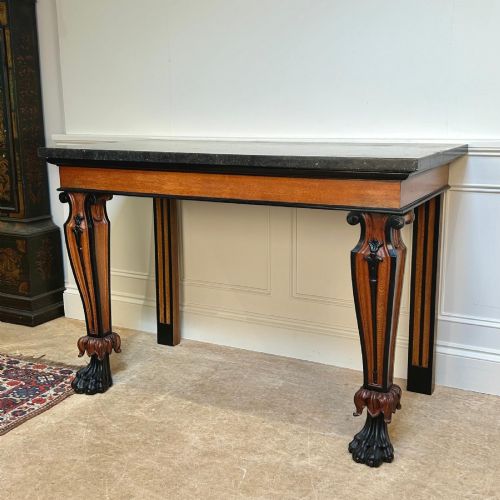
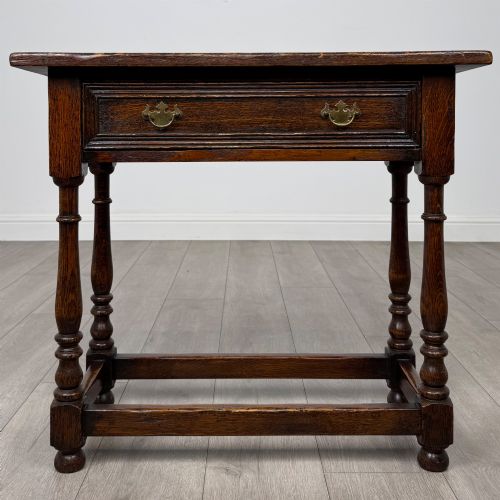
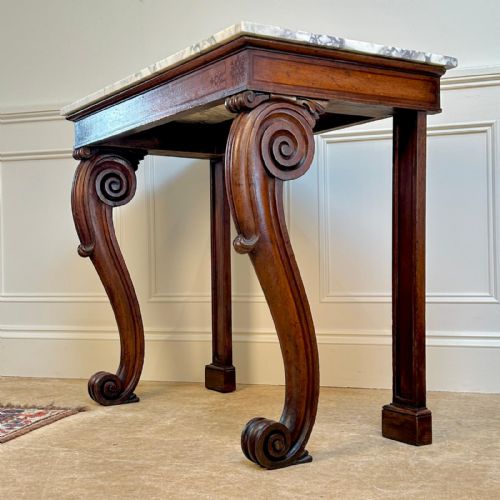
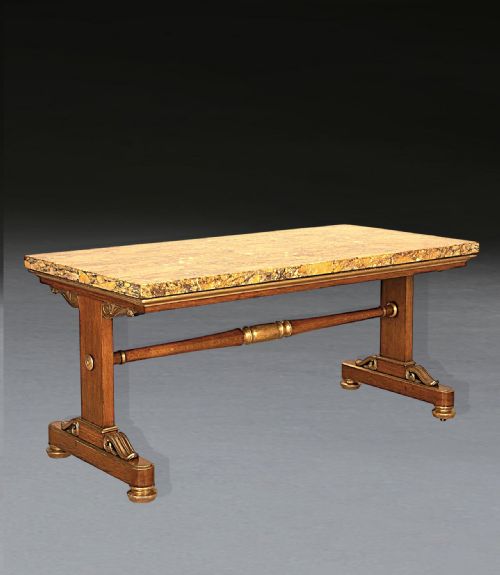
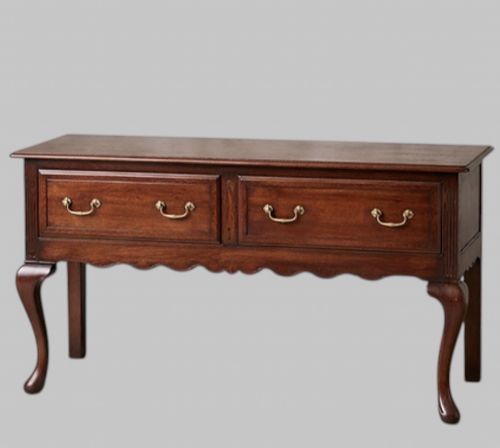
Functional variations include single drawer configurations, metamorphic designs, and tables paired with stick stands or marble tops. These items serve domestic hallways and corridors where depth is restricted and surface space is required.
Materials and Construction
Solid timber forms the core of these pieces, utilising oak alongside supporting materials like walnut, ebonised wood, and mixed timbers. Carpenters shaped the heavy wood using traditional joinery, often incorporating carved surface details.
Many examples integrate contrasting elements such as brass fixtures, ironwork, and inset marble or glass surfaces. Bleached finishes and giltwood accents appear alongside natural timber tones to alter the visual weight of the console.
Listings feature periods spanning from the seventeenth century through the Art Deco era of the 1930s.
Evaluating Craftsmanship
Quality rests in the handling of the timber and the crispness of any carved ornament, distinguishing restrained provincial joinery from elaborate revival pieces. The integration of secondary materials, such as Siena marble or fitted brass hardware, marks the distinction between standard utility items and ambitious architectural furniture.
Proportion dictates practical utility, particularly in narrow variants designed for confined hallways. The structural integrity of joints and the retention of original surface treatments determine the enduring character of each console.
The Oak Entry Console Glossary
- Console table
- A table designed to stand against a wall, frequently secured to the vertical surface or supported by front legs. These items occupy narrow spaces in halls and corridors.
- Lowboy
- A small oak table featuring one or more rows of drawers beneath the working surface. This domestic form dates back centuries and functions effectively as a compact console.
- Demi-lune
- A half-moon shape used for console tables designed to sit flush against a wall. This profile minimises floor intrusion in entryways.
- Giltwood
- Timber treated with gold leaf or gold paint to create a reflective surface. This finish highlights carved details on select tables.
- Ebonised wood
- Timber stained or treated to resemble ebony. This dark finish provides a formal contrast in nineteenth century design.
Oak Entry Console: Frequently Asked Questions
Where should I place an entry console?
These tables belong in hallways, corridors, and entrance lobbies where floor space is limited. Their narrow depths allow passage while offering a surface for daily items.
Positioning the console near the front door creates a natural drop point for keys and post. Pairing the table with a mirror or a hall stand completes the entryway arrangement.
How do I identify a Gothic Revival console?
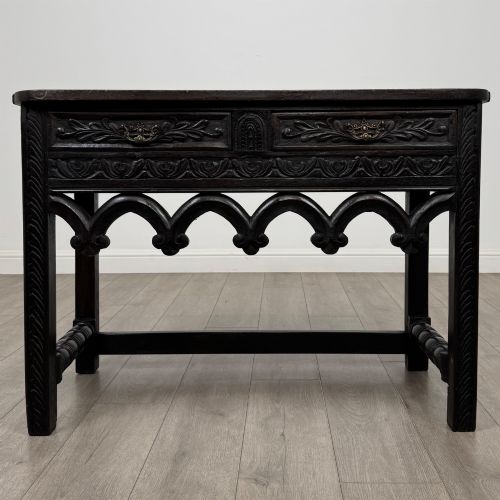
Gothic Revival pieces display architectural motifs such as pointed arches, trefoils, and heavy carved tracery. These design elements reflect medieval building traditions revived in nineteenth century furniture.
The timber is typically dark oak, often complemented by robust construction and solemn proportions that echo ecclesiastical woodwork.
What is the difference between a console and a side table?
Console tables are specifically proportioned to stand against a wall, sometimes historically fixed in place. Side tables are versatile freestanding items that can float within a room.
In practical usage within modern hallways, the terms overlap considerably. Both types provide surface space in narrow dimensions.
How do I care for antique oak furniture?
Antique oak benefits from stable indoor environments away from direct heat sources and dramatic humidity shifts. Regular dusting with a dry, soft cloth prevents particulate buildup on the grain.
Applying appropriate wax occasionally preserves the finish and nourishes the timber. Avoid liquid polishes that contain silicone or heavy solvents.