


Oak Hallway Settle
An oak hallway settle turns a draughty entrance into a welcoming room, offering timber construction and hidden storage.
Oak Hallway Settle
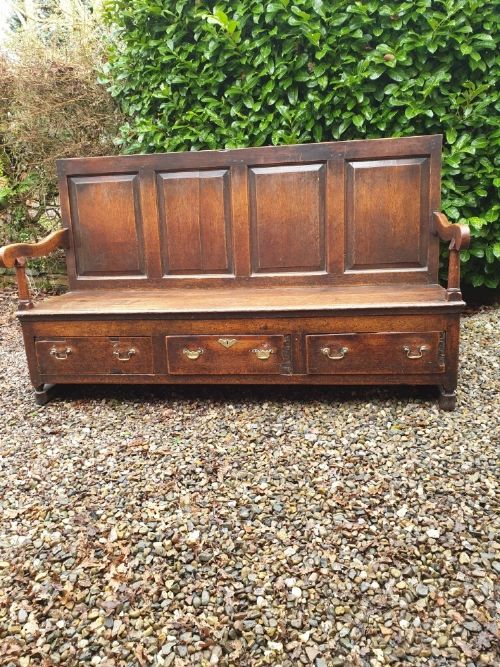
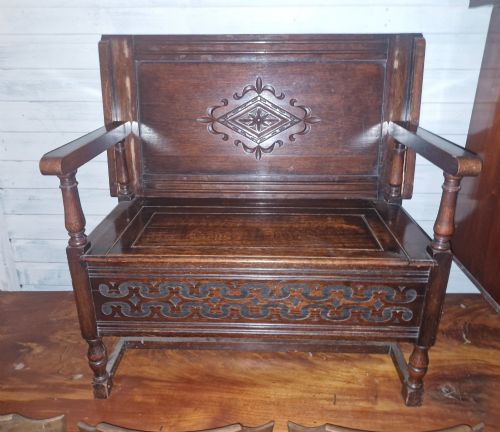
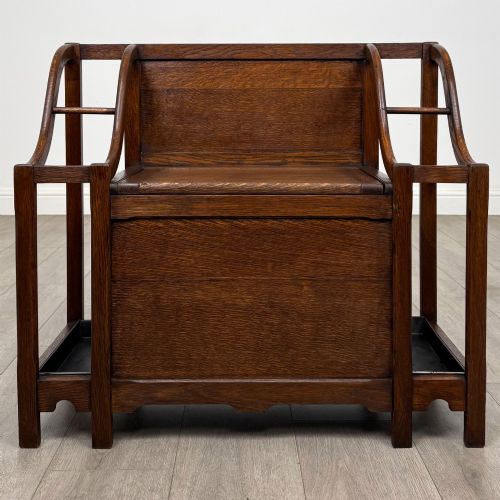
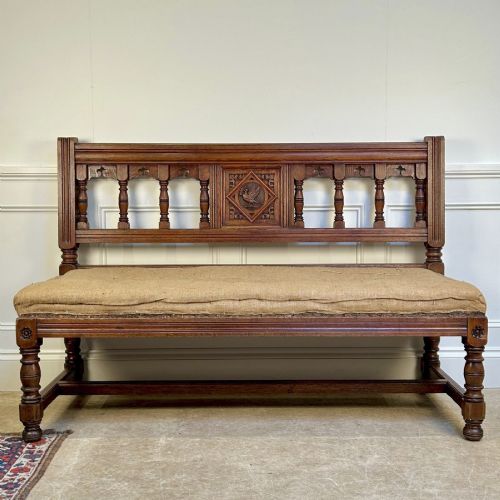
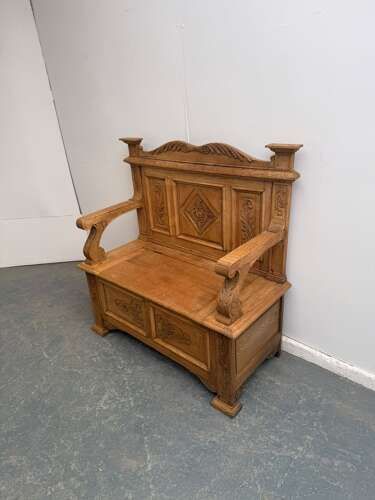
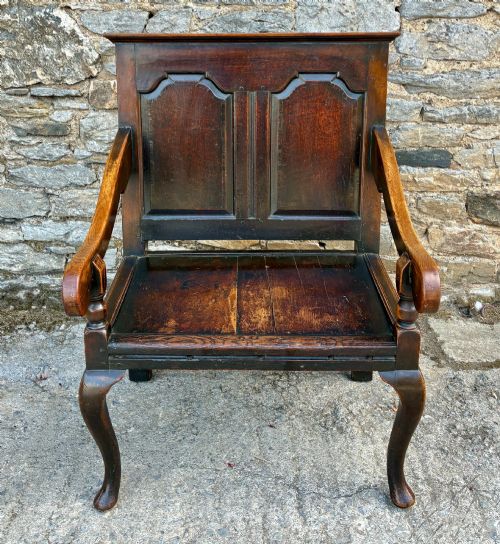
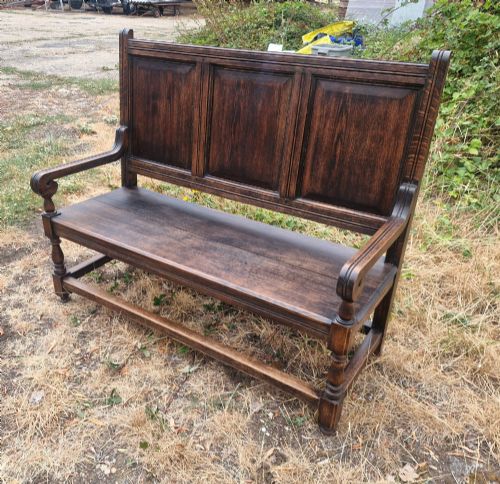
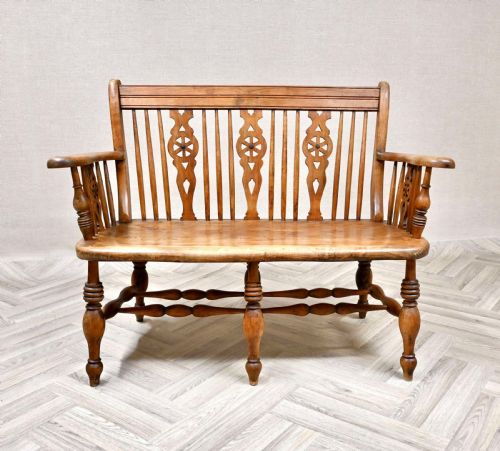
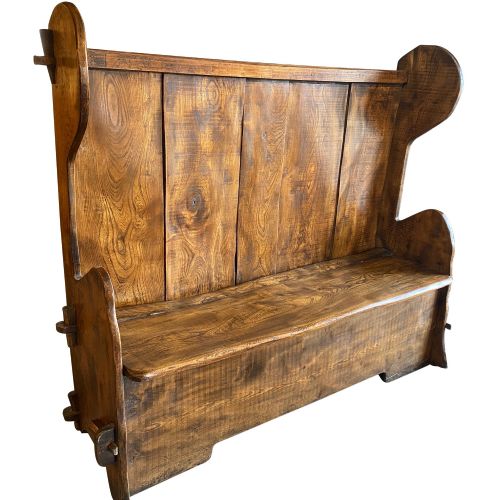
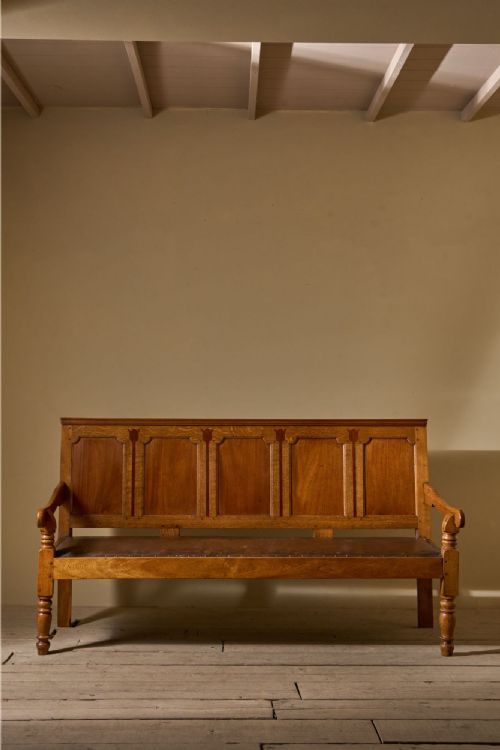
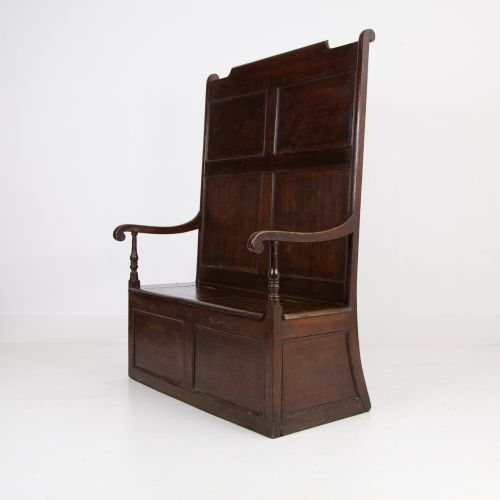
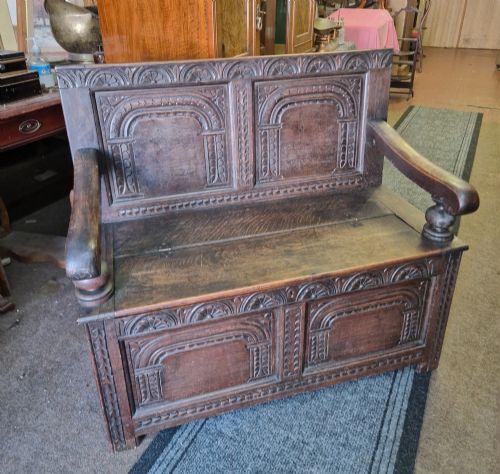
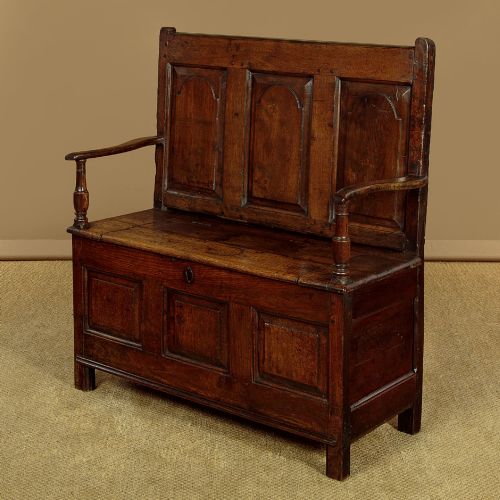
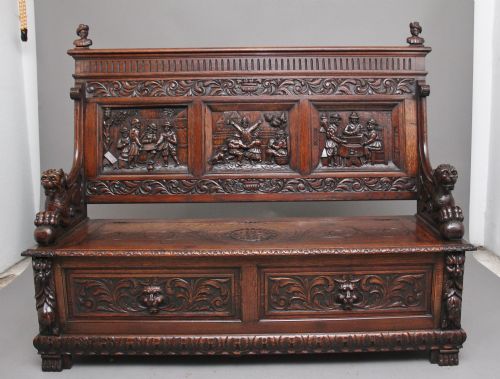
An oak hallway settle functions as a substantial bench for seating, frequently incorporating a high back to block cold drafts in entrance halls and passages. The pieces seen here span centuries of British domestic life, ranging from vernacular country pieces to elaborate revival designs.
Materials and construction
Cabinet makers built these benches primarily from solid oak, sometimes combining elm or other native timbers for secondary parts, utilising traditional mortise and tenon joinery secured with wooden pegs. Panels were typically held within grooved frames to allow for natural wood movement as seasonal humidity shifted.
Many examples feature surface enrichment through hand carving, utilising linenfold, geometric panels, or applied mouldings depending on the period. Brass hinges, iron straps, and occasionally fabric or leather upholstery appear as functional and decorative hardware additions.
Listings feature oak hallway settles spanning the seventeenth century through to the Edwardian period, utilising solid elm, brass mounts, and iron hardware.
Assessing quality and proportion
Proportion and timber selection dictate the distinction between vernacular workshop items and finer cabinet-made examples. Grain configuration, depth of colour achieved through wax finishing, and the integrity of the original joints establish the standing of a piece.
The sophistication of the carving separates standard regional work from pieces carrying distinct stylistic ambition or workshop attribution. Original ironmongery and untouched hinges contribute significantly to the integrity of older survivals.
GIllows·Shapland & Petter·Wylie Lockhead Manufacturers·James Shoolbred & Co.
The Oak Hallway Settle Glossary
- Box settle
- A wooden bench featuring an enclosed base with a lift-up seat lid for storage. This form kept household items dry and organised in communal halls.
- Monks bench
- A convertible seat whose hinged back folds forward to form a small table top. It served multiple functions in compact living spaces.
- Pannelled
- Constructed with framed wooden panels fitted into grooves to prevent warping. This method allows solid timber to expand and contract safely.
- Green man
- A sculptural face carved from foliage or branches, symbolising rebirth. This motif occurs frequently on Victorian and revival woodwork.
Oak Hallway Settle: Frequently Asked Questions
How do I use an oak hallway settle today?
These benches fit neatly into narrow hallways, mudrooms, and entrance spaces to provide both seating and concealed storage for shoes, scarves, and parcels. Their high backs also serve to visually anchor a large wall space in period properties.
Many owners style them with simple wool cushions or squabs to soften the timber seat while retaining the historic character of the frame.
How do I tell an 18th-century settle from a Victorian revival piece?
Eighteenth-century examples typically display hand-planed surfaces, pegged joinery showing irregular tool marks, and native timber shrinkage consistent with age. The construction methods reflect vernacular joinery traditions rather than industrial production.
Victorian and Edwardian revival pieces often utilise machine-sawn components, more uniform timber colour, and bolder, deeper carving executed in the Jacobean or Gothic taste.
What is the difference between a settle and a monks bench?
A standard settle remains a fixed seat with a high back and enclosed or open armrests, primarily designed for sitting and storage. A monks bench incorporates a pivoting mechanism that allows the backrest to fold down flat over the arms, creating a makeshift table.
While both act as hall furniture, the monks bench offered dual utility for smaller domestic interiors during revival periods.
How do I care for a waxed oak finish?
Maintain the timber by applying a natural beeswax polish sparingly once or twice a year, buffing it gently with a soft cloth to nourish the grain. Avoid placing the bench near direct heat sources or in strong sunlight, which can dry out the oak and cause splits.
Clean the surface simply with a dry or very slightly damp cloth, avoiding modern chemical sprays that strip historic patina.