




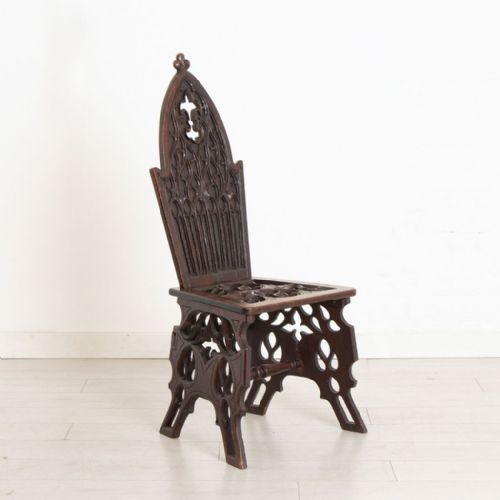

Gothic Tracery Seat
These gothic tracery seat examples combine medieval architectural motifs with robust timber and metal frames, offering both sturdy utility and striking historic presence.
Gothic Tracery Seat
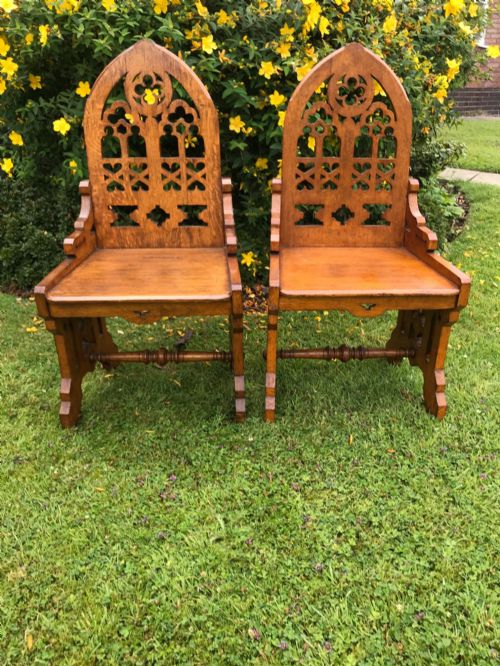
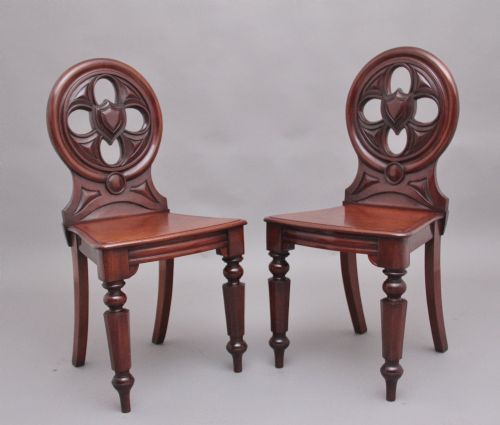
A gothic tracery seat brings ecclesiastical stone window patterns into domestic furniture, manifesting primarily as hall chairs, substantial oak benches, settles, and armchairs. These pieces emerge across the eighteenth, nineteenth, and early twentieth centuries, drawing heavily upon revival movements and Georgian Gothick interpretations.
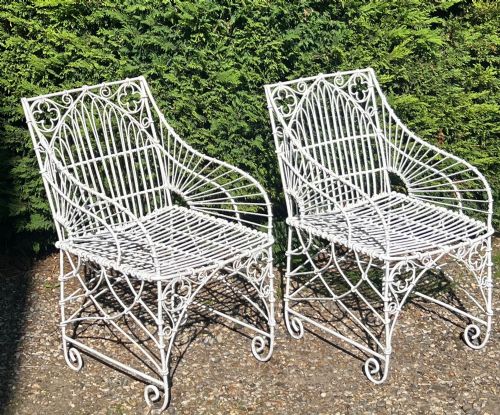
The version most commonly encountered on this page is the nineteenth century oak hall chair or bench, often displaying rigorous vertical proportions and carved pointed arches. Alongside timber seating, the inventory accommodates cast and wrought iron garden furniture alongside simulated rosewood dining sets from the Regency period.
Materials and construction methods
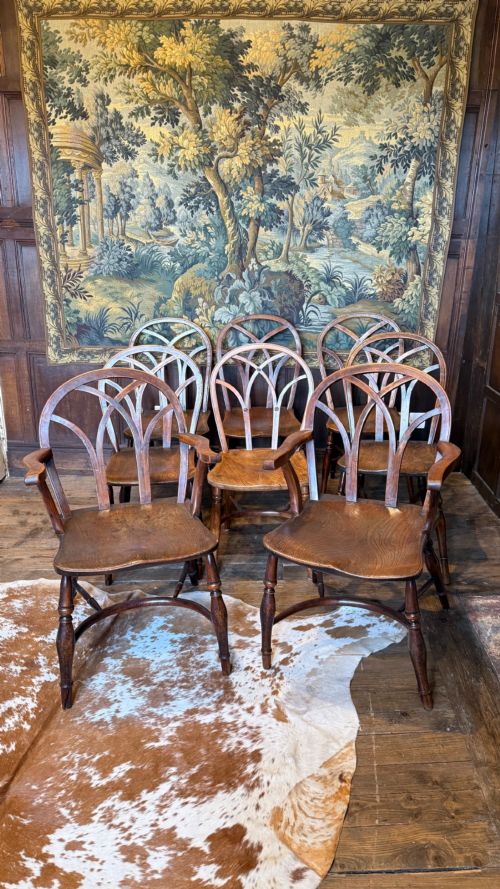
Carpenters and joiners built these items predominantly using native hardwoods such as oak, mahogany, elm, and yew, shaping heavy timbers with traditional mortise and tenon joints to support intricate openwork carving. Oak predominates in the nineteenth century revival pieces, while earlier eighteenth century examples utilise rich mahogany.
Metal versions rely upon foundry work, employing cast and wrought iron to replicate stone tracery patterns within durable garden chairs and benches. Secondary materials such as leather upholstery provide comfort on library armchairs, while painted finishes and simulated rosewood treatments alter the surface appearance of specific frames.
Gothic Tracery Seat Retail Price Guide 2026
Typical asking prices for gothic tracery seat among the pieces listed under this phrase on Sellingantiques today, from the lower quarter to the upper quarter. They describe what is for sale here now, not the wider market.
Listings feature oak, mahogany, wrought iron, cast iron, yew, and elm across eighteenth, nineteenth, and early twentieth century periods.
Distinctions in craftsmanship and design
Quality separates pieces by the depth and precision of the carved tracery, where sharp, undercut architectural details demand far greater skill than shallow machine or factory stamping. The selection of timber grain, particularly in golden oak and figured mahogany, dictates the visual harmony of the finished structure.
Structural integrity also divides the range, distinguishing rigid, heavy-gauge cast iron garden sets and solid oak benches from looser, lesser-joined frames. Authenticity of period construction methods and integrated design unity further elevate superior examples above standard utilitarian seating.
The Gothic Tracery Seat Glossary
- Tracery
- The stonework ornamentation supporting glass in a Gothic window, adapted by cabinetmakers to decorate chair backs and panel inserts.
- Gothick
- The eighteenth century picturesque precursor to Victorian Gothic Revival, often lighter in scale and playfully asymmetrical.
- Settle
- A wooden bench with a high back, solid arms, and a closed base designed to block draughts in domestic hallways.
- Chippendale
- An eighteenth century furniture style defined by Thomas Chippendale's pattern books, incorporating pierced splats and gothic arches.
- Regency
- The British design period spanning the early nineteenth century, drawing inspiration from classical antiquity alongside exotic revival styles.
Gothic Tracery Seat: Frequently Asked Questions
What is a gothic tracery seat?
It is a chair, bench, or settle featuring carved wooden or cast metal openwork derived from medieval church architecture. These items range from formal eighteenth century mahogany armchairs to robust nineteenth century oak hall benches.
Craftsmen adapted window patterns into functional furniture to satisfy successive revival movements. They served practical roles in grand entrances, dining rooms, libraries, and gardens.
How were these seats used historically?
Hall chairs and benches were traditionally placed in grand entryways for visitors and servants waiting indoors. Library armchairs provided sturdy, comfortable seating for reading rooms and studies.
Garden chairs and matching iron benches were designed to withstand outdoor environments while echoing architectural themes. Many pieces doubled as decorative statements of historical lineage within domestic interiors.
How do I date a gothic tracery seat?
Dating relies on identifying timber species, construction joinery, and the specific revival movement represented. Eighteenth century Gothick pieces often display lighter proportions and mahogany, whereas nineteenth century Gothic Revival items favour heavy oak.
Iron garden furniture frequently points to mid to late nineteenth century foundry production methods. Secondary elements like button leather upholstery or simulated rosewood paint further help anchor pieces to specific decades.
How do I care for antique wooden seating?
Maintain timber frames by keeping them away from direct heat sources and sudden humidity changes. Regular dusting with a dry cloth protects the finish without stripping natural oils.
Leather elements on library armchairs benefit from specialised conditioning to prevent cracking over time. Iron garden furniture requires monitoring for moisture exposure to preserve the original metal surfaces.