
Oak Hall Seat Storage
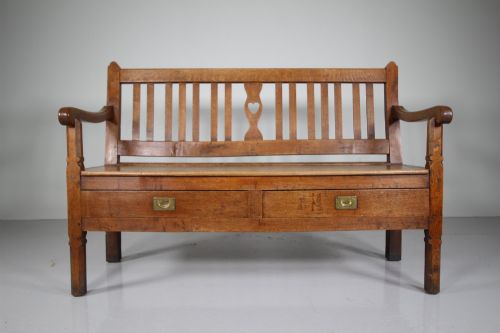
These robust pieces of oak hall seat storage combine practical utility with traditional craftsmanship to anchor an entrance hall.
Oak Hall Seat Storage
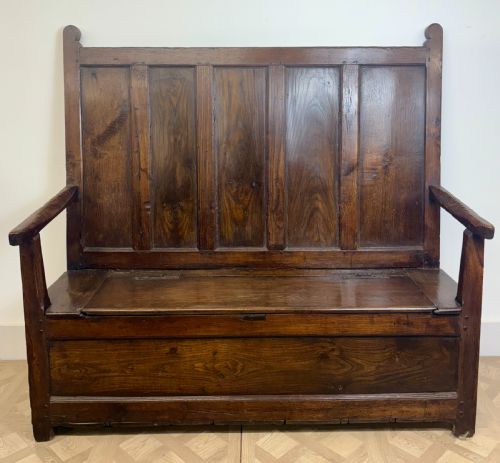
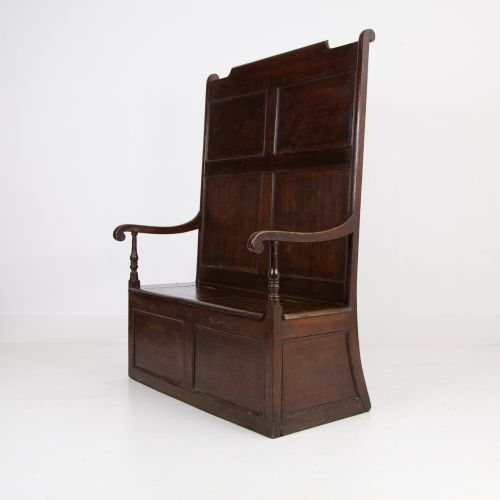
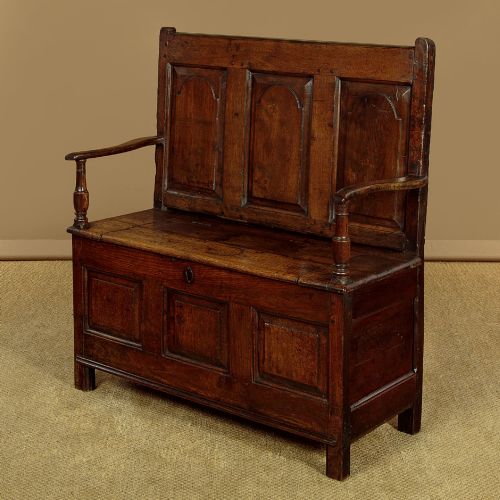
When you search for oak hall seat storage, you encounter substantial furniture designed primarily for entrance halls and corridors, offering both a place to sit and a compartment for belongings.
The selections span multiple eras, most frequently appearing in Victorian, Edwardian, and 18th century forms, alongside revival styles like Jacobean and Gothic.
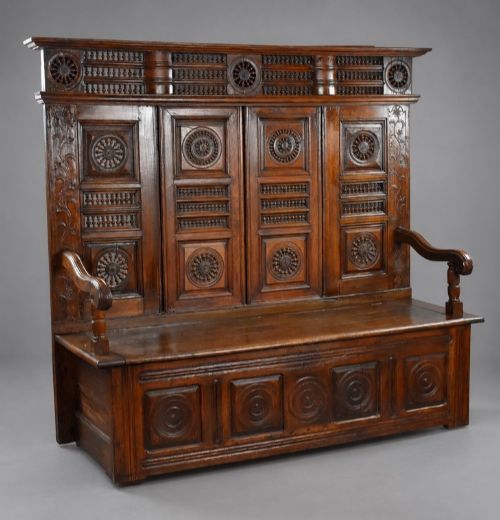
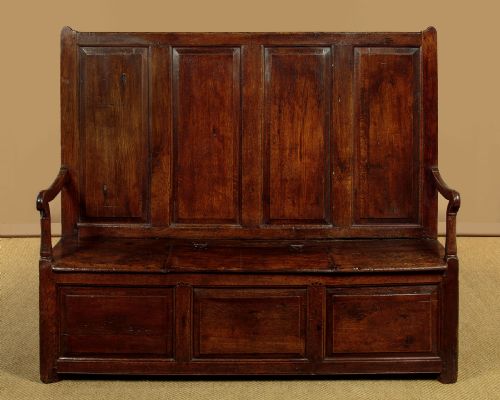
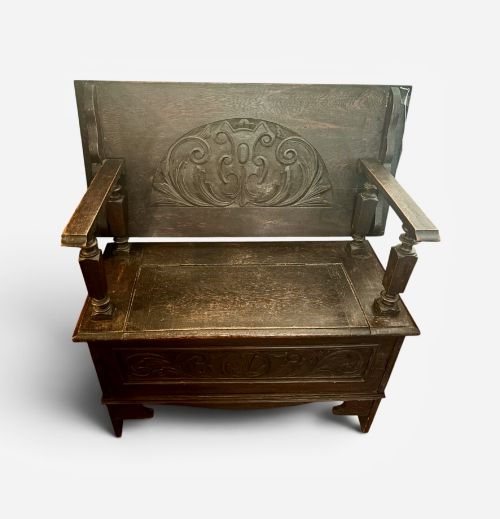
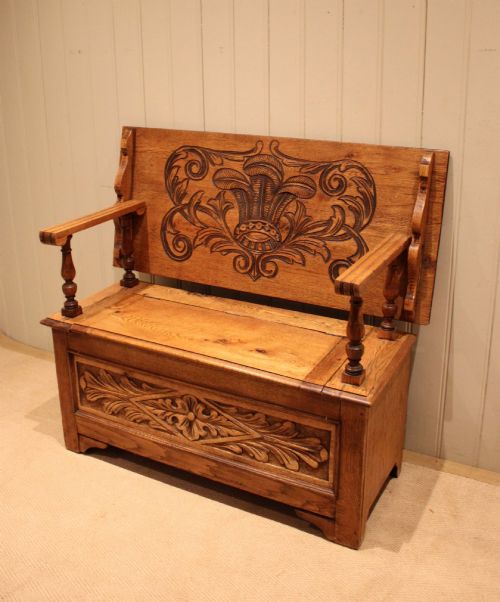
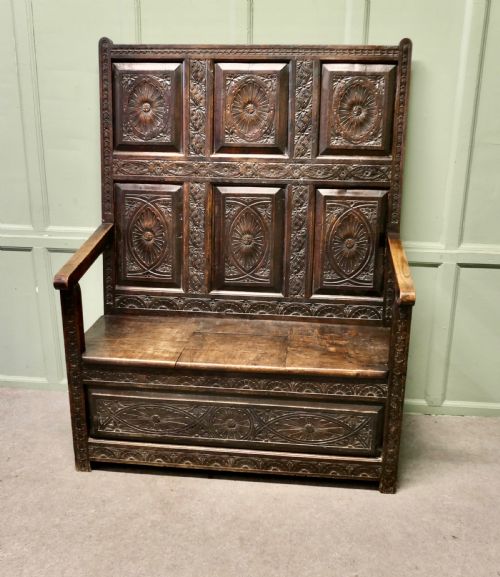
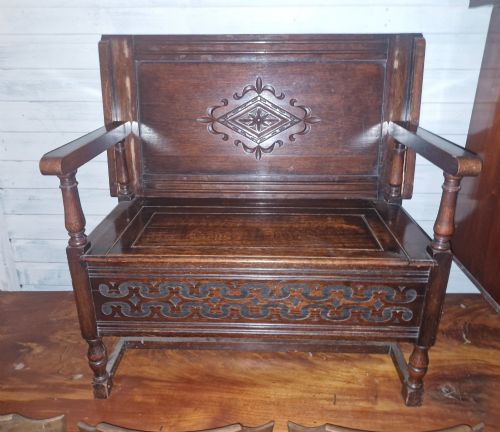
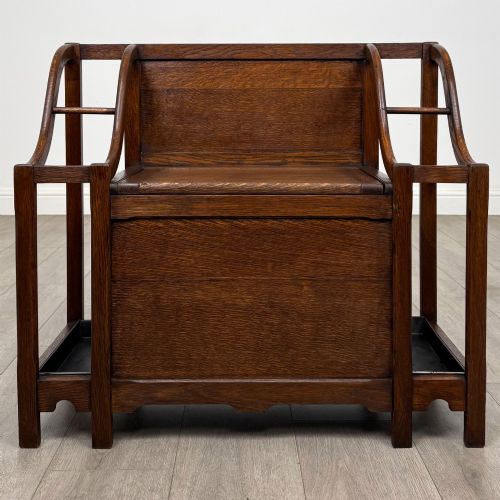
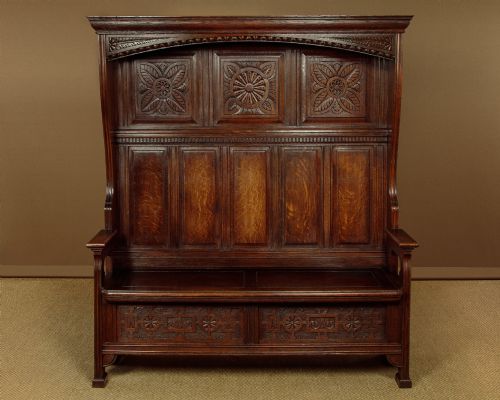
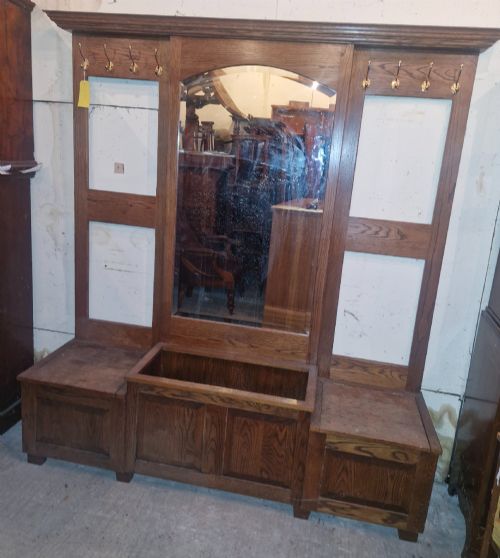
Forms range from high back box settles and monk's benches to hall stands with integrated cupboards and lift-up seats.
What varies in quality
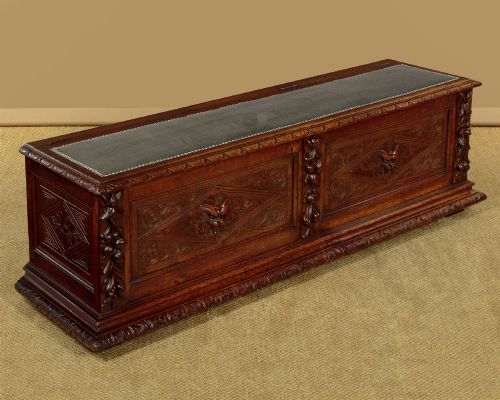
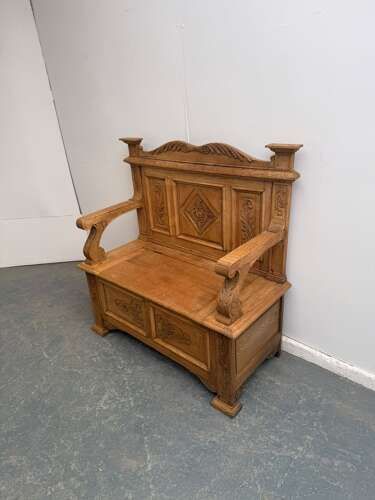
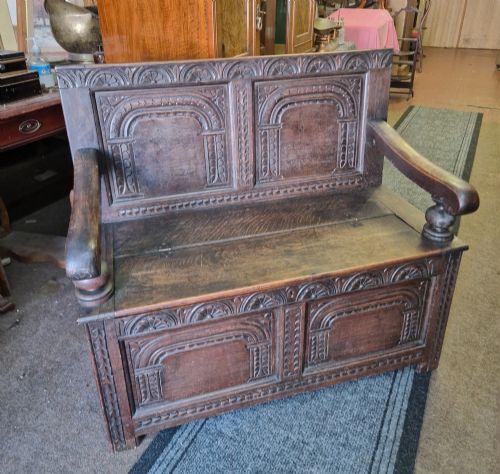
The depth and crispness of the carving distinguish standard utilitarian items from exceptional pieces, particularly on high back panels and arm supports.
Proportion and structural integrity matter greatly, separating well-balanced vernacular proportions from awkward later adaptations or heavy-handed restorations.
Certain designs incorporate carved Green Man motifs peeking out from the woodwork to watch over the hallway.
The Oak Hall Seat Storage Glossary
- Box settle
- A high-backed wooden bench with a enclosed compartment beneath the seat, traditionally used to keep draughts at bay in large hallways.
- Monk's bench
- A versatile convertible seat whose back folds forward to form a table top, often featuring concealed storage within the base.
- Hall stand
- A tall hall piece incorporating a seat, coat hooks, and often an umbrella stand or mirror, designed for entryway organisation.
- Jacobean Revival
- A 19th-century stylistic movement mimicking 17th-century English furniture through heavy proportions, geometric moulding, and deep panel carving.
Oak Hall Seat Storage: Frequently Asked Questions
How do I use an oak hall seat in a modern home?
Place the piece in an entrance hallway or boot room to provide a sturdy seat for putting on shoes while hiding clutter inside the compartment.
The integrated storage accommodates items like bags, scarves, and boots, keeping entryways tidy.
What is the difference between a settle and a monk's bench?
A traditional settle has a fixed high back and a box base, designed primarily for seating and storage.
A monk's bench includes a pivoting back mechanism that transforms the seat into a table top when lowered.
How do I identify an 18th-century box settle?
Look for hand- panelled construction, pegged joints, and timber showing natural ageing, surface wear, and a deep waxed patina.
Earlier examples tend to display simpler vernacular lines without the heavy carved ornamentation added during later revival periods.
Are these seats suitable for daily family use?
Solid oak construction and robust joinery make these pieces exceptionally durable for everyday hallway traffic.
The sturdy timber withstands regular sitting and daily opening of storage lids without losing structural stability.