


Oak Glass Tantalus
An oak glass tantalus holds spirits securely behind a locking mechanism, and these drinking cabinets bring period charm and clever domestic security to a room.
Oak Glass Tantalus
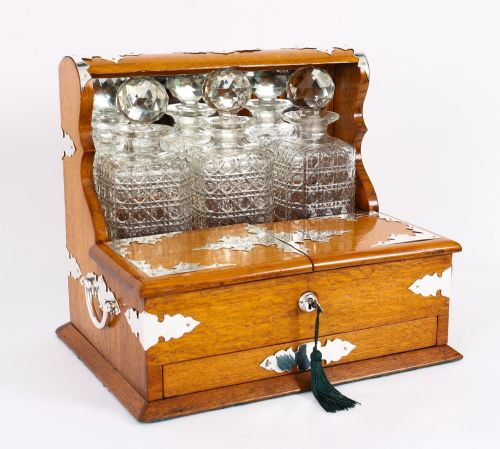
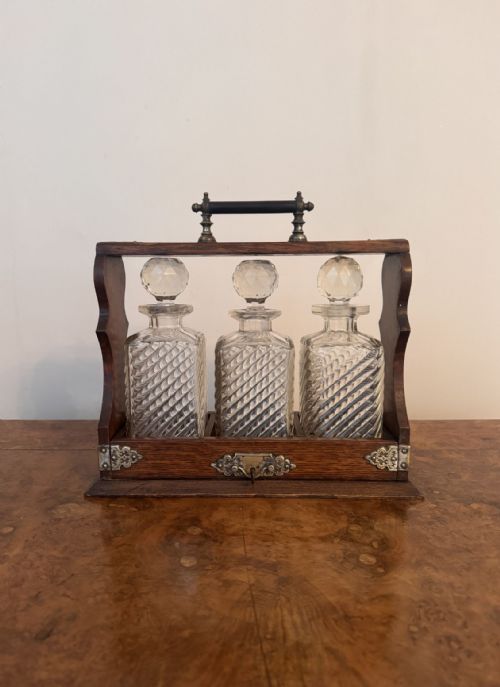
An oak glass tantalus serves as a secure drinking cabinet, designed to keep household spirits locked away from unauthorised hands while displaying the cut glass decanters within.
The pieces appearing on this page span the Victorian, Edwardian, and Art Deco periods, ranging from straightforward single bottle cases to elaborate compendiums incorporating games boxes.
Most examples rely on a robust wooden chassis fitted with metal locking bars, often holding two or three bottles complete with stoppers.
Materials and construction
Makers built these cabinets using solid or veneered oak, frequently highlighting blonde or golden tones alongside rich darker finishes.
Hardware components combine brass mounts and silver plated or electroplated fittings that operate the drop-front and locking mechanisms.
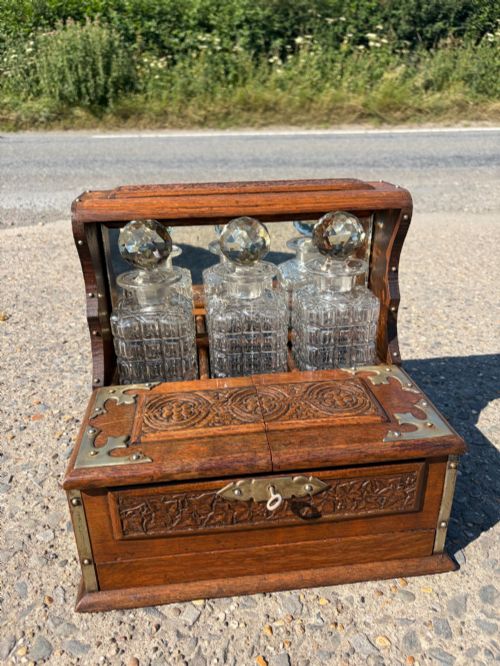
The interiors house heavy cut glass or cut crystal decanters, sometimes accompanied by mirrored backs and dedicated compartments for cards and counters.
Listings feature oak, cut glass, brass, and silver plate across Victorian, Edwardian, and 1930s periods.
Assessing quality
Superior examples distinguish themselves through finer cabinetwork, such as marquetry stringing and well-figured timber grain, rather than simple construction.
The weight and clarity of the cut glass decanters, alongside the substance of the brass or silver plated mounts, mark the difference between standard and high-end production.
Original working locks with matching keys and integrated folding game boards elevate the sophistication and completeness of a piece.
The Oak Glass Tantalus Glossary
- Tantalus
- A locking drink container that displays decanters while preventing access until unlocked by a key. The name derives from the mythological figure punished by eternal thirst.
- Compendium
- A multi-purpose box containing games equipment alongside the drinking vessels. These pieces combine social recreation with hospitality.
- Marquetry
- Inlaid wood patterns used to decorate the cabinet surfaces. Craftsmen insert contrasting veneers into the primary oak background.
- Electroplate
- A thin coating of silver applied to base metals via an electrical current. This technique provided the appearance of solid silver hardware on mounts and handles.
Oak Glass Tantalus: Frequently Asked Questions
How does the locking mechanism work?
Turning the key allows the vertical metal bar to lift or slide free from the wooden frame, releasing the handles of the decanters.
When the bar is lowered and locked, the stoppers cannot be removed from the bottles, preventing anyone from pouring a drink.
Are the decanters always original to the case?
Many pieces retain their matched cut glass or crystal bottles, often featuring deeply cut patterns that fit precisely into the wooden base recesses.
Because decanters were fragile and frequently used, replacements occur, so checking the fit against the partitions is standard practice.
What is a games compendium tantalus?
This hybrid form combines the locking spirit cabinet with a fold-down front or drawer containing playing cards, boards, and gaming pieces.
Victorian and Edwardian households utilised these combination boxes to save space and entertain guests after dinner.
How do I care for the oak and metal?
Maintenance requires simple dusting and occasional application of appropriate furniture wax to nourish the oak without building up heavy residues.
Metal mounts benefit from gentle cleaning to preserve the finish, avoiding harsh abrasives on silver plated surfaces.