


Cut Glass Decanter Caddy
A cut glass decanter caddy secures your spirits behind polished metal and timber, bringing Victorian and Edwardian hospitality straight to the sideboard.

Cut Glass Decanter Caddy
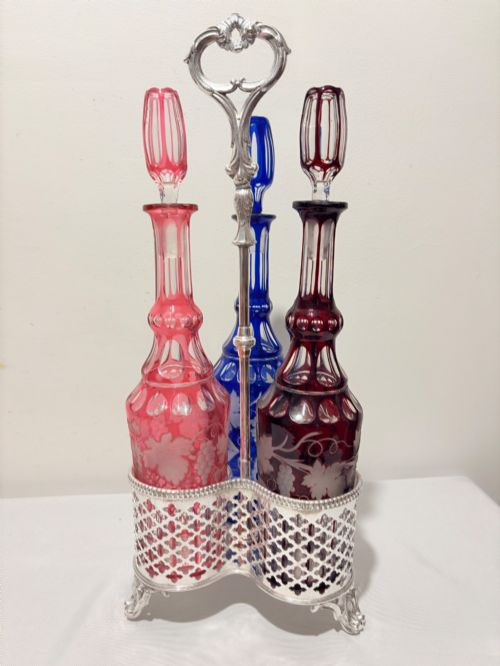
A cut glass decanter caddy combines heavy glass vessels with secure frames, often known as tantaluses, stands, or liquor coves from the nineteenth and early twentieth centuries.
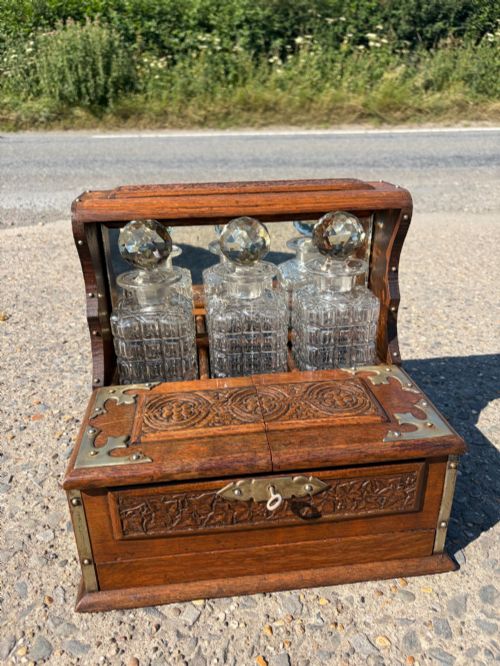
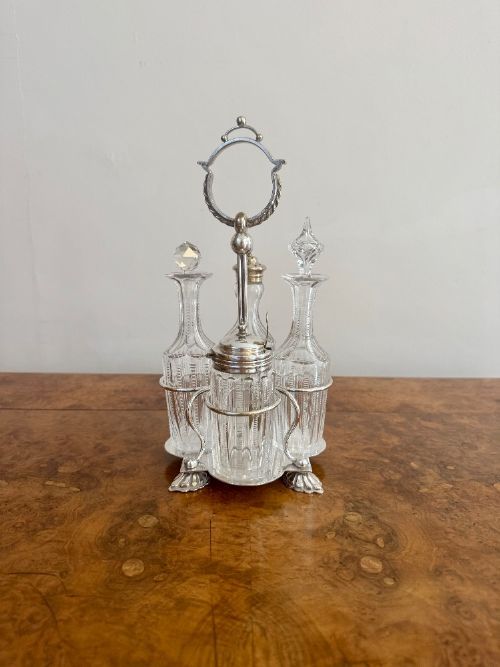
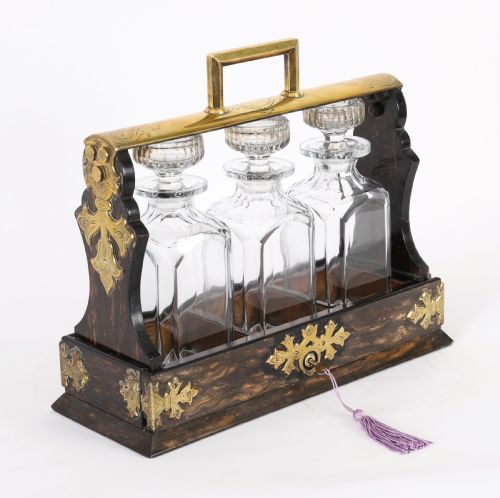
The pieces appearing here span the Victorian, Edwardian, and Art Deco periods, encompassing forms from simple silver plated frames to elaborate coromandel and walnut caskets.
You will most commonly encounter oak frames fitted with silver plate and holding two or three cut crystal decanters, designed to lock away the contents or display them proudly.
How they were made
Craftsmen shaped sturdy timbers like oak, walnut, and coromandel wood into robust table caskets and stands, frequently mounting them with brass or silver plated hardware.
Glassmakers blew heavy lead crystal and cut geometric facets into the surface of the decanters to catch the light, pairing them with matching stoppers.
Listings feature items from the Victorian, Edwardian, and Art Deco eras, constructed in oak, walnut, coromandel, and silver plate.
What varies in quality
The distinction between ordinary and exceptional pieces lies in the weight of the timber, the crispness of the glass cutting, and the heft of the silver plating or ormolu mounts.
Sophisticated mechanisms, locking bars with working keys, and exotic woods like coromandel separate ambitious cabinet work from standard domestic frames.
Wade Wingfield Wilkins
The Cut Glass Decanter Caddy Glossary
- Tantalus
- A locking drink cabinet or stand that holds decanters securely in place while revealing the bottles inside. The locking mechanism prevents unauthorized pouring.
- Silver Plate
- A thin layer of silver fused to a base metal like copper or nickel silver, widely utilised for frames, handles, and mounts.
- Coromandel Wood
- A dense, heavily figured timber from Asia with dark brown and black stripes, prized for luxury nineteenth-century boxes and tantaluses.
- Cave a Liqueur
- A French liquor chest or casket containing fitted glass decanters and matching glasses, often decorated with ormolu mounts.
- Cruet Set
- A frame holding glass bottles for condiments, oils, or sauces, sharing similar silver plated metalwork with decanter stands.
Cut Glass Decanter Caddy: Frequently Asked Questions
What is a tantalus?
A tantalus is a locking decanter frame designed to keep servants or guests from helping themselves to the spirits.
By securing the stoppers beneath a metal bar, the bottles cannot be removed without a key.
How do I date an oak tantalus?
Dating relies on the hardware, timber choice, and overall style of the cabinet work.
Victorian examples often feature heavy brass mountings and coromandel or solid oak, while later Edwardian versions lean towards simpler oak frames.
Are keys usually included?
Many antique locking frames survive without their original working keys due to the passage of time.
Locks can sometimes be opened or attended to by a specialist locksmith if needed.
How do I clean cut glass decanters?
Gentle washing with warm water and mild soap preserves the clarity of the lead crystal.
Avoid sudden temperature changes to prevent cracking the heavy glass.