
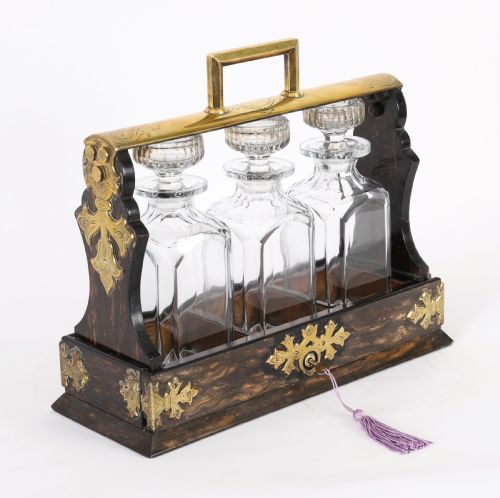


Victorian Liquor Tantalus
A victorian liquor tantalus secures your spirits behind a clever locking bar while displaying cut crystal decanters for evening entertaining.
Victorian Liquor Tantalus
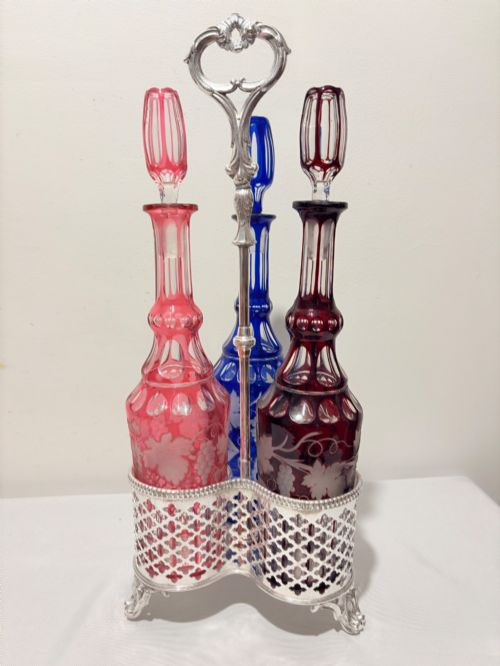
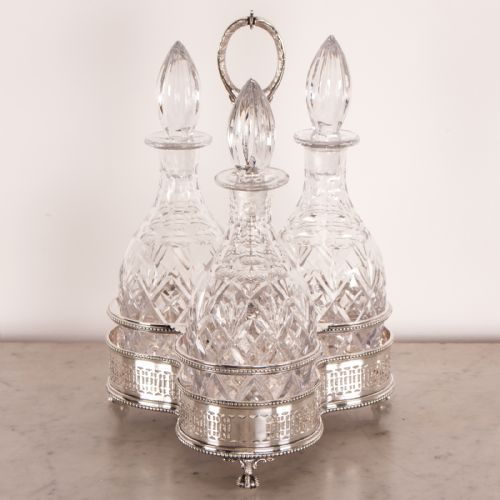
A victorian liquor tantalus forms a secure housing for spirits, designed to prevent unauthorized access to expensive drinks during the nineteenth century. These items appear primarily as fitted wooden frames or locking stands that hold multiple glass containers.
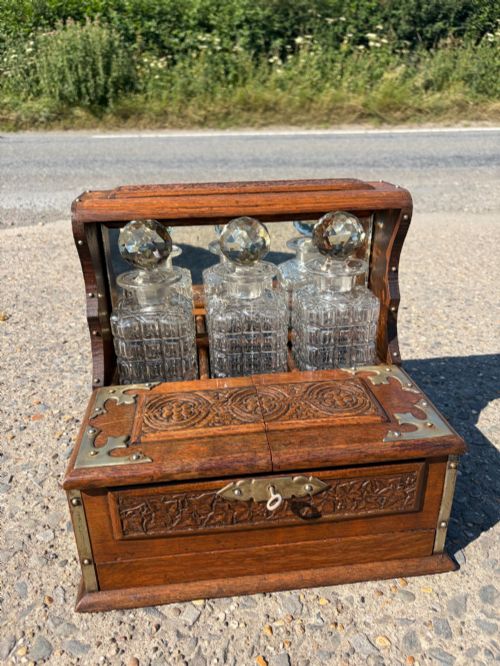
The examples on this page span from the mid-nineteenth century through the Edwardian transition, encompassing both oak and exotic wood constructions. Oak remains the most common timber seen, often fitted with brass mounts and silver-plated locking mechanisms.
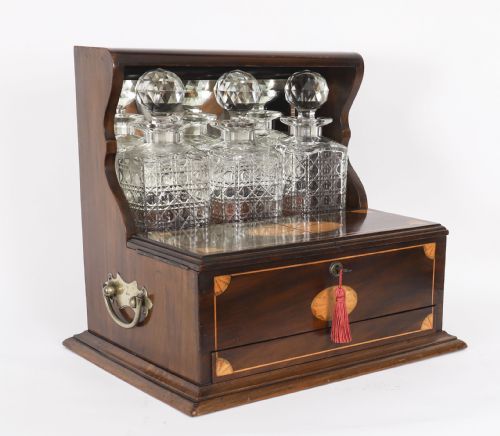
Makers housed either three or four bottles within these stands, sometimes combining the spirits container with a games compendium, humidor or dry bar. Decanter boxes and stands also represent related forms fulfilling a similar role for domestic hospitality.
How they were made
Cabinet makers constructed the bodies using dense hardwoods like oak, walnut, coromandel and pollard oak, frequently applying inlay, marquetry stringing or brass mounts to the exterior. Interior surfaces often incorporated mirror glass and velvet linings to hold the glassware securely.
Metal components relied on silver plating or solid brass for the locking bars, handles and hinges, while decanters utilised heavy cut crystal, cut glass or frosted glass. Specialised metalwork manufacturers supplied the patented locking actions that immobilized the stoppers until the side bar lowered.
The recorded items include alternative serving forms such as frosted glass barrels, spirit tots, dry bars and combined games compendiums.
What varies in quality
Quality rests upon the selection of timber and the complexity of the internal fittings, such as integrated games compendiums or humidor compartments alongside the bottles. Heavier brass mountings, substantial silver plating and superior grain figures in pollard oak or coromandel separate finer examples from standard production.
The integration of the locking mechanism and the original matching set of cut crystal decanters dictate the standing of a piece. Comprehensive sets retaining original keys, undamaged stoppers and fully operational patented bar mechanisms command greater attention from collectors.
Walker and Hall·Elkington·Betjemann Brothers·Hukin and Heath·Philip Ashberry·Mappin Brothers
The Victorian Liquor Tantalus Glossary
- Tantalus
- A locking drink container that keeps decanters visible yet physically inaccessible until unlocked. This device earned its name from the mythological figure of Tantalus, who suffered eternal thirst within sight of water.
- Coromandel
- A dense, dark exotic timber with contrasting grain patterns utilised for luxury nineteenth-century boxes and cabinetwork. It provides a striking backdrop for brass mounts and silver-plated hardware.
- Decanter box
- A fitted wooden case designed to hold spirit bottles upright during travel or domestic storage. Unlike open stands, these boxes enclose the glassware entirely when shut.
- Silver plate
- A layer of silver fused to a base metal ground, commonly utilised for the locking bars, carrying handles and framework of barware. It offered the visual appeal of solid silver at a lower cost.
- Games compendium
- A multi-use box containing equipment for various indoor pastimes, occasionally built into the base or sides of a liquor stand. These dual-purpose items served gentlemen's studies and drawing rooms.
Victorian Liquor Tantalus: Frequently Asked Questions
How does a tantalus lock work?
The locking bar runs across the necks of the glass decanters, preventing the stoppers from being lifted out while the side mechanism remains secured by a key.
Turning the key releases the hinged bar, allowing it to drop or swing aside so the bottles can be lifted free from their fitted base.
Were these pieces used for travel?
Certain examples functioned as travelling bars or fitted decanter boxes designed to be secured inside carriages or luggage during transit.
Stationary versions remained on sideboards and buffets within dining rooms and drawing rooms for evening hospitality.
How do I identify the period?
Cabinet timbers, hardware styles and registration marks help narrow down the date of production across the nineteenth century.
Earlier examples often feature coromandel and heavy brass mountings from the mid-Victorian era, while later pieces commonly employ oak and patented locking bars from the final decades of the century.
What drinks were kept inside?
Whiskey, gin and brandy formed the standard trio of spirits housed within three-bottle stands during the Victorian period.
Labels or cut glass patterns frequently denoted the intended contents for each decanter stored behind the locking bar.