


Oak Geometric Sideboard
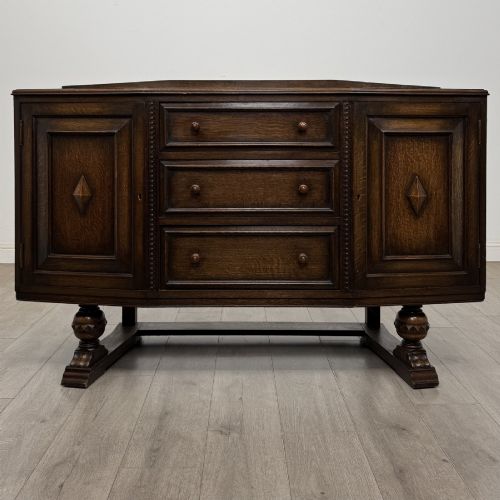
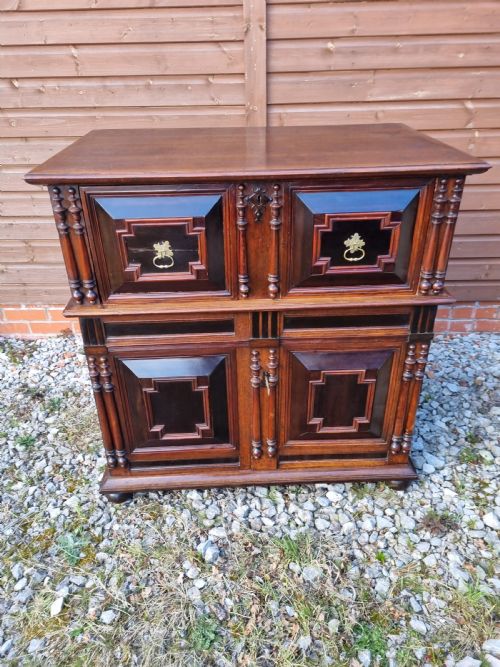
An oak geometric sideboard brings seventeenth-century architectural moulding and heavy timber into a room with striking depth.
Oak Geometric Sideboard
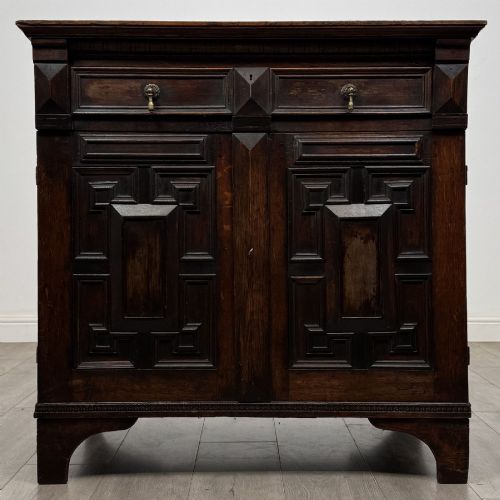
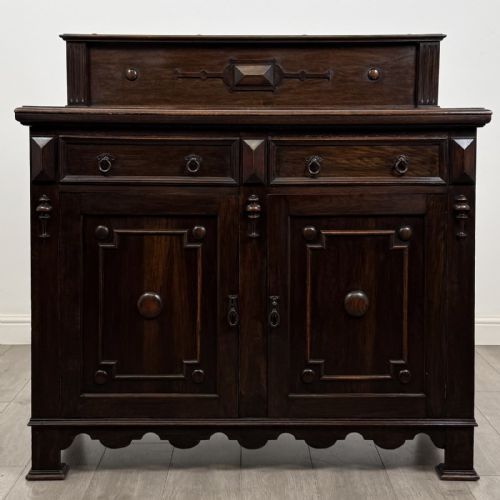
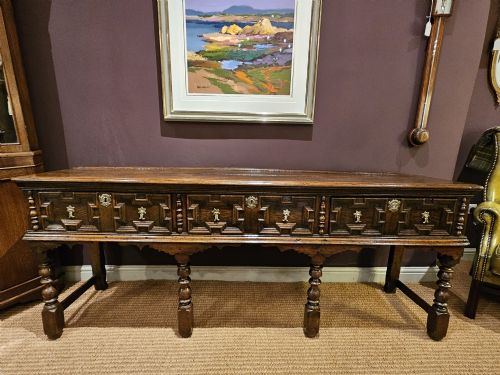
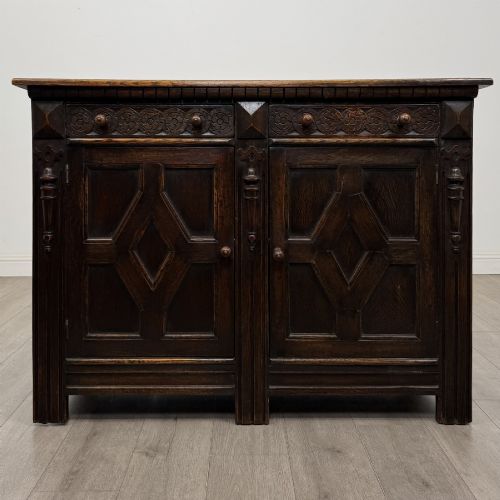
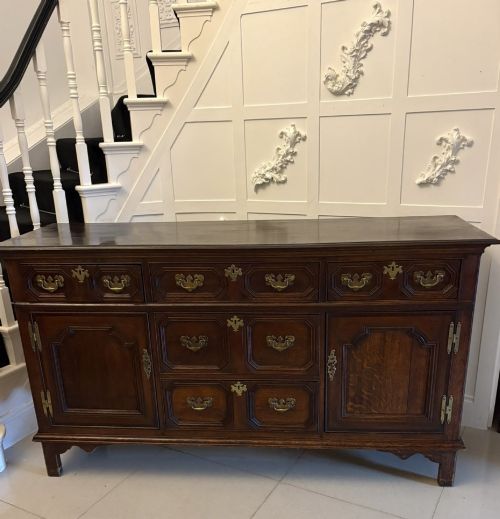
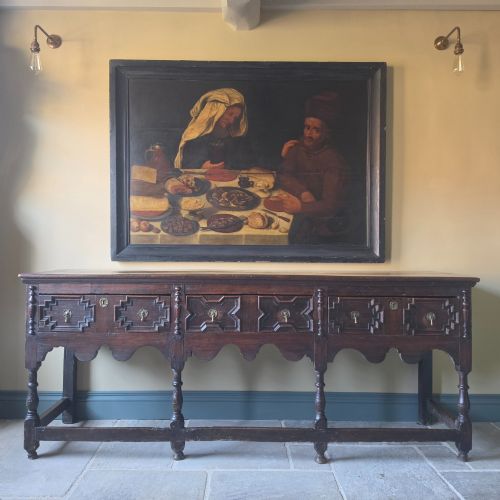
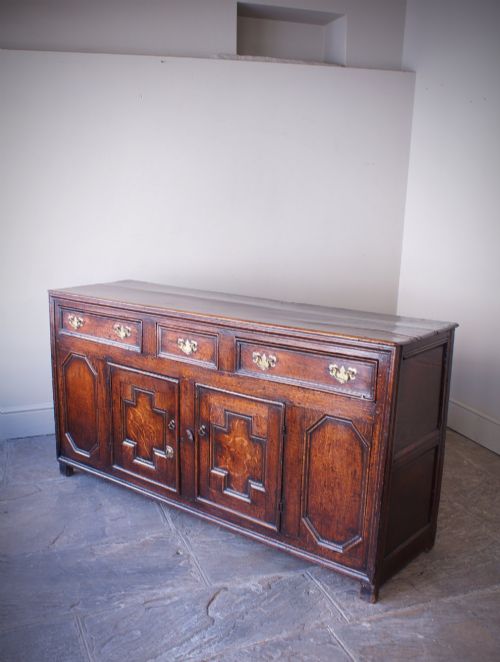
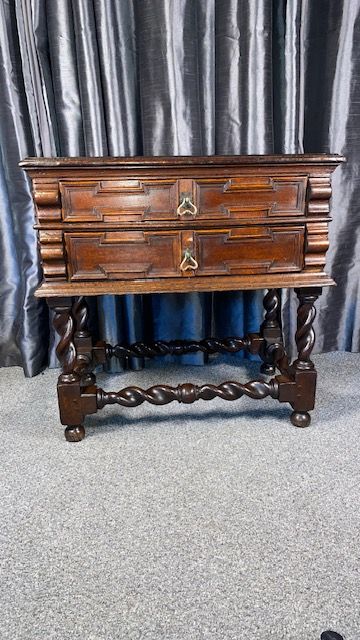
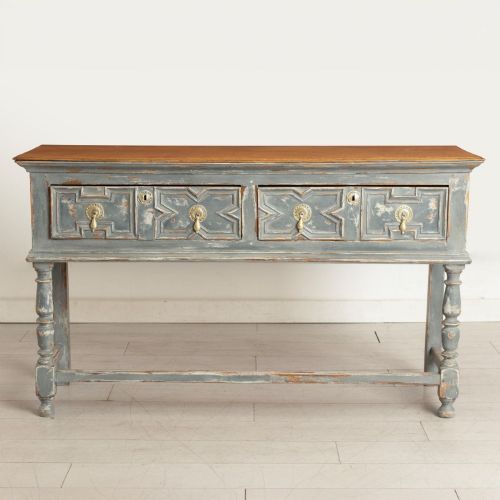
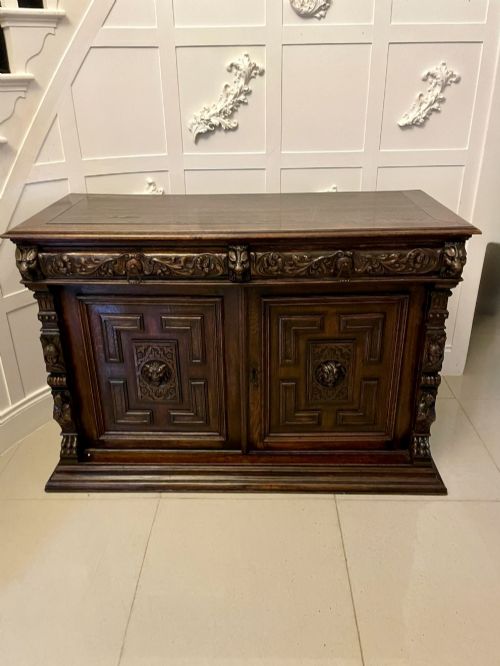
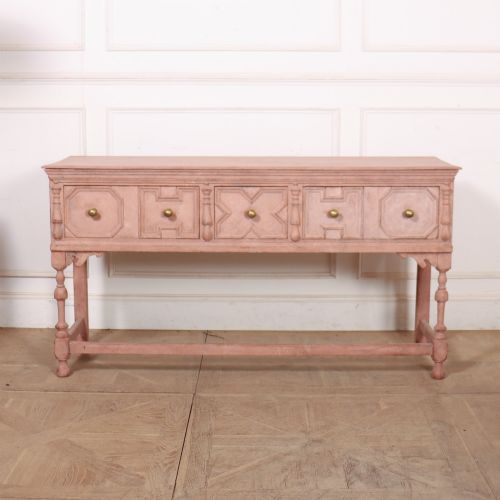
An oak geometric sideboard encompasses low dresser bases, serving dressers, and carved cupboards built with structured relief panels on the drawer fronts. These forms range from seventeenth-century originals featuring block fronts and moulded panels to later revivals produced across the nineteenth and twentieth centuries.
The version most commonly met on this page is the seventeenth-century dresser base or its early twentieth-century Jacobean revival counterpart. These pieces offer deep storage drawers and sturdy surfaces, often enriched with contrasting wood inlays or applied mouldings.
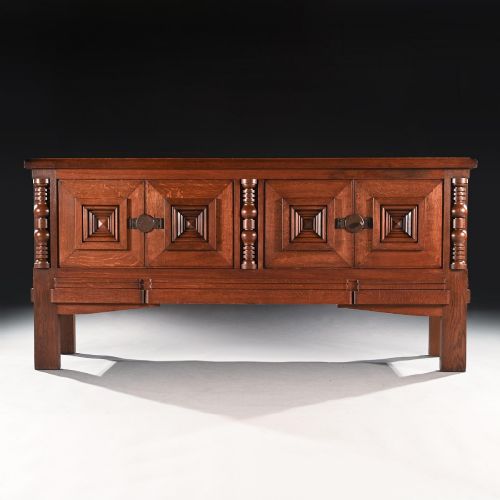
Makers such as Maple & Co and designers like Charles Dudouyt also appear in revival and twentieth-century interpretations, showing how the heavy rectilinear format adapted over time. The category bridges utilitarian dining room storage and sculptural furniture history.
Materials and construction methods
Carpenters built these pieces primarily from solid oak, supplementing the primary timber with secondary woods like fruitwood, sycamore, ebony, and walnut for contrasting geometric decoration. Panels were frequently shaped into mitred mouldings and applied to drawer fronts to create heavy visual depth.
Joinery relied on traditional pegged mortise and tenon frames, ensuring structural rigidity for heavy serving furniture. Secondary materials such as brass drop handles, iron hardware, and leaded glass occasionally complete the construction, depending on the period.
Oak Geometric Sideboard Retail Price Guide 2026
Typical asking prices for oak geometric sideboard among the pieces listed under this phrase on Sellingantiques today, from the lower quarter to the upper quarter. They describe what is for sale here now, not the wider market.
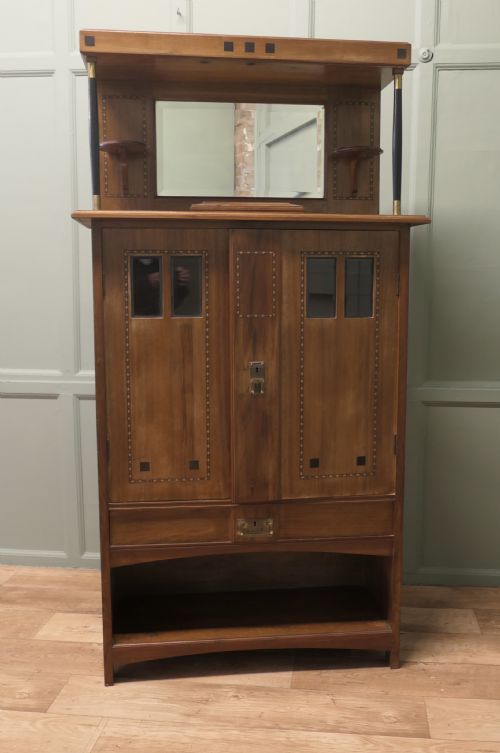
Object types here range from low serving dressers and block-front chests to Secessionist cocktail cabinets and occasional tables.
Assessing craftsmanship and execution
Quality rests in the crispness of the applied geometric mouldings and the selection of the timber grain. Finer examples display precise mitres on the drawer fronts and thoughtful integration of contrasting woods like ebony or snakewood.
The integrity of the structural carcass and the survival of original hardware or feet distinguish superior survivals from heavily altered pieces. Proportion and balance in the carved relief separate standard utility furniture from more ambitious cabinet work.
Maple & Co·Charles Dudouyt·Étienne Kohlmann
The Oak Geometric Sideboard Glossary
- Geometric moulding
- Raised wooden strips applied to a panel in repeating rectilinear or polygon patterns. This technique creates strong shadows and architectural depth on drawer fronts.
- Dresser base
- A low utilitarian table fitted with drawers and occasionally cupboards underneath. It served as a primary surface for food preparation and serving in earlier centuries.
- Jacobean style
- A heavy, formal seventeenth-century English aesthetic characterised by rectilinear forms and dark oak. Revival pieces often reproduce these characteristics with barley-twist supports.
- Block front
- A cabinet front divided vertically into three sections, with the outer sections projecting forward and the central section recessed. It adds pronounced sculptural weight to a case piece.
- Carolean revival
- A late nineteenth or early twentieth-century decorative movement that imitates the ornate carved woodwork of the reign of Charles II. It frequently employs elaborate crestings and twisted legs.
Oak Geometric Sideboard: Frequently Asked Questions
How do I date an oak geometric sideboard?
Examine the construction marks, timber shrinkage, and the style of the mouldings on the drawer fronts. Seventeenth-century pieces typically show hand-split boards and pegged joinery, while revival pieces from the nineteenth and twentieth centuries reveal machine-cut precision.
Hardware and secondary woods also offer clues. Earlier pieces integrate fruitwood, ebony, or sycamore accents with forged iron or brass fittings that match period manufacturing techniques.
Where were these sideboards used originally?
These pieces functioned primarily in large dining halls, kitchens, and great houses as serving tables and storage units for pewter, linens, and dry goods. The sturdy top surface accommodated heavy platters during busy feasts.
Over time, the form moved into domestic parlours and living spaces as dining habits changed. Today, they transition easily into modern hallways, living rooms, and contemporary dining areas.
How do I care for antique oak furniture?
Keep the wood away from direct heat sources and dramatic humidity fluctuations to prevent the solid oak panels from splitting or warping. Feed the timber periodically with appropriate beeswax to maintain the natural lustre of the surface.
Avoid chemical polishes that can strip the historic patina. Gentle dusting with a soft, dry cloth is sufficient for routine maintenance.
What is the difference between a dresser base and a sideboard?
A dresser base is traditionally an older, lower table featuring multiple rows of drawers and sometimes open potboards below, designed primarily for storage and serving. Sideboards emerged later as more formal dining room furniture, often featuring enclosed cupboards and dedicated cutlery drawers.
In practice, the terms overlap heavily in antique markets, especially when describing seventeenth-century forms and their later revival equivalents.