
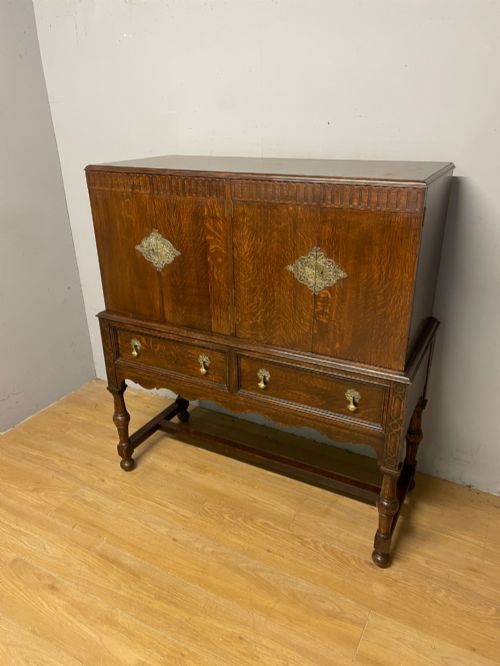


Oak Drinks Cabinet
An oak drinks cabinet is a sturdy piece designed for entertaining, offering secure storage for bottles and glassware.
Oak Drinks Cabinet
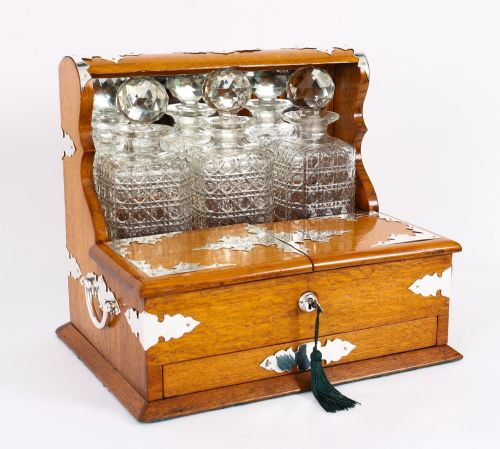
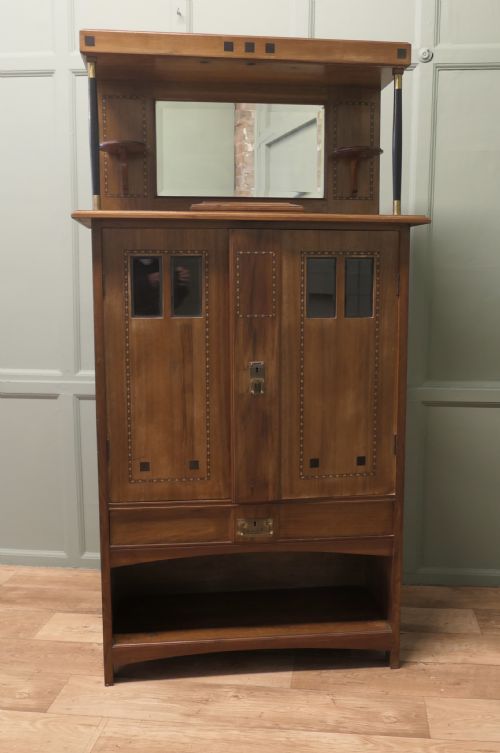
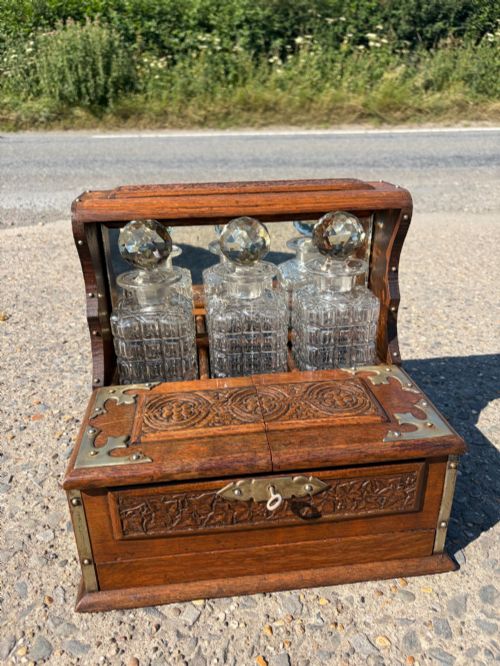
An oak drinks cabinet spans several distinct forms across the Victorian, Edwardian, and early twentieth-century periods, ranging from fitted cupboards to elaborate tantalus sets and home bars. The selection often includes tantalus units with cut glass decanters, games compendiums, and side cabinets adapted for hospitality.
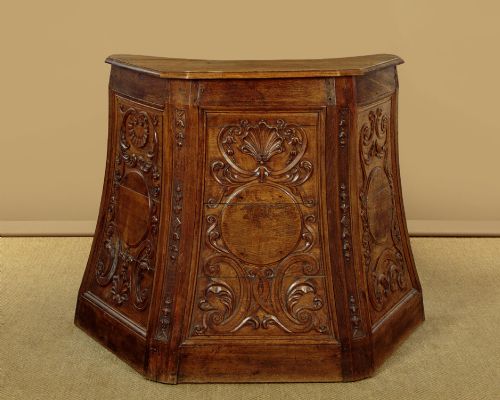
Buyers frequently encounter solid oak and pollard oak constructions dating from the nineteenth century up to the 1930s. Styles stretch from Jacobean Revival and Gothic Revival to Secessionist and Art Deco designs, reflecting the changing tastes in domestic entertaining across these eras.
Assessing Quality
Quality rests upon the selection of timber and the precision of the joinery, distinguishing heavy solid oak and burr walnut furniture from simpler utility pieces. The presence of dense carving, marquetry stringing, and substantial brass mounts elevates the standard of a cabinet.
The refinement of the interior fit-out, such as original cut glass decanters, mirrored backs, and integrated games compendiums, marks the difference between standard storage and superior craftsmanship.
Oak Drinks Cabinet Retail Price Guide 2026
Typical asking prices for oak drinks cabinet among the pieces listed under this phrase on Sellingantiques today, from the lower quarter to the upper quarter. They describe what is for sale here now, not the wider market.
Some solid oak cabinets arrive complete with original sign-writing for historical beer kellers and rustic wine cooler tables.
Waring and Gillows·Inglesants
The Oak Drinks Cabinet Glossary
- Tantalus
- A locking drink container that secures decanters within a metal frame, preventing unauthorized access while displaying the bottles. It typically holds two or three crystal decanters.
- Marquetry
- Decorative woodwork where pieces of veneer are fitted into a panel to form elaborate patterns or pictures. This technique often appears on nineteenth-century cabinet doors and surfaces.
- Jacobean Revival
- A nineteenth and early twentieth-century architectural and furniture style emulating the heavy, dark carved woodwork of the seventeenth century. It is characterised by straight lines and geometric mouldings.
- Secessionist
- A design movement of the early twentieth century that favoured clean lines and modern geometric forms over ornate historical revivals. Pieces in this style offer a simpler, more streamlined aesthetic.
- Compendium
- A container holding a variety of related items, such as games equipment alongside glassware and bottles. These multifunctional pieces were popular for parlour and drawing room entertainment.
Oak Drinks Cabinet: Frequently Asked Questions
What periods do these cabinets come from?
The available pieces span from the nineteenth century through the Edwardian era and into the 1930s. They include Victorian and Edwardian examples alongside later Art Deco designs.
Production methods shifted over these decades, moving from heavily carved revival styles towards smoother, modernist lines in the early twentieth century.
How do tantalus sets work?
A tantalus secures glass decanters beneath a locking metal bar that prevents the stoppers from being removed. Opening the lock requires a key, keeping the contents safe.
Most examples feature three crystal bottles, occasionally accompanied by a games compendium or dry bar compartment.
What is pollard oak?
Pollard oak is a decorative timber harvested from trees that were cut back near the trunk to encourage dense, textured branching. This creates a distinctive clustered grain pattern.
Cabinet makers used this prized wood for visible door panels and tabletops to highlight the natural figure.
How do I care for an oak drinks cabinet?
Keep the wood away from direct heat sources and strong sunlight to prevent the solid oak and veneers from drying out or splitting. Routine dusting and occasional polishing will maintain the finish.
Ensure brass mounts and mirror glass are kept dry to protect the surrounding wood from moisture damage.