




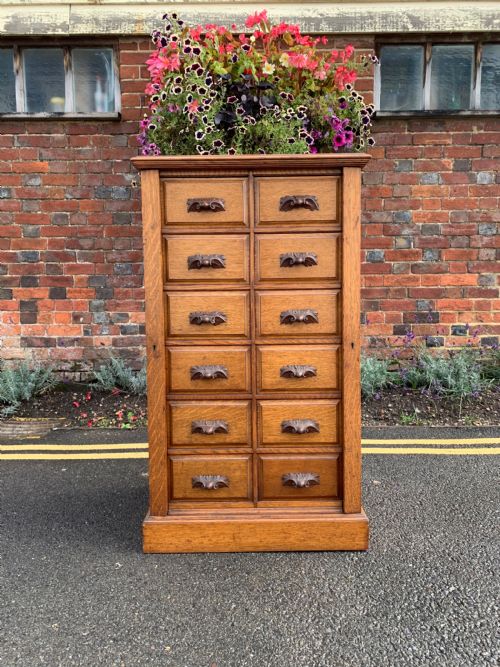


Oak Double Chest
An oak double chest brings serious architectural presence to a room, offering towering proportions and deep storage built from honest, hard-wearing timber.
Oak Double Chest
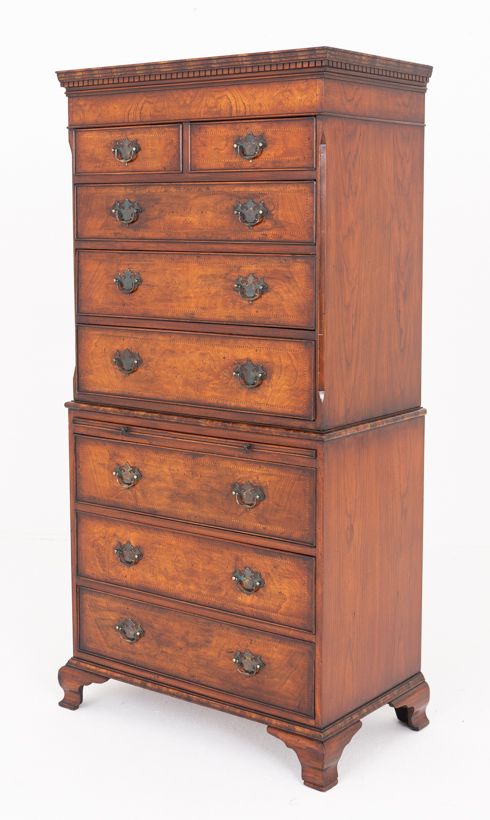
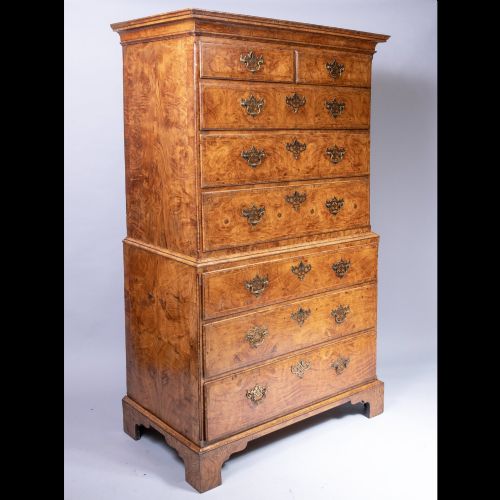
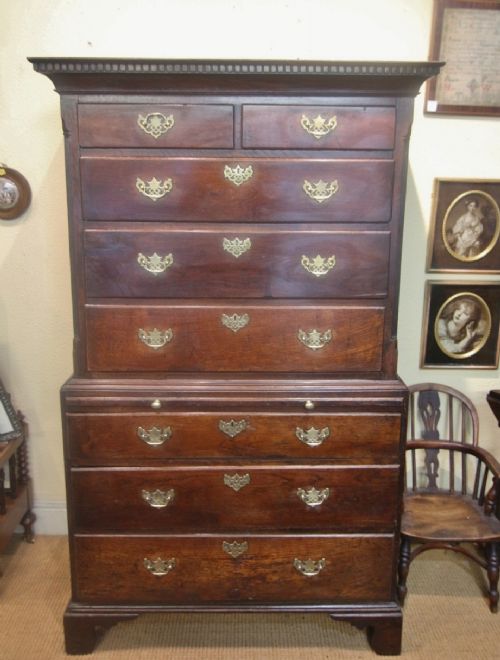
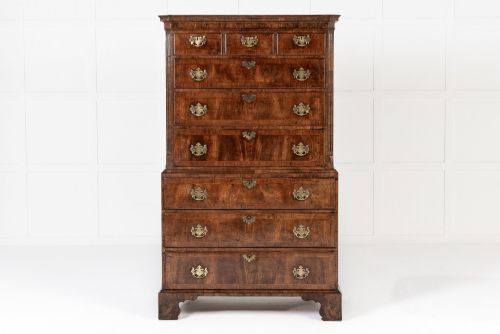
An oak double chest, often encountered as a tallboy or chest on chest, divides its storage vertically into two distinct stacking sections rather than sitting as a single low bank of drawers.
This configuration originates primarily in the eighteenth century, with Georgian examples dominating current selections alongside pieces bearing distinctive Welsh vernacular details.
Buyers also encounter related forms such as linen presses and cross-banded cupboards that utilise the same two-stage carcass construction.
Materials and construction
Cabinetmakers built these pieces using solid oak for the primary structural frame and exterior panels, frequently pairing it with secondary woods for drawer linings and internal divisions.
Figured elm, burr elm, and walnut appear as accent materials on drawer fronts and cross-banding, adding rich grain contrast to the predominant golden and brown oak tones.
Brass handles, escutcheons, and hinges provide functional hardware, while occasional bone inlay details demonstrate finer decorative ambition in specific regional workshops.
The listings span multiple centuries, ranging from sixteenth-century Spanish examples up to twentieth-century British interpretations in oak and elm.
Assessing quality and proportion
The division between ordinary and exceptional pieces rests upon the crispness of the mouldings and the intentional selection of timber grain across the upper and lower sections.
Original brass hardware and undisturbed patination elevate a piece significantly above examples that have undergone heavy restoration or replacement of key structural components.
Proportion dictates the visual success of the piece, with finer examples maintaining balanced drawer hierarchies from the smaller upper tiers down to the deeper base.
The Oak Double Chest Glossary
- Tallboy
- A tall chest of drawers made in two stacked sections, where a smaller upper chest sits upon a larger base unit.
- Cross-banding
- A decorative border technique where thin strips of veneer are laid with the grain running perpendicular to the surrounding timber.
- Linen press
- A tall cupboard featuring sliding trays or shelves in the upper section intended for household textiles, positioned above a drawer base.
- Escutcheon
- A protective plate surrounding a keyhole, typically cast in brass and shaped to complement the period style of the hardware.
Oak Double Chest: Frequently Asked Questions
How do I fit a tall chest in a modern room?
These tall pieces demand adequate vertical clearance and benefit from being anchored securely to a sturdy wall for safety.
Position them away from direct heat sources to protect the historic timber from drying out or splitting over time.
What is the difference between a tallboy and a standard chest?
A standard chest sits low to the floor as a single unit, whereas a tallboy stacks one cabinet directly on top of another to maximise vertical storage.
This two-stage construction made it easier to transport heavy furniture up narrow staircases during past centuries.
How do I care for antique oak surfaces?
Maintain the finish by applying a modest amount of traditional beeswax occasionally, buffing it gently with a soft cloth to nourish the wood.
Avoid commercial liquid polishes containing silicone, which can build up and dull the natural warmth of the grain.
Can I use a linen press for modern clothing?
The interior sliding shelves work well for folded garments, knitwear, or bed linen just as their original makers intended.
Some owners choose to have a carpenter convert the upper shelf space into a hanging rail if longer clothing storage is required.