

Oak Dining Table Leaves
Oak dining table leaves extend family meals through centuries of sturdy British timber, bridging centuries-old gatelegs and twentieth-century refectories.
Oak Dining Table Leaves
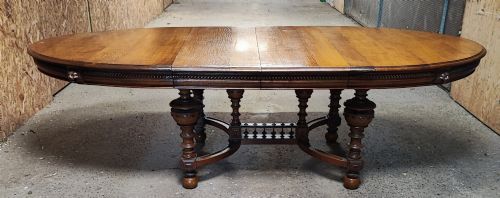
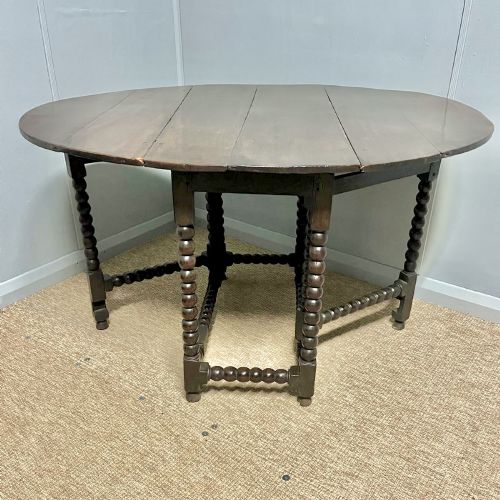
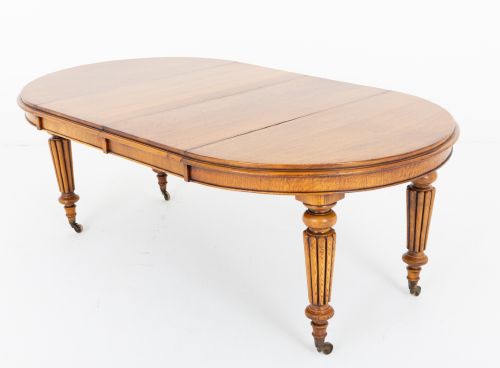
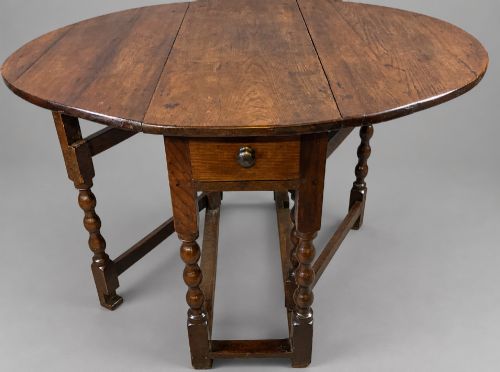
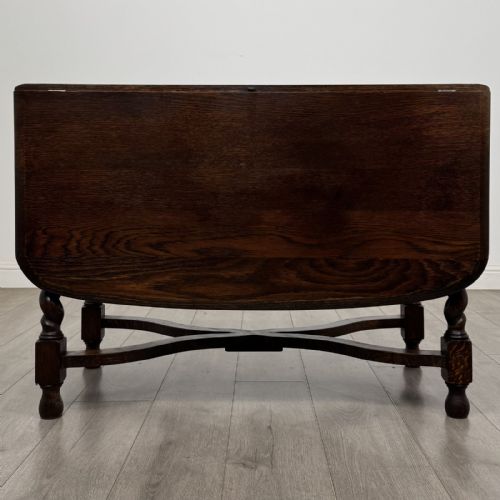
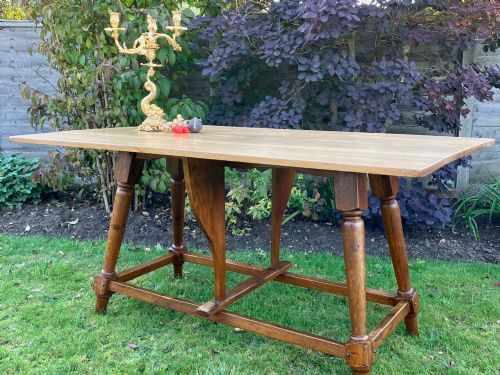
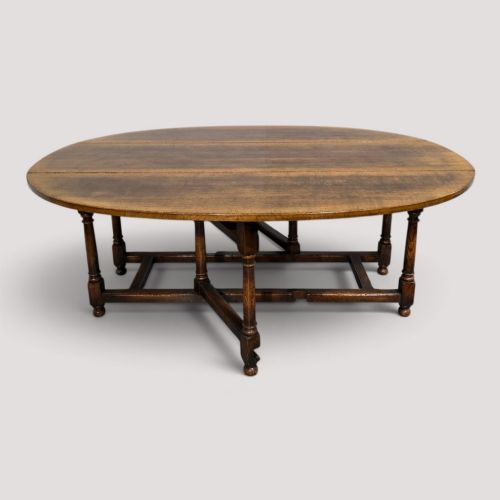
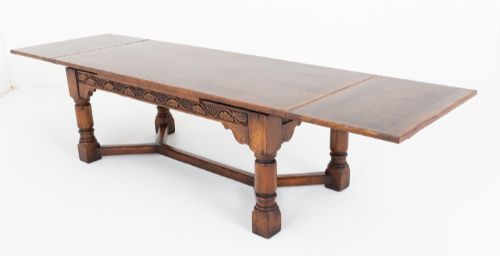
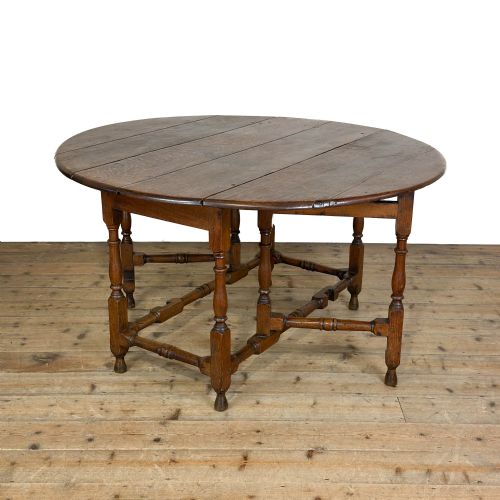
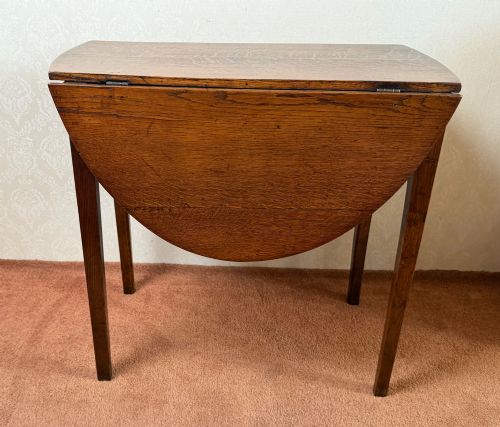
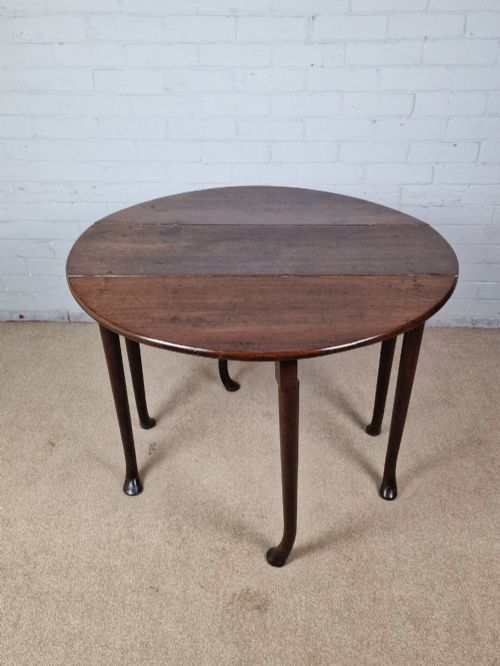
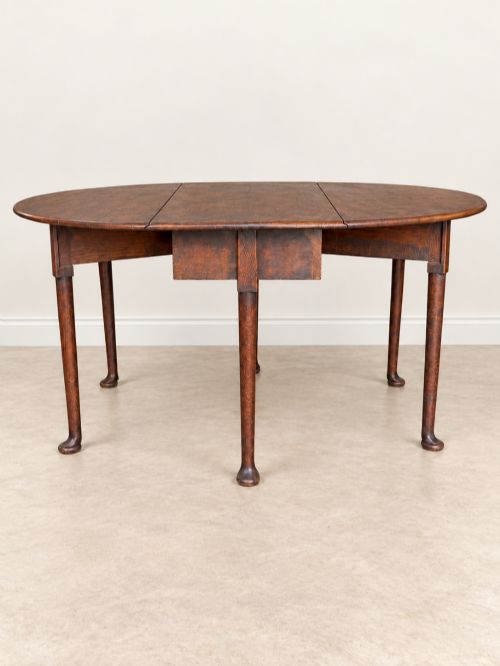
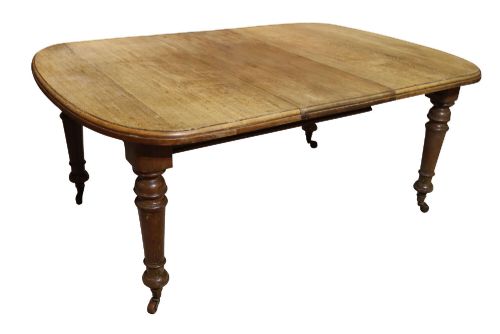
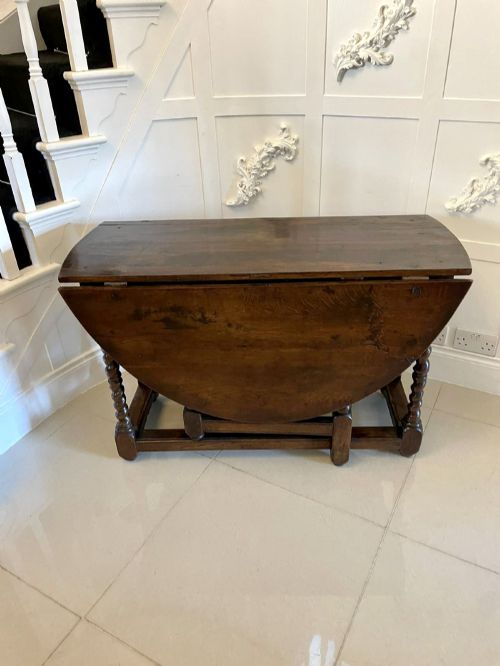
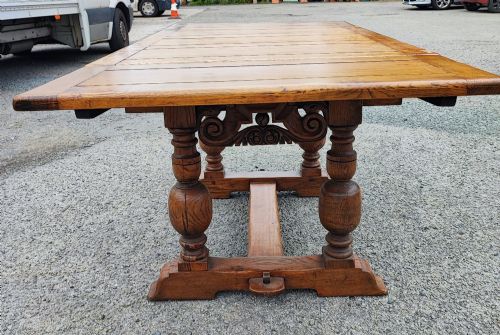
Oak dining table leaves appear across seventeenth-century gatelegs, Georgian drop-leaf tables, and twentieth-century extending refectories. Buyers seeking oak dining table leaves encounter both the drop-leaf mechanisms of earlier centuries and the sliding extension leaves of later designs.
The selection ranges from compact gateleg drop-leaf tables that expand with hinged flaps to large extending refectory and wake tables utilising draw leaves or removable centre boards. Solid oak and limed oak predominate, supported by seventeenth-century, eighteenth-century, and twentieth-century craftsmanship.
Traditional English country and rustic farmhouse forms sit alongside Jacobean revival and Arts and Crafts interpretations. These pieces serve daily dining needs while offering flexible surface area through folding flaps or sliding extension leaves.
Factors of Quality
Quality rests in the selection of figured timber and the integrity of the original hinges and sliding mechanisms. Superior examples retain their original surface patina, whether dark seventeenth-century polish or golden twentieth-century tones.
The weight of solid oak timbers and the stability of the gateleg or draw leaf action determine longevity. Refinement in leg turnings, such as bobbin or barley twist details, distinguishes standard utilitarian tables from finer workshop productions.
Oak Dining Table Leaves Retail Price Guide 2026
Typical asking prices for oak dining table leaves among the pieces listed under this phrase on Sellingantiques today, from the lower quarter to the upper quarter. They describe what is for sale here now, not the wider market.
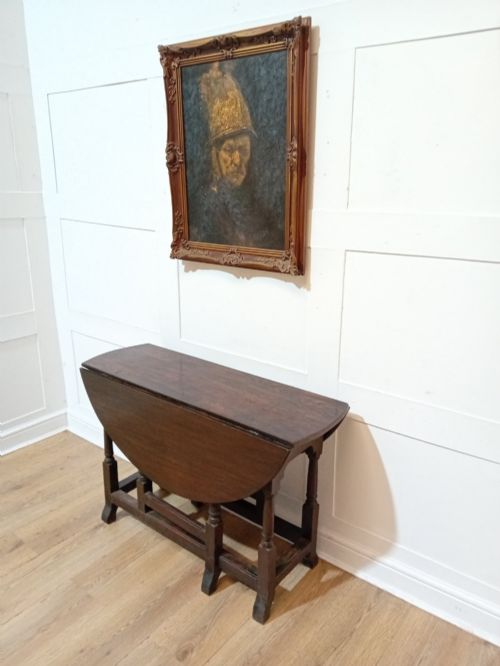
Early gateleg tables often squeezed extra diners into seventeenth-century rooms by folding down to the size of a narrow side table.
The Oak Dining Table Leaves Glossary
- Gateleg table
- A table with hinged flaps supported by legs that swing outward like gates. This design allows the surface area to expand or contract easily.
- Draw leaf table
- A table equipped with underleaves that pull out from beneath the main top to extend the surface length. The mechanism slides smoothly on internal wooden runners.
- Barley twist
- A type of spiralling turned leg popular in seventeenth-century furniture and revived in twentieth-century pieces. It adds ornamental texture to vertical supports.
- Patina
- The surface sheen and colour developed by aged wood through handling and exposure over decades or centuries. Original patina indicates untouched historical surfaces.
Oak Dining Table Leaves: Frequently Asked Questions
How do drop leaf tables work?
Drop leaf tables use hinged flaps on either side of a fixed centre board. These flaps lift up and lock into place using swinging legs or wooden brackets.
When not needed for larger gatherings, the flaps drop down vertically to save floor space in dining rooms or kitchens.
How do extending dining tables operate?
Extending dining tables use draw leaves or removable centre sections to increase surface length. Draw leaves slide out from underneath the main tabletop on wooden tracks.
Other styles separate at the centre to accommodate a drop-in leaf panel held by internal alignment pins.
How do I care for solid oak furniture?
Solid oak benefits from regular dusting with a soft, dry cloth and occasional treatment with natural beeswax. Avoid placing wooden tables near direct heat sources or damp areas.
Using coasters and placemats protects the aged timber surface and preserves the original patina over time.