
Oak Credenza Buffet
An oak credenza buffet anchors a dining room with substance, offering heavy timber construction and generous storage derived from centuries of domestic service.
Oak Credenza Buffet
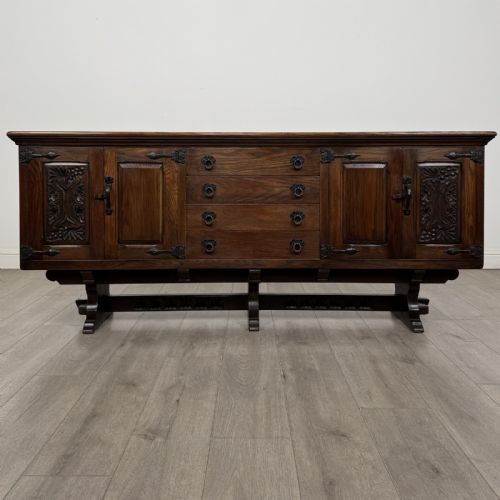
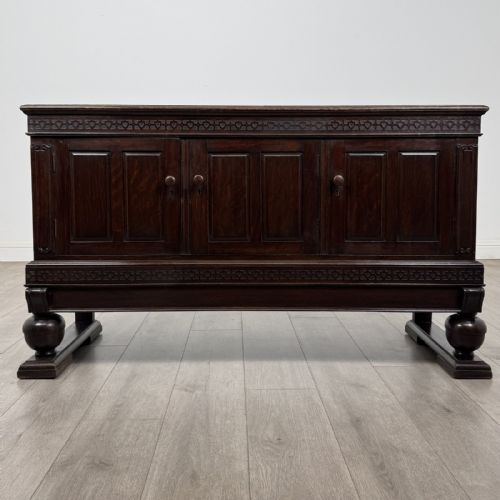
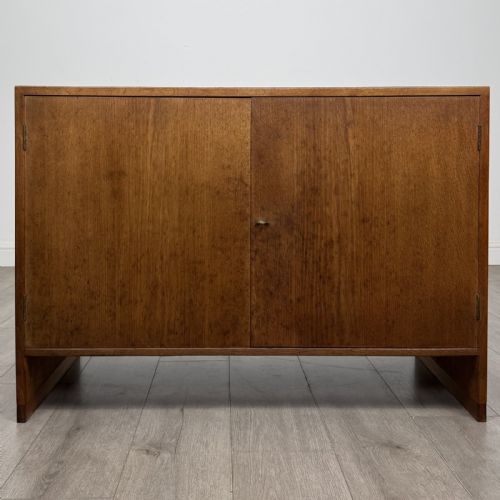
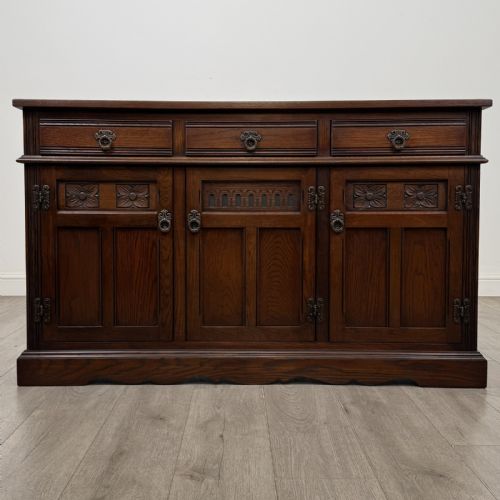
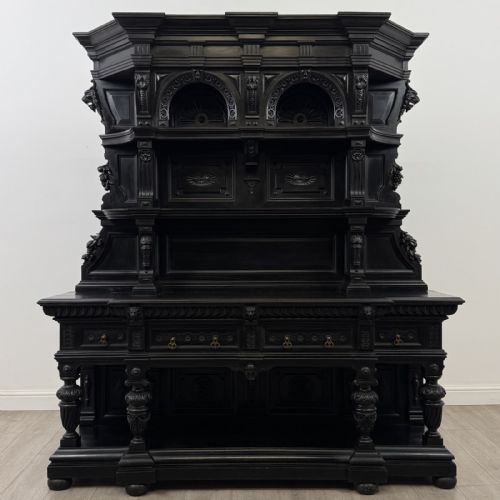
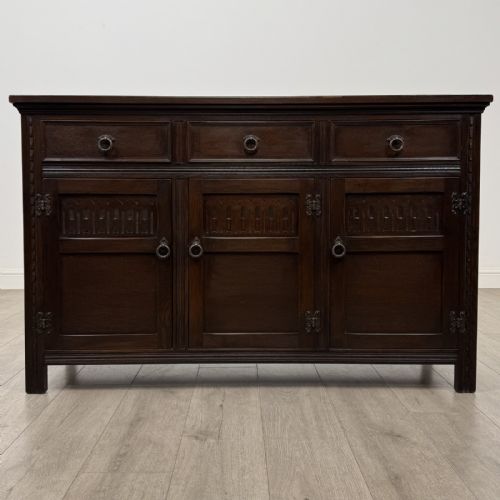
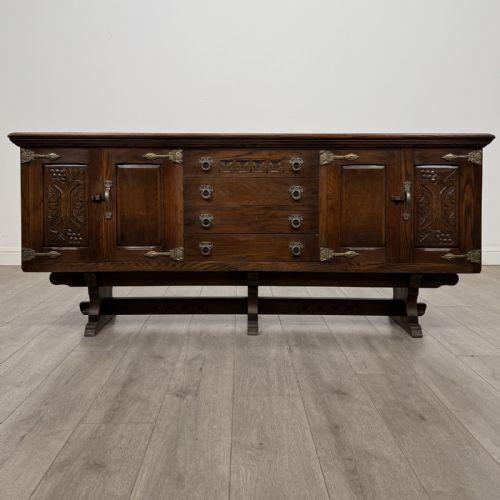
When searching for an oak credenza buffet, collectors encounter a diverse range of heavy storage furniture spanning the seventeenth century through the mid-twentieth century. Sideboards, dresser bases, cupboards, and enfilades frequently populate this category, functioning primarily as robust servers and display surfaces in dining spaces.
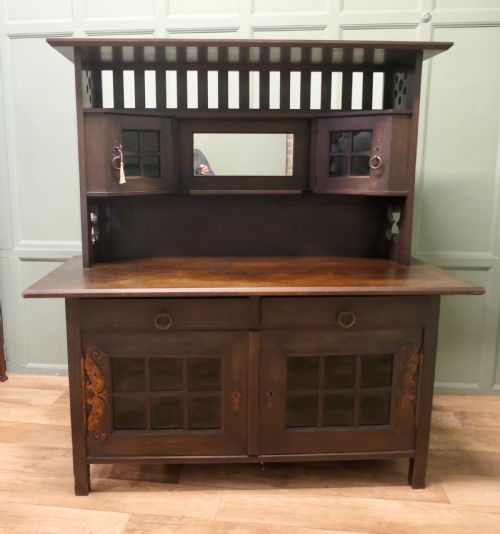
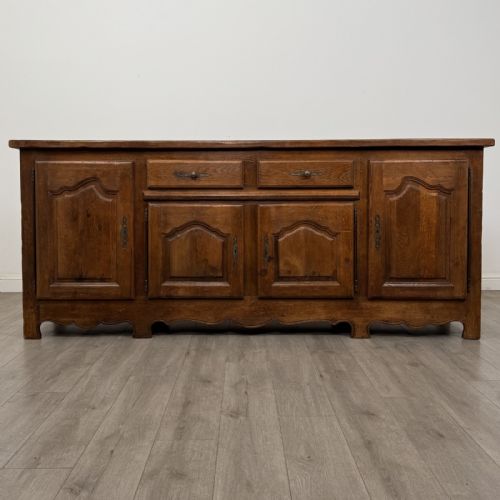
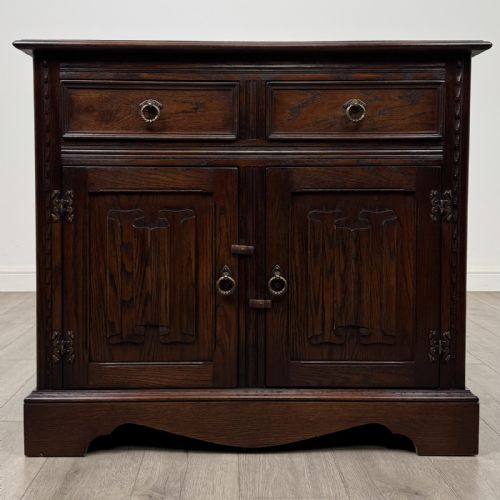
The material vocabulary centres squarely on solid oak and pollard oak, occasionally accented with brass handles, iron mounts, and mirrored backs. Pieces manifest in distinct historical revivals and regional interpretations, including Jacobean Revival, Gothic Revival, Arts and Crafts, and French Provincial forms.
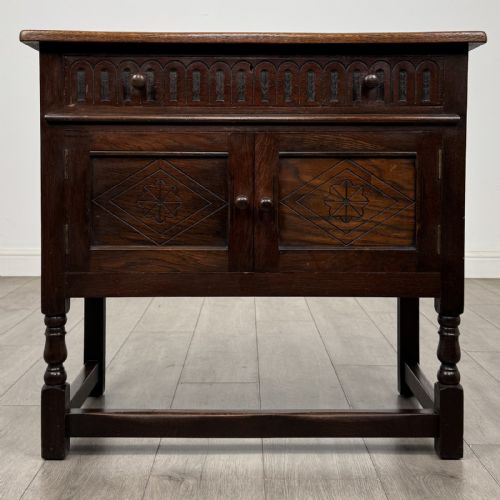
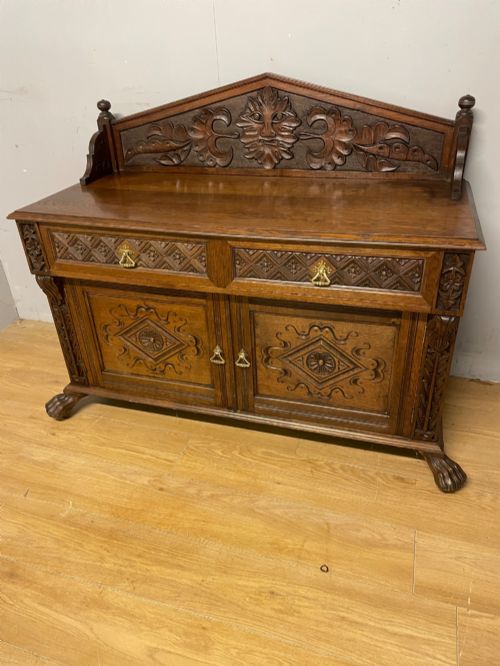
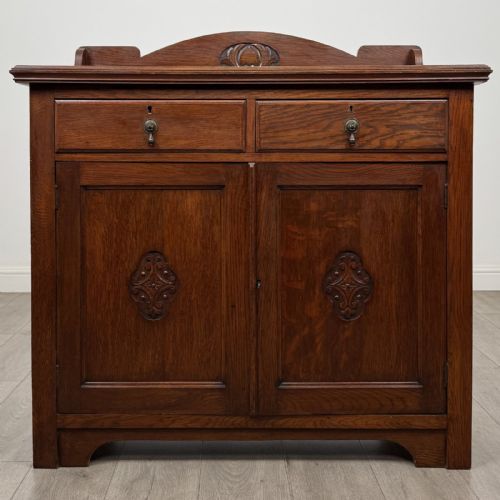
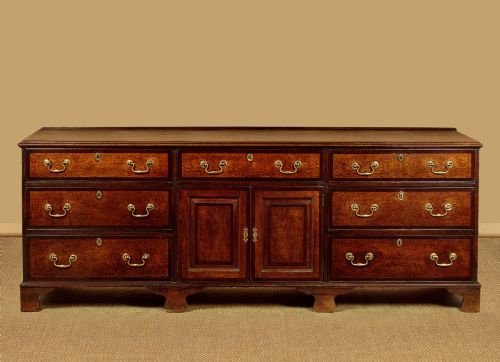
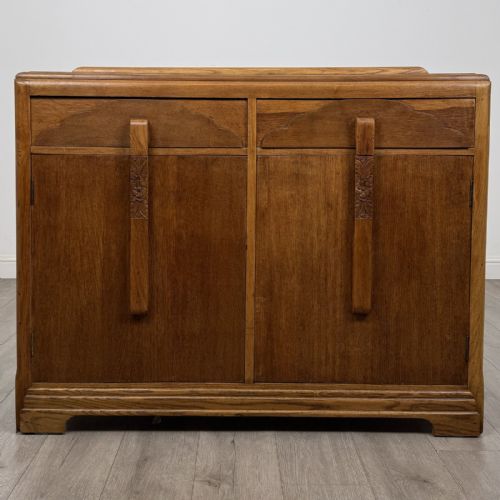
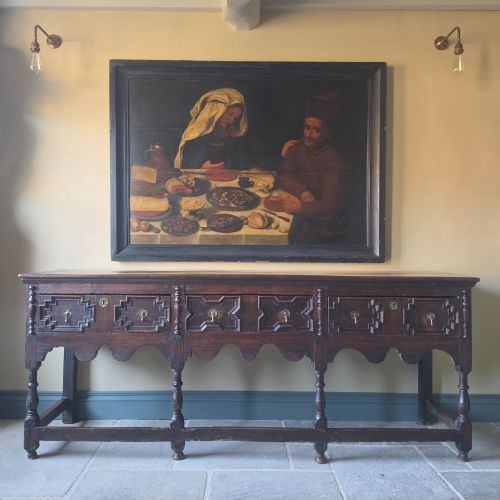
Early examples include seventeenth-century and eighteenth-century dresser bases with simple linear proportions, while nineteenth-century and Edwardian variants often incorporate carved galleries, linenfold panels, and stretcher bases. Later twentieth-century iterations embrace Art Deco geometric lines and streamlined golden oak surfaces.
Materials and construction methods
Makers utilised solid oak for its durability and prominent grain, sometimes selecting pollard oak for decorative burr patterns on drawer fronts and cabinet doors. Secondary woods and structural frames were joined using traditional methods suited to heavy domestic service.
Surface enrichment relied on hand-carving, geometric panel moulding, and linenfold texturing, complemented by brass handles and occasionally ebonised wood details. French examples frequently integrated marble tops into carved enfilade and hunting cabinet designs.
Backboards often featured raised or mirrored galleries, while lower sections utilised sturdy stretcher bases, barley twist legs, or bracket feet to support the substantial weight of the timber.
Stylistic revivals dominate the selection, with Jacobean, Gothic, and Arts and Crafts movements appearing alongside Georgian and Victorian forms.
Indicators of quality and distinction
The standard of carving distinguishes superior pieces, with crisp, deep relief work on panels and galleries separating accomplished workshops from routine production. The choice of timber also dictates distinction, particularly where figured pollard oak or carefully matched quarter-sawn oak grain creates a cohesive visual rhythm.
Structural integrity depends on the retention of original hardware, brass handles, and hinges that match the period of the carcass. Proportion and balance in regional forms, such as narrow Gothic revival bases or expansive Georgian Welsh dressers, reflect the skill of the original maker.
Shapland and Petter·Charles Dudouyt
The Oak Credenza Buffet Glossary
- Credenza buffet
- A long low storage unit designed for dining rooms to hold tableware and serve food. These forms combine the enclosed cupboard space of a credenza with the serving top of a buffet.
- Dresser base
- An open or enclosed lower wooden unit featuring drawers and cupboards without upper shelving. They originate from early domestic kitchens and dining halls.
- Pollard oak
- Timber taken from trees that have been pollarded, producing dense, highly figured burr patterns used for decorative veneer. Cabinetmakers prize this wood for its distinctive swirling grain.
- Linenfold
- A style of wood carving that mimics folded fabric or linen cloth. It appears frequently on Tudor and revival cabinet doors.
- Enfilade
- A suite of rooms or a long piece of furniture with a continuous line of cabinets or doors. French versions often feature marble tops and heavy carving.
- Stretcher base
- A system of horizontal wooden bars connecting the lower legs of a table or sideboard for added rigidity. This construction provides essential support for heavy oak carcasses.
Oak Credenza Buffet: Frequently Asked Questions
How do I date an oak sideboard?
Dating relies on examining construction marks, timber selection, and stylistic details such as geometric panels or linenfold carving. Earlier seventeenth and eighteenth-century pieces display hand-tooled joints and simpler lines, whereas Victorian and Edwardian examples often incorporate decorative mirrored galleries and revival motifs.
Hardware and handles also offer clues, though replacements are common. Comparing the carcass proportions to known regional furniture types helps narrow the decade of manufacture.
What is the difference between a buffet and a credenza?
Traditionally, a buffet served food during meals, while a credenza functioned as a side cabinet for storage and display. Over time, these terms merged into overlapping descriptions for long, low dining room furniture.
In practical terms, both provide substantial surface area and internal shelving behind doors or drawers. The exact nomenclature often depends on regional origin and the specific architectural style of the piece.
How should I care for antique oak furniture?
Maintain antique oak by keeping it away from direct heat sources and strong sunlight, which can dry out and split the timber. Regular dusting with a soft, dry cloth preserves the patina without building up chemical residue.
Occasional application of traditional beeswax helps nourish the wood grain. Avoid commercial silicone polishes, as they can permanently alter the surface finish.
Can I use an antique dresser base in a modern kitchen?
An antique dresser base integrates well into contemporary kitchens as a freestanding island or a characterful storage cabinet. Their durable oak construction withstands daily use while adding warmth and historical contrast to modern interiors.
Ensure the working height suits your workspace requirements. The deep drawers and lower cupboards offer practical storage for tableware and linens.