
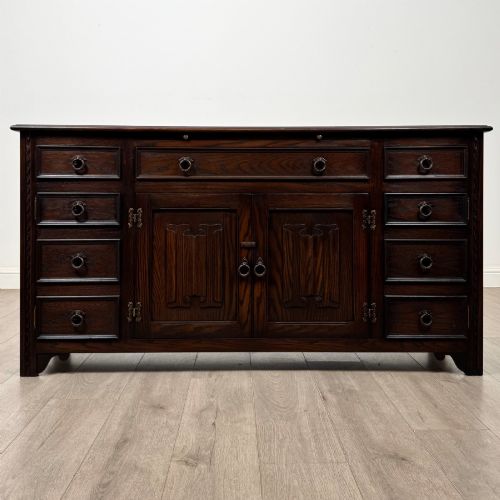
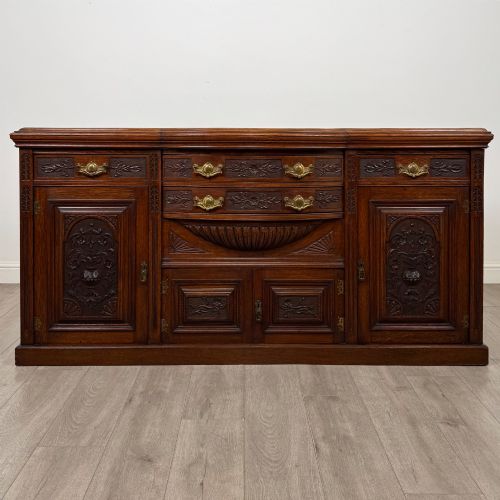
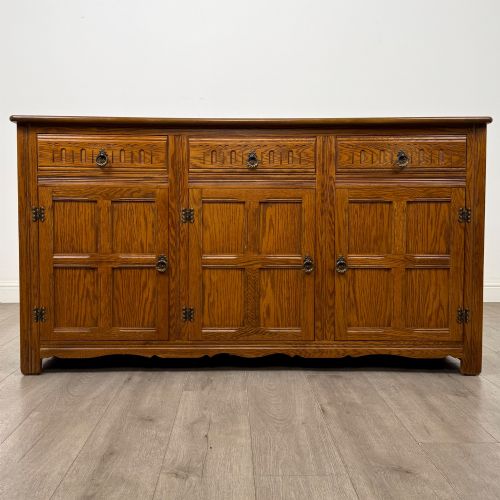
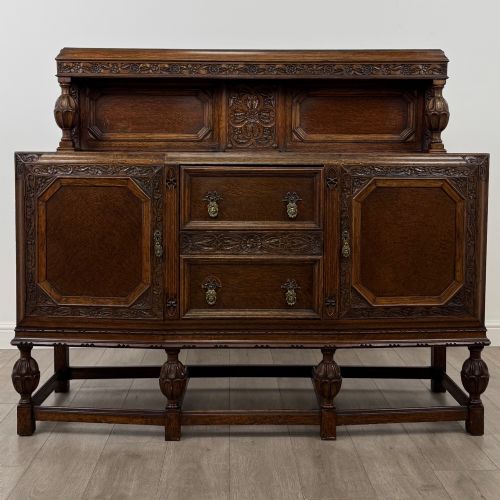


Traditional Oak Dining Sideboard
These traditional oak dining sideboard pieces offer sturdy storage and period presence, bringing timeless utility to any dining room.
Traditional Oak Dining Sideboard
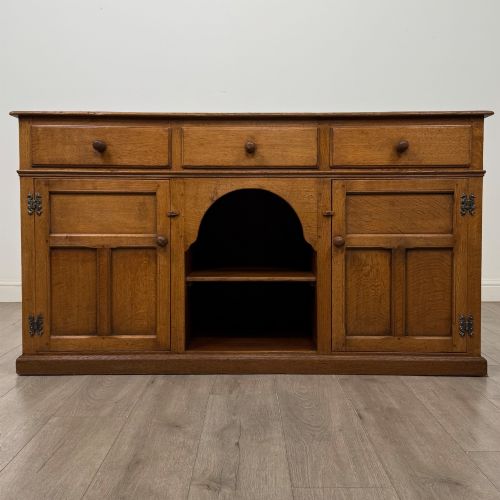
A traditional oak dining sideboard provides a substantial storage foundation for dining rooms, appearing in forms such as dresser bases, court cupboards, and mirrored buffets. These pieces emerge from periods ranging from the 18th century through to the 1930s, encompassing Georgian, Victorian, and Edwardian eras alongside Jacobean revival styles.
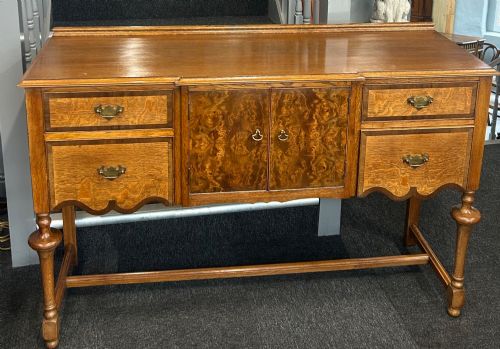
Buyers frequently encounter variations featuring carved detailing, breakfront drawers, or superstructure mirror backs in solid oak. The selection spans straightforward country oak utilitarian designs up to more ornate revival interpretations utilising burr walnut highlights or brass hardware.
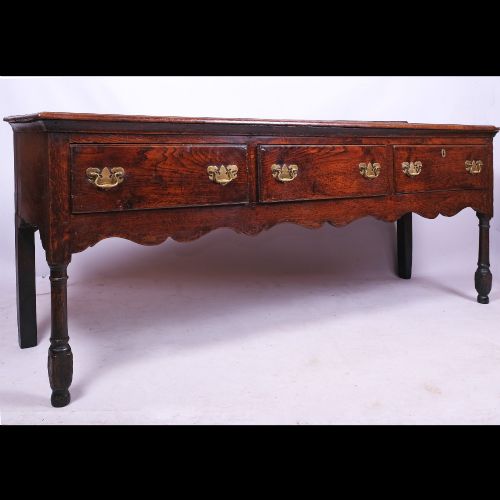
The object types grouped under this category include traditional sideboards, Welsh dressers, and dresser bases suited for dining room placement. Each configuration serves the primary purpose of holding dining paraphernalia while anchoring the room's aesthetic in historic craftsmanship.
What varies in quality
The standard of a traditional oak dining sideboard rests on the depth and crispness of its hand carving and the selection of figured timber. Superior examples display dense, well-matched oak boards and thoughtful proportions rather than mechanical uniformity.
Construction integrity defines the upper tier, seen in solid drawer linings, smooth running mechanism, and intact original hardware. Lesser examples may show coarser secondary woods, altered mirror backs, or replacement handles that disrupt the period harmony.
Listings span periods from the 18th century through to the 1930s, incorporating oak, brass, glass, metal, mahogany, iron, burr walnut, and pine.
The Traditional Oak Dining Sideboard Glossary
- Dresser base
- A low cabinet featuring drawers and cupboards beneath a flat top, historically used for food preparation and serving. This form forms a core part of the dining storage selection.
- Court cupboard
- An enclosed antique cupboard featuring an upper recessed section supported by columns or pendants. These pieces provide decorative storage within dining and reception rooms.
- Jacobean Revival
- A style popular in later centuries that copies the heavy turned legs, geometric moulding, and deep panel carving of the 17th century. It frequently appears on pieces dating from the Victorian era onwards.
- Welsh dresser
- A large dining room storage item combining a lower base of cupboards and drawers with open plate racks above. They showcase pottery and serving dishes alongside functional storage.
- Pollard oak
- Oak timber taken from trees that have been pollarded, producing a dense, knotty burr grain with high decorative value. It is typically utilised for feature panels on high-status Victorian sideboards.
Traditional Oak Dining Sideboard: Frequently Asked Questions
How do I date a sideboard?
Dating relies on observing construction traits, handle types, and stylistic revivals present in the woodwork. Secondary timbers like pine can also indicate the period of manufacture.
Comparing the carved motifs to known historical periods helps narrow down whether a piece originates from the 18th century or later revivals.
Are these sideboards solid oak?
Most examples utilise solid oak for their primary frame and visible surfaces, though secondary timbers such as pine occasionally appear in drawer linings.
Some revival pieces incorporate burr walnut veneers over oak carcases to provide decorative contrast on drawer fronts and doors.
What is a dresser base?
A dresser base is the lower portion of a traditional dresser, comprising multiple drawers and cupboards beneath a sturdy timber surface. These served as practical serving stations in dining rooms.
Unlike full dressers, they omit the upper plate rack, making them lower and easier to place beneath paintings or mirrors.
How do I care for antique oak?
Maintaining antique oak involves keeping the timber away from direct heat sources and sudden humidity changes to prevent splitting. Regular dusting with a soft cloth preserves the polish.
Applying a traditional beeswax feed periodically helps nourish the dry timber and maintains the natural lustre of the oak grain.