


Heavy Oak Buffet Cabinet
A heavy oak buffet cabinet brings solid nineteenth-century presence and robust timber construction into a modern dining room or hallway.
Heavy Oak Buffet Cabinet
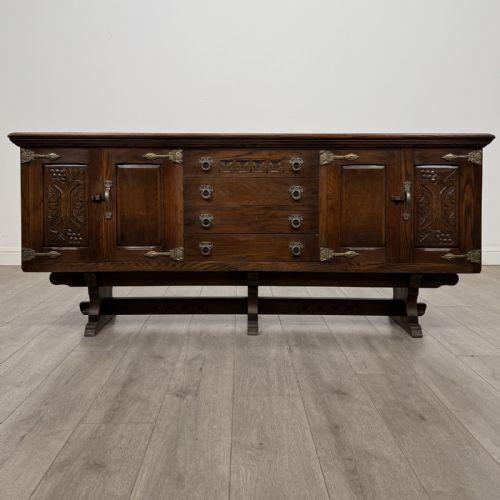
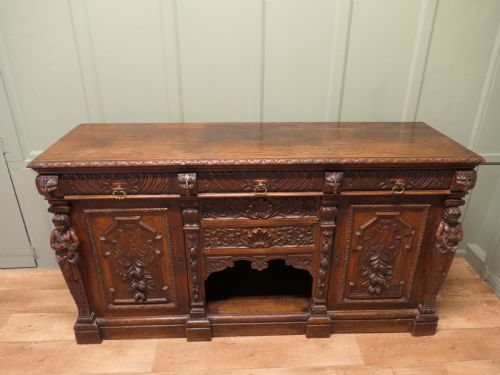
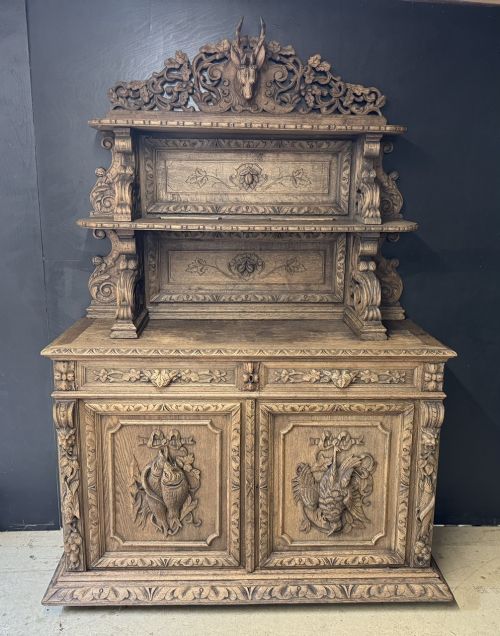
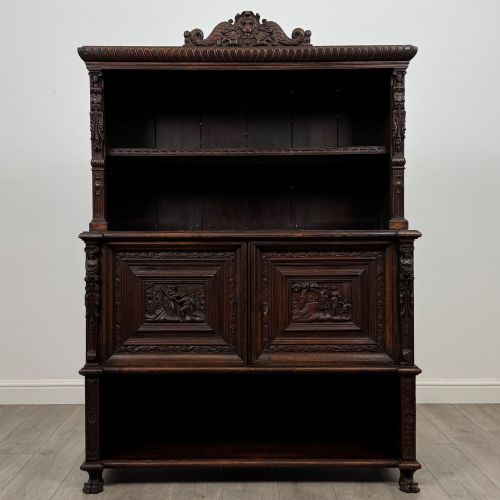
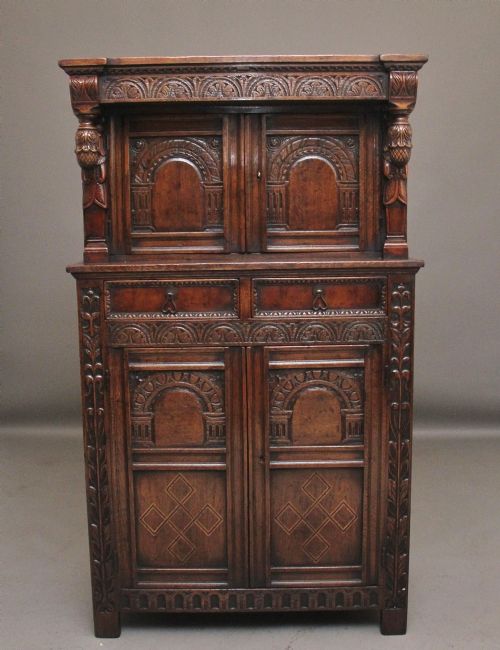
A heavy oak buffet cabinet sits squarely within the nineteenth and early twentieth centuries, spanning periods from mid-Victorian decades up to nineteen-twenty. These substantial items appear in listings under varied descriptions, including sideboards, court cupboards, and hall cupboards, reflecting diverse storage forms. Buyers exploring this category encounter pieces dating from eighteen-fifty to nineteen-twenty that were built to anchor large dining spaces.
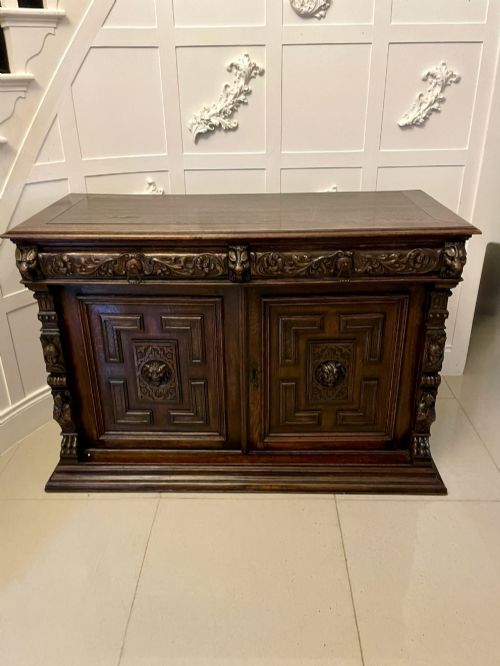
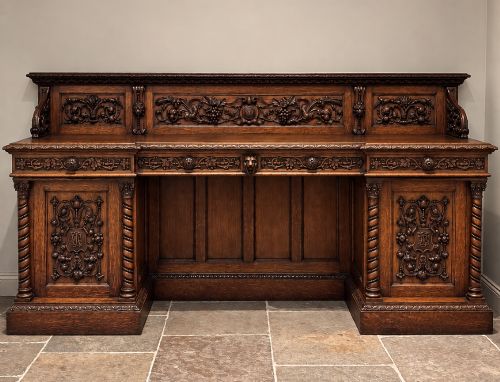
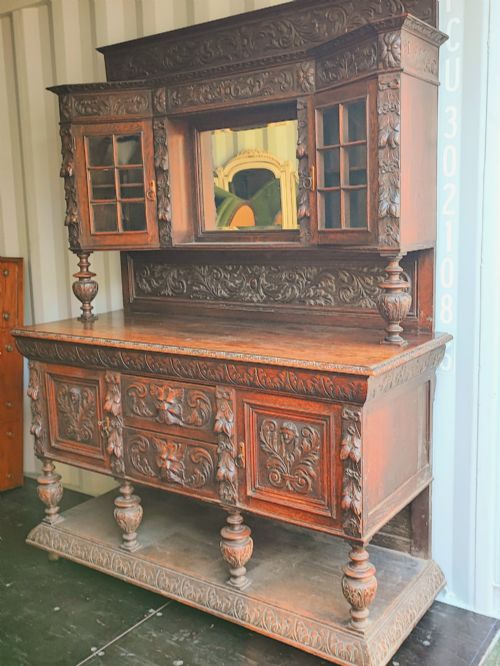
The dominant aesthetic draws heavily on historical revivals, particularly Renaissance, Gothic, Flemish Baroque, and Jacobean styles. Many examples feature elaborate ornamentation such as Green Man carvings, mirror backs, and stretcher bases. This page focuses on robust timber furniture that combines display shelving with enclosed cupboard storage.
Judging the work
Depth and crispness of the timber carving separate standard production from superior examples. Master workshops produced figures and foliage with sharp undercut details, whereas lesser pieces rely on shallow, mechanical stamping or simple mouldings.
Integration of secondary materials like heavy brass handles, iron strap hinges, and thick bevelled glass indicates a higher grade of manufacture. Proportional balance across large sideboards and cupboards also dictates overall merit, as massive frames require careful architectural harmony to avoid bulkiness.
Current listings feature oak furniture spanning the Victorian era through to the early twentieth century, incorporating glass and mirror elements.
The Heavy Oak Buffet Cabinet Glossary
- Green Man
- A sculptural motif depicting a human face carved out of or sprouting from leaves and vines. This ancient symbol appears frequently on nineteenth-century revival woodwork.
- Court cupboard
- A traditional English enclosed piece of furniture featuring multiple tiers for display and storage. These structures often incorporate recessed upper sections supported by carved columns.
- Renaissance Revival
- A nineteenth-century architectural and decorative style drawing inspiration from fifteenth and sixteenth-century European forms. Pieces typically display symmetry, heavy cornices, and classical relief carving.
- Stretcher base
- An underframe system connecting the lower legs of a table or cabinet with horizontal wooden bars. This construction adds stability to heavy pieces resting on uneven floors.
- Bevelled glass
- Glass panes featuring an angled, polished edge around the perimeter. This treatment refracts light and adds decorative depth to cabinet doors.
Heavy Oak Buffet Cabinet: Frequently Asked Questions
How do I care for a heavy oak buffet cabinet?
Feed the timber periodically with a traditional beeswax polish to maintain the natural lustre of the grain. Avoid placing heavy oak furniture near direct heat sources or in damp environments to prevent wood movement.
Dust intricate carvings regularly with a soft bristle brush to prevent dirt accumulation in recessed areas. Check hinges and structural joints annually to ensure heavy doors remain properly aligned.
What is the difference between a buffet and a court cupboard?
A buffet generally functions as a low sideboard designed for serving food and storing dining accessories. These pieces emphasise flat top surfaces and lower cabinet space.
A court cupboard incorporates tiered shelving, often featuring a smaller upper cabinet set back from a larger lower base. These taller structures prioritize architectural display over simple surface utility.
Where should I place a large sideboard in a modern home?
Position these substantial pieces against a load-bearing wall in a dining room, large hallway, or spacious living area. Ensure the chosen wall offers sufficient length and height to accommodate mirror backs and heavy cornices without overcrowding the space.
Allow adequate clearance for cabinet doors and drawers to open fully without obstruction. Consider the weight of solid oak construction when placing the furniture on upper floor levels.
How can I tell a Victorian revival piece from earlier eras?
Examine the interior construction, drawer linings, and hardware fixings for signs of nineteenth-century manufacturing methods. Machine-sawn timber elements and standardised screw threads generally point towards Victorian production rather than seventeenth-century origins.
Look for characteristic revival traits such as eclectic mixes of Flemish Baroque and Gothic ornamentation. Maker marks, registration stamps, or specific dated inscriptions also help pinpoint the exact decade of manufacture.