
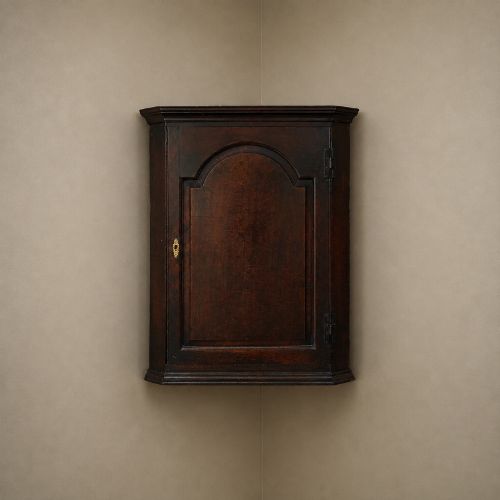
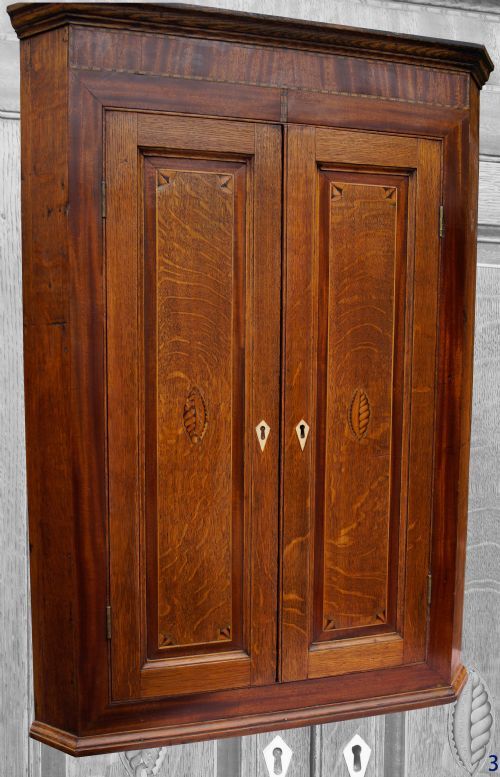
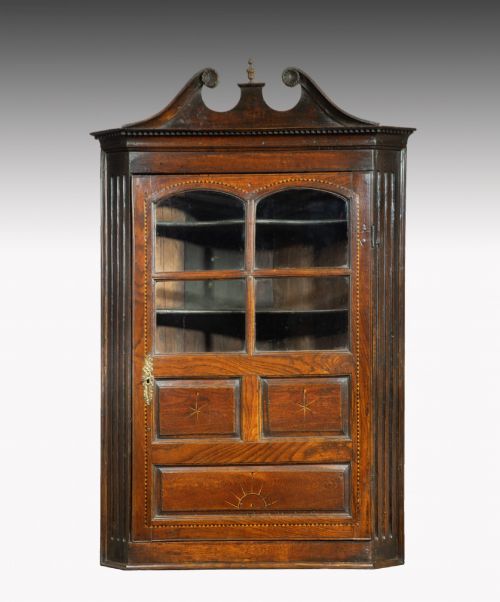
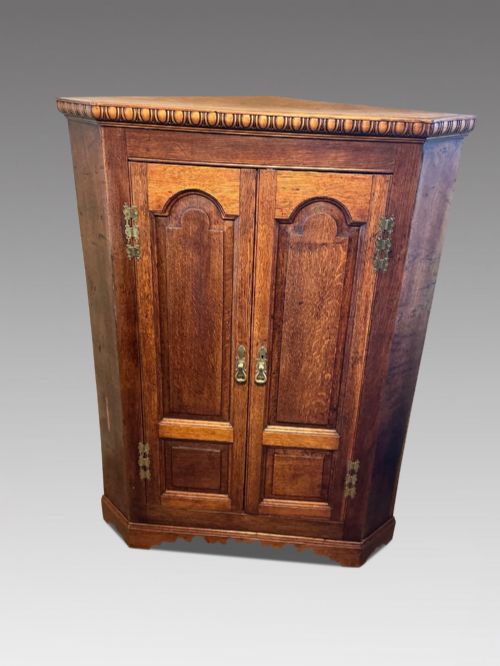

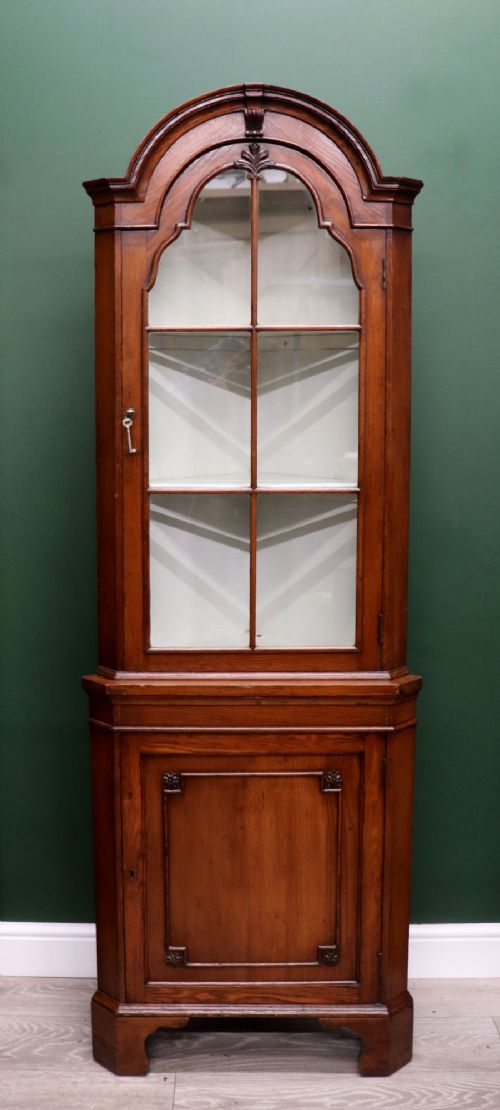

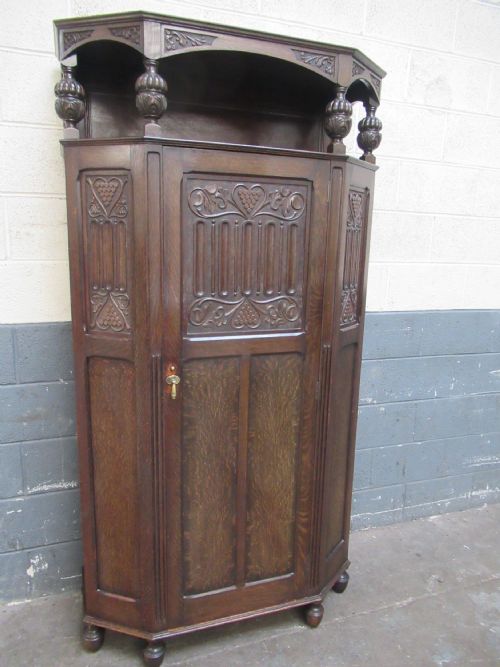


Oak Corner Storage Cabinet
An oak corner storage cabinet uses dead space to hold your belongings while anchoring a room with timber character.
Oak Corner Storage Cabinet
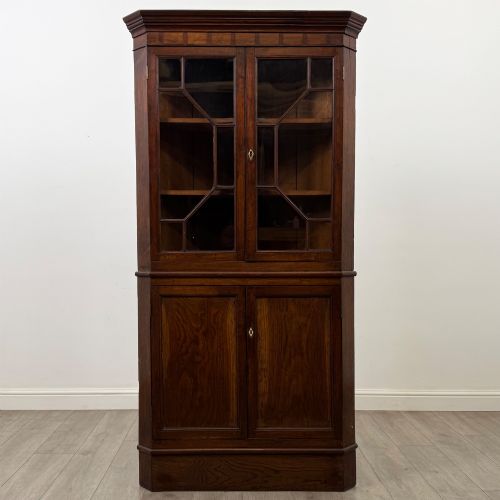
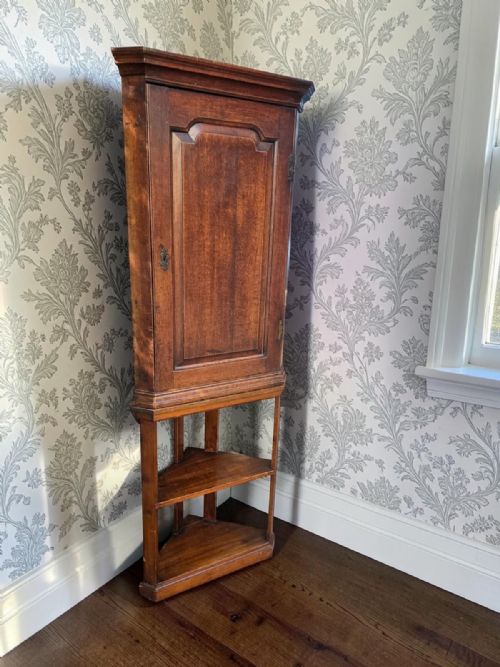
When you search for an oak corner storage cabinet, you encounter versatile timber units designed to fit neatly into room angles. The selections span compact wall-hanging pieces alongside substantial floor-standing and two-part cupboards.
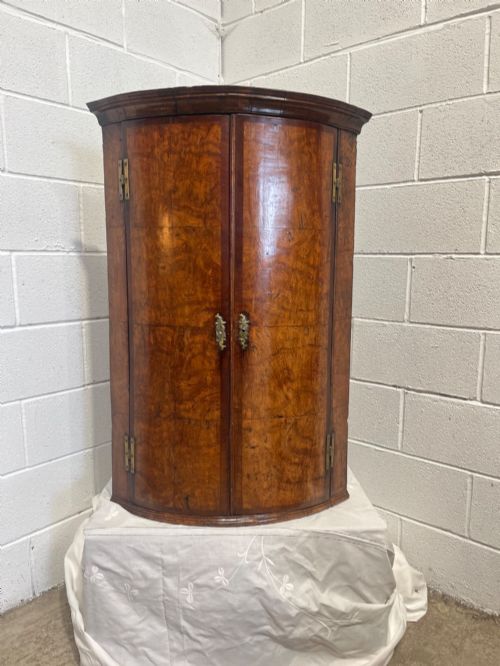
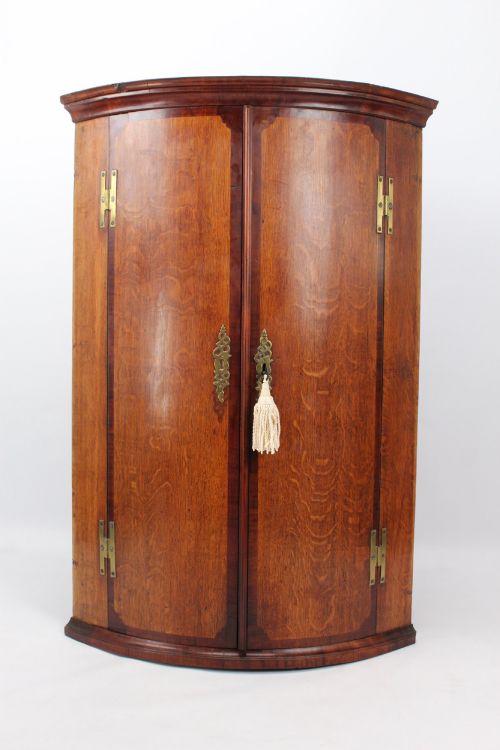
Georgian and 18th-century pieces dominate the selection, offering panelled doors and bow-fronted profiles. Victorian interpretations appear with Gothic Revival or Arts and Crafts detailing.
Regional variations include Welsh cupboards alongside English and provincial formats. Occasional hybrid pieces combine oak with mahogany or fruitwood highlights.
Materials and construction methods
Solid oak serves as the primary timber, sometimes figured as burr oak or simulated on pine carcases. Secondary elements incorporate mahogany, fruitwood, and brass or iron hardware such as hinges and escutcheons.
Cabinetmakers utilised traditional panelled construction methods to accommodate seasonal timber movement. Interiors often feature shaped shelves and internal decoration suited for display or storage.
Distinctions in quality
The sophistication of the timber figure and the crispness of carved details dictate the standing of a piece. Burr oak and finely figured panels elevate a cabinet above plain structural timber.
Structural integrity relies on original brass or iron hardware and intact internal shaped shelving. The finesse of the door joinery and the proportion of the cornice separate provincial utility from master cabinetwork.
The Oak Corner Storage Cabinet Glossary
- Bow front
- A convex, outwardly curved cabinet door profile that projects into the room. This shape required advanced joinery skills to curve the timber or assemble vertical staves.
- Two part
- A cabinet constructed in two separate upper and lower sections stacked together. This format facilitates transport and placement of taller floor-standing cupboards.
- Wall hanging
- A smaller cabinet fitted with brackets or fixing points to mount directly onto wall surfaces. These units maximise floor space in compact rooms.
- Panelled
- A method of door construction using a central floating panel set within a grooved frame. This technique accommodates natural wood expansion and contraction without splitting.
- Limed oak
- A timber finish treated with a white compound to highlight the open grain pattern. This technique adds a pale, decorative layer to the surface.
Oak Corner Storage Cabinet: Frequently Asked Questions
How do I clean an oak corner storage cabinet?
Dust the timber regularly with a soft, dry cloth to prevent particulate buildup on the surface. Avoid modern silicone polishes and apply traditional beeswax sparingly to nourish the grain.
Keep the cabinet away from direct heat sources and strong sunlight to prevent the oak from drying out or splitting. Stable room humidity preserves both the timber and the original brass or iron hardware.
What is the difference between hanging and standing models?
Hanging models mount directly to walls, making them suitable for smaller rooms where floor space remains restricted. They typically feature compact proportions and shallower depths for wall clearance.
Standing models rest securely on the floor, offering larger storage capacities and often dividing into two separate vertical sections. These taller units anchor room corners with greater visual weight.
How can I tell Georgian pieces apart from Victorian revivals?
Georgian pieces display construction traits and proportions typical of the 18th century, such as hand-cut dovetails and understated mouldings. They frequently utilise solid native oak with simple, functional cornices.
Victorian revivals often incorporate heavier decorative carving influenced by Gothic or Arts and Crafts movements. These later interpretations may exhibit machine-assisted joinery alongside period stylistic revivals.
Were these cabinets used in specific rooms?
These units served multiple domestic functions across parlours, hallways, and dining spaces. Their angular footprint transformed dead room corners into practical storage for tableware or household goods.
Kitchens and dining areas utilised them to store glassware and provisions, while hallway variants managed general household items. Their versatile geometry suited nearly any domestic interior requiring efficient storage.