


Traditional Oak Corner Unit
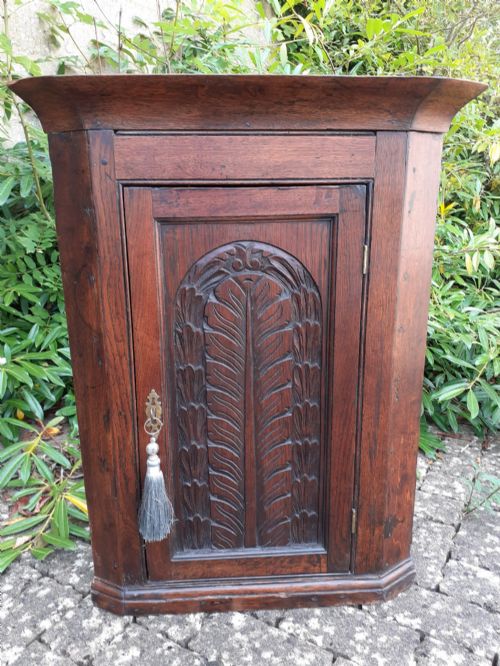
These traditional oak corner unit pieces make use of neglected room angles while providing sturdy storage in classic timber.
Traditional Oak Corner Unit
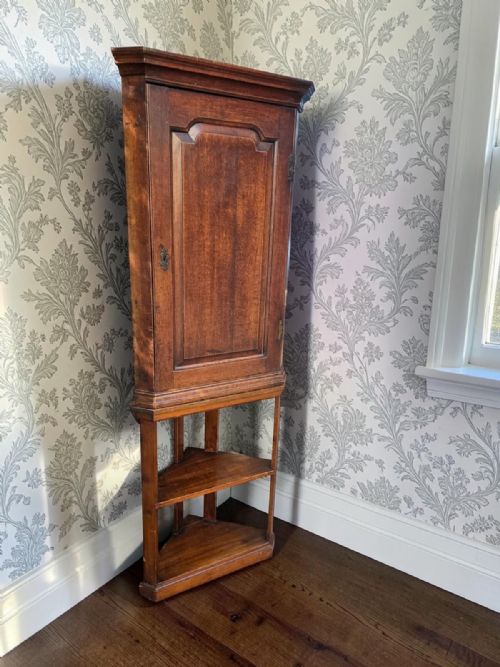
A traditional oak corner unit solves the problem of difficult room junctions by utilising wasted space for practical storage. Buyers searching for a traditional oak corner unit encounter forms ranging from small hanging cupboards to tall floor-standing cabinets.
The selections on this page span the Georgian, eighteenth century, and Victorian eras, alongside styles such as Georgian Country and Jacobean Revival. Hanging cupboards and standing floor cabinets predominate among the listed items.
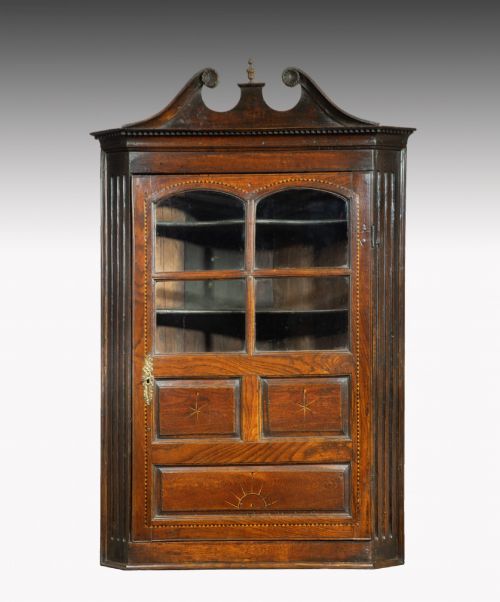
Most examples appear in solid oak, occasionally combined with mahogany, brass, glass, satinwood, or iron details. These pieces function as corner cabinets and corner cupboards suited to domestic interiors.
How they were made
Construction relies primarily on solid oak, shaped into panels and frames designed to fit room corners precisely. Cabinetmakers employed traditional joinery techniques to build robust doors, carcases, and shelving.
Secondary materials such as mahogany, satinwood, and iron appear in specific decorative elements, inlays, or hardware. Brass handles and glass panels also feature on selected cabinets to accent the primary timber.
Listings feature oak combined with mahogany, glass, brass, satinwood, and iron across Georgian and Victorian periods.
What varies in quality
Quality differences lie in the subtlety of the timber grain, the precision of panel joinery, and the presence of decorative inlays. Early eighteenth-century panelled examples show careful hand-working that distinguishes them from later revival pieces.
The integrity of the structural carcase and the original condition of brass hardware or glass panes influence the overall character of each cabinet. Finer specimens display harmonious proportions and careful integration of secondary woods like mahogany or satinwood.
The Traditional Oak Corner Unit Glossary
- Corner Cupboard
- A storage piece built with a triangular or angled plan designed to fit neatly into the corner of a room. These items often feature single or double doors enclosing internal shelves.
- Hanging Corner Cupboard
- A wall-mounted version of the traditional corner storage unit, usually fitted with fixing points at the rear. These smaller cupboards save floor space.
- Floor Standing Corner Cupboard
- A tall cabinet that rests directly on the floor, occasionally constructed as a two-part cupboard on a stand. This form provides substantial storage capacity.
- Panelled
- A method of construction where flat boards are fitted within a surrounding frame to allow for natural timber movement. This technique prevents warping in large wooden surfaces.
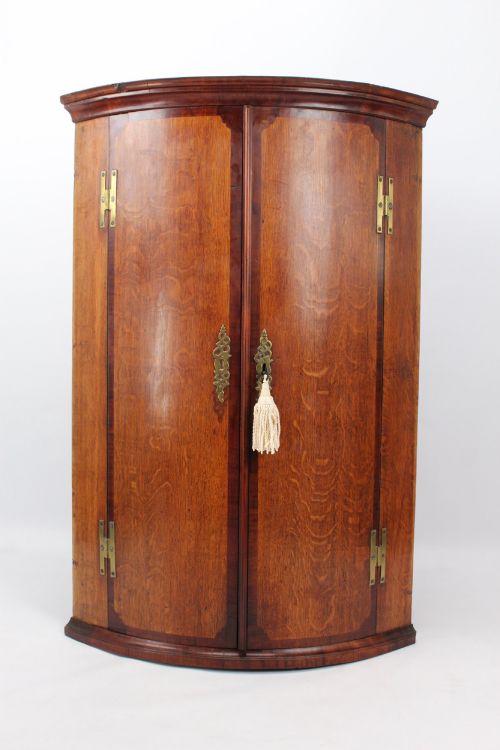
- Bow Front
- A convex, curved front profile found on selected Georgian cupboards. This shape softens the angular geometry typical of corner furniture.
Traditional Oak Corner Unit: Frequently Asked Questions
How do I hang a wall corner cupboard?
Hanging corner cupboards require secure fixings into solid wall studs or masonry to support the weight of the timber and its contents. Most pieces feature internal fixing holes or sturdy brackets placed at the back corners.
Ensure you check the load capacity of your wall type before mounting any antique cabinet. Assistance is often needed to hold the cupboard level while securing the fastenings.
How do I tell Georgian from Victorian pieces?
Georgian pieces often display simpler, understated lines with seventeenth or eighteenth-century construction methods like hand-panelling. Victorian items, including those from around eighteen eighty, sometimes incorporate heavier carved details or mixed woods like mahogany.
Examining the internal fixings, backboards, and hinge types provides further clues regarding the manufacturing date. Comparing the overall proportion and secondary timber usage helps clarify the period.
What is a Welsh corner cupboard?
A Welsh corner cupboard typically combines oak with secondary timbers such as mahogany, reflecting regional woodworking traditions from Wales. These hybrid pieces often showcase contrasting wood grains and varied decorative details.
They serve the same functional purpose as standard corner units while offering a distinct aesthetic variation. Collectors value them for their regional characteristics and mixed material construction.