
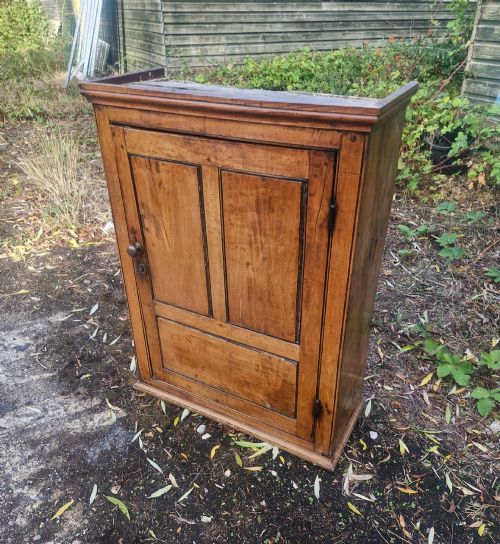
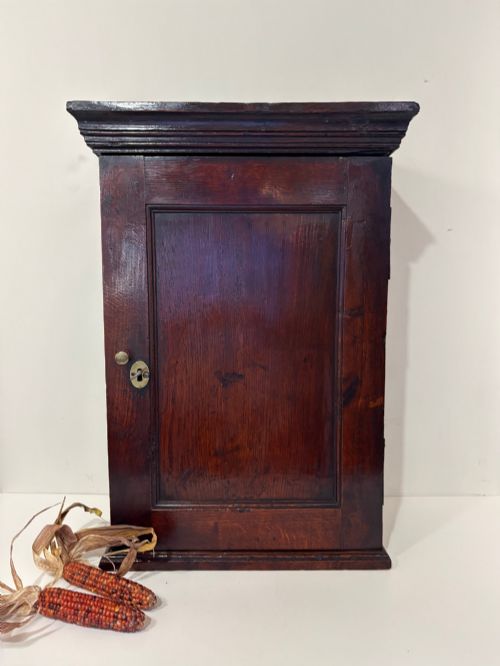
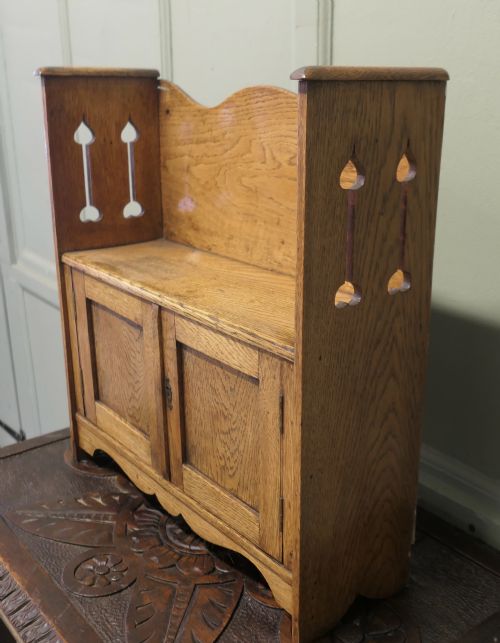
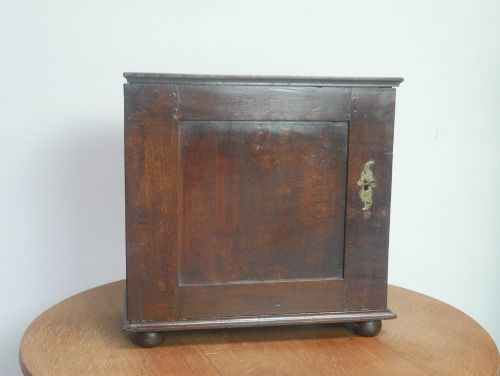


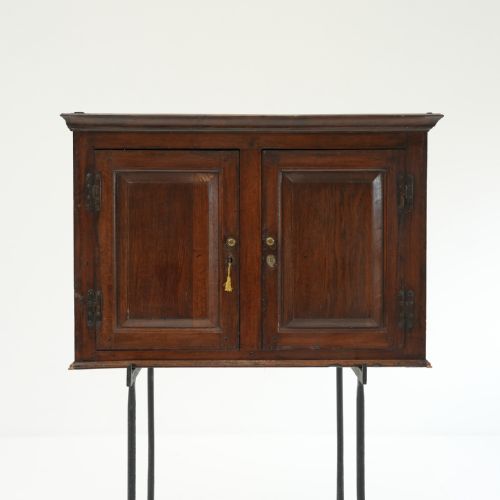


Rustic Oak Wall Cupboard
A rustic oak wall cupboard brings warmth and grounded utility to a room, offering practical storage disguised in rich, aged timber.
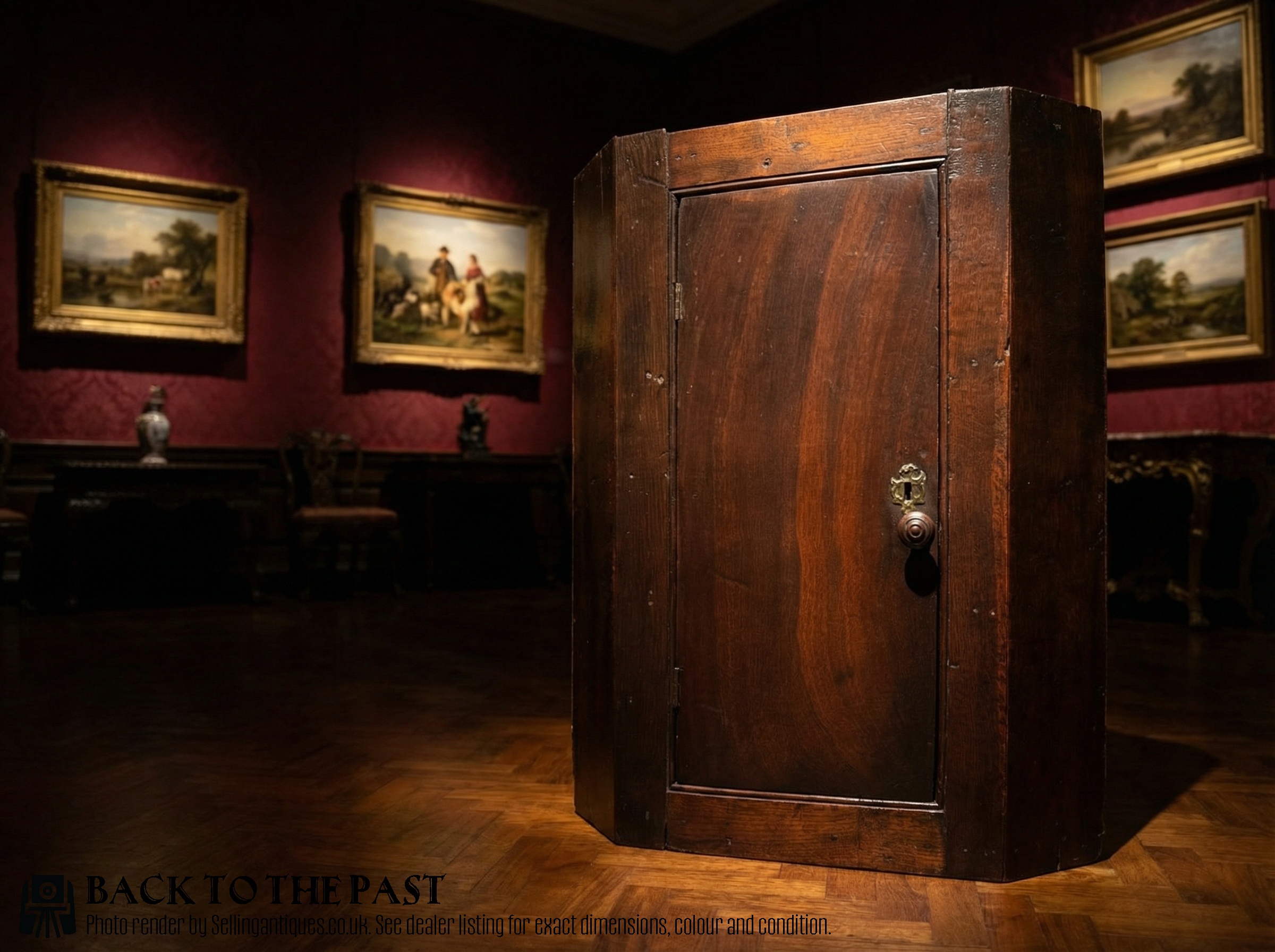
Rustic Oak Wall Cupboard
A rustic oak wall cupboard is a sturdy storage piece designed to hang securely or tuck into an unused corner, making efficient use of compact spaces. Buyers searching for a rustic oak wall cupboard commonly encounter hanging corner cabinets, wall-mounted spice cupboards, and provincial corner cupboards spanning the seventeenth, eighteenth, and nineteenth centuries. These items trace their origins to English country workshops, Welsh farmhouses, and French provincial manoirs, where local makers utilised domestic timber for everyday utility.
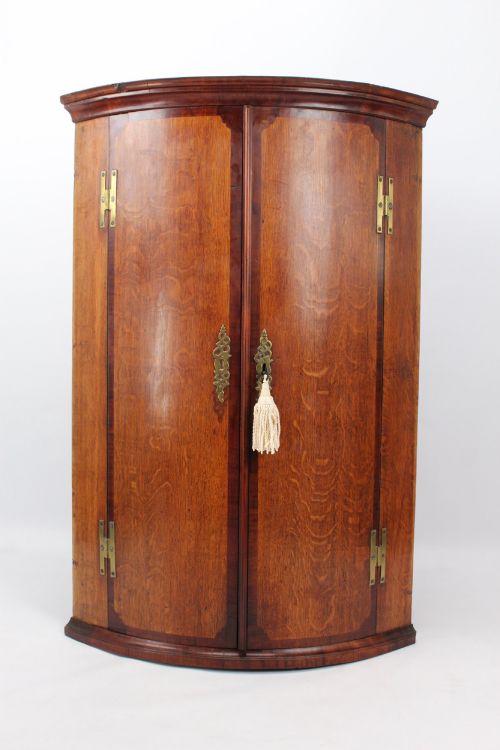
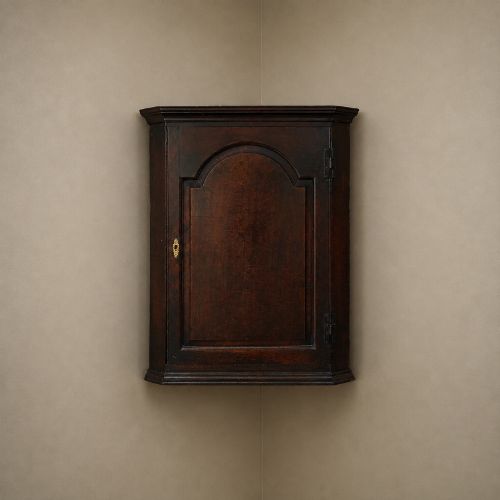
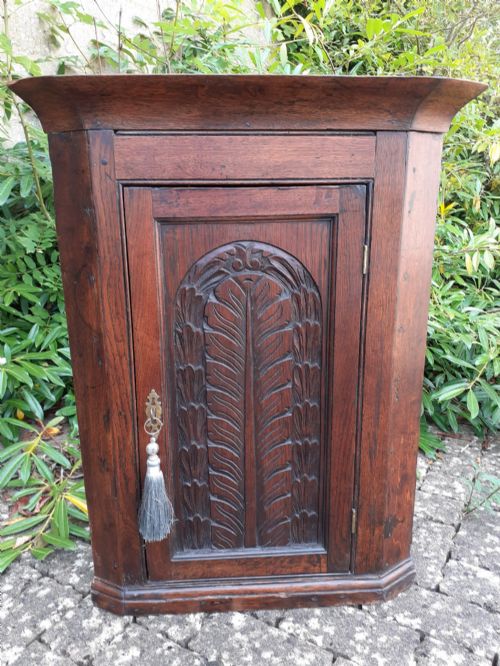
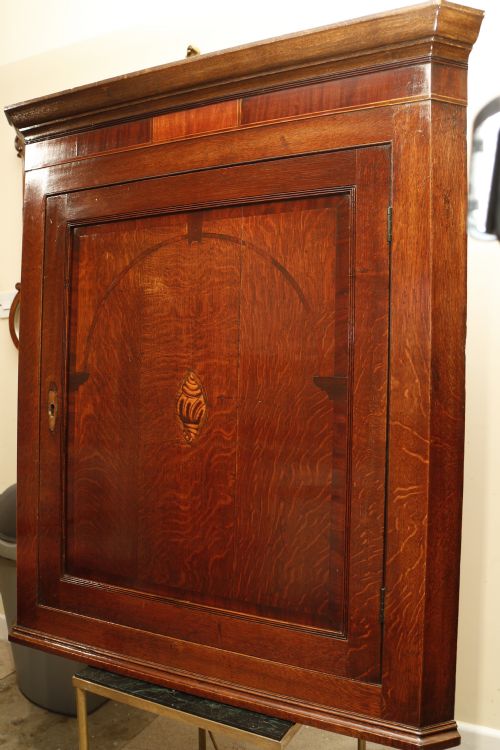
The dominant forms on this page are corner cupboards and wall cabinets dating from the Georgian period and the eighteenth century, alongside smaller numbers of Arts and Crafts and nineteenth-century provincial pieces. While many examples feature straightforward panelled doors and iron hinges, others display bow fronts or intricate wood inlay. They were originally built to store dry goods, spices, or valuables away from damp cottage floors, and today they bring historic character directly to kitchen and dining room walls.
How They Were Made
These pieces are constructed primarily from solid oak, frequently paired with secondary woods like pine and accented with brass or wrought iron hardware such as hinges and escutcheons. Joinery relies on traditional pegged mortise and tenon frames, while raised panels allow the dense timber to expand and contract with seasonal changes in humidity.
Surface decoration ranges from plain adzed boards to decorative marquetry inlay, mahogany crossbanding, and occasional painted finishes on French doors. Estate-made and provincial examples show the toolmarks of local carpenters who shaped mouldings by hand and fitted doors with simple latches or locks.
Rustic Oak Wall Cupboard Retail Price Guide 2026
Typical asking prices for rustic oak wall cupboard among the pieces listed under this phrase on Sellingantiques today, from the lower quarter to the upper quarter. They describe what is for sale here now, not the wider market.
The listings span from the seventeenth century through the Victorian era, encompassing Georgian country pieces, French provincial cabinets, and Arts and Crafts wall units.
What Varies in Quality
Quality rests in the choice of timber and the crispness of the cabinetmaker's joinery, distinguishing heavy, well-proportioned farmhouse pieces from ordinary utility boxes. Superior examples display carefully selected oak grain, tight mitres on door frames, and original brass or wrought iron hardware that has aged gracefully alongside the wood.
The sophistication of the internal shelving and the presence of regional details, such as Welsh country carving or fine Georgian proportions, elevate a piece above standard utilitarian storage. Construction that retains its original backboards and hanging brackets preserves the structural integrity expected by discerning buyers.
The Rustic Oak Wall Cupboard Glossary
- Bow front
- A convex curved cabinet front that projects outward from the corners. This shape adds visual weight and requires advanced woodworking skill to bend or shape the timber.
- Raised panel
- A central wooden board whose edges are bevelled to fit into a grooved frame. This technique allows the solid wood to move naturally without splitting the surrounding structure.
- Escutcheon
- A protective plate surrounding a keyhole, often made of brass or iron. It prevents the wood around the lock from wearing away through repeated use.
- Marquetry inlay
- Decorative patterns formed by fitting contrasting pieces of wood veneer into the primary surface. It provides ornamental detail without compromising the strength of the main panel.
Rustic Oak Wall Cupboard: Frequently Asked Questions
Were these cupboards meant for kitchens or living rooms?
Historically, smaller spice cupboards and hanging cabinets were kept in kitchens or parlours to store valuable foodstuffs, medicines, and tableware. Their enclosed doors kept contents clean in busy domestic spaces.
Today, they transition easily into modern homes as bathroom cabinets, hallway key stations, or statement display pieces in living areas.
How can I tell an eighteenth-century cupboard from a later copy?
Examine the construction methods, tool marks on the interior boards, and the type of hardware used. Eighteenth-century pieces typically feature hand-cut joints, pegged frames, and hand-forged iron hinges.
Older oak also develops a distinctive dry patina and deep colour over centuries, whereas later reproductions often show uniform machine milling and modern fixings.
Do these cupboards require special care in my home?
Keep wooden cupboards away from direct heat sources and drastic humidity changes to prevent the oak panels from cracking. Regular dusting with a dry cloth and occasional application of beeswax will nourish the aged timber.
Avoid placing them in damp areas like unheated cellars, as moisture can damage both the wood and any historic ironwork.