
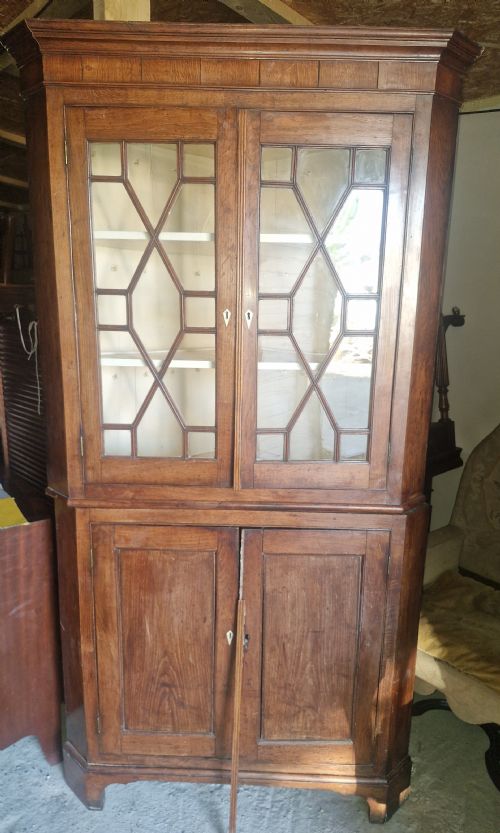
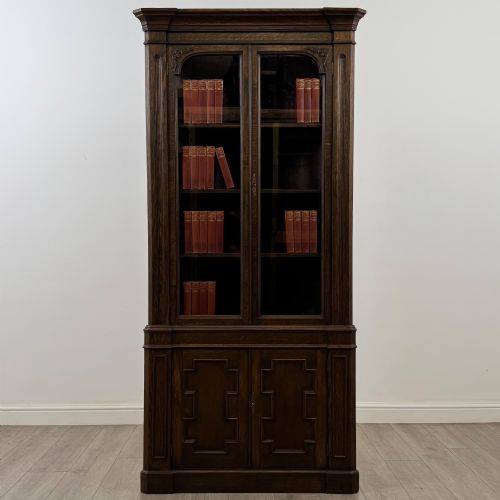
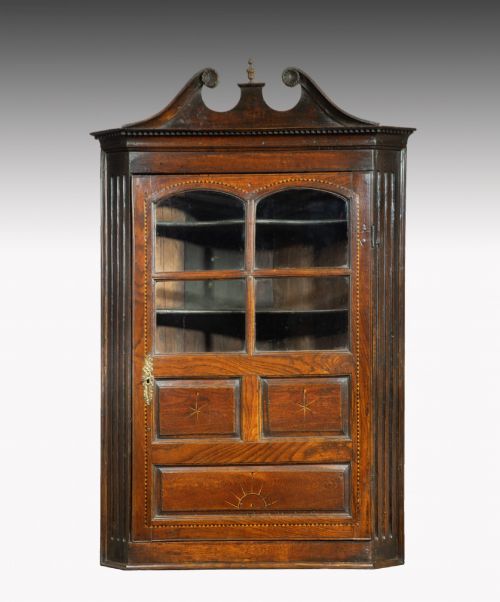
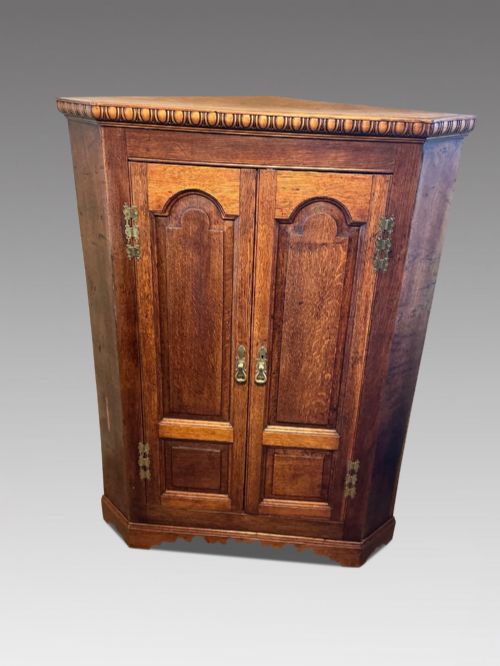


Oak Corner Display Cupboard
An oak corner display cupboard makes use of awkward angles while housing glassware or silver.
Oak Corner Display Cupboard
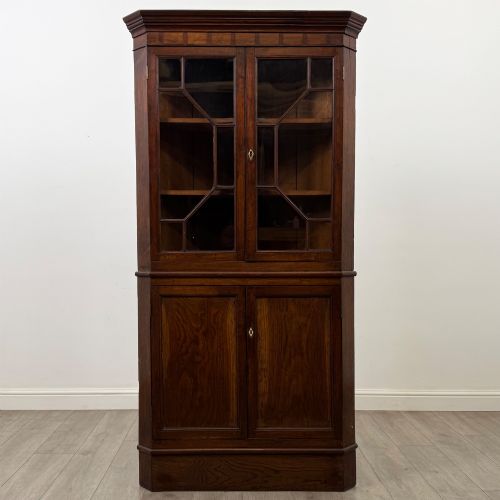
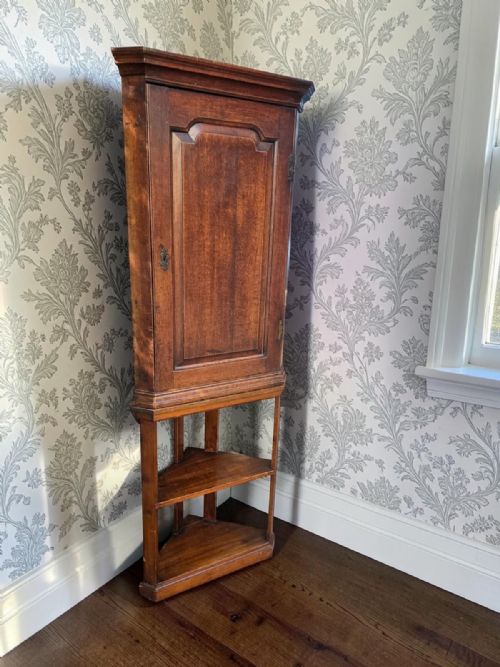
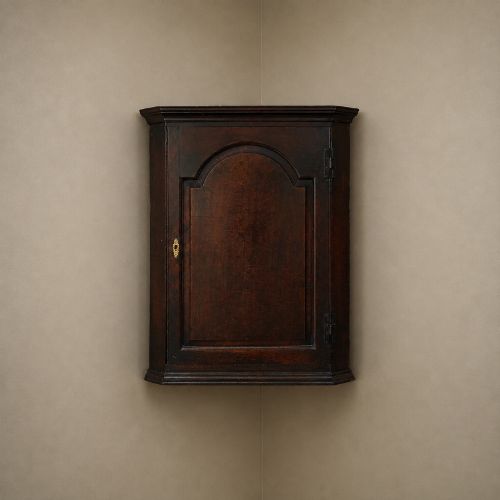
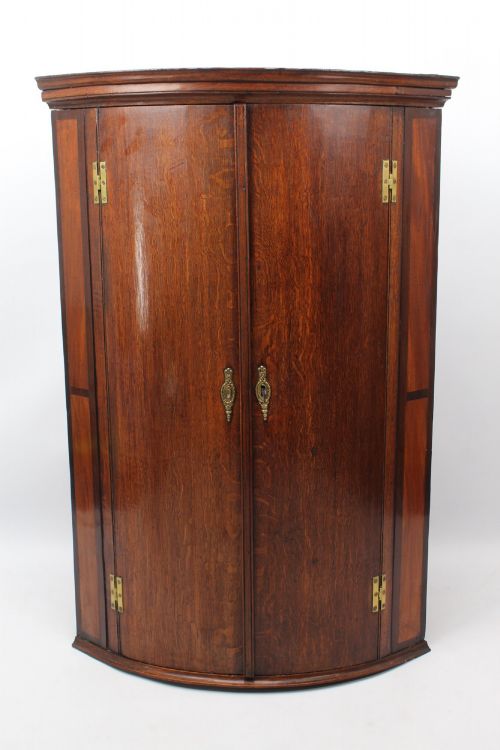
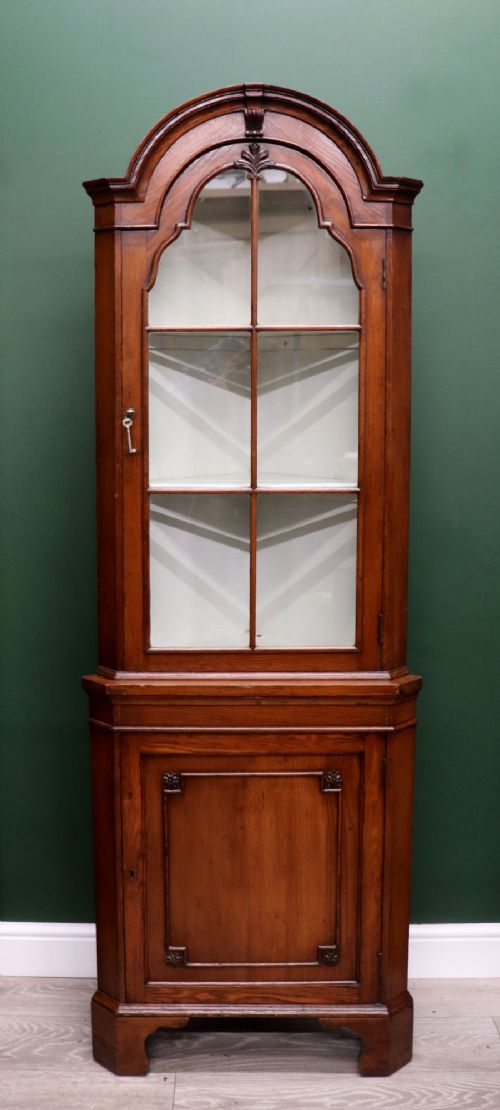
An oak corner display cupboard serves to utilise unused room angles while providing storage and display space for domestic items. When searching for an oak corner display cupboard, buyers encounter both wall-hanging and floor-standing variants originating mainly from the eighteenth and nineteenth centuries.
The material selection leans heavily on oak, occasionally accented with mahogany crossbanding or wood inlay. Forms range from single-door wall cabinets to tall, two-part standing furniture and bow-fronted designs.
Georgian and Victorian examples dominate the available selection, alongside pieces from the Edwardian era and the 1930s. Regional variations, such as Welsh country pieces, appear regularly alongside formal revival styles.
How they were made
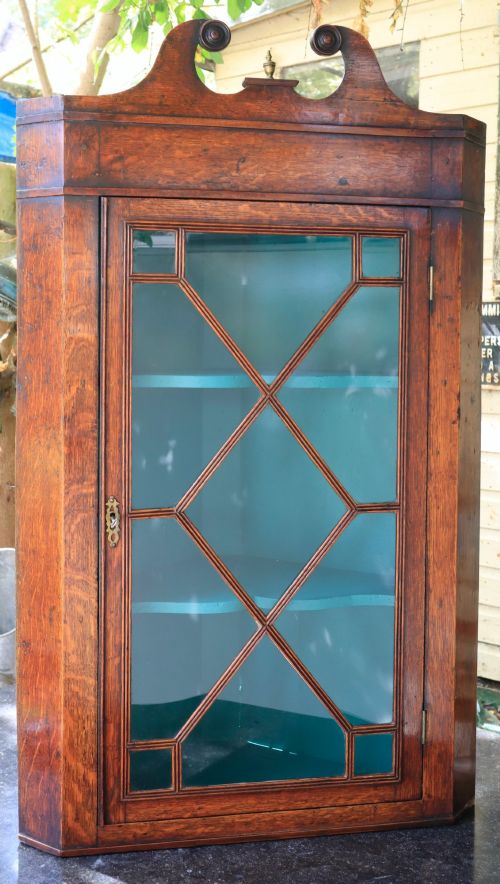
Joiners built these cabinets using solid oak panels, often incorporating pine for secondary interior elements or drawer linings. Glazed doors utilise lead or timber glazing bars to hold glass panes, while brass hinges and catches secure the doors.
Cabinet makers employed techniques such as crossbanding with mahogany veneers and fine wood inlay to decorate door panels and cornices. Surface finishes developed through waxing and handling over centuries, bringing out the grain of the wood.
Some eighteenth-century carvers hid secret little drawers inside the cabinet interior behind the main shelves.
What varies in quality
The standard of timber selection and cabinet construction dictates the grade of a piece. Earlier eighteenth-century examples often demonstrate finer proportions and more thoughtful integration of mahogany crossbanding than later revival items.
Glazing quality and the preservation of original brass hardware contribute significantly to the character of a cabinet. The execution of carved details or panel work separates standard utility furniture from finer regional or metropolitan workshop production.
The Oak Corner Display Cupboard Glossary
- Crossbanding
- A strip of veneer run perpendicular to the grain of the primary surface, commonly seen in mahogany framing oak panels on Georgian furniture.
- Bow front
- A convex curved cabinet front that projects outward, frequently found on eighteenth-century corner pieces.
- Glazing bars
- The wooden strips that hold individual panes of glass within a cabinet door.
- Two-part cupboard
- A tall standing cabinet constructed in separate upper and lower sections for easier transport and placement.
Oak Corner Display Cupboard: Frequently Asked Questions
Are these cabinets difficult to hang on walls?
Wall-hanging examples require secure fixing to solid masonry or internal wall studs due to the weight of the solid timber and glass.
Professional installation ensures the cabinet supports its own load safely when loaded with ceramics or glassware.
How do I tell an 18th-century piece from a Victorian revival?
Eighteenth-century pieces typically show hand-cut joinery, pegged joints, and timber shrinkage appropriate to their age.
Victorian and later revival pieces often utilise machine-sawn components and standardised hardware fittings.
Do these cupboards come in sections?
Floor-standing models frequently arrive in two separate stacked sections, making them simpler to move through narrow doorways.
Wall-hanging and smaller freestanding units are constructed as single solid carcasses.
Can I use a corner cupboard for modern display?
The interior shelving accommodates glassware, books, or ceramics securely while utilising awkward room corners.
Original shelf depths vary, so checking interior dimensions ensures your specific items will fit inside.