


Oak Corner Desk Chair
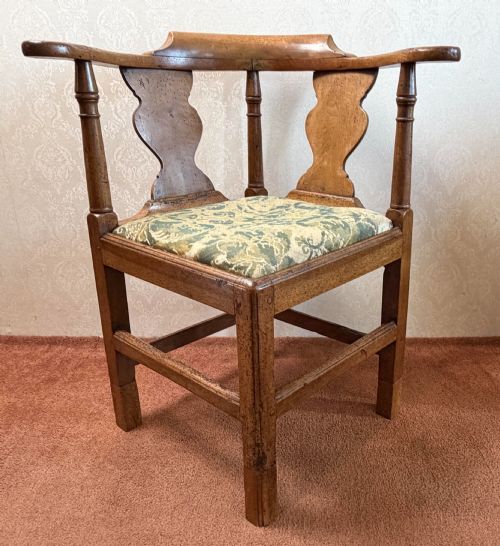
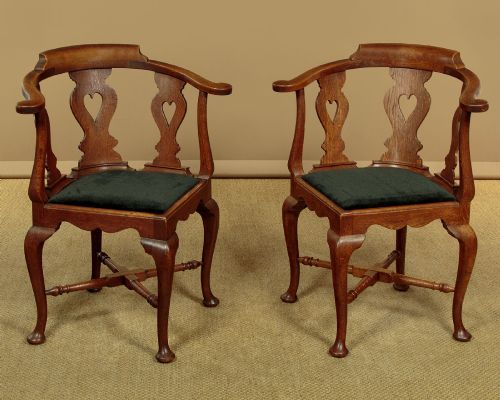
An oak corner desk chair gives you a sturdy seat designed to tuck neatly into a room angle, combining solid timber with practical use.
Oak Corner Desk Chair
The form itself relies on a diagonal footprint, positioning a backrest across the corner so the sitter faces into the room. Makers built these using various seat options, including rush, cane, fabric, leather, and plain upholstery, reflecting both formal and country tastes. Such seating suited domestic writing tasks and study spaces where floor space came at a premium.
How they were made
Joiners relied heavily on solid oak and fruitwood for the structural frames, often integrating turned or carved wooden supports to bear the weight of the sitter. These frames were frequently fitted with rush, cane, or upholstered pads using leather and fabric to form the seat base.
Detailing involved straightforward hand carving, bobbin turnings, or smooth joins that fastened the corner posts securely to the legs and back rail. Brass fittings occasionally appeared on specific revival styles, adding functional or decorative accents to the timber work.
The selection includes regional English country pieces alongside formal Victorian burgermeister chairs and French provincial bergères.
What varies in quality
The degree of crispness in the hand carving and the selection of dense, figured oak or fruitwood set the better examples apart from standard workshop output. Superior pieces show careful proportioning in the turned legs and back rails, ensuring the diagonal stance remains balanced and visually harmonious.
The integrity of the original joints and the survival of early or period-appropriate seat materials, such as rush, cane, or leather, heavily influence the overall character of the piece. Lesser examples often display heavy modifications or simplified turnings that lack the deliberate weight of earlier production.
S&H Jewell
The Oak Corner Desk Chair Glossary
- Corner chair
- A chair specifically built with a diagonal plan to fit into the angle of a room, featuring a continuous curved backrest supported by turned pillars.
- Rush seat
- A woven seating surface made from dried marsh grasses, commonly found on country chairs for a resilient and textured finish.
- Fruitwood
- Dense timber gathered from fruit-bearing trees such as pear or apple, utilised by makers for its fine grain and smooth working properties.
- Bergère chair
- An enclosed upholstered armchair with wooden framing, sometimes incorporating cane panels along the sides and back.
- Bobbin turning
- A form of woodturning characterised by a series of rounded, spool-like shapes repeated along the length of a furniture leg or stretcher.
Oak Corner Desk Chair: Frequently Asked Questions
What is an oak corner desk chair used for?
These pieces provided compact seating for writing desks placed in room corners or tight spaces during the eighteenth and nineteenth centuries.
Their unique diagonal design allowed a sitter to work comfortably while utilising rooms efficiently.
How do I identify an eighteenth century corner chair?
Eighteenth century examples typically feature simpler, robust country construction in oak or fruitwood, often with straightforward turned supports and drop-in rush seats.
Later Victorian and Edwardian versions frequently incorporate heavier carved ornamentation or revival styles such as Gothic and Renaissance influences.
Are these chairs comfortable for daily use?
The supportive wrap-around back rail offers a surprisingly secure and upright posture suitable for reading or writing at a desk.
Comfort depends largely on the condition of the seat, whether it is upholstered in leather, fabric, or woven from rush and cane.
How should I care for an antique oak chair?
Keep the timber clean using a soft, dry cloth and apply occasional high-quality beeswax to nourish the dry oak or fruitwood grain.
Protect rush and cane seats from excessive moisture and direct heat sources to prevent the natural fibres from becoming brittle.