






Oak Conference Table
An oak conference table provides a sturdy centre for large gatherings, built from enduring timber in styles spanning the Victorian era to the twentieth century.
Oak Conference Table
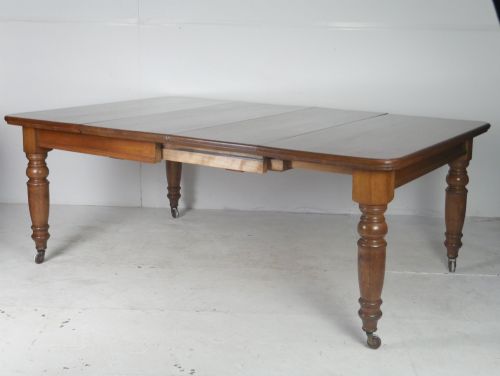
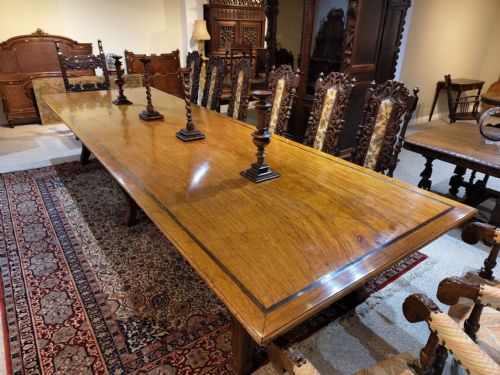
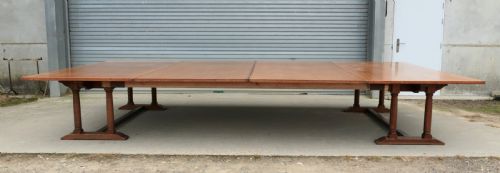
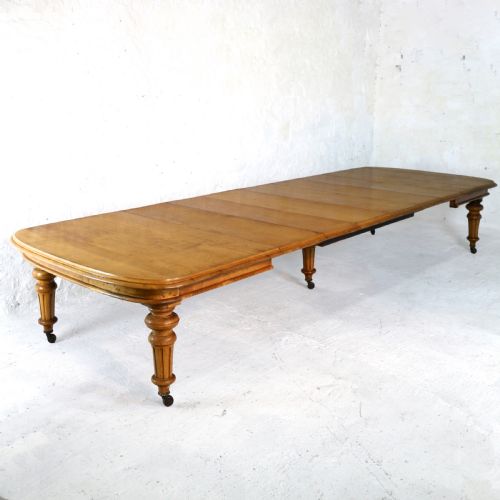
When searching for an oak conference table, buyers encounter substantial pieces designed to seat many people, often taking the form of large dining tables, banqueting tables, library tables or boardroom tables. These surfaces serve gathering spaces with generous proportions, ranging from circular designs to monumental lengths exceeding twelve or eighteen feet.
The versions most commonly met on this page span the nineteenth century and the Edwardian period, drawing on Victorian, Gothic Revival, Elizabethan Revival, Reformed Gothic, Arts and Crafts, and English Country House traditions. Many examples feature extending mechanisms with multiple leaves to accommodate large parties.
Origins and materials reflect traditional British cabinet making, utilising oak alongside pollard oak and secondary timbers, sometimes accompanied by matching dining sets or chairs.
How they were made
Construction relies heavily on solid oak and pollard oak timber, selected for durability and pronounced grain patterns, occasionally paired with brass fittings.
Tables frequently incorporate extending mechanisms supported by leaves, cruciform bases, or refectory frames to manage considerable lengths while maintaining stability.
Some tables stretch so far they require fourteen matching chairs just to keep the peace at dinner.
What varies in quality
The distinction between tiers of quality rests upon timber selection, such as the use of highly figured pollard oak rather than standard oak, and the complexity of revival detailing like Gothic or Elizabethan carving.
Proportion and engineering also divide standard production from exceptional boardroom examples, particularly in the seamless integration of extending leaves and substantial timber bases.
The Oak Conference Table Glossary
- Refectory table
- A long, narrow dining or conference table traditionally supported by substantial legs connected by a stretcher.
- Extending table
- A dining or conference table designed with removable leaves and internal runners to increase its overall length.
- Pollard oak
- Oak timber harvested from trees that have been pollarded, producing dense, highly figured grain patterns prized for decorative surfaces.
- Gothic Revival
- A nineteenth-century architectural and decorative style drawing inspiration from medieval ecclesiastical design and pointed arches.
Oak Conference Table: Frequently Asked Questions
How many people can these large tables seat?
Capacities vary widely depending on the length of the specific board, with many examples accommodating ten, twelve, eighteen, or even thirty diners.
Buyers should examine the dimensions and number of leaves listed to determine exact seating arrangements for their rooms.
What is the difference between a dining and conference table?
Historical dining and conference tables often overlap in form, as large refectory, library, and banqueting tables were utilised across domestic and formal settings.
Many extending dining tables adapt easily to modern boardroom requirements due to their generous proportions.
How do I identify a Gothic Revival table?
Gothic Revival pieces display architectural motifs drawn from medieval design, including pointed arches, heavy tracery, and formal structural carving.
These elements appear frequently on nineteenth-century oak tables associated with Victorian and Reformed Gothic styles.
Are these tables fitted with extending leaves?
Numerous examples incorporate extending mechanisms and multiple leaves designed to adjust the overall length of the surface.
This functionality allowed large Victorian and Edwardian households to alter table sizes according to the number of guests.