
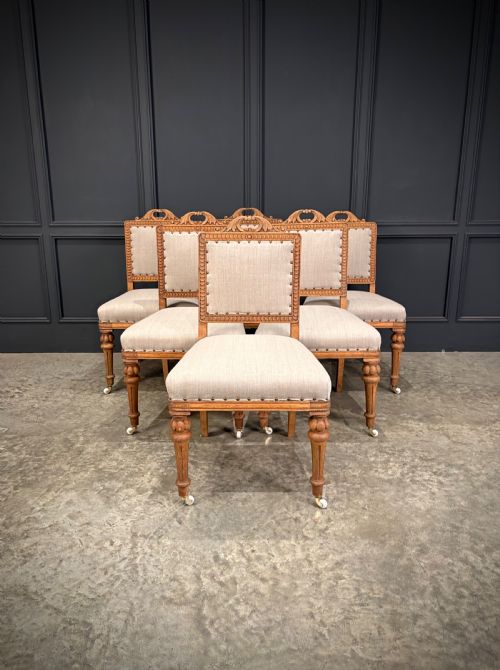


Oak Chairs on Castors
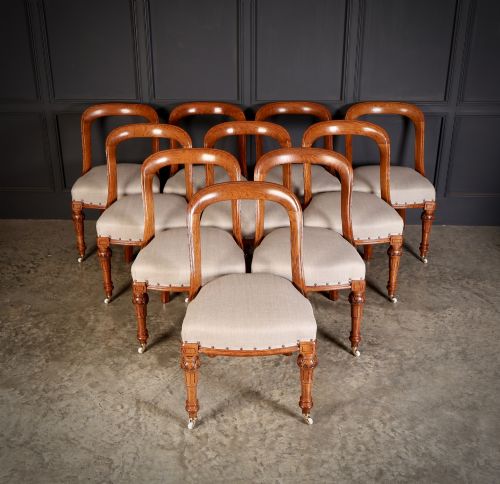
Oak chairs on castors are solid timber seating fitted with small wheels for easy movement around a study or dining table.
Oak Chairs on Castors
When you search for oak chairs on castors, you encounter robust timber seating designed for studies, offices, and dining rooms across the nineteenth and early twentieth centuries. The selection on this page centres heavily upon Victorian examples alongside Edwardian desk chairs and Arts and Crafts workspace seating.
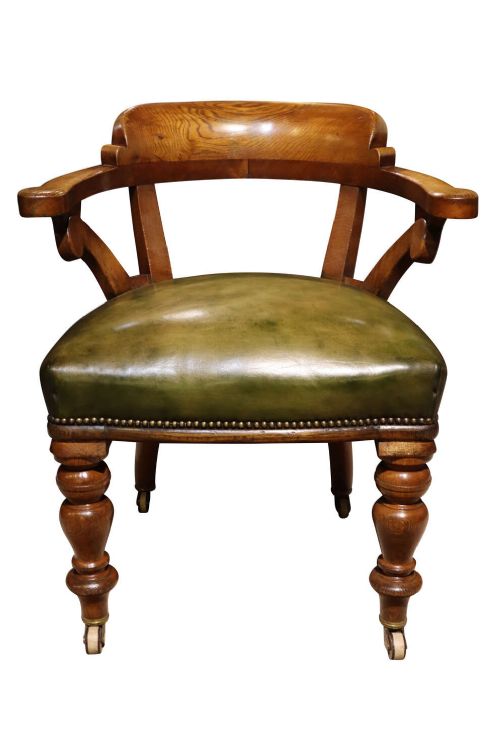
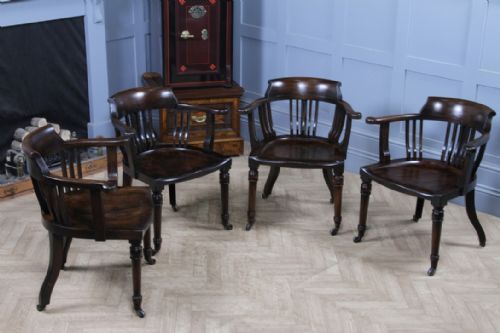
Forms range from sturdy captain's chairs and smoker's bow armchairs to sets of dining chairs and swivel desk variants. These pieces combine heavy timber frames with functional undercarriage wheels, allowing a heavy seat to glide across a carpet or floorboards without strain.
Most pieces date from the Victorian and Edwardian eras, spanning library armchairs, hall chairs, and revolving desk models. Golden oak, dark polished oak, and bleached timber appear frequently alongside upholstered leather or fabric pads.
How they were made
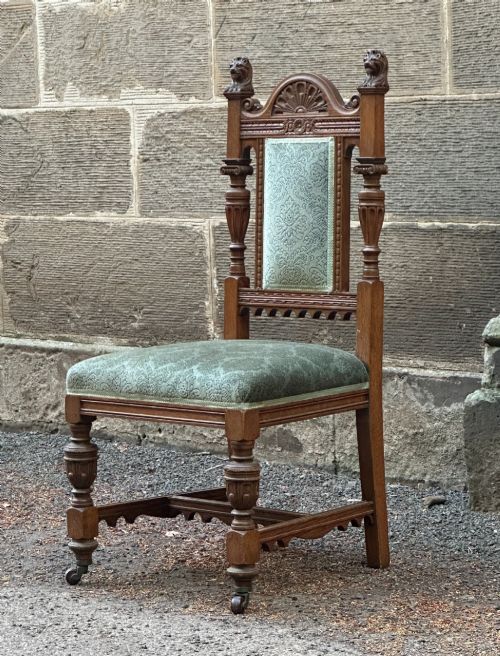
Makers built these frames using solid oak, sometimes golden or bleached, joined with traditional woodworking methods to withstand daily movement. Turnings, carvings, and steam-bent rails provide structural strength and decorative detail.
Metal and ceramic castors are fitted to the base of the legs, often utilising brass mounts and small porcelain wheels to protect floor coverings. Upholstered variants incorporate leather or fabric pads secured with brass studs over firm stuffing.
The listings on this page span the Victorian and Edwardian periods, featuring materials such as brass, leather, and solid oak.
What varies in quality
The distinction between ordinary utility seating and superior examples lies in the depth of carving and the selection of timber grain. Golden oak with rich figure and deeply relief-carved panels commands greater attention than plain, utilitarian stock.
Original hardware determines much of the integrity, particularly matching brass castors and uncompromised swivel mechanisms on desk chairs. The quality of the leather upholstery and the tightness of the frame joints complete the assessment.
Bruce Talbert·W.Williamson & Sons·Kendrick & Jefferson
The Oak Chairs on Castors Glossary
- Castor
- A small wheel mounted on a swivel at the base of a leg to allow smooth rolling. They appear in brass, iron, and ceramic.
- Captain's Chair
- A low-backed wooden armchair designed for comfort at a desk or table. They frequently feature curved spindle backs.
- Smoker's Bow
- A sturdy Windsor-style armchair with a continuous curved backrail and arm bow. They are commonly built from solid oak or elm.
- Gothic Revival
- An architectural and decorative style drawing on medieval forms. Pieces often display pointed arches, tracery, and heavy chamfered edges.
Oak Chairs on Castors: Frequently Asked Questions
Why were castors fitted to chairs?
Castors allowed heavy wooden chairs to move easily across thick carpets and heavy rugs in Victorian libraries and dining rooms.
This mobility saved floor coverings from scuffing and made it simpler to adjust seating positions around a large table.
How do I identify a Victorian desk chair?
Victorian desk chairs typically combine solid oak frames with turned spindles, saddle seats, and leather upholstery.
Many incorporate revolving mechanisms or small wheels to assist movement within a study.
Are these chairs suitable for modern daily use?
Solid oak construction and sturdy joinery make these chairs remarkably robust for everyday sitting at a desk or dining table.
Checking the stability of the castor mounts ensures the timber legs remain protected during movement.
What is golden oak?
Golden oak refers to a warm, honey-toned timber finish popular during the late nineteenth and early twentieth centuries.
This appearance results from specific finishing oils and varnishes highlighting the natural grain.