





Gothic Style Desk Chairs
Gothic style desk chairs bring architectural presence to a room, drawing on medieval forms adapted for nineteenth and twentieth century seating.
Gothic Style Desk Chairs
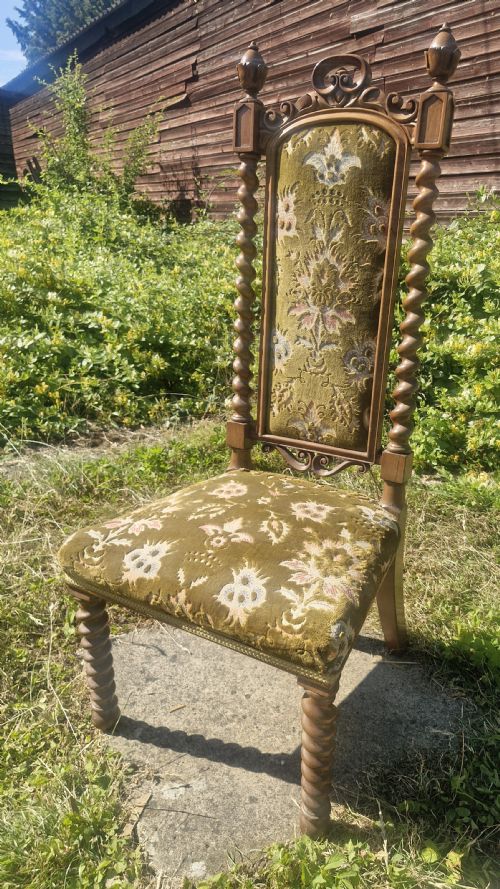
Gothic style desk chairs encompass sturdy seating built across the nineteenth and twentieth centuries, drawing heavily on medieval architectural motifs such as pointed arches and tracery. You will encounter high-back forms, X-frame armchairs, and side chairs executed in solid timber.
The examples gathered here span several decades, featuring revival periods alongside later interpretations. Makers utilised robust construction methods to create imposing silhouettes suitable for studies and libraries.
Many pieces show direct inspiration from notable nineteenth-century designers, while others adopt broader ecclesiastical and vernacular traditions. They function as both practical seats and statements of antiquarian taste.
Materials and construction
Oak dominates the construction of these pieces, frequently carved deeply with linenfold panels, strapwork, and geometric tracery. Workshops also turned to walnut, rosewood, and mahogany for particular commissions.
Upholstery materials range from plain leather to rich velvet and woven fabric, secured with brass tacks. Joinery relies on traditional pegged mortise and tenon frames designed to bear heavy daily use.
Listings feature oak as the primary timber, complemented by mahogany, walnut, and rosewood across nineteenth-century revival periods.
Judging quality and execution
The depth and sharpness of the timber carving set superior examples apart from standard commercial production. Crisp relief work on architectural elements indicates skilled hand execution rather than mechanical shaping.
Proportion and timber selection dictate the overall integrity of a piece. Well-balanced frames utilising dense, figured grain display a superior material quality that elevates the design.
Gillows·Bruce James Talbert·A. W. N. Pugin
The Gothic Style Desk Chairs Glossary
- Gothic Revival
- An architectural and decorative movement spanning the eighteenth and nineteenth centuries that revived medieval forms. It heavily influenced furniture design through pointed arches and ecclesiastical motifs.
- X-frame
- A structural chair design featuring intersecting supports forming an X shape when viewed from the side. This ancient form gained renewed popularity during the nineteenth-century revival periods.
- Carolean Style
- A seventeenth-century aesthetic marked by rich carving, scrolling foliage, and high cane or upholstered backs. Later Victorian interpretations revived these elements for imposing seating.
- Tracery
- Ornamental stone openwork traditionally supporting glass in a Gothic window, later translated into carved wooden panels on furniture. It provides the distinct geometric patterns seen across the backs of these chairs.
Gothic Style Desk Chairs: Frequently Asked Questions
Are these chairs comfortable for daily desk work?
Many of these chairs offer supportive upright postures suited to writing or reading at a desk. Their solid timber frames and high backs encourage an engaged seating position.
While some examples feature padded leather or velvet upholstery, others rely entirely on carved wooden seats. Buyers often add a loose cushion if they require extra padding for extended working hours.
How do I identify a nineteenth-century revival piece?
Nineteenth-century revival pieces display characteristic architectural details such as pointed arches, quatrefoils, and heavy linenfold carving. These motifs mimic medieval stone and woodwork.
Examination of the timber and joinery helps confirm the period of manufacture. Tool marks, timber shrinkage, and traditional peg construction provide clear indicators of nineteenth-century workshop practices.
Will an oak gothic chair suit a modern interior?
The rich tones of polished oak and dark leather anchor contemporary spaces with a strong architectural focal point. These chairs contrast effectively against minimal plaster walls and clean lines.
Their substantial presence means a single armchair or pair works best where the room has sufficient scale. They pair naturally with large wooden desks and antique side tables.
What is the difference between an armchair and a side chair here?
Armchairs feature structural elbow supports and broader proportions designed for primary seating at a desk or table. They often display more elaborate carving along the crest rail and arms.
Side chairs omit the arm supports, resulting in a more compact footprint that tucks easily beneath writing surfaces. They frequently share the same decorative vocabulary as their larger counterparts.