
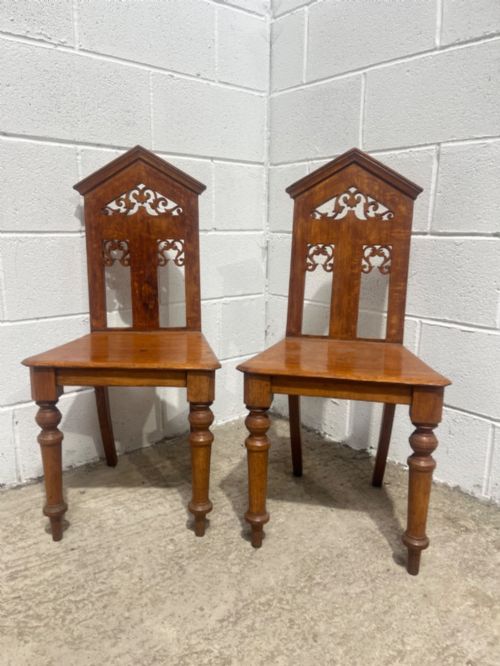
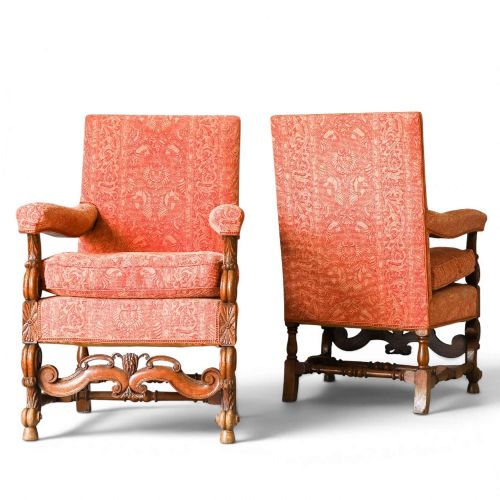
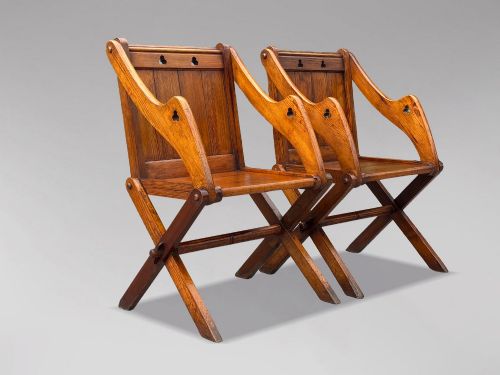
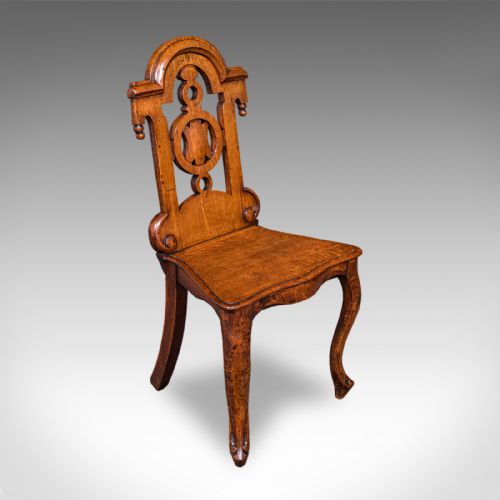
Carved Gothic Accent Chairs
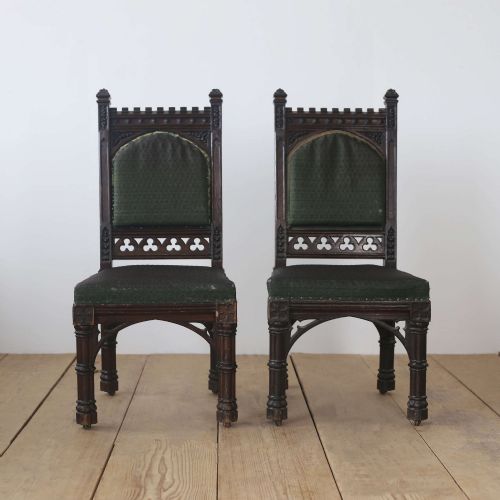
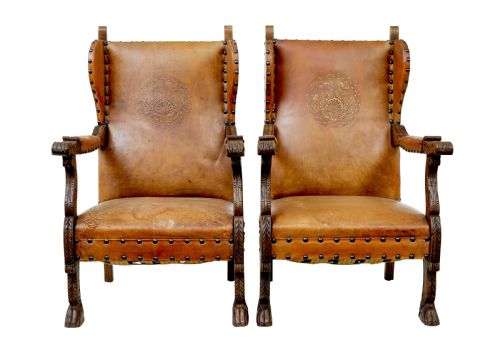
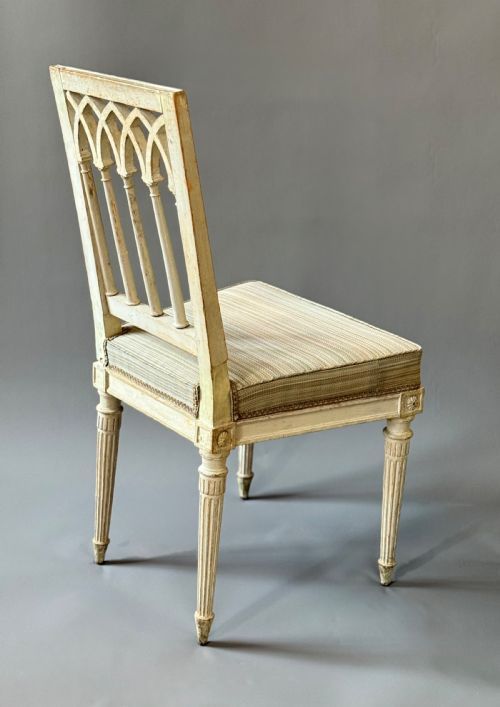
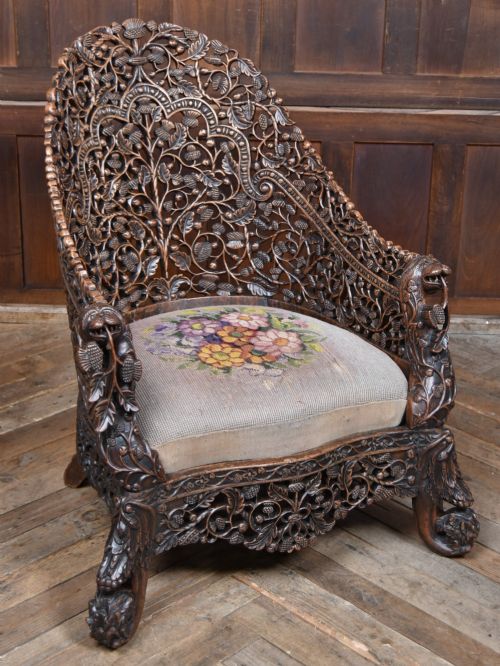
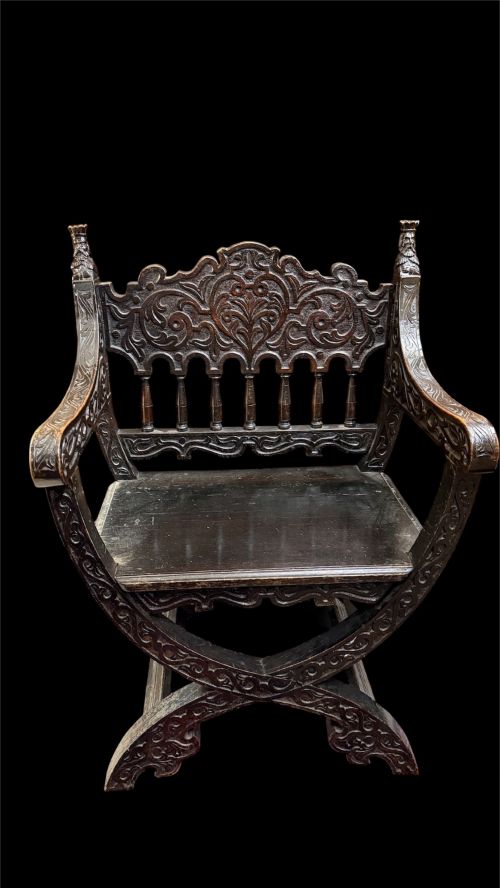
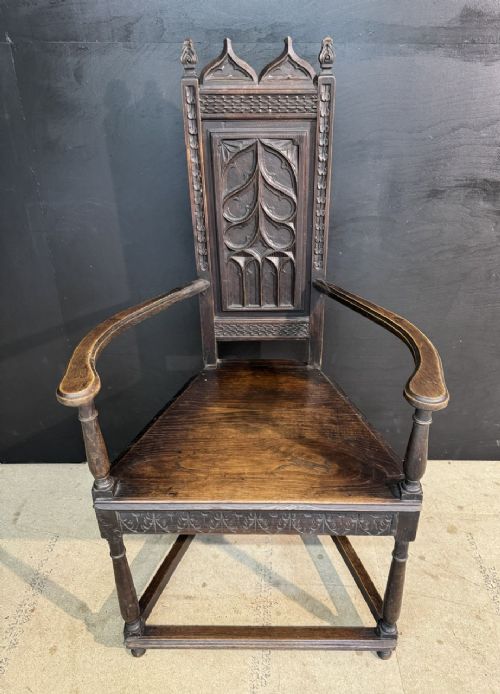
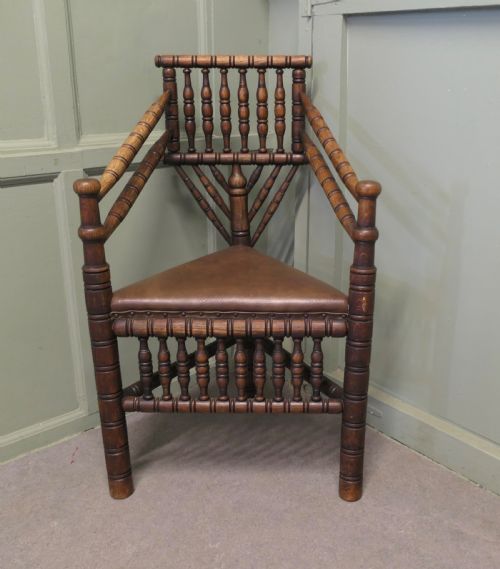
These carved gothic accent chairs bring heavy timber, pointed arches, and heraldic details into modern rooms.
Materials and Construction
Oak dominates the construction, joined by walnut, mahogany, and pitch pine to form rigid structures capable of supporting deep hand-carved ornamentation. Workshops also employed painted wood, brass accents, and turnings to replicate medieval prototypes.
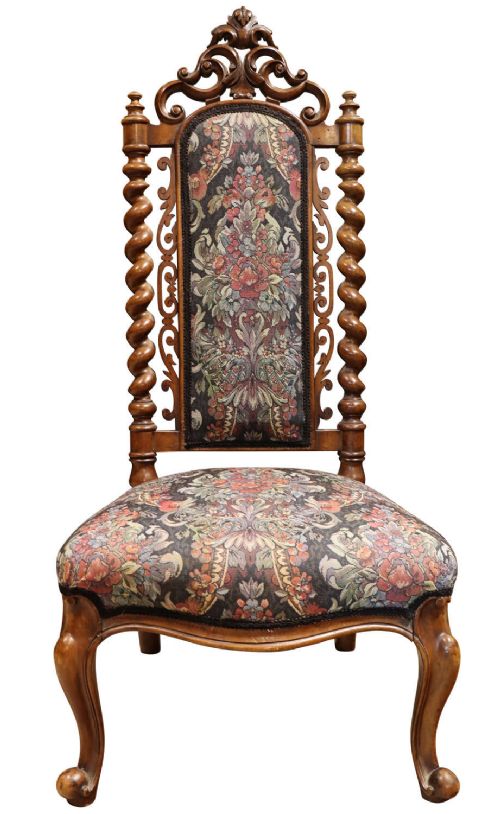
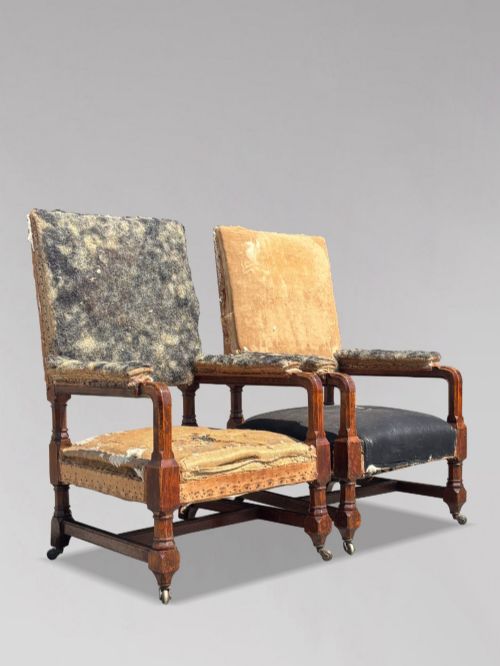
Upholstery materials include heavy tapestry, embossed leather, and plain fabric fixed with brass tacks to wooden frames. Joinery methods relied on pegged mortise and tenon joints, creating robust armchairs, Glastonbury chairs, and hall seats that endure for centuries.
Evaluating Quality
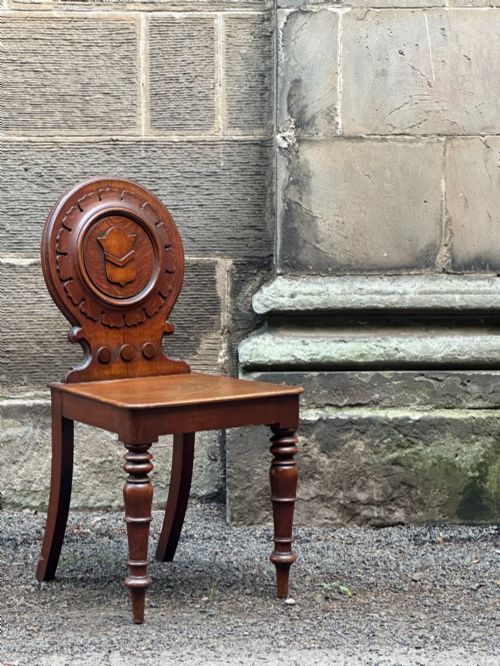
The depth and crispness of the hand-carving separate ordinary production from exceptional pieces. Sharp tracery, well-defined heraldic shields, and balanced proportions indicate skilled cabinet work rather than mass-produced stamping.
Timber selection and structural integrity dictate the grade of a chair. Dense quarter-sawn oak with original surface patination commands greater respect than softer secondary woods with obscured or heavy-handed restorations.
One tiny apprentice piece demonstrates miniature gothic carving skills from the eighteenth century.
Bruce Talbert·Gillows·A W N Pugin
The Carved Gothic Accent Chairs Glossary
- Gothic Revival
- An architectural and decorative style drawing inspiration from medieval buildings, featuring pointed arches, trefoils, and heavy carved woodwork. This movement shaped much of nineteenth-century furniture design.
- Glastonbury Chair
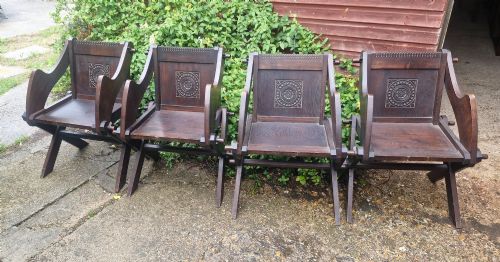
- A folding armchair type with X-framed supports and a sloping back, popular during revival periods. The design references early medieval prototypes associated with ecclesiastical seating.
- Wainscot Chair
- A heavy wooden armchair constructed with panelled backs and solid timber seats. These pieces date back to sixteenth-century vernacular traditions and inspired later nineteenth-century revivals.
- Trefoil
- A graphic ornament composed of three overlapping rings or lobes resembling a clover leaf. It appears frequently in the openwork tracery of gothic chair backs.
- Hall Chair
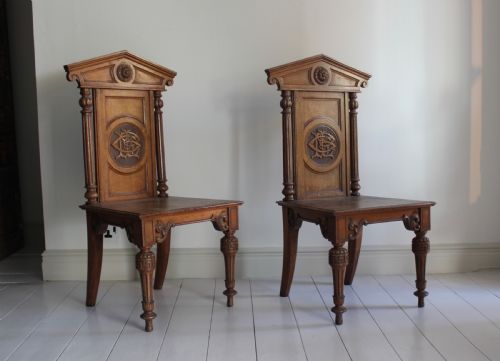
- A rigid wooden seat placed in an entrance hall, typically featuring a solid carved back displaying heraldic shields or family crests. They were designed for brief seating rather than comfort.
Carved Gothic Accent Chairs: Frequently Asked Questions
Where should I place a carved gothic accent chair?
These pieces suit entrance halls, libraries, or studies where their architectural timber frames act as sculptural focal points.
They pair well with neutral walls and plain backgrounds that allow the deep carving and silhouette to stand out clearly.
Are these chairs comfortable for daily sitting?
Most historic hall chairs and side chairs feature upright wooden backs designed for posture rather than lounging.
Upholstered armchairs and library chairs offer softer seating, though nineteenth-century cushioning tends to feel firmer than modern upholstery.
How do I date a gothic revival chair?
Examine the timber, joinery methods, and surface patination alongside stylistic clues like ecclesiastical tracery or heraldic motifs.
Nineteenth-century makers often combined medieval forms with machine-assisted preparation while retaining hand-finished carving details.
What is the difference between a hall chair and an armchair?
Hall chairs feature stiff wooden seats and high carved backs without arms, intended for occasional use in entrance spaces.
Armchairs provide elbow rests and wider proportions, built as Glastonbury chairs, wainscot seats, or library seating designed for extended periods.