



Oak Bureau Desk Top
An oak bureau desk top offers a practical writing space and fitted interior, bringing traditional craftsmanship into a room.
Oak Bureau Desk Top
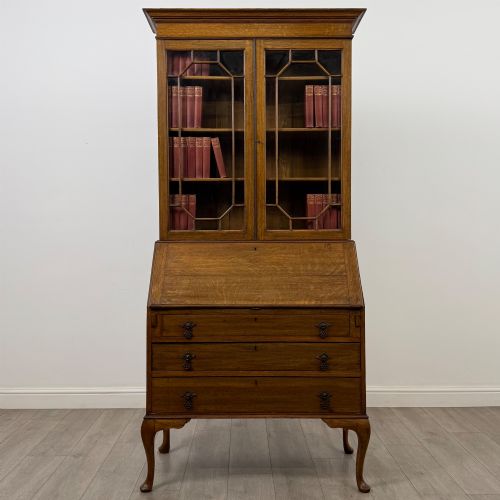
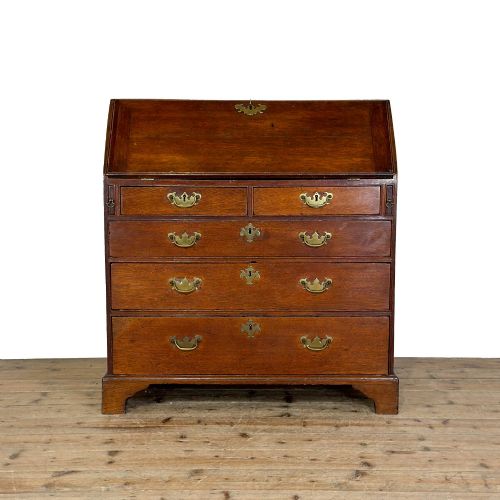
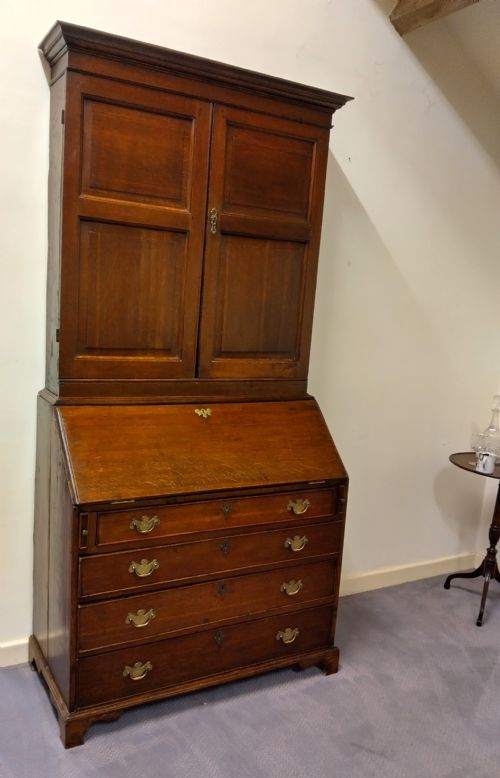
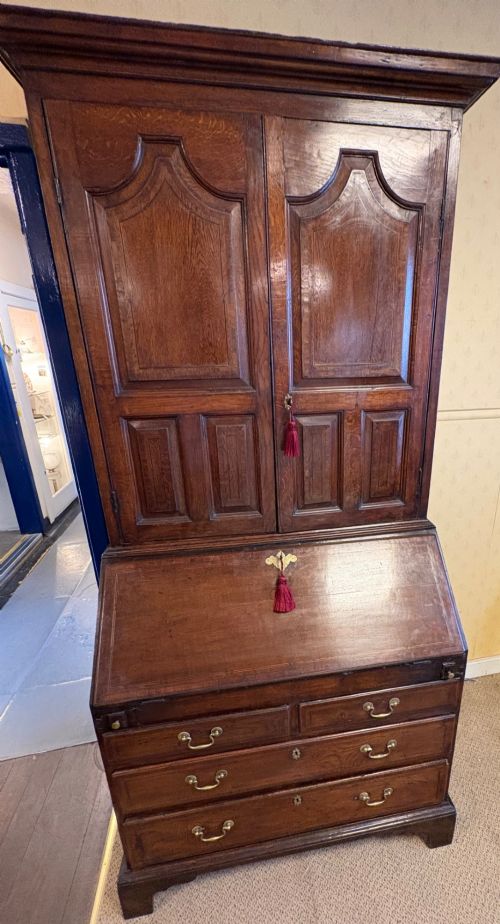
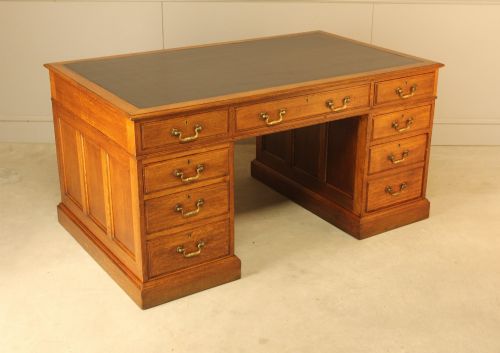
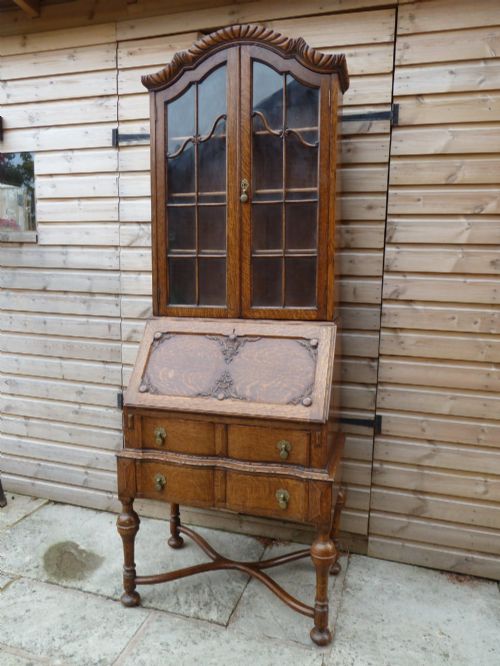
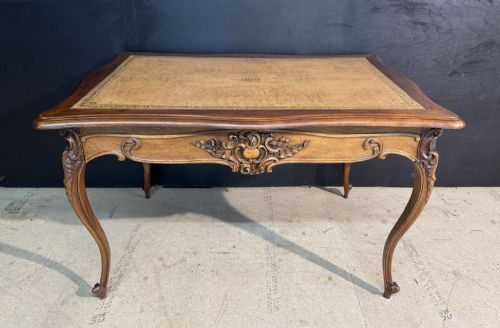
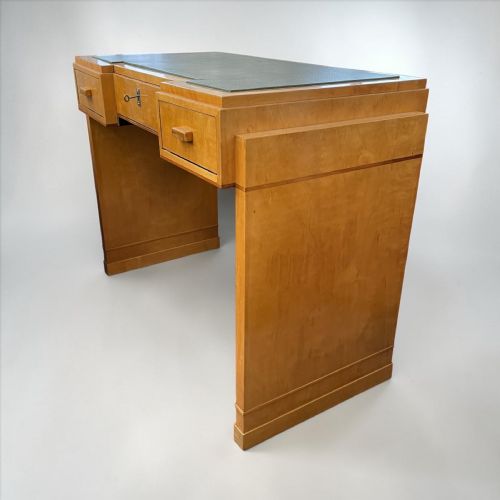
When you search for an oak bureau desk top, you encounter a range of writing furniture spanning from the seventeenth century through to the Edwardian period and the nineteen-twenties. The selection encompasses smaller table top formats as well as substantial bureau bookcases and roll top pedestals.
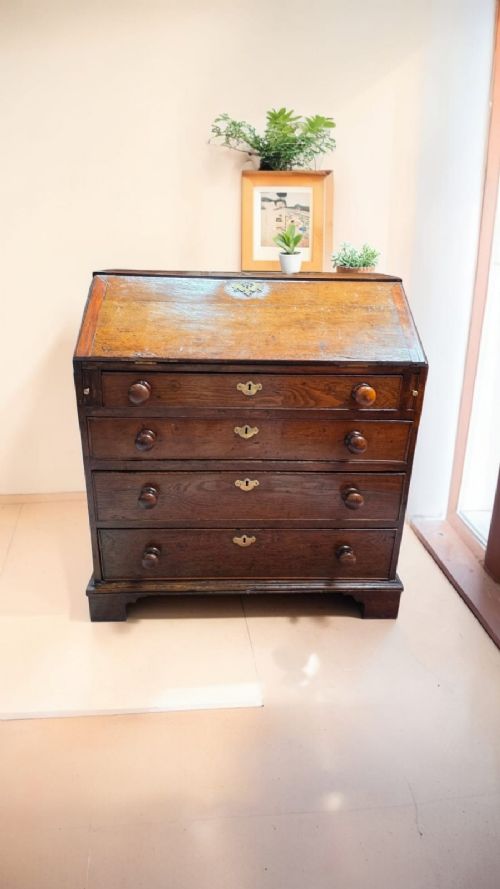
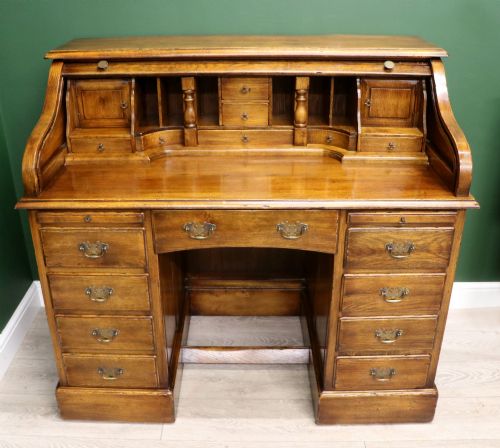
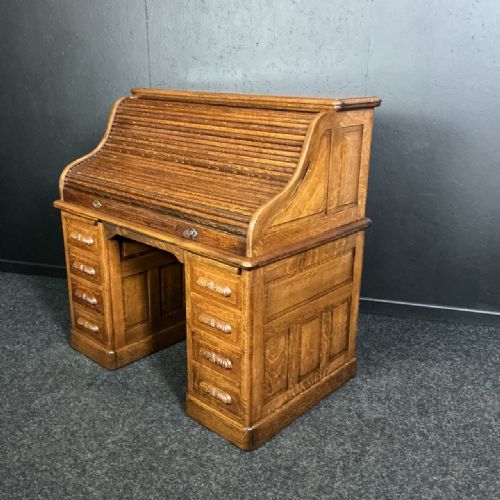
The most common forms on this page include eighteenth-century sloping fronts with fitted stepped interiors and Edwardian roll top desks with tambour mechanisms. Pieces originate from vernacular workshops as well as more formal Georgian and Victorian cabinet-makers.
How they were made
Cabinet-makers relied primarily on solid oak, frequently augmented by mahogany, walnut, or birch for internal detailing and crossbanding. Brass handles, escutcheons, leather writing surfaces, and glass panel doors complete the construction of these desks.
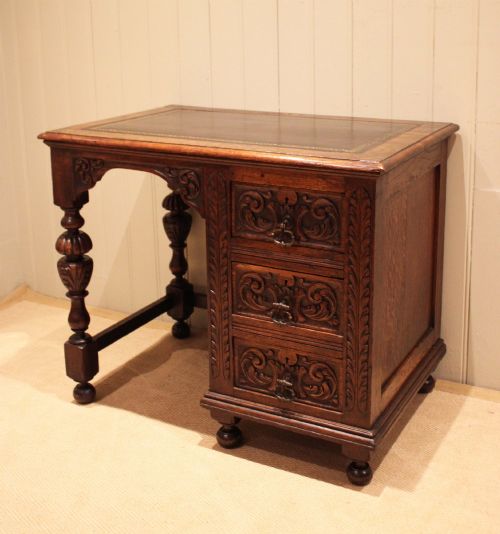
Joinery techniques range from early panelled and pegged framing to nineteenth-century tambour slats and mechanized roll tops. Carving, including Green Man motifs and Jacobean Revival details, appears on specific Victorian and revival pieces.
Several desks conceal secret drawers behind dummy pigeonholes, designed for letters and currency.
What varies in quality
The sophistication of the internal arrangement dictates much of the distinction between pieces, particularly where stepped drawers, pigeonholes, and secret compartments are present. Simpler vernacular items contrast with highly finished George III and crossbanded examples.
Materials and secondary timbers also shift the grade of an item, as seen in the use of pollard oak or fine brass hardware versus utilitarian commercial fittings. The integrity of mechanisms like tambour shutters and drop-front supports marks the difference in execution.
Blyth and Son·Maples of London and Paris·Globe Wernicke
The Oak Bureau Desk Top Glossary
- Bureau
- A writing desk featuring a sloping lid that opens to reveal internal compartments and drawers. Early iterations often sit on frames or function as table top boxes.
- Tambour
- A flexible shutter composed of narrow vertical strips of wood glued to canvas, allowing roll top desks to slide open smoothly. This technique became widespread during the Edwardian era.
- Crossbanding
- A strip of veneer applied to the borders of a desktop or drawer front with the grain running at right angles to the central panel. It provides a decorative framing effect on eighteenth-century pieces.
- Stepped interior
- An arrangement of internal pigeonholes and small drawers tiered in ascending rows within a bureau. Finer examples conceal secret compartments behind sliding panels.
Oak Bureau Desk Top: Frequently Asked Questions
How do I use an oak bureau desk top?
The fall-front flap lowers to create a writing surface while concealing letter slots and small drawers inside. Papers and writing materials remain stored securely behind the closed lid when not in use.
Larger variations incorporate bookcases or roll top mechanisms to combine shelving and storage within a single footprint. Table top versions sit directly upon existing surfaces to provide a portable writing station.
How can I date an oak bureau?
Construction methods, hardware types, and overall proportions indicate the period of manufacture. Seventeenth and early eighteenth-century pieces often display vernacular hand-pegged joinery and simpler framing.
Later Victorian and Edwardian examples incorporate mass-produced brasses, tambour tracks, or commercial cylinder mechanisms. Regional characteristics and revival styles also help place the item in context.
What is the difference between a bureau and a roll top desk?
A traditional bureau relies on a hinged sloping flap that pulls down toward the user to form a flat writing surface. The interior stays exposed only when the front is lowered.
A roll top desk uses a slatted wooden tambour that slides vertically or horizontally along a track to cover the entire desk surface and pigeonholes. This mechanism allows the user to secure the workspace without clearing away papers.
Where should I place a bureau in my home?
These pieces function effectively in studies, living rooms, or bedrooms due to their compact footprint and enclosed storage. The flat top surfaces of bureau bookcases also display books or decorative objects.
Sufficient clearance must be allowed in front of the piece for the drop-front flap to lower completely. Natural light from a nearby window assists with reading and writing tasks at the desk.