



Oak Buffet and Hutch
These oak buffet and hutch pieces bring solid timber storage and display to a room, offering centuries of regional craftsmanship and practical utility.
Oak Buffet and Hutch
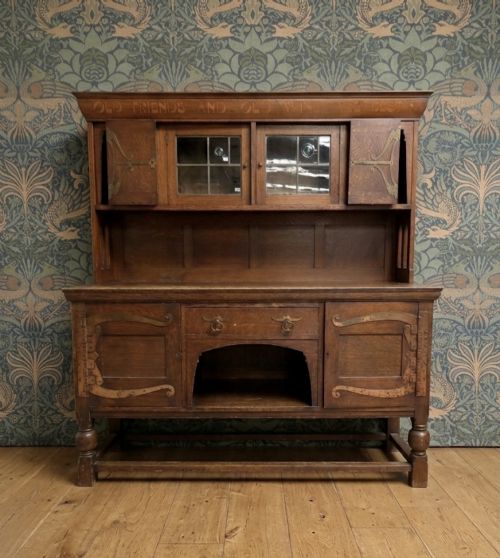
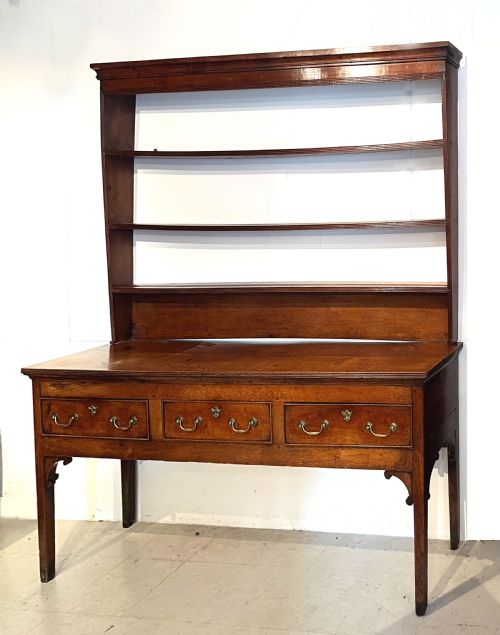
When you search for an oak buffet and hutch, you are looking at substantial storage furniture combining a lower base cupboard or sideboard with an upper display rack or cabinet. The pieces available span eras from the sixteenth century through the Georgian and Victorian periods up to early twentieth-century Arts and Crafts designs.
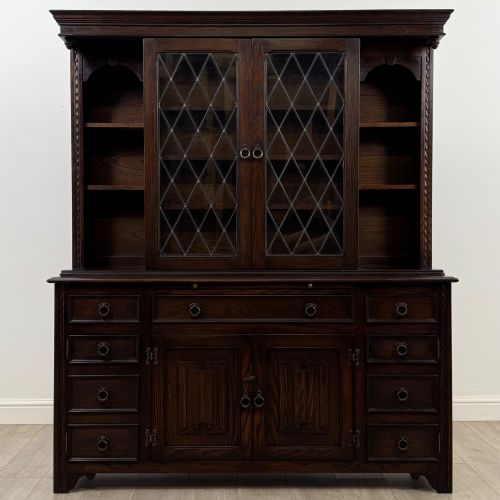
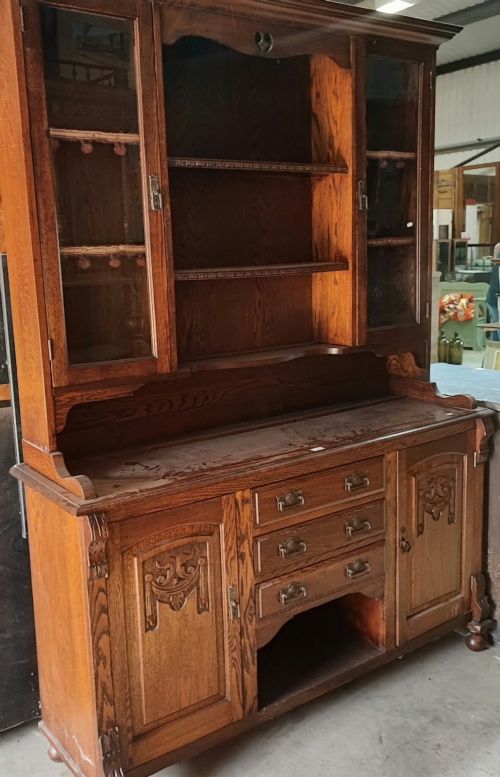
The most common forms you will meet on this page are Welsh dressers and buffet a deux corps, alongside sideboards and display cabinets. These items originate from English country workshops as well as French provincial regions, featuring fitted plate racks, glazed doors and breakfront drawers.
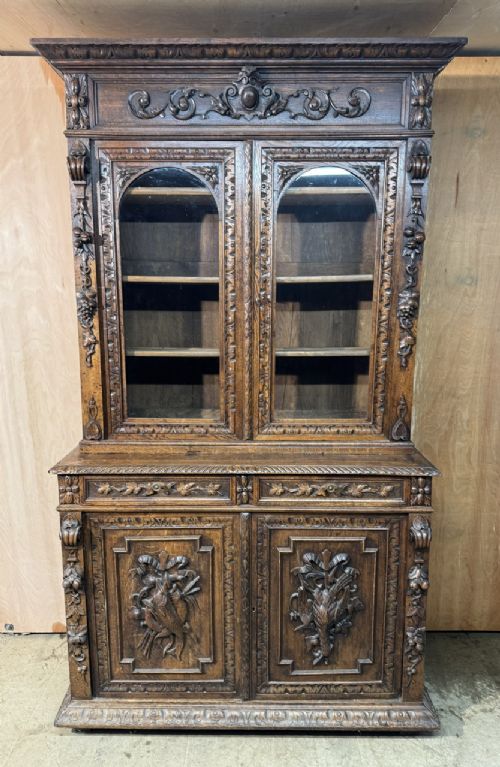
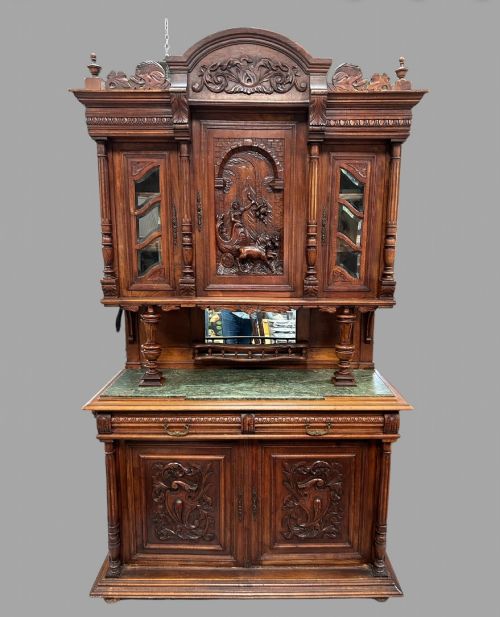
Makers ranged from vernacular village joiners to notable firms such as Ambrose Heal and Shapland and Petter. Styles shift from plain country utility to elaborate Jacobean, Tudor and French Renaissance revivals carved with geometric patterns, figures and hunting motifs.
Assessing quality and character
Quality separates in the depth and crispness of the hand-carving, from simple geometric mouldings to elaborate figural panels and Renaissance revival reliefs. Timber selection also dictates the tier, with tightly figured grain and well-matched boards marking superior pieces.
Structural integrity and originality define the upper end of the range, visible in untouched patination, original brasses, and intact glass or leaded lights in the upper rack. Regional variations in proportion and vernacular detailing further distinguish standard utility furniture from master-carved regional showpieces.
Several pieces feature carved figures and hunting motifs tucked into the woodwork, quietly watching over centuries of family meals.
Ambrose Heal for Heal and Son·Shapland and Petter
The Oak Buffet and Hutch Glossary
- Welsh dresser
- A traditional combination of a low base cupboard with drawers and an open timber rack above for displaying plates.
- Buffet a deux corps
- A substantial two-part French storage piece featuring a lower cupboard section surmounted by an upper cabinet.
- Tiger oak
- Oak timber exhibiting strong, mottled medullary ray figuring that resembles tiger stripes.
- Leadwork
- The network of lead cames used to hold small panes of glass together in cabinet doors.
- Breakfront
- A piece of furniture where the central section projects forward from the flanking outer sections.
Oak Buffet and Hutch: Frequently Asked Questions
What is an oak buffet and hutch?
An oak buffet and hutch is a two-part storage and display item combining a lower sideboard or cupboard with an upper rack or cabinet.
These pieces served historic households for storing tableware and displaying ceramics in kitchens, dining rooms and halls.
How were these pieces used historically?
Families utilised the lower cupboards and drawers for heavy pots, linens and cutlery while placing pewter or ceramic plates on the upper shelves.
Over time, display functions grew more prominent, particularly in glazed cabinets and Arts and Crafts sideboards intended for refined dining rooms.
How do I live with a large oak dresser?
Position the piece against a sturdy wall in a kitchen or dining space where its depth and height can anchor the room.
Use the open shelves or glazed compartments to display everyday ceramics, glassware or books while keeping bulky items concealed below.
How can I tell the period apart?
Early pieces from the sixteenth and seventeenth centuries show heavy Tudor or Jacobean carving, dark patination and pegged frame construction.
Later Victorian and Edwardian examples often incorporate machine-planed boards, lighter oak tones, and distinct stylistic revivals such as Arts and Crafts or French provincial.