


Oak Accent Armchairs
These oak accent armchairs bring substantial timber and historical forms into a modern room, offering seating with genuine presence and character.
Oak Accent Armchairs
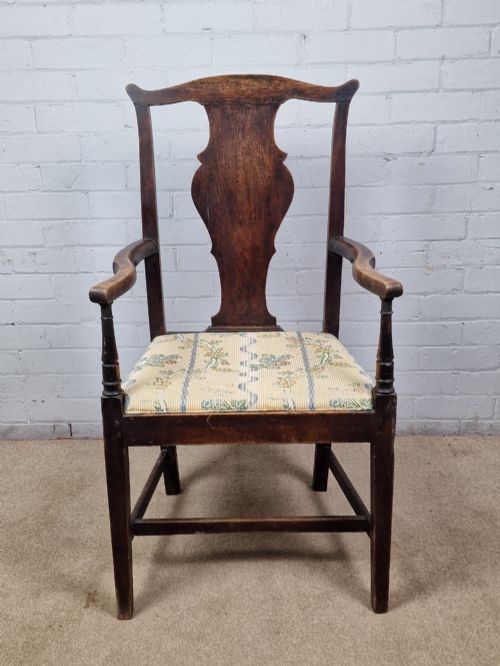
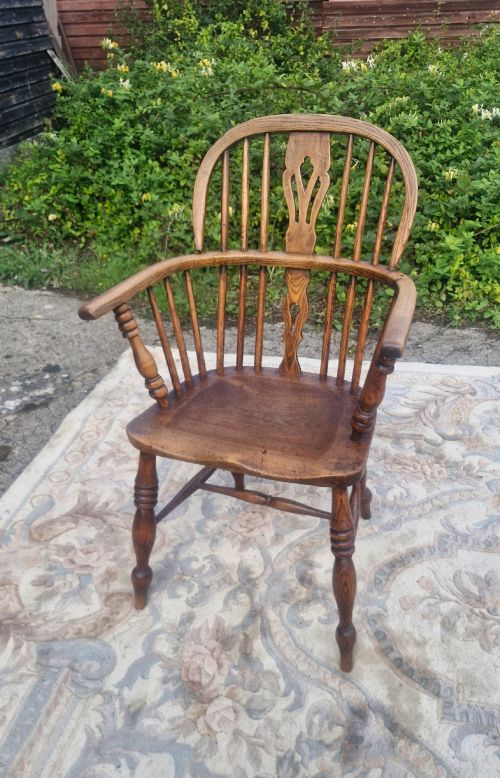
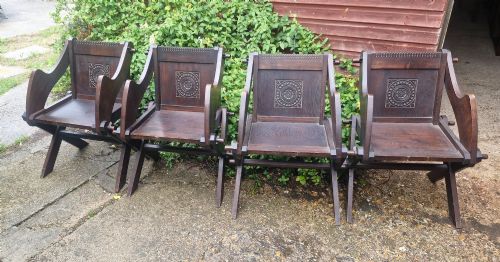
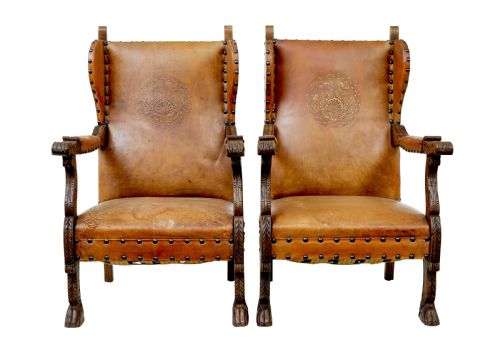
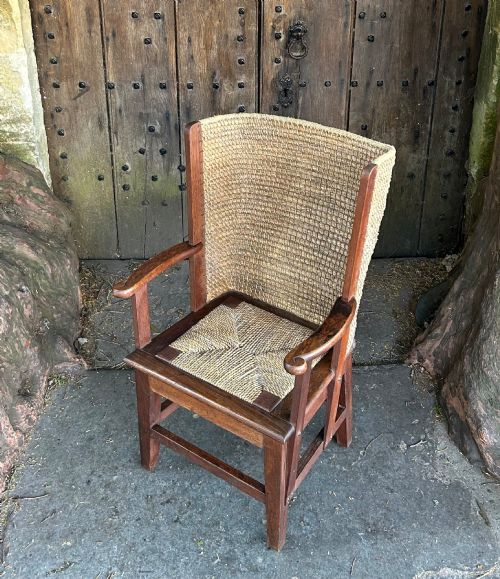
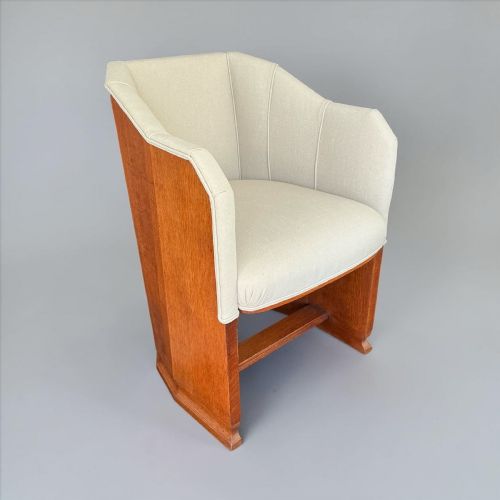
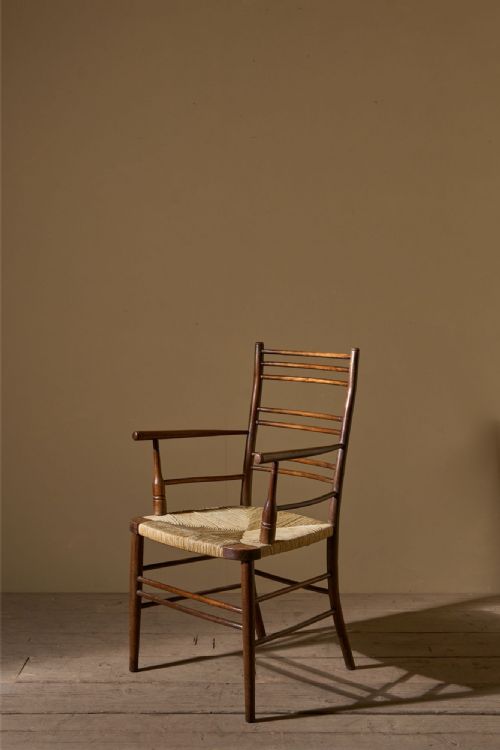
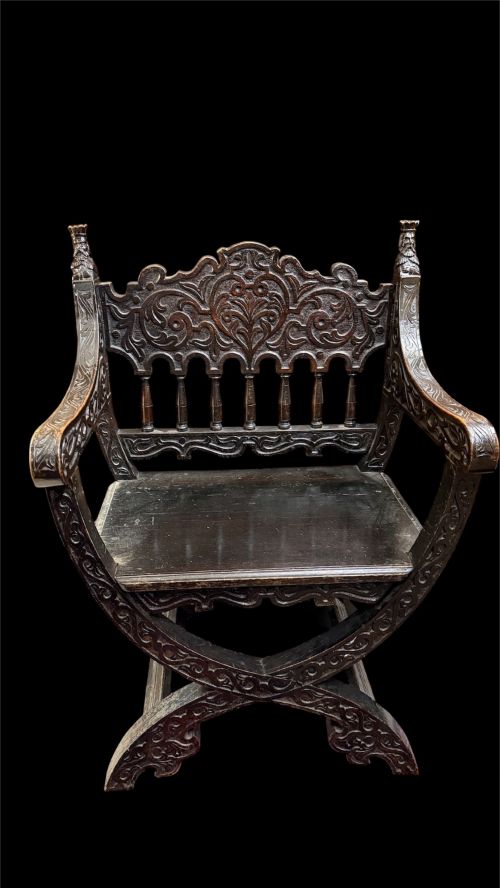
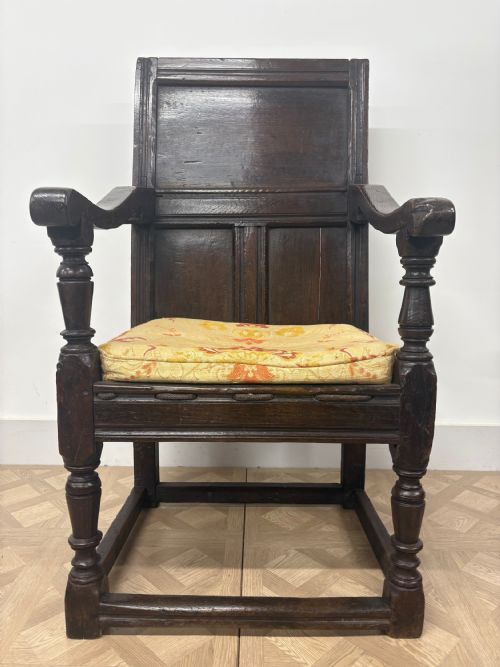
When you search for oak accent armchairs, you encounter a wide span of seating forms ranging from heavy 17th-century wainscot chairs to lighter Arts & Crafts and 1930s designs. The category encompasses everything from high-backed Windsor chairs and Lancashire pieces to turned frames and Gothic revival library seating.
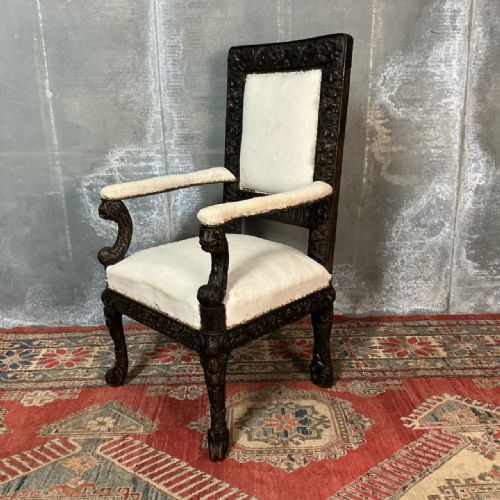
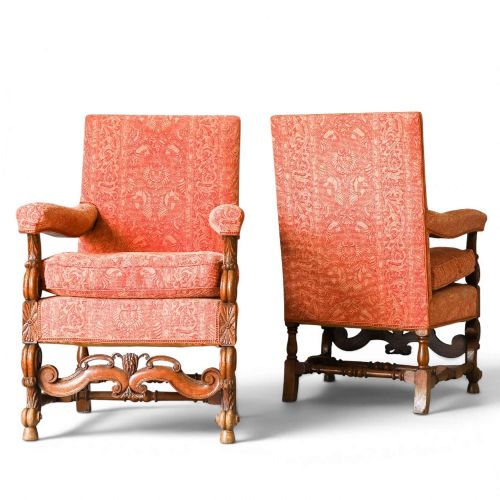
The versions most common on this page date primarily from the 19th century and the early decades of the 20th century, often drawing stylistic inspiration from earlier Jacobean, Renaissance, and Gothic periods. These chairs function as focal points in a room rather than standard seating, utilising distinctive silhouettes to anchor a space.
Materials and Construction
Makers built these pieces primarily from solid oak, sometimes pairing the heavy timber frames with secondary woods like elm, and frequently incorporating rush, cane, or timber for the seats. Upholstered variants rely on traditional coverings such as leather, velvet, and various woven fabrics fixed to the frame.
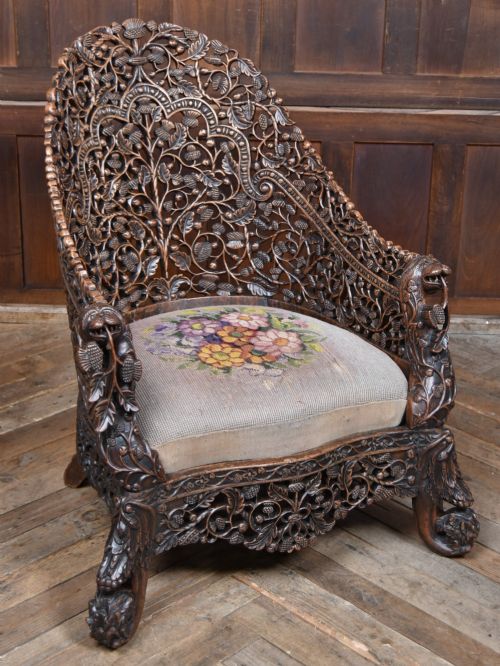
Joinery techniques ranged from traditional pegged mortise and tenon joints in earlier wainscot and Windsor designs to robust turned elements and cross-frames in later revival pieces. Carving and embossing served to decorate the structural oak, while elements like brass studs or cane work added textural contrast.
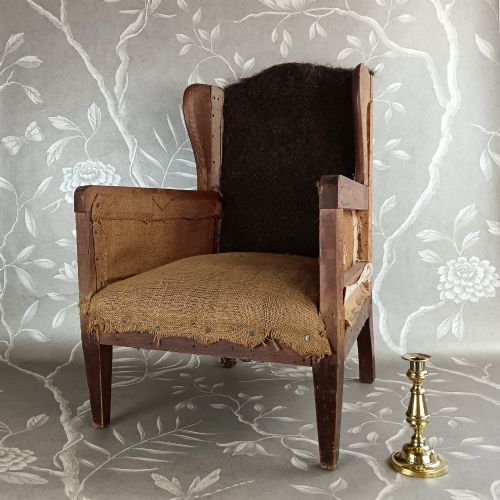
Among the heavy timber seating, a child's wingback armchair offers miniature proportions without sacrificing traditional upholstery.
Judging Quality and Character
Quality in these chairs rests upon the integrity of the timber, the depth and execution of the hand-carving, and the overall balance of proportions. Heavier library chairs and wainscot pieces rely on substantial, well-seasoned oak that maintains structural stability over centuries.
The distinction between standard examples and superior pieces often lies in the crispness of turned details, the authenticity of period joinery, and the harmony of secondary materials like rush or embossed leather. Greater design ambition, seen in Arts & Crafts or Gothic revival interpretations, separates ordinary seating from exceptional focal points.
Morris & Co
The Oak Accent Armchairs Glossary
- Wainscot chair
- A heavy wooden armchair of 17th-century origin, constructed with panelled backs and solid timber seats. These pieces display rigid joinery and formal proportions.
- Windsor chair
- A chair built with a solid wooden seat into which the back and legs are dowelled directly. Variations include comb backs and low-back configurations.
- Rush seat
- A seating surface woven from dried marsh rushes around a wooden frame. This technique appears frequently on Arts & Crafts and country chairs.
- Turned chair
- Seating constructed largely from turned wooden spindles and members shaped on a lathe. They draw on medieval and 17th-century precedents.
- Gothic Revival
- A style drawing on medieval architectural motifs such as pointed arches and tracery. It experienced significant popularity during the 19th century.
Oak Accent Armchairs: Frequently Asked Questions
How do I place an oak armchair in a modern interior?
These substantial chairs work well as single accent pieces in living rooms, studies, or hallways where their architectural frames can stand out against plain walls. Pairing a heavy timber silhouette with simpler contemporary furnishings creates a balanced contrast.
Because the woods carry deep tones and visible grain, positioning them near natural light sources helps reveal the details of the carving and turning.
How should I care for historic oak and leather furniture?
Solid oak benefits from occasional applications of appropriate wax to nourish the grain and protect the surface from drying out. Avoid placing the timber near direct heat sources or in strong sunlight.
For upholstered sections featuring leather or velvet, gentle dusting and careful conditioning keep the materials supple without altering their historical character.
Are these chairs comfortable for everyday use?
Many oak armchairs, particularly wainscot and hall variants, were designed with upright postures in mind rather than relaxed lounging. However, upholstered Arts & Crafts, reclining, and Victorian library models offer more cushioned support.
Selecting the right chair depends on whether the intended use is active sitting at a desk or quiet reading.