





Nursery Rocking Chair
A nursery rocking chair brings compact charm and domestic history to a room, offering gentle movement through traditional timber construction.
Nursery Rocking Chair
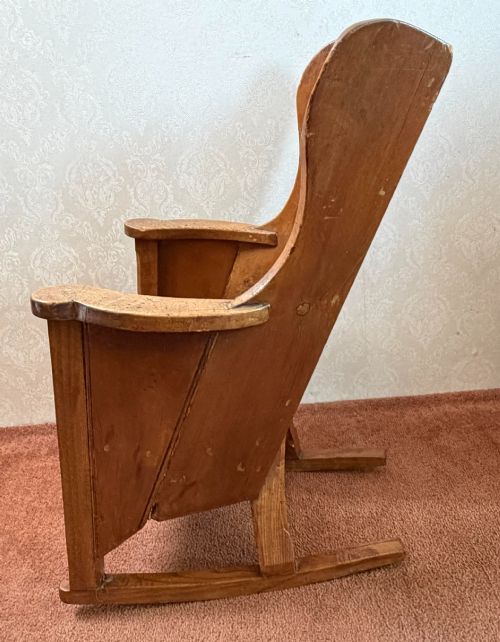
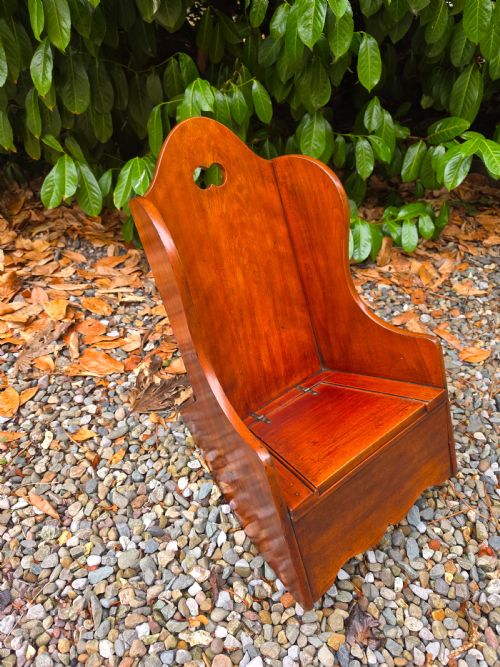
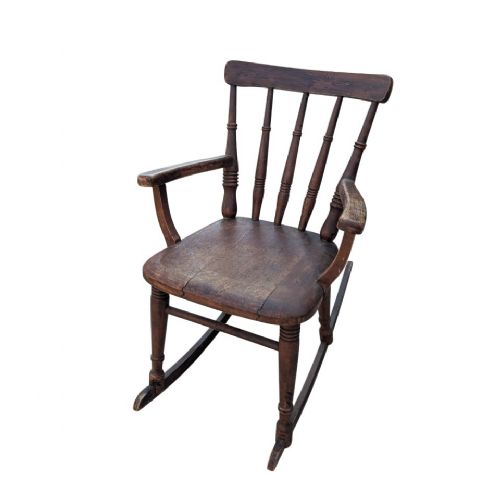
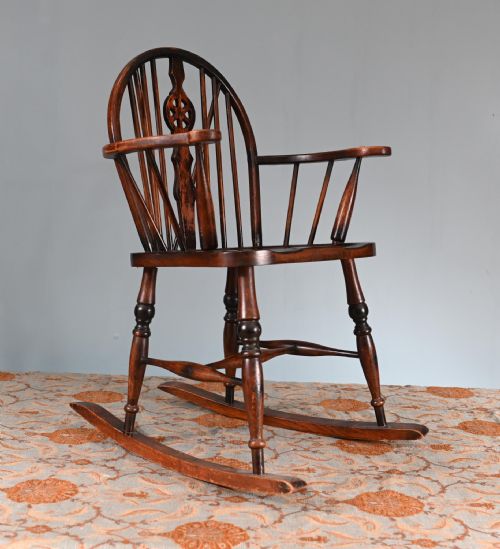
A nursery rocking chair encompasses small-scale seating designed for children alongside adult versions historically used in domestic chambers. Buyers searching for a nursery rocking chair typically encounter downsized Windsor forms, spindle backs, and low-slung armchairs intended for child occupants or doll displays.
The pieces on this page span several centuries, stretching from eighteenth-century country workshops to nineteenth-century Victorian production. Elm, beech, and fruitwood appear frequently, reflecting regional British and European vernacular furniture traditions.
Smaller examples serve dual purposes as child-sized seats and doll rockers, retaining the proportions and construction methods of full-sized seating. These miniature chairs capture the domestic habits of past households within compact footprints.
How they were made
Makers utilised solid timbers such as elm, ash, beech, and oak for frames, turning spindles on lathes and bending wood with heat where required. Windsor styles combine turned uprights with saddle-shaped wooden seats, while bentwood examples rely on steam-bent components secured with screws or bolts.
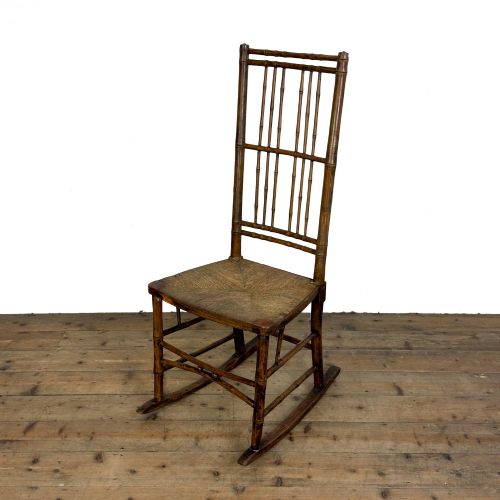
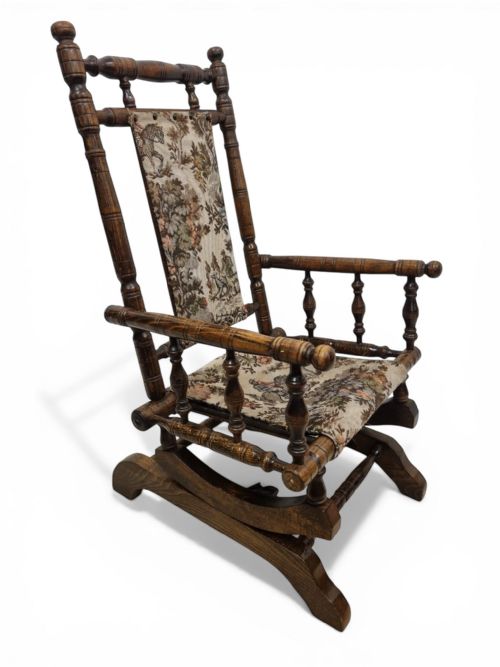
Upholstery appears occasionally in the form of tapestry inserts or padded panels, though many examples expose plain timber surfaces finished with polish, paint, or ebonising. Rush and cane seating inserts provide flexible surfaces on specific regional and Victorian models.
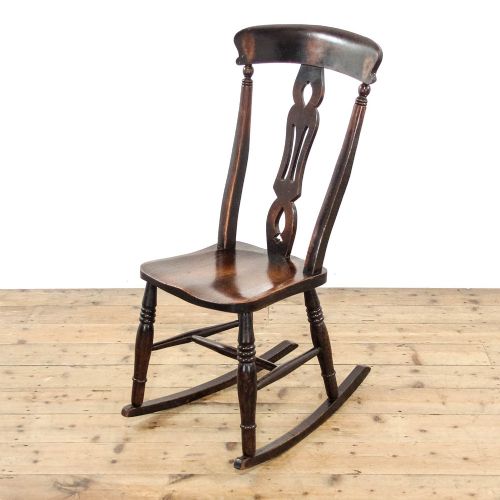
Listings for this phrase feature timber species including elm, ash, beech, oak, pine, and fruitwood alongside cane and rush seating.
What varies in quality
The integrity of the timber framing and the balance of the rockers dictate the overall standard of a piece. Chairs retaining their original turned components, patinated wood surfaces, and sturdy joinery stand apart from examples altered by later repairs or replacement rockers.
Refined turning on spindles and well-fitted joints indicate skilled vernacular or workshop production. Conversely, crude alterations or stripped surfaces diminish the historical character of older frames.
The Nursery Rocking Chair Glossary
- Windsor
- A chair built with a solid wooden seat into which the legs, back spindles, and bow are separately inserted. This technique creates a sturdy, lightweight frame common in regional country seating.
- Bentwood
- Wood softened by steam and bent into curved shapes, a method perfected by manufacturers like Thonet during the nineteenth century. It produces lightweight frames with smooth, continuous lines.
- Spindle back
- A chair back constructed from multiple thin, turned vertical wooden rods. These rods provide lightweight support while maintaining an open visual profile.
- Ebonised
- Timber treated with chemical stains or dark paint to imitate the appearance of ebony. This finish gained popularity during the Victorian and Aesthetic Movement periods.
- Potty rocker
- A specialised child's chair featuring a cut-out seat designed for toilet training in domestic settings. These pieces date primarily to the Georgian and early nineteenth-century periods.
Nursery Rocking Chair: Frequently Asked Questions
How do I spot a genuine antique nursery rocking chair?
Examine the timber surfaces for natural wear, hand-turned tool marks, and construction methods appropriate to the stated period. Traditional joinery without modern metal fasteners usually indicates genuine age.
Compare the proportions and wood types to documented vernacular styles from regions like Wales, England, or Scandinavia. Consistency in the patina across the seat and rockers supports authenticity.
How should I care for an antique wooden rocking chair?
Keep the timber away from direct heat sources and rapid humidity changes to prevent the wood from splitting. Dust the frame regularly with a dry cloth and apply occasional specialist wax if the finish appears dry.
Avoid tightening joints with modern adhesives without consulting a professional restorer. Preserving the original structure maintains the historical integrity of the piece.
What is the difference between Windsor and bentwood rockers?
Windsor rockers rely on traditional joinery where turned spindles and legs fit into bored holes within a solid wooden seat. They represent heavier, vernacular country craftsmanship.
Bentwood rockers utilise steam-moulded components that create continuous, flowing curves with minimal joints. This industrial technique produced lighter frames popular from the mid-nineteenth century onward.