

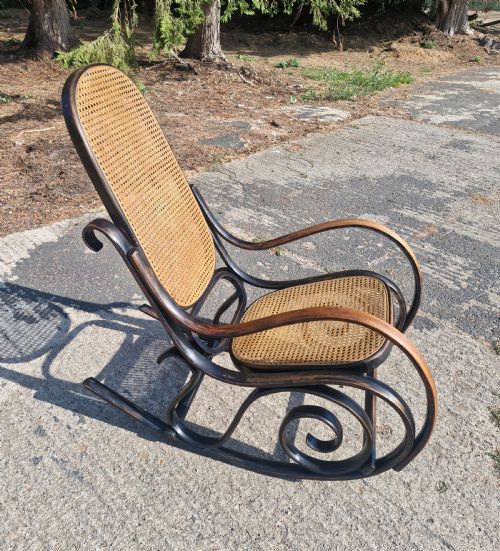
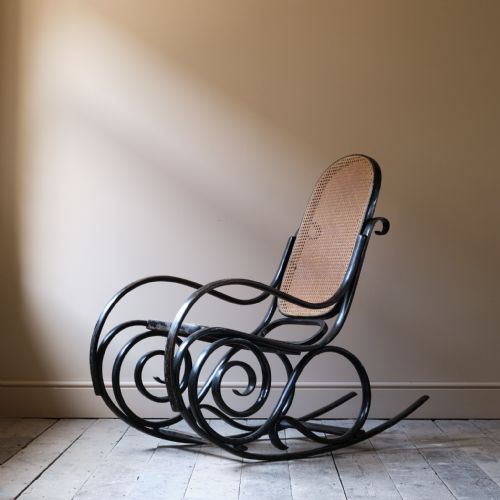


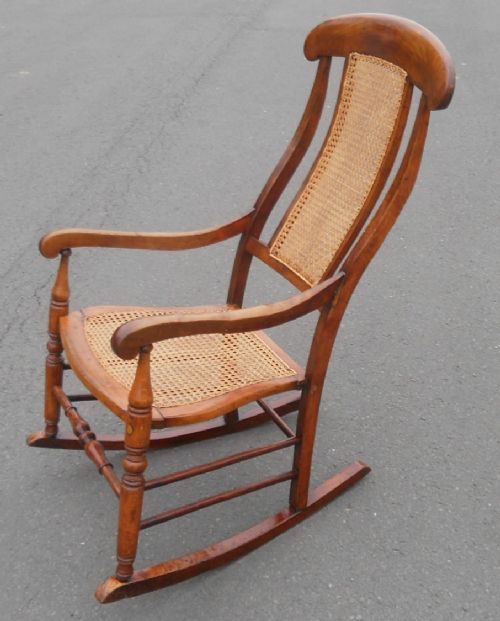


Vintage Cane Rocker
These vintage cane rocker examples bring tactile warmth and gentle movement to a room, combining steam-bent timber with woven seats and backs.
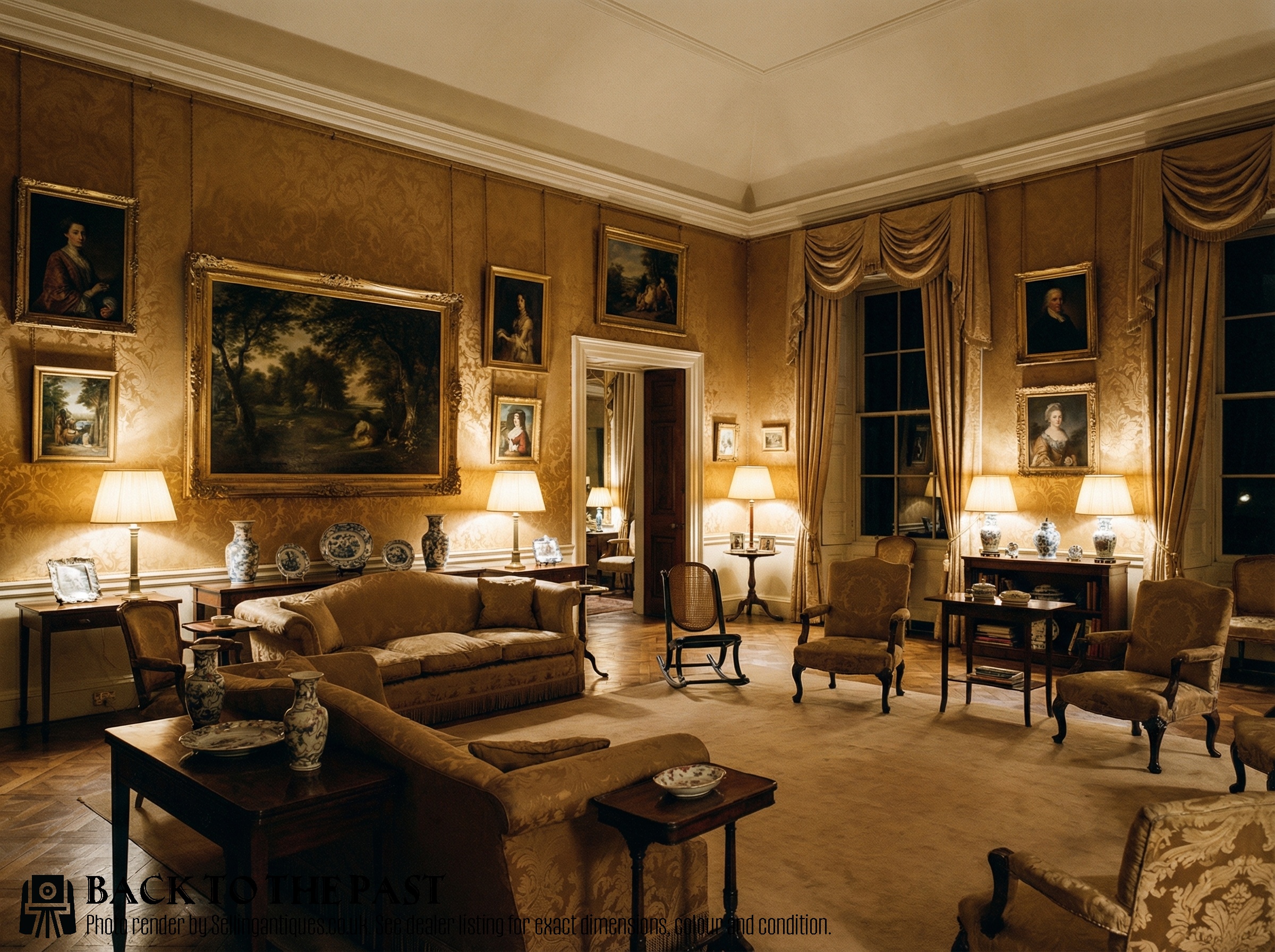
Vintage Cane Rocker
A vintage cane rocker is a seating form designed for gentle motion, uniting a timber frame with woven plant fibres across the seat and back. When you search for a vintage cane rocker, you encounter seating designed for relaxation, spanning both steam-bent European frames and traditional English country forms.
The versions most commonly met on this page range from Victorian and Edwardian examples to early twentieth-century pieces. These include child-sized chairs alongside full-scale armchairs, often constructed in continental workshops or local English joinery shops.
Forms vary between the fluid, looped curves of bentwood designs and the rigid, upright geometry of spindle-back chairs. Each piece relies on the tension of woven material to provide a flexible and supportive surface for the sitter.
How they were made
Makers utilised beech and beechwood for its ability to accept steam-bending, allowing long lengths of timber to be curved into continuous loops for arms and runners. Oak also appears in heavier structural frameworks where rigidity takes precedence over curvature.
Rattan and cane provide the resilient, breathable web surfaces threaded through drilled frames or secured with binder cane. Additional elements like leather sometimes appear on associated components, while steam heat shapes the wooden skeletons without joining numerous small parts.
Vintage Cane Rocker Retail Price Guide 2026
Typical asking prices for vintage cane rocker among the pieces listed under this phrase on Sellingantiques today, from the lower quarter to the upper quarter. They describe what is for sale here now, not the wider market.
Listings feature pieces spanning the nineteenth century through the 1920s, employing beech, oak, leather, and rattan.
What varies in quality
Quality rests in the integrity of the steam-bent frame and the tightness of the woven weave. Superior examples exhibit smooth, unbroken curves in the timber and finely pitched cane work that distributes weight evenly without sagging.
The distinction between standard production and exceptional manufacture lies in the precision of the joints and the finish applied to the wood. Finer items retain crisp detailing around the arm scrolls and secure bindings that hold the woven panels taut.
Thonet
The Vintage Cane Rocker Glossary
- Bentwood
- Wood that has been heated with steam to make it pliable, allowing craftsmen to bend it into curved shapes. This technique defines many nineteenth and twentieth-century rocking chair frames.
- Cane
- The thin, peeled bark of the rattan palm used for weaving seats and backs. It provides a strong, flexible, and breathable surface.
- Spindle back
- A chair back constructed with a series of slender, turned wooden rods set vertically between the top rail and the seat. This traditional construction method supports the sitter through rigid uprights.
- Rattan
- A climbing palm with strong stems utilised for structural framing and woven panels. Its fibrous nature makes it durable under the continuous motion of a rocking chair.
Vintage Cane Rocker: Frequently Asked Questions
What is a vintage cane rocker?
A vintage cane rocker is a moveable seating chair built from bent or turned timber with woven plant fibre panels.
These pieces combine wooden frames with flexible cane or rattan to create a dynamic seat that responds to the movement of the body.
How do I identify a Victorian rocker?
Victorian rockers typically feature darker timber tones, turned spindle backs, or heavier beech frameworks.
They reflect the domestic styles of the nineteenth century, prioritising robust joinery and traditional country or formal aesthetics.
Where were these chairs made?
Production spans English workshops creating country spindle-back chairs and continental European factories producing steam-bent furniture.
Central European makers developed specialised bending techniques that travelled globally during the nineteenth and twentieth centuries.
How do I care for cane seating?
Cane seating benefits from occasional light dusting and maintaining ambient room humidity to keep the plant fibres pliable.
Avoiding excessive dryness prevents the woven material from becoming brittle over years of use.