




Caned Rocking Chair
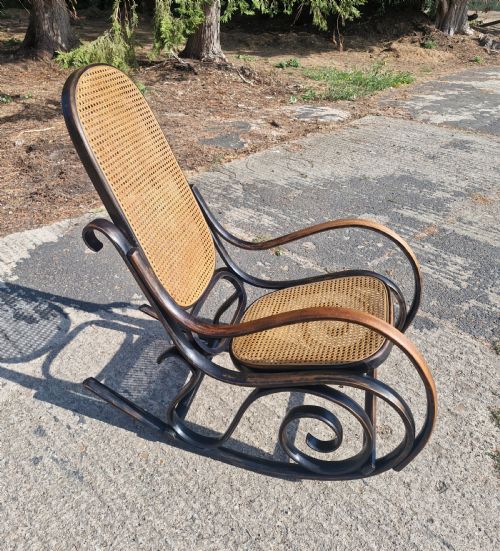
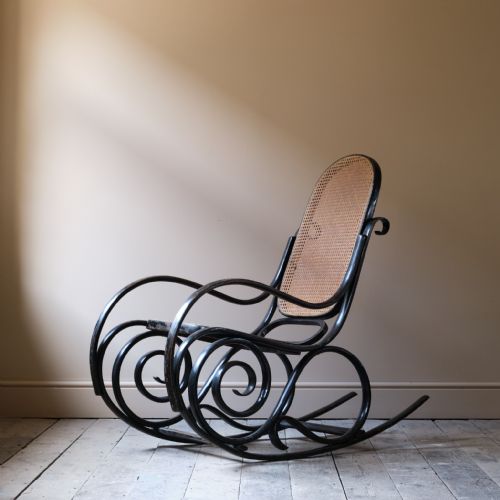
These caned rocking chair examples bring together bentwood frames and woven seats, offering both gentle movement and classic domestic comfort.
Caned Rocking Chair
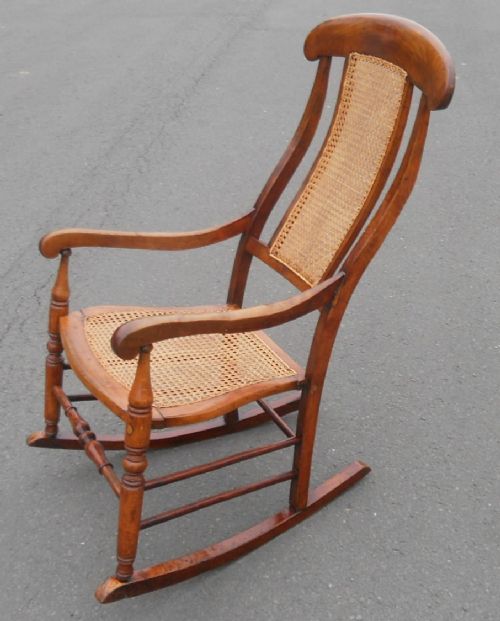
A caned rocking chair combines a sturdy wooden or bentwood frame with a woven cane or rattan seat panel, designed for movement in the parlour or nursery. Buyers searching for a caned rocking chair will encounter various iterations dating from the nineteenth century through the Edwardian period and up to nineteen-twenty.
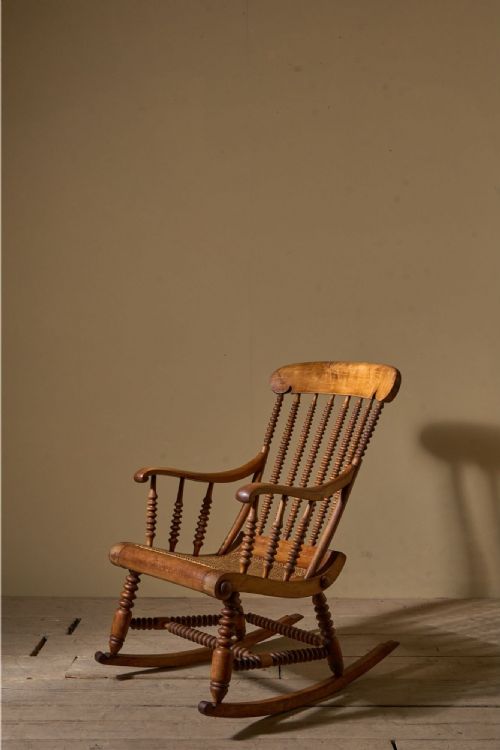
The selection ranges from robust Victorian country seating and spindle back designs to sophisticated continental bentwood pieces. Smaller child's rocker formats also appear, showing how makers scaled down the rocking chair form for younger users.
How they were made
Makers utilised beech, oak, and general hardwoods to construct the primary frames of these chairs, frequently employing steam bending techniques to achieve curved armrests and runners. Bobbin turning and spindle back construction also contributed structural rigidity to the wooden framework.
The seating areas and backrests incorporate woven cane and rattan cane panels, threaded through pre-drilled holes in the wooden surrounds to provide flexible yet supportive tension. This combination of solid timber and resilient plant fibres allowed the chairs to withstand constant movement.
One tiny nineteenth-century rocker was built perfectly sized for a doll to join in the nursery's evening rest.
What varies in quality
Quality in these rocking chairs rests upon the precision of the steam-bent timber curves and the tightness of the woven cane panels. Superior examples exhibit fluid lines without distortion in the wood and uniform, densely packed cane work that distributes weight evenly.
The integrity of the joinery, whether through traditional spindle assembly or advanced bentwood structuring, dictates the overall stability of the piece. Finer specimens maintain original structural harmony between the wooden frame and the woven inserts.
Thonet
The Caned Rocking Chair Glossary
- Bentwood
- Wood that has been heated with steam to make it pliable, allowing makers to bend it into curved structural shapes for chairs. This technique enables lightweight yet robust framing.
- Cane
- Material derived from the outer portion of the rattan palm, split and woven to create flexible panels for seats and backs. It provides a breathable and supportive surface.
- Spindle back
- A chair back constructed from a series of slender, turned wooden rods set vertically between the top rail and the seat. This design offers structured support.
- Bobbin turned
- A style of furniture turning where the wood is shaped on a lathe to resemble a string of beads or bobbins. It is typical of nineteenth-century decorative framing.
- Rattan
- A climbing palm species whose stems are processed for weaving furniture parts. The strong fibres resist splitting under daily tension.
Caned Rocking Chair: Frequently Asked Questions
What periods do these chairs come from?
The available pieces originate from the nineteenth century, including specific Victorian and Edwardian eras, alongside early twentieth-century examples up to nineteen-twenty.
These dates reflect the prevailing manufacturing periods for bentwood and turned wooden rockers.
How do bentwood and spindle designs differ?
Bentwood frames rely on steam-heated timber curved into continuous lines, whereas spindle designs utilise vertical turned wooden rods.
Both methods provided structural strength but created distinctly different aesthetic profiles for the parlour or nursery.
What materials make up the frames?
Makers constructed the primary frames using beech, oak, and general hardwoods selected for their strength and responsiveness to turning or bending.
Beech wood appears frequently, particularly in continental bentwood production.
Were children's versions made in the past?
Smaller child's rocker formats were produced alongside full-sized armchairs during the nineteenth and early twentieth centuries.
These smaller pieces mirrored the construction methods of adult seating on a reduced scale.