
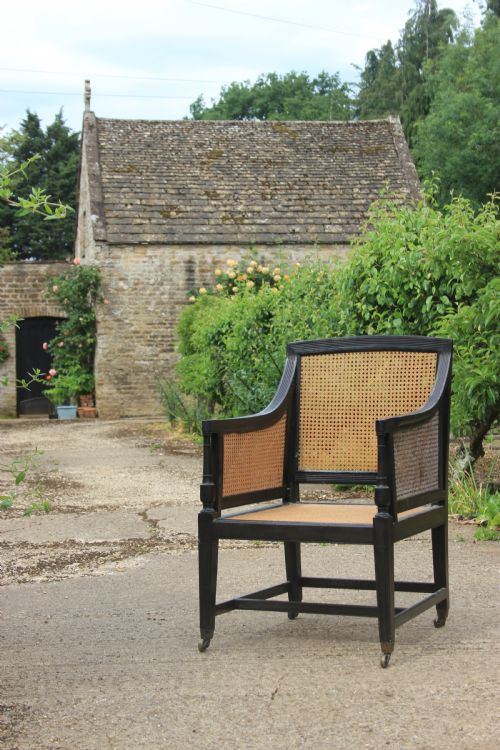


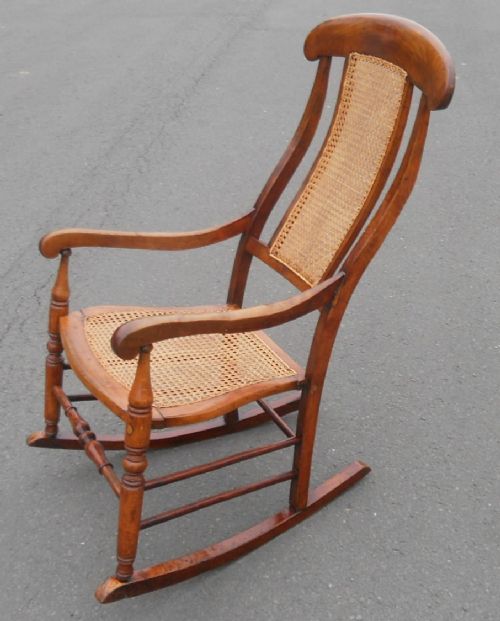

Traditional Woven Cane Chair
These traditional woven cane chair examples bring natural texture to a room, formed from durable plant fibres shaped into supportive seats.
Traditional Woven Cane Chair
A traditional woven cane chair brings together sturdy timber frames and flexible plant-based seating surfaces. The selection spans armchairs, rocking chairs, and children's high chairs across various historical periods.
Buyers will encounter items ranging from Victorian and Edwardian examples to 1920 pieces and Regency items. Frameworks utilise woods such as mahogany, oak, walnut, beech, and ebony, paired with split cane and rattan cane.
Stylistic approaches on this page cover Victorian, 1920s French Revival, Jacobean Revival, Art Nouveau, Anglo-Indian Regency, Regency Revival, Rustic Country, and Arts & Crafts designs. Some incorporate fabric, velvet, or lacquer finish elements.
How traditional woven cane chair frames and seats were constructed
Frames take shape from solid hardwoods like mahogany, oak, walnut, beech, and ebony, sometimes formed through bentwood techniques. Artisans carved and joined these timbers to support the lighter seating materials.
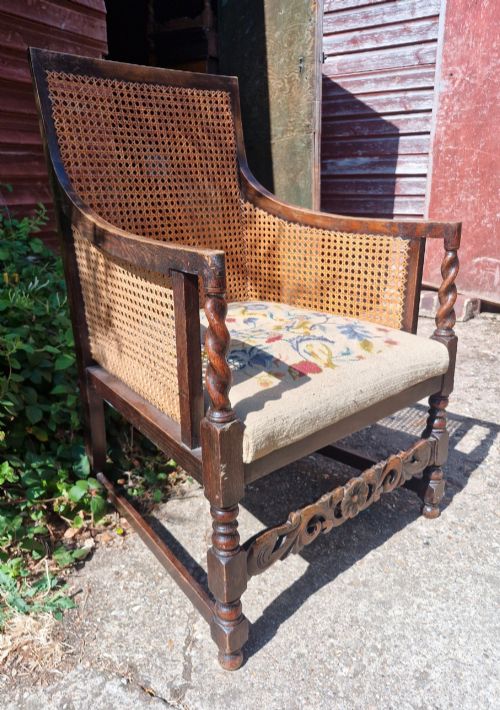
Seating surfaces and backs utilise woven cane, split cane, and rattan cane interlaced through holes bored in the wooden frames. Additional tactile elements appear in upholstered fabric, velvet panels, and oriental lacquered surfaces.
The available selection includes pieces spanning the nineteenth century through the 1920s, constructed from oak, mahogany, walnut, beech, and ebony.
What separates fine traditional woven cane chair examples
Quality rests in the precision of the timber framing and the tightness of the cane weave. Heavier woods like mahogany and walnut offer greater structural presence compared to simpler bentwood or beech alternatives.
The sophistication of the design style elevates certain pieces, moving from rustic country utility to refined Revival and Art Nouveau aesthetics. Intricate carving on the wood and uniform regularity in the plant fibre weave define the upper tier.
The Traditional Woven Cane Chair Glossary
- Bergere
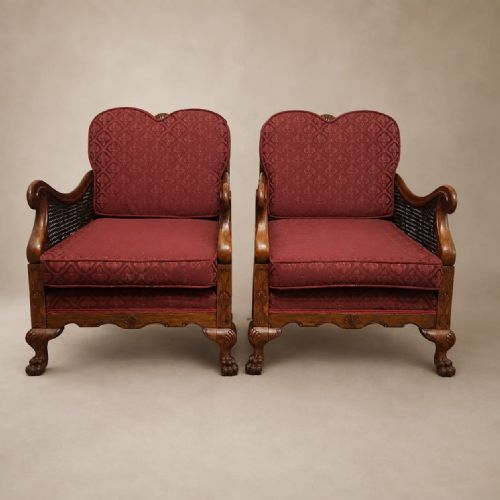
- An upholstered French armchair design featuring enclosed cane sides and back panels. It typically includes a loose seat cushion resting on a cane or wooden platform.
- Cane
- The thin peeled bark of the rattan palm utilised for flexible weaving. It provides breathable strength for seat bases and chair backs.
- Bentwood
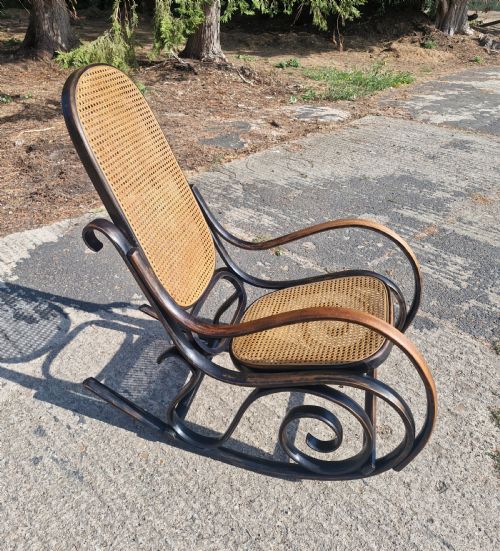
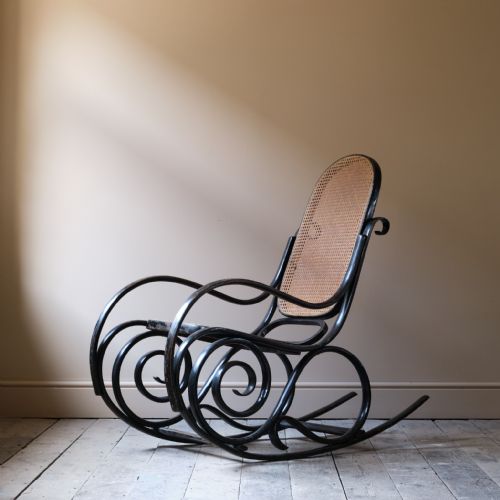
- Wood softened through steaming and then bent into curved structural forms. This technique creates fluid, continuous lines particularly visible in rocking chairs.
- Regency
- A British design period spanning the early nineteenth century influenced by classical antiquity. Pieces from this era often display clean lines and dark timber usage.
- Split cane
- Cane material split lengthwise to create a flat, smooth ribbon for weaving patterns. It offers a distinct tactile surface compared to round cane.
Traditional Woven Cane Chair: Frequently Asked Questions
How do I care for traditional woven cane chair seats?
Keep the cane hydrated by wiping it occasionally with a damp cloth to prevent the natural fibres from becoming brittle. Avoid placing the seating directly beside strong heat sources.
Support the cane surface by avoiding kneeling or standing directly on the seat. Proper weight distribution preserves the tension of the woven fibres over decades of use.
Where did bergere chairs originate?
Bergere forms developed in France during the eighteenth century as comfortable seated furniture for domestic interiors. These enclosed seats evolved through subsequent revival periods.
British and European makers reinterpreted the form across the nineteenth and twentieth centuries, incorporating mahogany and oak frameworks alongside traditional cane weaving.
Are bentwood rocking chairs durable?
Bentwood construction utilises steamed timber that retains resilient flexibility under normal seating movement. The curved frames absorb motion effectively while maintaining structural integrity.
These pieces combine lightweight frames with sturdy cane panels, making them practical for everyday domestic spaces.
How do I distinguish Victorian from Edwardian pieces?
Victorian examples often employ darker hardwoods like mahogany and walnut with heavier carving details. The forms tend toward substantial proportions and rich finishes.
Edwardian designs generally favour lighter structural interpretations and simpler aesthetic lines. The timber selection often shifts towards beech and oak with restrained ornamentation.