
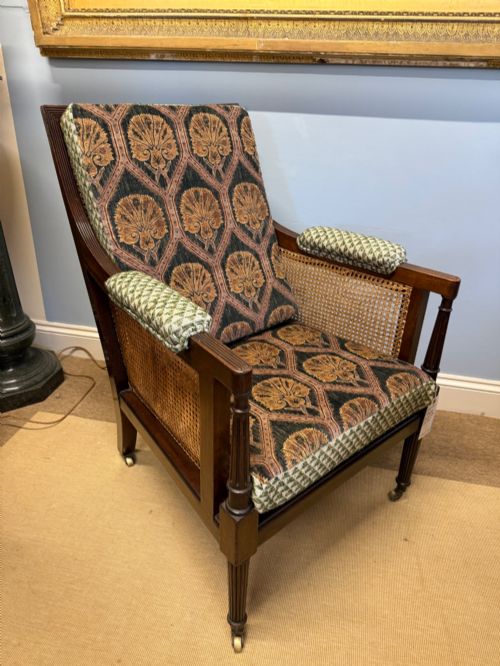
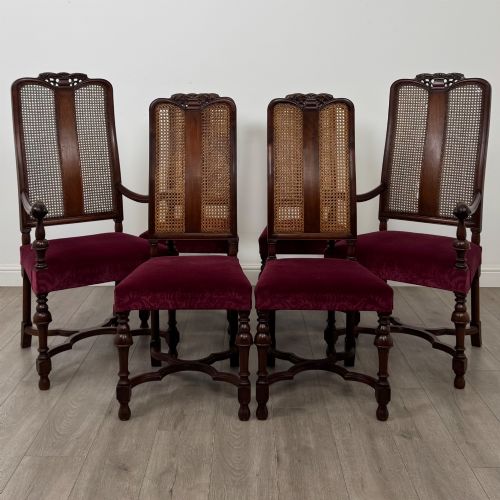
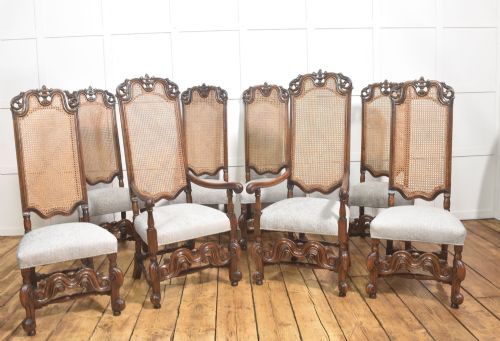

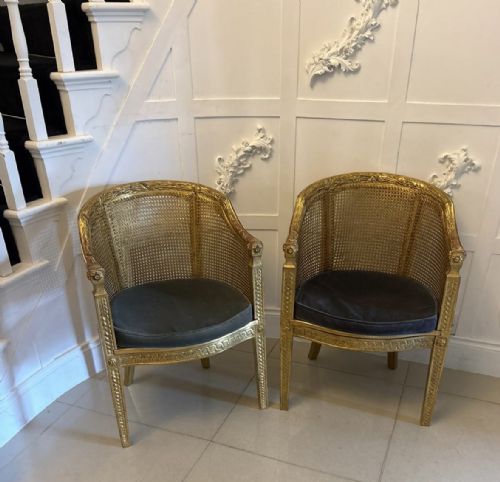
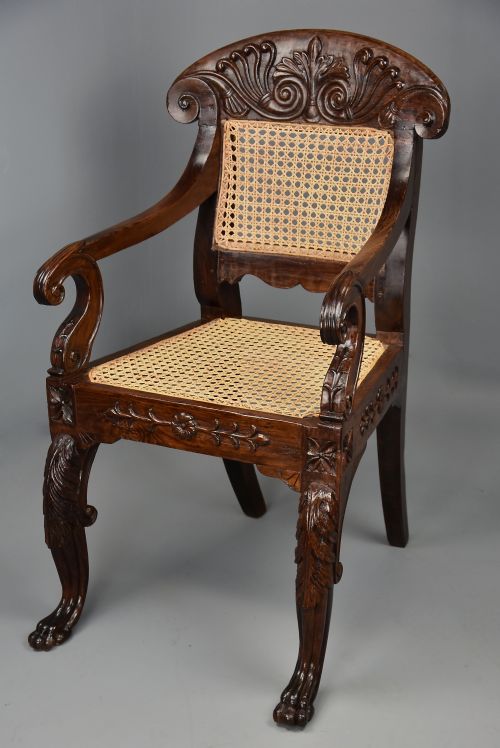
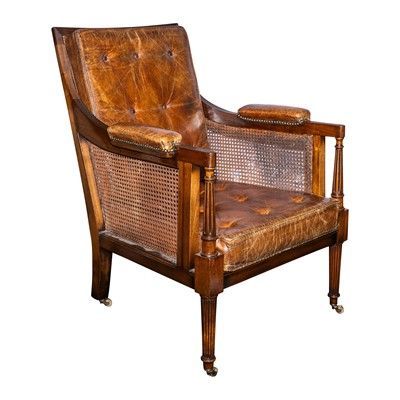


Cane Sided Armchair
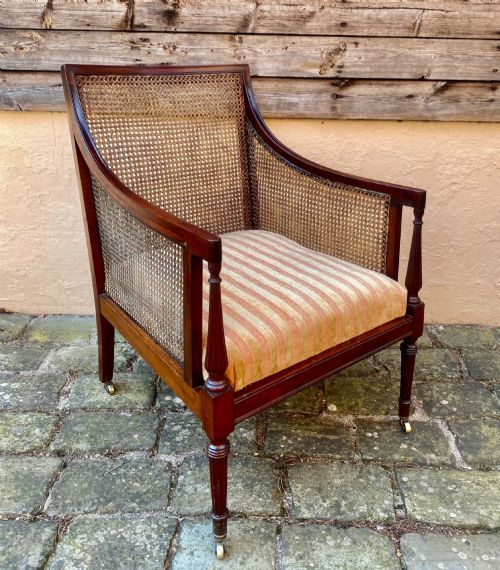
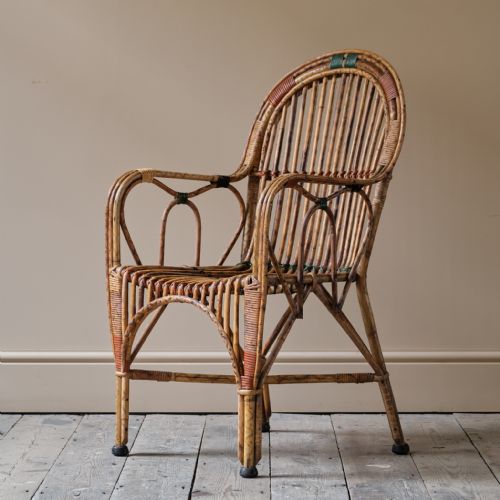
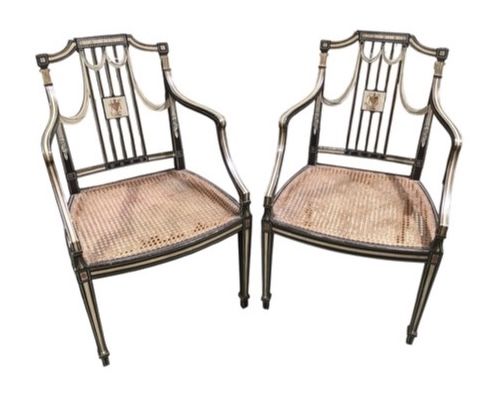
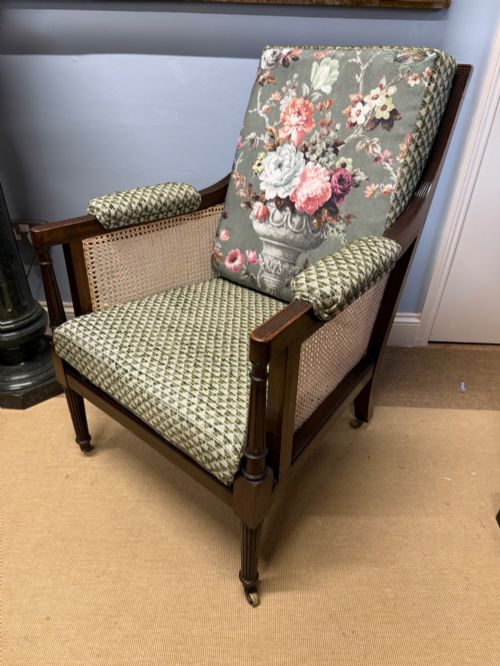
These cane sided armchair selections bring open-weave panels and timber frames together, offering substantial seating with characteristic period charm.
Cane Sided Armchair
A cane sided armchair uses woven natural material across the sides and back panels to create a lighter frame while retaining structural support. Buyers searching for a cane sided armchair encounter various formats, from library seating to bedroom and salon chairs spanning the nineteenth and twentieth centuries.
The materials appearing across these listings range from mahogany and walnut to oak and padouk, alongside upholstered elements in leather, velvet, and fabric. Influences stretch from Regency and French Louis XVI to Jacobean Revival and Art Deco styles.
Many examples take the form of bergere chairs featuring enclosed wooden arms and woven cane flanks. Others incorporate brass details, faux bamboo, or carved framework to suit different domestic interiors.
How they were made
Frames are constructed from hardwoods like mahogany, walnut, and oak, joined through traditional cabinet-making techniques to support the weight of daily use. Timber components frequently feature carved ornamentation, inlay work, or painted finishes.
Caning involves piercing holes along the wooden channels and threading processed rattan or cane strips by hand in tight geometric patterns. This woven mesh provides flexible tension across the side panels and backrests.
Upholstered sections rely on drop-in seat pads or sprung bases covered in leather, velvet, or fabric, secured with brass tacks or piping where appropriate.
Several armchairs incorporate faux bamboo frames, proving that Victorians loved botanical mimicry almost as much as tea time.
What varies in quality
The fineness of the cane weaving and the regularity of the strand tension determine the structural integrity of the side panels. Tightly woven panels distribute weight evenly and resist sagging over decades of use.
Timber selection and the crispness of carved details dictate the overall refinement of the piece. Dense hardwoods with well-preserved joinery and rich natural grain indicate superior workshop execution.
The preservation of original surface finishes, whether polished mahogany, giltwood, or patinated oak, affects the character of the piece. Subsequent alterations or replacement upholstery also influence how closely the chair matches its original period aesthetic.
The Cane Sided Armchair Glossary
- Bergere
- A French upholstered armchair with enclosed sides, typically featuring woven cane panels and a loose seat cushion. This form gained popularity during the eighteenth century and inspired numerous nineteenth and twentieth-century revivals.
- Caning
- The practice of weaving rattan peel or cane strips through drilled holes in a wooden frame. It creates a breathable, resilient surface commonly used for chair backs and side panels.
- Padouk
- A dense tropical hardwood known for its reddish-brown colour and durability. It appears in colonial and Anglo-Indian furniture production.
- Giltwood
- Timber coated with a thin layer of gold leaf or metallic gilt paint. It is frequently associated with formal French salon furniture.
- Faux bamboo
- Wood turned and carved to imitate the segmented stalks of natural bamboo. This decorative technique enjoyed widespread popularity during the Victorian era.
Cane Sided Armchair: Frequently Asked Questions
What is a bergere chair?
A bergere chair is a traditional upholstered armchair featuring solid wooden sides filled with woven cane panels. These seats combine wooden frames with cushioned seating for library or drawing room use.
The style originates from French furniture design and appears across various nineteenth and twentieth-century revivals.
How do I care for cane panels?
Cane panels require occasional dusting with a soft brush and gentle cleaning with a damp cloth to prevent the material from drying out. Maintaining moderate humidity in the room prevents the natural rattan from becoming brittle.
Avoid placing these chairs directly against intense heat sources or in harsh sunlight.
Are these chairs comfortable for daily use?
Most examples incorporate supportive sprung or padded seat bases designed for extended sitting. The woven cane sides offer slight give while maintaining upright posture support.
Arm heights and seat depths vary between library models and lighter salon chairs.
How can I tell the period of a chair?
Dating relies on examining the timber species, joinery methods, and stylistic revival influences present in the frame. Nineteenth-century examples often feature mahogany or walnut with traditional hand-carved details, whereas later twentieth-century pieces incorporate different manufacturing tolerances.
Matching the overall design vocabulary to documented revival periods helps confirm the era.