


Georgian Style Bergere
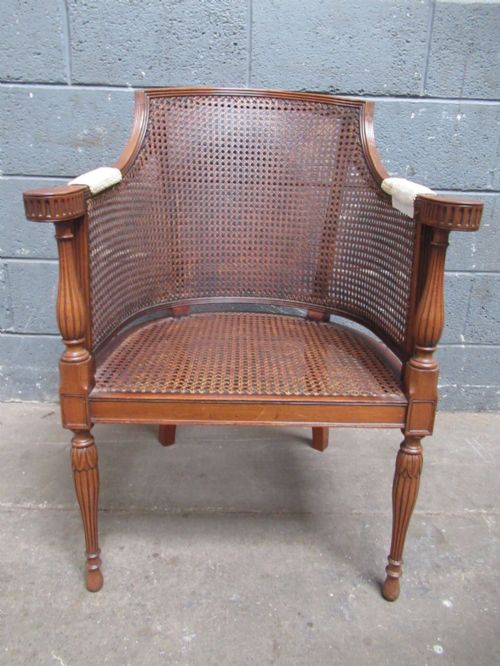
A georgian style bergere is a deep, enclosed armchair built for comfort, and you want one for its classic silhouette and woven panels.
Georgian Style Bergere
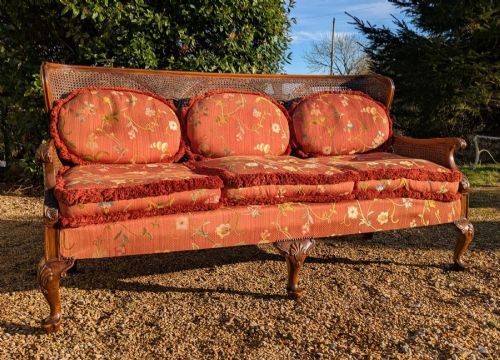
A georgian style bergere brings a deep, enclosed armchair form into the room, often accompanied by matching sofas in the listings. These seats originate across several periods, stretching from the Georgian era and Regency through the nineteenth century, nineteen hundred, and nineteen thirty.
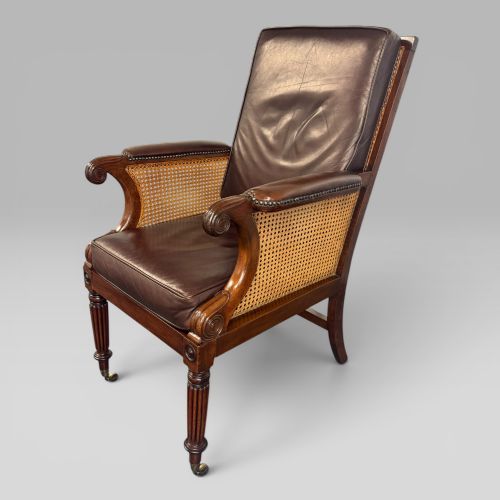
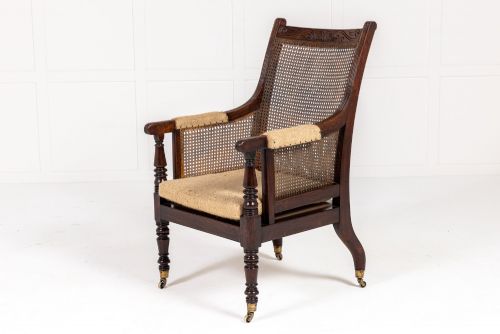
The most common version you meet on this page is the library bergère armchair, shaped in mahogany with cane panels. Makers also produced inlaid mahogany variants and tub shaped forms, alongside revival interpretations.
How they were made
Workshops built these chairs primarily in mahogany and walnut, using dense timber to form sturdy frames that support the enclosed sides. Artisans integrated brass details and inlaid elements to ornament the structural wood.
Caning and rattan cane form the distinctive woven panels of the arms and back, paired with loose cushions in leather, fabric, and textile. Feather cushions provide the soft filling for the seat bases and backs.
The listings on this page span the Georgian era, Regency period, nineteenth century, nineteen hundred, and nineteen thirty.
What varies in quality
Quality rests in the precision of the timber frame and the tightness of the woven cane panels. Finer examples show crisp inlay and substantial mahogany construction rather than simple plain timber.
The sophistication of the proportions and the attribution of the design elevate certain pieces above standard production. Chairs connected to established workshops carry greater presence through careful joinery and refined carving.
The Georgian Style Bergere Glossary
- Bergère
- An enclosed upholstered armchair with solid sides filled with cane or upholstery. This French form became popular in British libraries during the eighteenth and nineteenth centuries.
- Caning
- A woven lattice made from rattan or cane strips, used to form light yet strong back and side panels. It requires skilled hand weaving to maintain uniform tension.
- Inlay
- Contrasting woods or materials set flush into the surface of the primary timber to create decorative patterns. This technique demands precise carpentry.
- Tub chair
- An armchair with a rounded, curved back that flows directly into the arms. The continuous rail encloses the sitter for warmth and draught protection.
Georgian Style Bergere: Frequently Asked Questions
What is a bergere chair?
A bergere chair is a French-derived armchair featuring enclosed sides filled with cane or upholstery. It provides a deep, comfortable seat historically favoured in libraries and drawing rooms.
These chairs often include loose squab cushions filled with feathers to balance the rigid wooden and caned frame. The design creates a cocooning effect that sets it apart from standard open armchairs.
How do I identify a Regency period chair?
Regency chairs typically display specific classical motifs, such as reeded legs, sabre legs, and subtle brass accents. The timber is predominantly dark mahogany.
Makers working in this period drew inspiration from classical antiquity, resulting in clean lines and restrained ornamentation. Proportions are generally robust yet elegant.
Are these chairs comfortable for daily use?
These armchairs offer deep seating and are designed for reading and relaxation. The addition of feather cushions ensures a soft seating experience.
Because the frames are low and deep, they suit modern living spaces as reading chairs or statement seating. The cane sides also keep the heavy wood frame visually light.
What wood is used for these pieces?
Mahogany is the primary wood found across these listings, valued for its strength and rich dark colour. Walnut also appears in select frames.
Craftsmen selected these hardwoods because they could be carved cleanly and hold the tension of woven cane panels. The timber often ages to a deep, warm patina.