


Traditional Caned Chair
A traditional caned chair brings light woven texture and structural timber together in forms that span formal library bergères to country dining seats.
Traditional Caned Chair
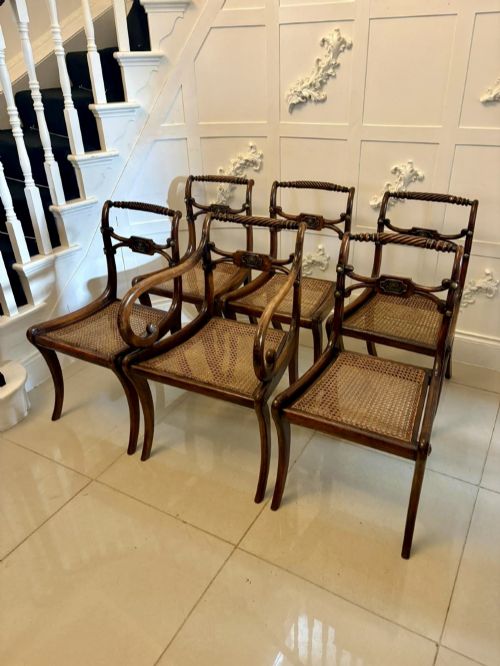
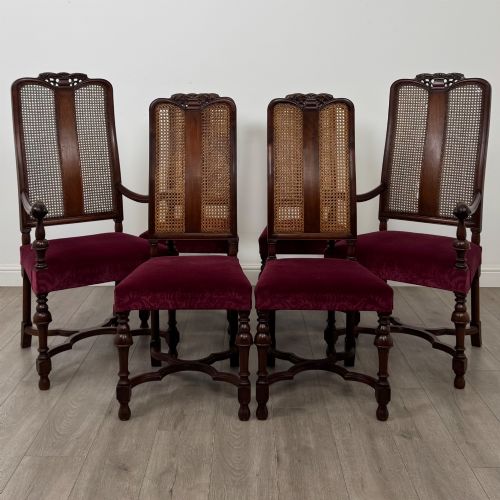
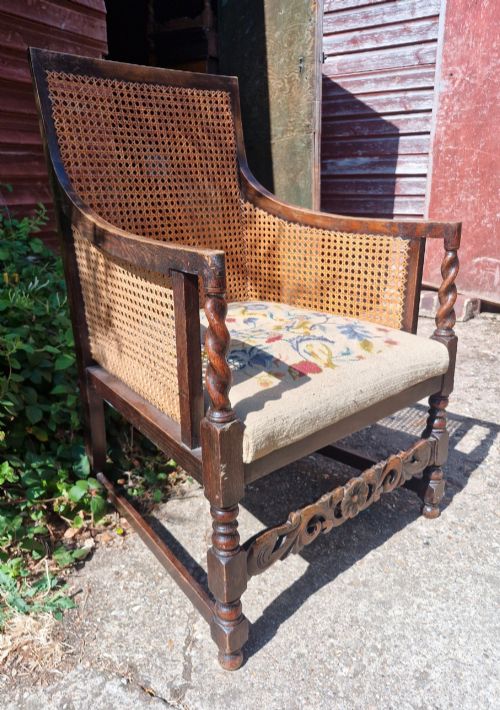
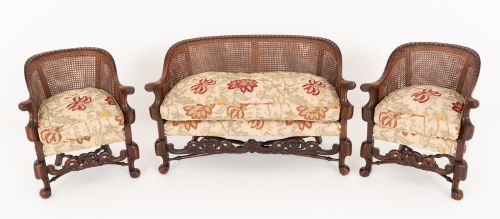
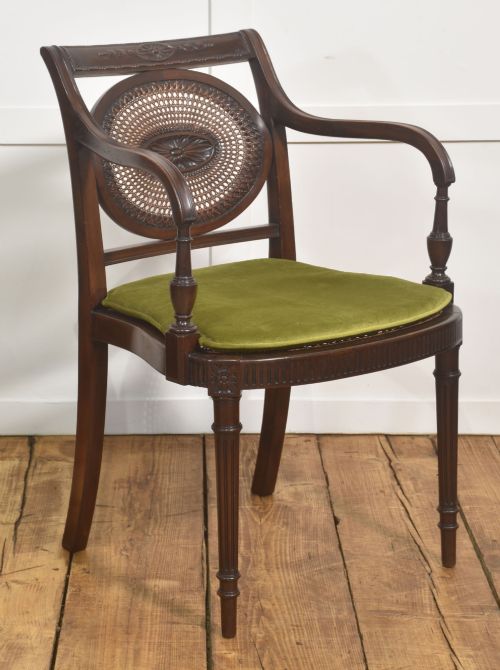
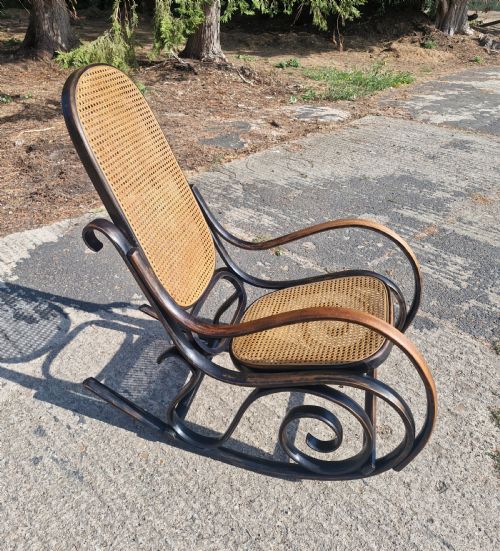
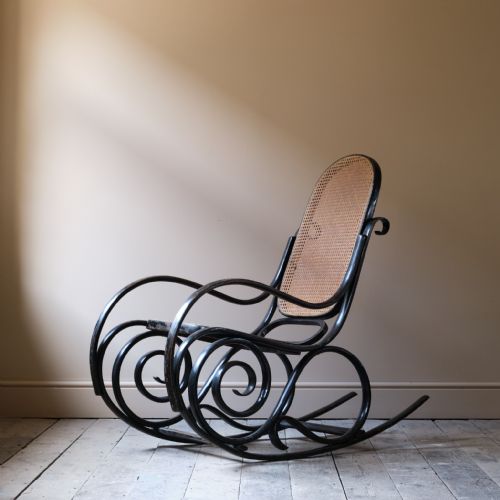
A traditional caned chair uses woven plant material for seats or backs, framed in solid timbers such as mahogany, oak, and walnut. When you search for a traditional caned chair, you encounter forms ranging from single dining seats and carvers to deep library bergères, rocking chairs, and children's high chairs.
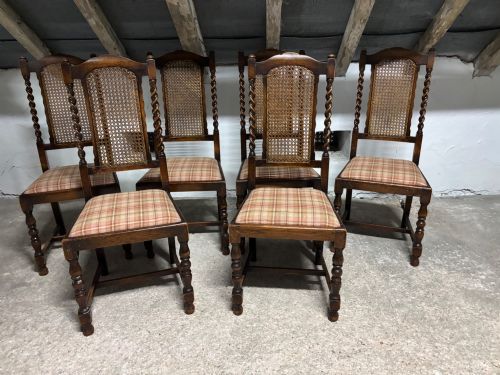
The pieces appearing on this page stretch across the nineteenth century into the early decades of the twentieth, encompassing Regency elegance, Victorian mass, and revivalist movements like Jacobean and Carolean styles. Dining sets sit alongside individual lounging armchairs upholstered with split cane or traditional bergère work.
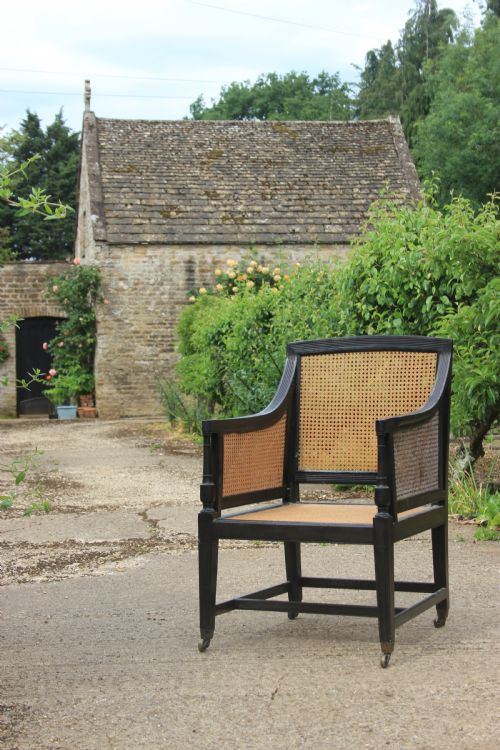
Makers and designers worked within distinct regional idioms, producing everything from English country seating to ebonised frames and lacquered oriental side chairs. The unifying element remains the combination of wooden framing with woven cane panels designed for resilient yet flexible support.
How they were made
Timbers like dense mahogany, figured walnut, and sturdy oak form the skeletal framework of these seats, shaped through turning, carving, and steam-bending. Selected frames incorporate brass details, inlaid veneers, or ebonised finishes to alter the visual weight of the wood.
Caning employs processed rattan or split cane woven by hand through pre-drilled holes along the seat rails or back frames. This technique creates a porous, supportive surface that requires considerable tension during weaving to maintain its resilience under daily use.
Even infants dined in style, as shown by miniature mahogany tub highchairs outfitted with proper woven cane seats for tiny Victorians.
What varies in quality
The refinement of the timber carving and the precision of the joinery set finer pieces apart from standard workshop production. Superior examples feature carefully selected grain patterns in the mahogany or walnut frames, alongside balanced proportions that unify the wooden structure with the woven panels.
The consistency and tightness of the cane work define the execution standard, where uniform strands and neat hole-to-hole weaving indicate skilled artisan labour. Heavier bergère models rely on deep frames and substantial secondary supports that elevate their structural integrity above simpler side seating.
The Traditional Caned Chair Glossary
- Bergère
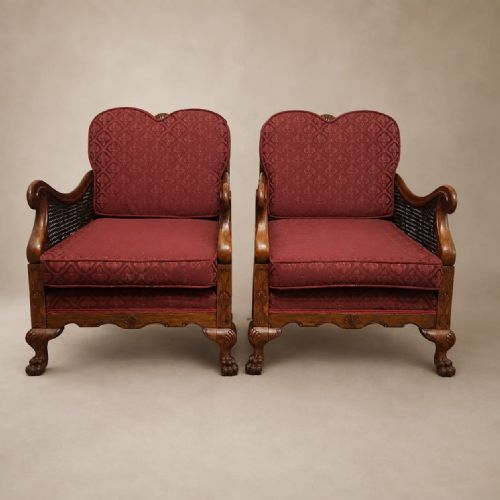
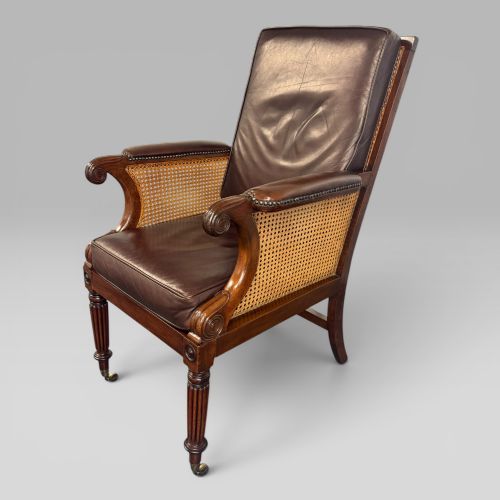
- An upholstered armchair with enclosed sides, often featuring cane panels woven into the wooden frame. These deep seats originated in France and became popular in English libraries during the Regency and Victorian periods.
- Carver
- An armchair designed to match a set of dining chairs, typically positioned at the head of a table. They feature open arms that accommodate formal dining attire.
- Bobbin turned
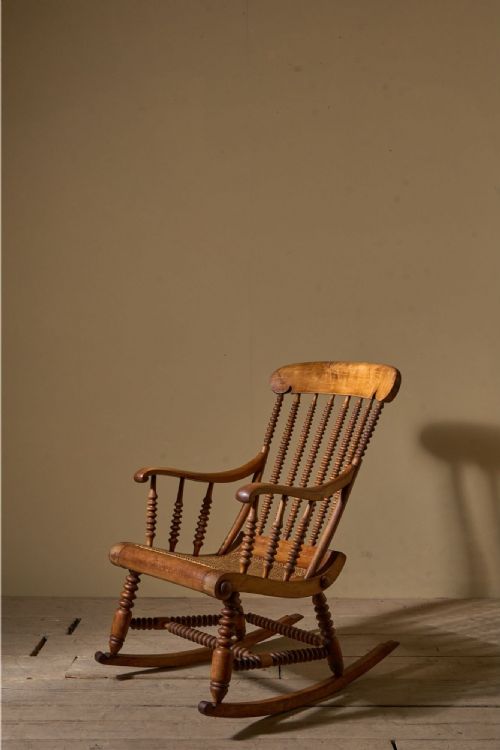
- A style of furniture leg or stretcher shaped on a lathe to resemble a series of wooden bobbins or spools. This decorative turning appears frequently on nineteenth-century country and revival seating.
- Klismos
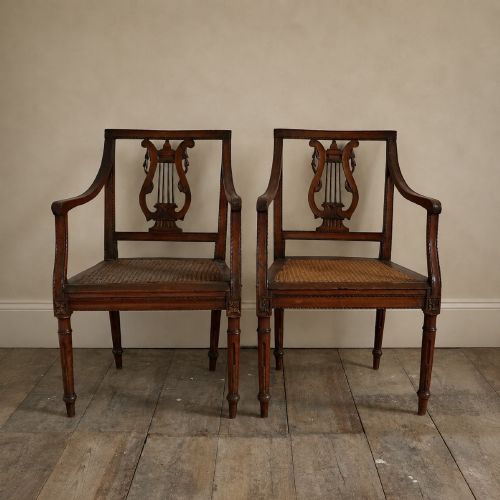
- An ancient Greek chair design characterised by curving, outward-swooping legs and a concave backrest designed to fit the human spine. Revival versions often incorporate cane seating surfaces.
- Split cane
- The inner portion of the rattan reed split to a flat profile and used for tighter, more delicate woven panels. It offers a smooth surface distinct from whole-cane strands.
Traditional Caned Chair: Frequently Asked Questions
What is a bergere chair?
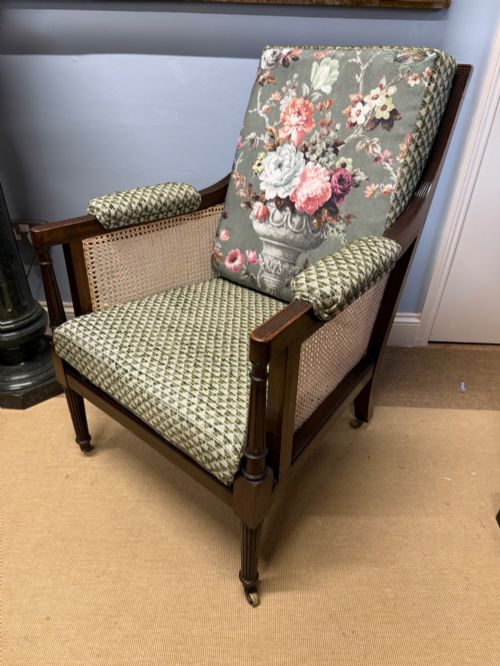
A bergère is an enclosed upholstered armchair characterised by wooden framing and woven cane panels on the back and sides. They provide deep, comfortable seating designed for reading rooms and parlours.
These chairs often include loose squab cushions upholstered in fabric, leather, or velvet to soften the woven seat base. Their substantial wooden frames separate them from lighter dining models.
How do I care for cane seats?
Cane requires moderate humidity to prevent the natural rattan material from becoming brittle and snapping under pressure. Regular dusting with a soft brush keeps the woven panels clear of debris.
Avoid placing these chairs directly next to intense heat sources or in overly dry rooms. Occasional light dampening of the underside can help maintain the flexibility of the plant fibres.
Are these chairs comfortable for daily use?
Traditional caned chairs offer surprising resilience because the woven mesh flexes under weight to distribute pressure evenly. Many library and easy chairs were engineered specifically for prolonged sitting.
Armchairs paired with fitted cushions provide additional padding for everyday lounging. Dining variants offer firm, supportive seating suited for meal times.
How do I date a caned chair?
Dating relies on identifying the prevailing architectural styles, timber choices, and turning methods used in the frame construction. Regency examples display clean classical lines, whereas Victorian and Edwardian pieces often incorporate heavier revival motifs.
Examining the underside reveals the hand-drilled hole patterns and peg construction methods associated with nineteenth-century workshop practices. Machine-drilled uniform holes typically indicate twentieth-century production.