





Novelty Bronze Ornaments
Novelty bronze ornaments bring character to a desk through clever animal figures, theatrical birds and utilitarian objects cast in metal.
Novelty Bronze Ornaments
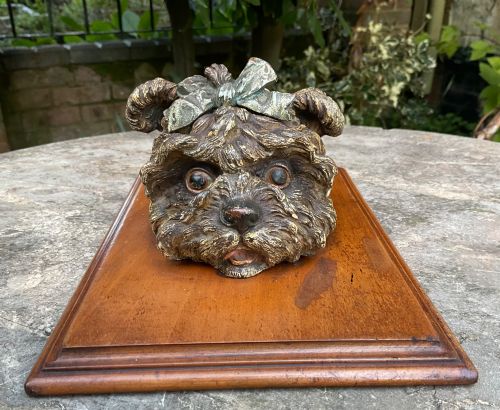
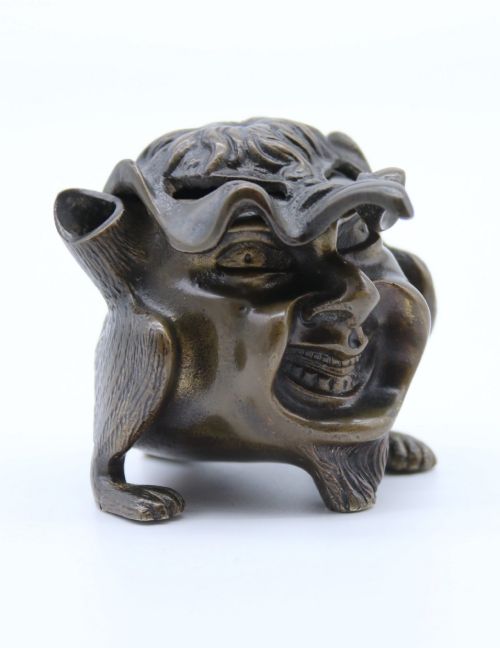
Novelty bronze ornaments combine sculpture with function, taking the shape of animals, boots and grotesque creatures designed to sit upon a writing table or shelf. When searching for novelty bronze ornaments, buyers encounter Victorian and Edwardian pieces that serve practical roles such as inkwells, paper weights, pin cushions, and desk clocks.
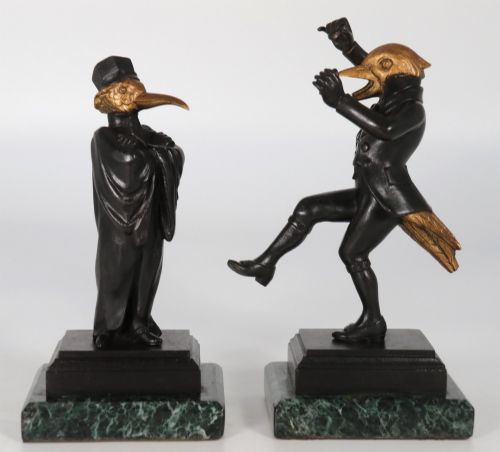
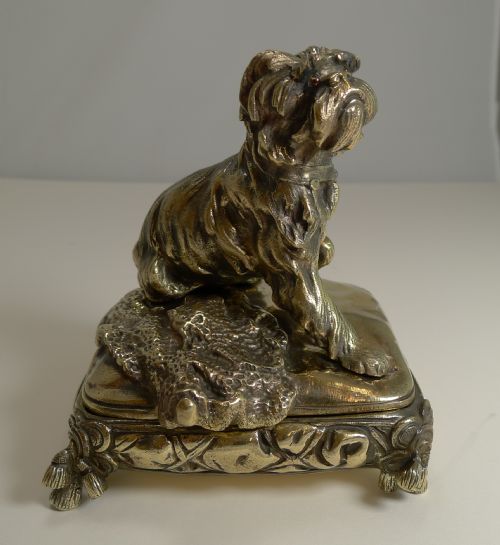
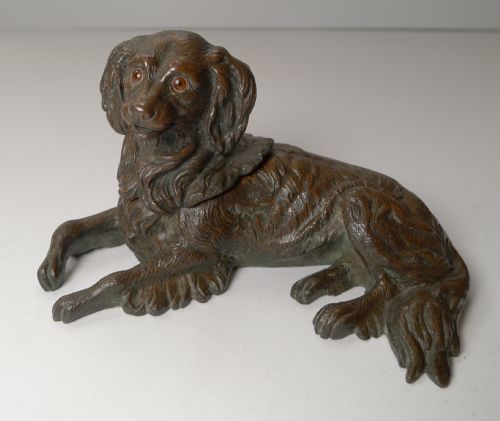
The selection here draws primarily from the nineteenth century, including Austrian cold painted bronze works alongside English and French desk accessories. Common subjects range from dogs like Yorkshire terriers and King Charles spaniels to theatrical birds and ibexes, fashioned from bronze, gilt bronze, and brass.
Many of these items double as functional desk accessories, incorporating glass ink inserts, velvet cushions, or champleve enamel details. Pieces span the Victorian period into the early twentieth century, showing both whimsical animal forms and utilitarian desk items.
How they were made
These pieces rely on bronze casting, often enhanced with cold painting where colour is applied to the metal without high-temperature firing. Gilt bronze and brass also feature prominently, providing a durable metallic base for intricate animal hair, feathers, and footwear details.
Makers integrated various decorative mediums into the cast metal, such as champleve enamel panels, inset glass eyes, timber mounts, marble bases, and velvet pads. Paint and enamel add surface colour to cold painted bronze figures and clock faces, while glass provides functional reservoirs for inkwells.
Novelty Bronze Ornaments Retail Price Guide 2026
Typical asking prices for novelty bronze ornaments among the pieces listed under this phrase on Sellingantiques today, from the lower quarter to the upper quarter. They describe what is for sale here now, not the wider market.
A spurred boot cast in bronze waits patiently to hold down stray papers on a Victorian desk.
What varies in quality
The definition and crispness of the casting separate standard items from finer work, particularly in the rendering of animal fur, feathers, and facial expressions. Superior pieces retain their original cold painted surfaces or rich gilding rather than showing heavy retouching.
Integration of secondary materials such as champleve enamel, original glass eyes, and matched glass ink inserts contributes to a piece's completeness. The weight of the metal and the precision of mechanical elements like paper clips or hinged inkwell lids also indicate the maker's original standard.
The Novelty Bronze Ornaments Glossary
- Cold painted bronze
- Bronze sculpture finished with unfired paint applied directly to the metal surface. This technique was widely utilised by Austrian workshops to create vibrant animal figures.
- Champleve enamel
- An enamelling technique where troughs or cells are sunk into the metal surface and filled with vitreous paste before firing. It appears on decorative clock cases and desk accessories.
- Gilt bronze
- Bronze that has been coated with a thin layer of gold or gold-coloured alloy to impart a bright metallic sheen. It distinguishes more decorative Victorian desk pieces from plain bronze.
- Inkwell
- A small pot or reservoir for holding liquid ink, frequently incorporated into figural animal sculptures on desk stands. They often retain their original glass liners.
Novelty Bronze Ornaments: Frequently Asked Questions
What are novelty bronze ornaments?
These pieces are small cast metal sculptures that combine decorative animal or character subjects with practical desk items.
They take the form of inkwells, pin cushions, paper weights, and clocks, originating mainly from the Victorian and Edwardian periods.
How were cold painted bronzes made?
Foundries cast the bronze figures into detailed animal or character shapes, capturing textures like fur and feathers.
After casting, artisans applied oil or water-based paints directly to the cold metal surface without a high-temperature kiln firing.
Where did these desk ornaments originate?
The pieces span several European origins, with Austrian workshops known for cold painted dog and animal figures, and English makers producing domestic animal inkwells.
French makers also contributed grotesque creatures and specialised desk ornaments during the nineteenth and early twentieth centuries.
How do I care for antique bronze?
Keep the metal away from direct moisture and clean only with a soft, dry cloth to preserve the original patina and any cold painted surfaces.
Avoid commercial metal polishes that can strip away gilding, enamel, or delicate painted details.